








This website uses cookies to improve your experience. We\'ll assume you\'re ok with this, but you can opt-out if you wish. Read More
In case of sale of your personal information, you may opt out by using the link Do Not Sell My Personal Information
One of the quiet joys of hiking is the headspace it gives you.
Hours of steady movement, the rhythm of your breath, boots on the path — and suddenly the noise of everyday life fades. Out on the hill, you can solve the problems of the world (at least to your own satisfaction), replay conversations, plan the future, or simply enjoy the rare luxury of thinking one thought at a time.
And when the legs get tired, most of us have something in mind that keeps us moving forward.
Over the years, we’ve asked our guests what motivates them on a long day out walking. The answers are as varied as the people themselves — but a few themes come up again and again.
For many walkers, a clear goal makes all the difference.
For some, it’s the chance to finally tick a Munro.
For others, it’s standing on the highest point in a new area.
Sometimes it’s a long-planned route, or even being the first to explore a lesser-known line.
Whatever the goal, having a plan focuses the mind and gives purpose to each step. Of course, we’re always careful to remind our guests that the day isn’t over when you reach the top — the walk only truly ends when you’re back home, boots off and feet up.
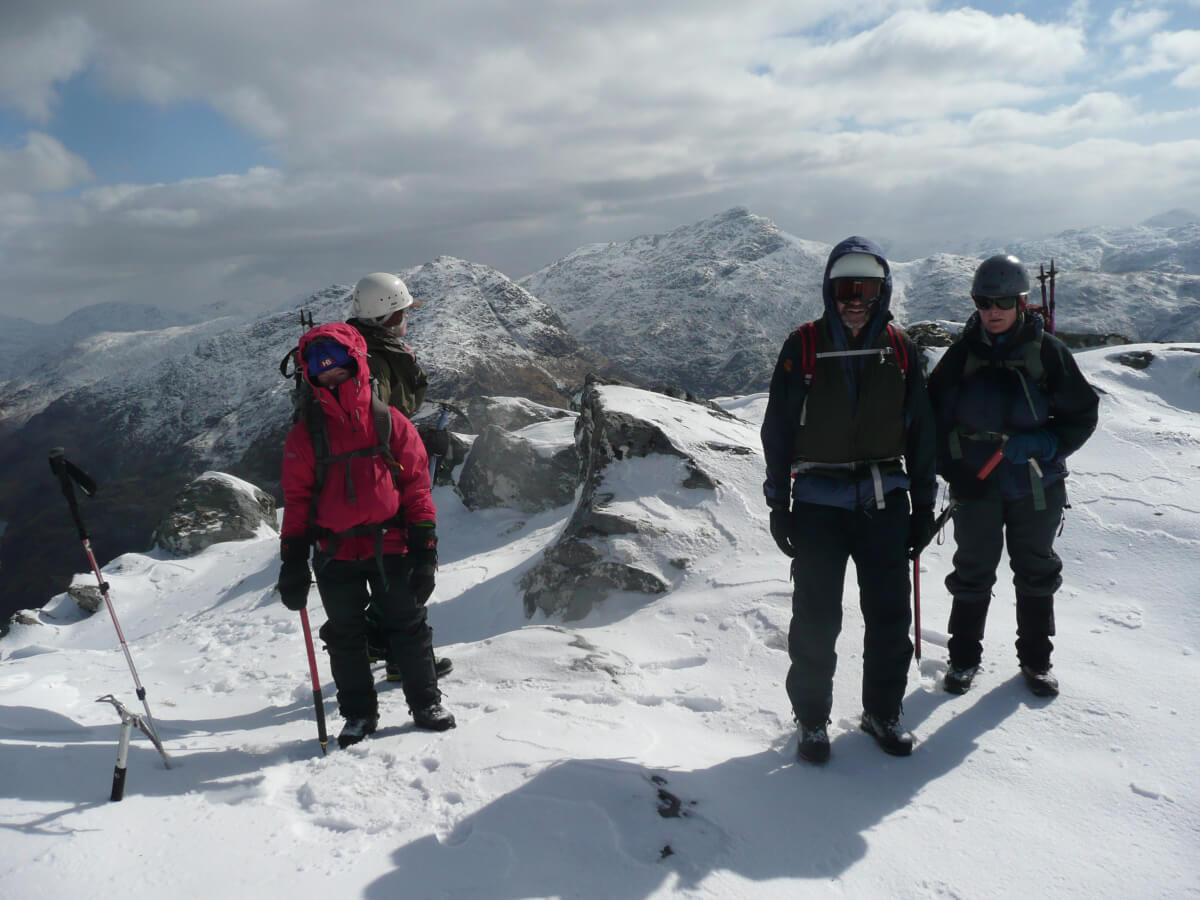
Up on a summit on the remote peninsula of Knoydart with no sign of habitation for miles around
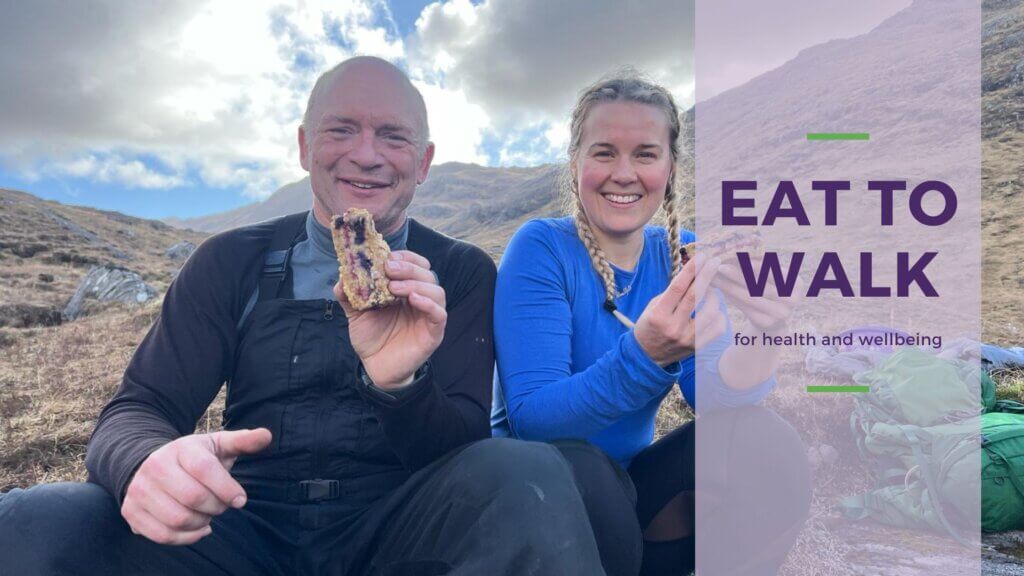
Never underestimate the motivational power of a packed lunch.
Everyone has their own favourites, but a well-timed treat can transform a tough stretch of path. On our trips, we like to keep things varied: home-baked goodies alongside trail mix and savoury snacks.
Guests often tell us that knowing there’s something special waiting in their lunch box makes the miles pass that bit more easily — whether it’s gingerbread, raspberry and pine-nut bars, or a classic vanilla streusel square.
Food tastes better outdoors. That’s just a fact.
Dinner is another powerful incentive — and one that sparks a surprising amount of speculation.
Sometimes we keep it a surprise; sometimes guests ask outright. Either way, there’s often a good deal of guessing on the walk back. More often than not, we manage to hit someone’s favourite during the course of the week, which is always deeply satisfying.
After a full day on the hill, the thought of a warm, well-cooked meal can be enough to carry you through the final climb.
It won’t surprise anyone that a fair number of our guests are highly motivated by the idea of a pub at the end of the day.
For some, it’s almost a mirage — that imagined first sip that gets you through the final, toughest section of the route. Amazing how much faster everyone walks when there’s time for a beer before dinner.
Andy is particularly good at highlighting walks that just happen to finish near one of his favourite watering holes.
Pure coincidence, of course.
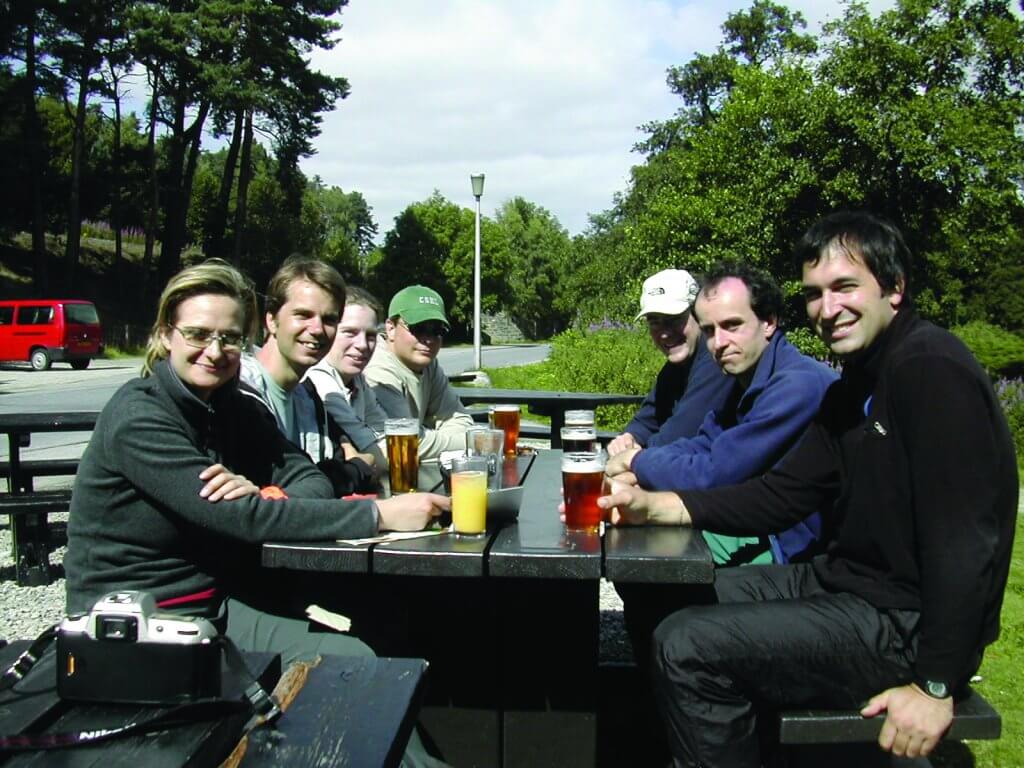
The best way of relaxing after a walk, no matter how hard or easy it may have been
Back indoors, the motivations become wonderfully basic:
A hot shower, especially after a long or wet day, is hard to beat. Some guests will happily skip tea and cake in favour of getting straight under the water.
An open fire turns tired legs into relaxed ones, especially after winter walks or blustery Highland days.
A proper pint of tea — how British are you?
Cake, always cake. One of the great joys of hiking is knowing you’ve earned it. Low-calorie options rarely feature on the request list.
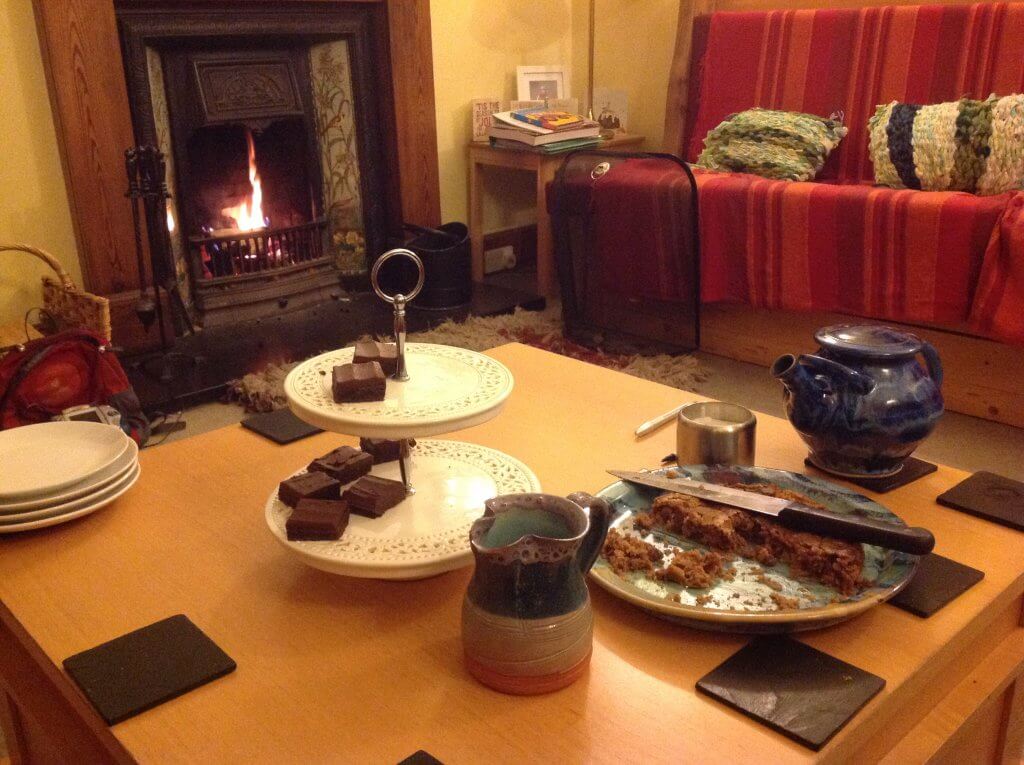
What’s striking is that nearly all these motivators boil down to the basics: food, warmth, shelter and rest.
Hiking strips life back to essentials. Out on the hill, the complicated becomes simple, priorities shift, and small comforts take on a new importance. It’s one of the reasons walking holidays are so restorative — they remind us how little we actually need to feel content.
If you’re dreaming of long days on the trail, good food, warm fires and welcoming places to rest at the end of it all, we offer a wide range of guided walking holidays and hiking vacations across the Cairngorms and the wider Highlands of Scotland.
We’d love to help you plan your next adventure — just get in touch for full details.
Organising an overseas hiking vacation that genuinely works for everyone in a group is one of the biggest challenges facing group leaders. Differences in fitness, hiking experience, personal goals, and travel expectations are present in almost every group — and those differences are often amplified when the destination is unfamiliar.
Scotland’s terrain, weather, and remoteness can add another layer of complexity. Distances may look short on a map, but rough ground, elevation gain, and changeable conditions mean that two walkers with similar fitness at home can have very different experiences on the hill. Careful planning is essential.
Most hiking groups include participants with varying levels of fitness, confidence, and technical experience. Some members may hike regularly in mountainous terrain; others may be strong walkers but unfamiliar with rough trails, boggy ground, or sustained ascents.
As group size increases, these differences become harder to manage. Larger groups tend to fragment naturally, with faster walkers pulling ahead and slower walkers feeling pressure to keep up. From our experience, limiting group size to around eight participants makes a significant difference. Smaller groups are easier to pace, easier to supervise, and tend to function more cohesively — particularly in remote environments where clear communication and decision-making matter.
For organisers, this also simplifies logistics: transport, accommodation, dining, and guiding ratios are all easier to manage at this scale.
Many group members will arrive in Scotland with specific ambitions — often iconic summits or well-known routes they’ve seen in guidebooks or online. These goals can be motivating, but they can also create tension if they are unrealistic for the whole group.
The key is to be explicit early on. Set expectations clearly and base your itinerary on what is achievable for the group as a whole, not the strongest individuals. Consulting with a local guiding company during the planning phase can be invaluable here. They can help assess whether ambitions can be accommodated safely and, crucially, whether it is possible to offer alternative walks on the same day without compromising supervision or safety.
This approach allows stronger walkers to feel challenged while ensuring the rest of the group has a rewarding day, rather than feeling like they are failing to meet someone else’s benchmark.
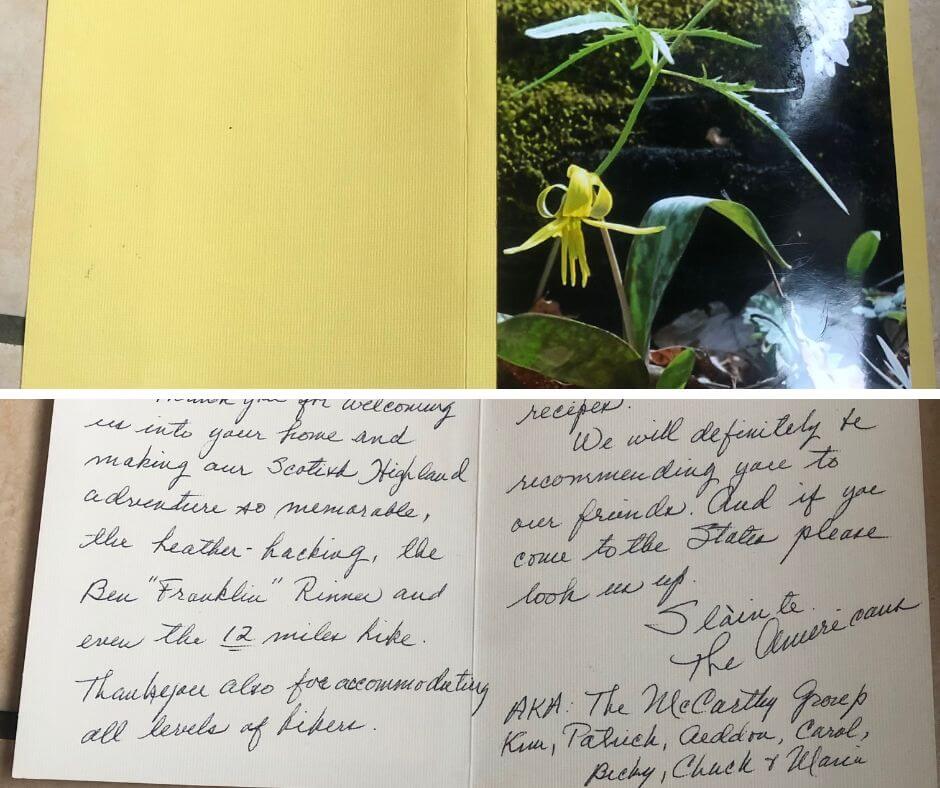
Not every participant measures success by summits climbed or miles covered. Many are drawn to Scotland for its landscapes, history, wildlife, and sense of place. For first-time visitors, there is often a desire to see “the famous sights” — but this can raise another question: is the goal to tick boxes, or to experience the country more deeply?
Scotland offers exceptional walking that delivers dramatic scenery without technical difficulty, as well as opportunities to weave in cultural elements — historic sites, local stories, food, and landscapes shaped by centuries of human use. These quieter, less commercial experiences often become the most memorable parts of a trip.
Local knowledge makes a real difference here. Routes and locations promoted by large, international operators are often popular for a reason, but they also tend to be busy. Working with a local provider opens up alternatives that offer just as much impact, without the crowds.
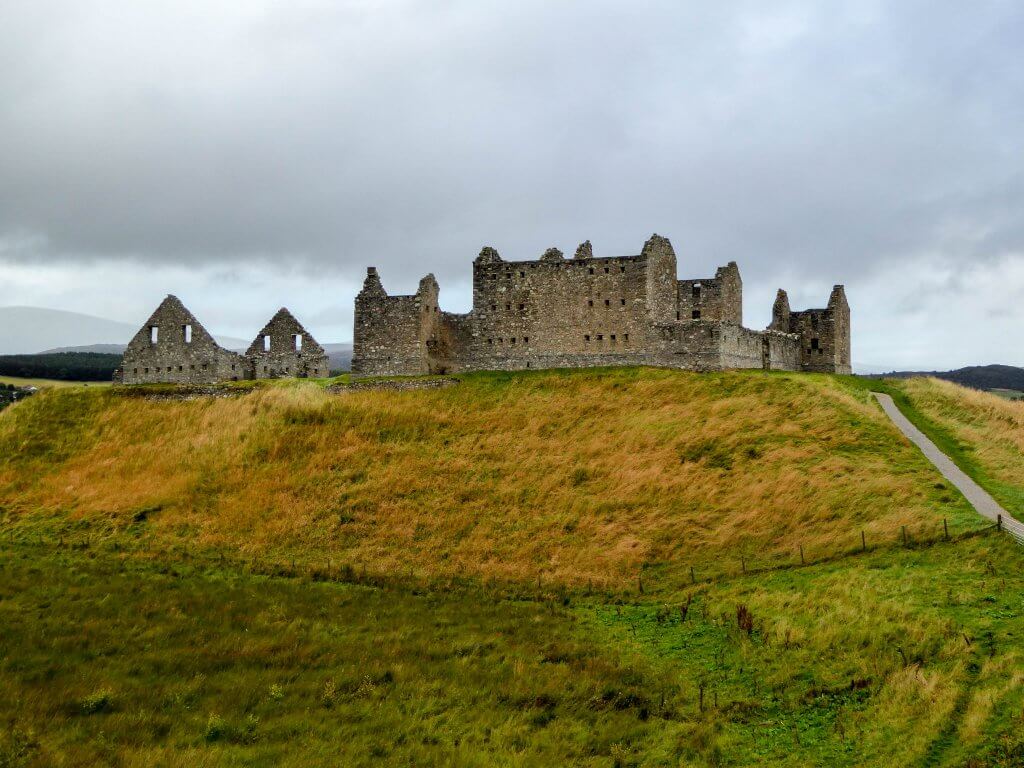
Historical sites in the Scottish countryside
One of the most effective ways to manage mixed ambitions is to build choice-based days into the itinerary. Rather than forcing the entire group onto a single route, days can be structured to offer:
Well-designed shorter walks in Scotland often provide outsized rewards — dramatic glens, lochs, and coastlines — without the sustained effort or exposure of higher summits.
Even with careful planning, the day-to-day experience matters. Guide-led pacing helps ensure that no one feels rushed or left behind, and that breaks, regrouping points, and decision-making are managed calmly and professionally.
When this is done well, the tone of the trip changes. Participants stop comparing themselves to one another and start enjoying the experience.
As we often reassure group leaders:
“No one feels like they’re holding the group back — and no one feels under-challenged.”
Be sure to also check out part 1 of this series where we discuss the kind of terrain you might encounter in Scotland.
If you’re the person everyone looks to when a group trip is proposed, transport is often where the responsibility really starts to feel heavy — especially overseas. Driving on the left, unfamiliar roads, jetlag, and getting a whole group to the right place at the right time can turn what should be an exciting plan into a source of stress.
When trying to organise a group hiking tour in another country, transport is one of the major headaches. This is particularly the case when you’re travelling to a country where you either don’t speak the language, or in this case, where the locals drive on the other side of the road. So when your group is more than an average family in size – what do you do about transport? Do you drive yourselves? Do you book a private hire/driver? Do you go with public transport passes? All valid options with pluses and minuses.
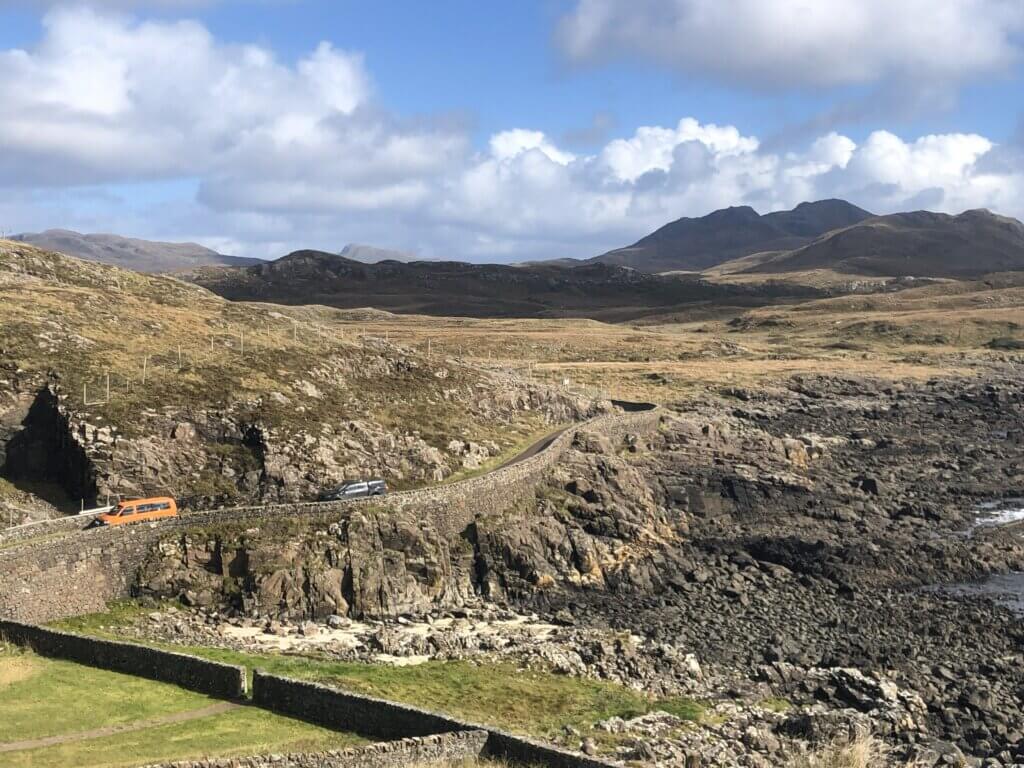
What you’ll need to consider if you’re going to hire a vehicle/vehicles
You may need more than one driver. How many of your group are comfortable driving on the left hand side of the road? Will you need to book automatic transmission vehicles, which are less common in the UK than abroad? For group organisers, this often raises an additional question: who is ultimately responsible if something goes wrong? Can you get all your drivers insured and will this be an additional hassle you could do without. Read the small print carefully – we have had independent travellers who’ve been caught out by small print in hire contracts, particularly relating to foreign credit/debit cards
If you’re planning some hiking as all or most of your tour, you will inevitably end up on smaller, more rural roads which are very narrow and often windy; not to be under-estimated especially at the beginning of your trip when the drivers may also be suffering from jetlag. In fact, in more remote areas the roads may not only be narrow, but even be “single track”. There’s a whole separate etiquette for dealing with single track roads.
Single track roads:
always stay on your side of thr road (THE LEFT)
if the passing space is on the right hand side of the road stop on your side and let the oncoming traffic use the passing space to go around you.
These are manageable once you’re used to them — but they can be intimidating for first-time visitors, especially when you’re conscious of a group relying on you
This is not a term which is commonly used in the UK. We’re far more likely to talk about where the parking area is for a particular route. Unlike many US hiking areas, access points in the Highlands aren’t designed for large volumes of cars or groups arriving simultaneously — something that can catch overseas groups by surprise. Some of these parking areas are little bigger than passing spaces or only big enough for small number of vehicles. Again this is something it is worth bearing in mind when planning your trip. Do you want the hassle of searching for parking? And don’t forget the expense as well. Fewer and fewer parking areas are free of charge these days.
If you’re planning to drive, you should plan around jetlag. We do relatively frequently hear news reports of fatal accidents on the Scottish roads due to tourists accidentally driving on the wrong side of the road. This is much more easily done when you’re tired. One way to avoid this would be to plan a couple of days in or around the city of your arrival before starting the hiking part of your vacation. This way you can adjust to the new time zone before taking on the additional challenge of driving on unfamiliar roads and on what is for you the “wrong” side of the road. or volunteer organisers, this is one of the biggest hidden risks: tired drivers, unfamiliar road rules, and the pressure of getting everyone there safely
We have an excellent public transport system in the UK, but where it falls down for hiking groups is that access to the start of the trail is rarely in the same place as the train station/bus stop and many trails, particularly in the Highlands, can only be accessed in a private vehicle. Also multiple tickets on public transport are probably going to work out as expensive, if not more expensive than hiring a vehicle. You might even want to compare the costs with those of arranging private transport, including a driver.
For organisers, the key question is often not ‘is public transport possible?’ but ‘does it reduce stress for the group — or add to it? Co-ordinating tickets could be an additional headache you could do without.

For many hiking groups the solution isn’t doing everything yourselves — or handing everything over — but working with a local partner who understands both the terrain and the realities of group leadership.
If you’re arranging a hiking trip in the Highlands with your friends/hiking club, you might want to consider the following services:
airport transfers
→ Your group arrives together, rested, and oriented — without anyone needing to drive on day one.
hike planning & trailhead transport
→ Walks matched to your group’s ability, with logistics handled quietly in the background. Also worth bearing in mind when trying to select hikes is that we have very different land access rights – something we can help you understand (loads of other articles on our blog which help to understand the Scottish Outdoor Access Code).
arranging hikes from our home base
→ A shared base removes daily packing, reduces decision fatigue, and strengthens the social side of the trip.
You remain the trusted organiser for your group but we can work in partnership with you to make sure you all have a smooth experience and the group’s expectations are met or exceeded.
Preparing for a group hiking trip to Scotland: it may be more complex than it seems.
“Scotland is not the Rockies” – understanding Scottish terrain and conditions
If you regularly organise hikes in North America — whether in US National Parks, Canadian provincial parks, or established wilderness areas — you’re used to a certain definition of wilderness.
You expect:
Clearly defined trails
Waymarked junctions
Predictable gradients
Weather windows that usually hold
Infrastructure designed to manage large numbers of hikers
Scotland offers something very different.
And this difference is often what catches even highly experienced North American hiking groups off guard.
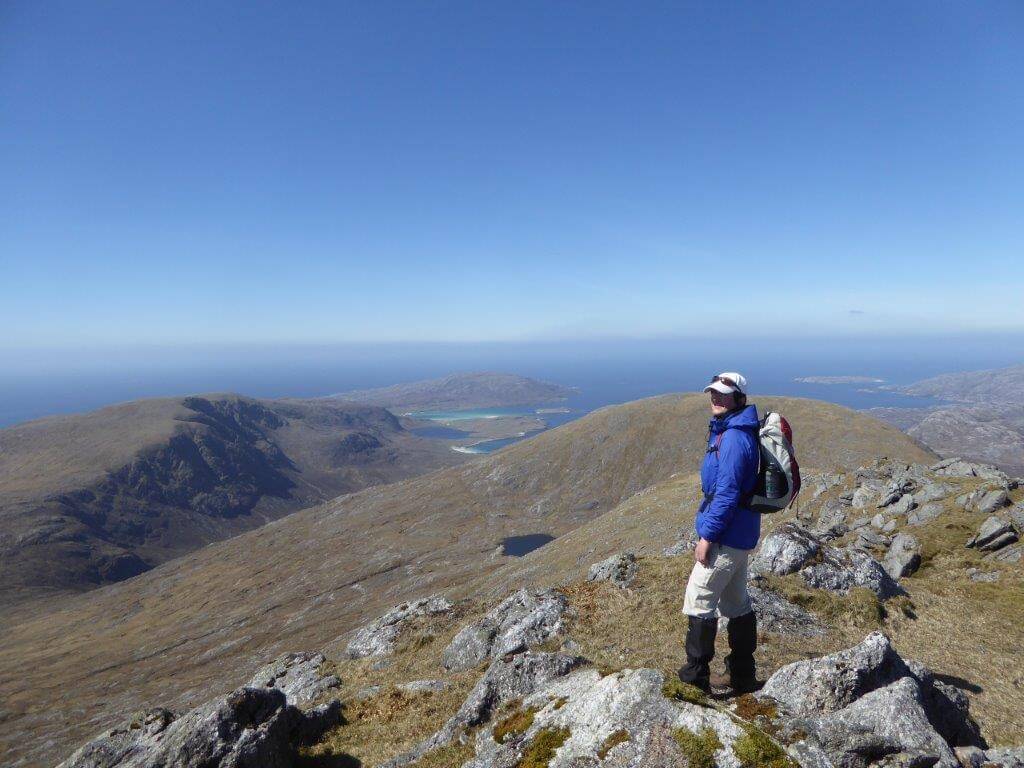
Admiring the seemingly endless wilderness views from the hills of Harris
In much of North America, wilderness exists within a managed framework. Trails are built, graded, signed, and maintained. Even in remote areas, the route is usually obvious underfoot.
In Scotland, true wilderness often begins where the trail ends.
Paths may:
Fade in and out
Split unexpectedly
Cross bog, heather, rock, and grass with no clear line
Exist only because people (or sheep or deer) have walked there before
This doesn’t make Scottish hiking more dangerous — but it does make it fundamentally different.
For group organisers, the key shift is this:
In Scotland, you are often navigating across terrain, not along a trail.
There are organised long distance trails here, the most famous of which is the West Highland Way, but if you really want to experience the best of the Highlands you’ll want to head out into less well known terrain.
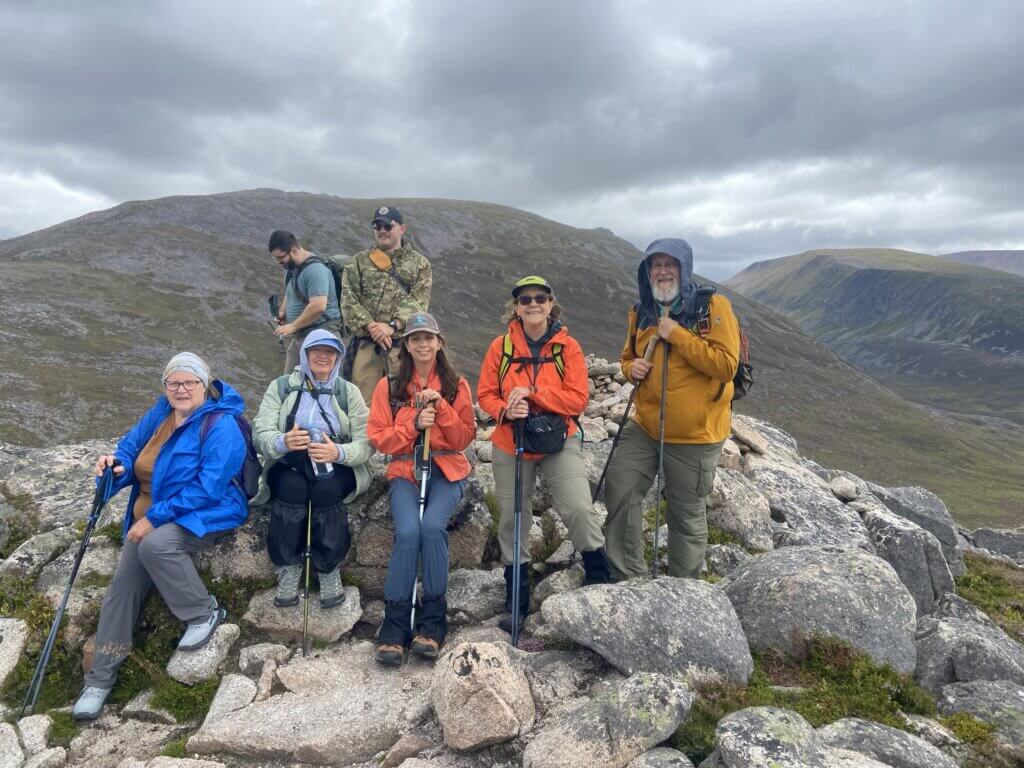
On the way to Britains’s second highest peak, Ben Macdui. Perfect photo opportunity.
One of the most common assumptions North American hikers bring to Scotland is that lower elevation equals easier hiking.
On paper, Scotland’s mountains look modest: our highest peak is Ben Nevis: 4,413 ft (1,345 m)
Compared to the Rockies or Sierra Nevada, this doesn’t seem especially demanding. However it is worth remembering that many of our hikes start from sea level. Any day where you ascend 1000m is more than enough for many, especially if the terrain is not the easiest underfoot.
Effort in Scotland comes less from altitude and more from:
Rough, uneven ground – for some reason, “heather bashing” is never a highlight guests are begging to repeat!!!
Persistent wetness underfoot – boggy ground is never a favourite either. Peat “hags” can make a hike a bit of en endurance event.
Steep, direct ascents
Constant micro-navigation decisions
A 6–8 mile Scottish hike can feel more strenuous than a much longer North American trail day.
Many experienced North American hikers are surprised by how physically and mentally demanding Scottish walking can be — even at lower elevations.
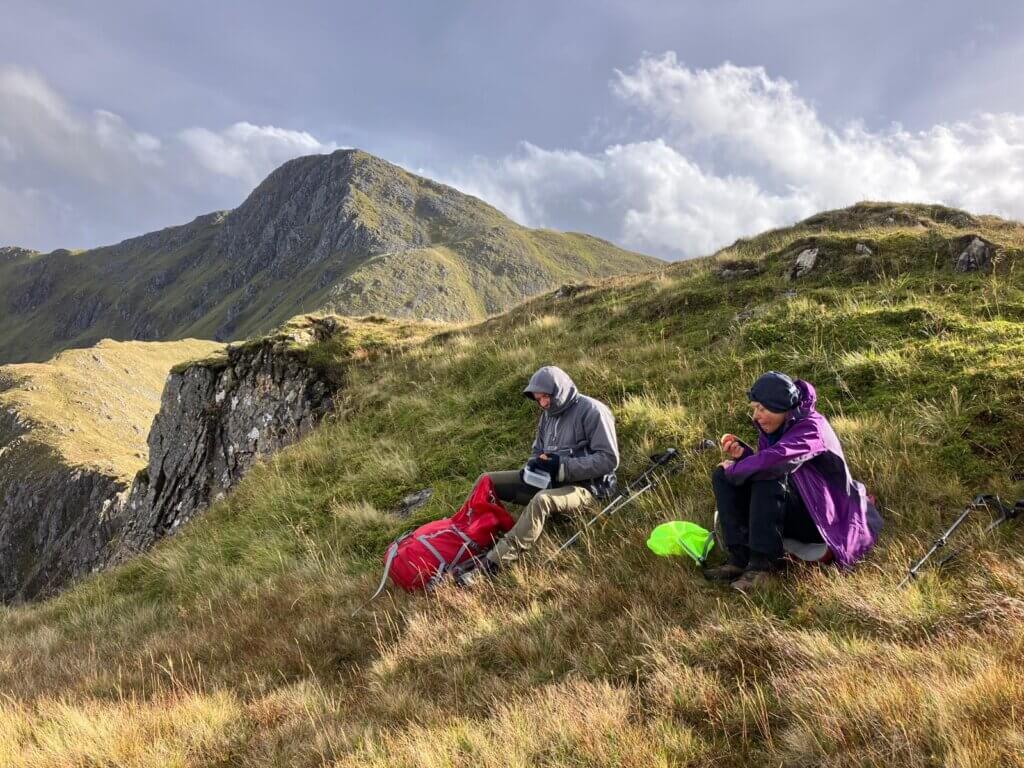
In many North American parks, mileage is the primary planning metric. If your group can comfortably hike 10–12 miles on established trails, the assumption is that they’ll be fine elsewhere.
In Scotland, navigation skill often matters more than distance.
Why?
Landmarks can disappear quickly in fog
Trails may not be visible from one section to the next
GPS and phone signals are unreliable
Route choices must be adjusted constantly based on terrain and conditions
This doesn’t mean Scottish hiking is technical — but it is engaged. You’re always reading the landscape.
For group leaders, this adds mental load:
Choosing safe lines across open ground
Adjusting pace in poor visibility
Making conservative decisions without obvious trail cues
In many parts of Western North America, weather is something you work around. Storms come and go. Forecasts are reliable enough to plan with confidence.
In Scotland, weather is part of the landscape.
It’s normal to experience:
Wind on summits year-round
Light rain or mist for extended periods
Rapid changes in visibility
Cool temperatures even in summer
Fog, wind, and wet ground are not exceptional conditions — they are expected.
The most successful Scottish hiking groups aren’t the ones who avoid poor weather, but the ones who plan with flexibility:
Shorter distances
Lower-level alternatives
Routes chosen on the day, not weeks in advance
For many North American hikers, wilderness is defined by distance and scale: long approaches, big trail networks, and a clear sense that once you’re deep in a National Park, you are far from roads, towns, or services.
In Scotland, wilderness works differently — and this is where experienced North American groups are often surprised.
You can be:
Two hours into a hike
Only 6–8 miles from your start point
Technically less than five miles from a public road
…and still be walking across pathless ground, with no visible trail, no signage, no buildings, and no other people in sight.
What creates the sense of wilderness in Scotland isn’t distance — it’s exposure and engagement.
No constructed trail:
You may be moving across grass, rock, heather, or peat rather than a maintained path. Footing is uneven and often wet, which slows progress and increases fatigue.
No waymarking or junction signs:
Route choices are made by reading the land — contour lines, slope angles, drainage lines — rather than following posted directions.
Weather that limits visibility:
Low cloud can reduce visibility to 30–50 metres, even in summer. When this happens, navigation becomes continuous rather than occasional.
Commitment without obvious exit points:
Once you’re on a ridge or plateau, descent options may be limited by terrain, wind direction, or group ability — even though civilisation is geographically nearby.
Little or no phone signal:
You cannot rely on real-time weather updates or easy communication, so decisions must be made confidently and conservatively.
For a group organiser, this means the feeling of remoteness comes not from how far you’ve gone, but from how fully you are responsible for the next decision — route, pace, safety, and timing — at every stage of the day.
That’s why groups often describe Scottish hiking as more mentally demanding than expected, even when daily distances are shorter and elevation gain looks modest on paper.
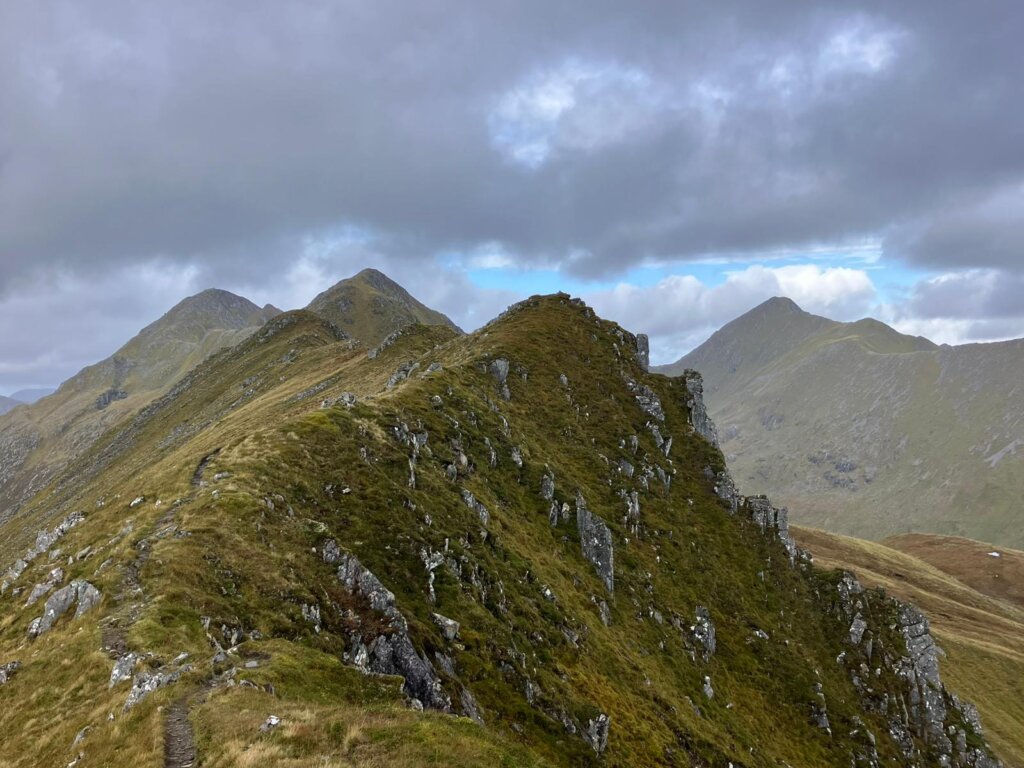
If you’re leading a group that’s confident, capable, and experienced in North American hiking environments, Scotland doesn’t require you to lower your ambitions — but it does require you to reframe expectations.
Successful groups:
Plan shorter, more varied days
Value navigation and local knowledge over mileage
Build in weather flexibility
Allow leaders to focus on experience, not constant decision-making
This is why many North American group organisers choose to work with local experts for Scottish trips — not because the hiking is beyond their ability, but because the context is unfamiliar.
Walking in a country which isn’t your own always has challenges – many of which might not be considerations when you’re at home. For starters the maps are different. The maps in the UK are very good quality – you need to look out for OS (Ordnance Survey) maps. There is an app but we wouldn’t recommend relying exclusively on your device. You can get waterproof paper maps which would be a good backup for a leader/organiser.
On top of this, as we’ve mentioned we like to keep our “wilderness” in Scotland relatively pristine so you’ll find fewer paths and a noticeable lack of signposts (our European neighbours find this cause for comment too).
If you’re really keen to experience the wildlife, understand the geology, know the local fauna – then working with a local expert would really benefit your group.
Winter transforms the Scottish mountains. Familiar paths can quickly become buried, and repeated thaw–freeze cycles can turn an easy summer path into something extremely treacherous. A simple slip can have serious consequences.
For anyone planning winter walking in the Highlands, knowing how to use your crampons and ice axe — and how to carry them properly — is a core part of staying safe.
At Scot Mountain Holidays, we spend a lot of time helping guests build confidence in winter conditions. This blog is not exhaustive, but it outlines some key principles and opinions from our guide, Andy, based on many years of winter experience in the Scottish mountains.
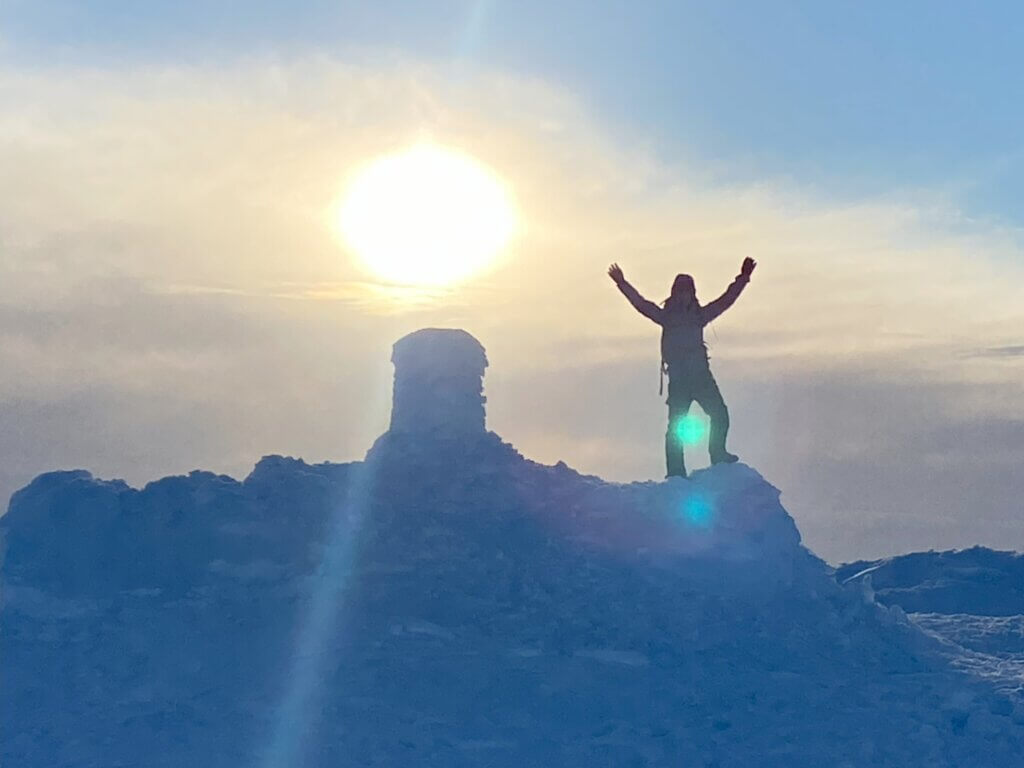
Winter Boots:
dequately stiff winter boots are the foundation of safe winter movement. In many ways, the boot is just as important a tool as your ice axe.
Stiffness is vital because it:
ensures crampons can be fitted securely
allows you to concentrate body weight and force through specific areas of the boot
A proper winter mountaineering boot enables efficient execution of step-kicking and crampon techniques. Even without consciously employing these techniques, you will notice that your footing feels significantly more secure on snow-covered terrain.
Winter boots also provide better insulation, improved ankle support, and — critically — the uppers are robust enough to allow crampon straps to be tightened properly without restricting circulation.
B1 winter boots are generally not sufficiently stiff for Scottish winter mountain conditions. When front-pointing, the toe can bend upwards and the heel drop, causing you to lose purchase and potentially fall out of the step.
Underfoot conditions in Scotland’s winter mountains are often more challenging than summer glacier crossings in the Alps or Himalaya. Even a fully rigid B3 boot rarely feels excessive on a hill walk in full winter conditions.
Crampons:
Crampons are strong pieces of equipment, but they are not indestructible. Importantly, stiffness should come from the boot, not the crampon.
An inadequately stiff boot can subject a crampon to repeated cyclical stress over the course of a day, increasing the risk of fatigue or failure. Always choose a crampon that is compatible with your boot — the stiffer the boot, the wider the range of compatible crampon styles.
Ice axe:
Putting aside technical climbing axes, Andy does not favour long-shafted walking axes. While there are occasions where a longer shaft is useful, these are generally outweighed by the disadvantages.
Shaft length is always a compromise. A length of 50–55cm suits most winter walking situations well.
An ice axe leash should not be permanently attached. There have been incidents where people have sustained head and upper-body injuries after losing grip of an axe during a slide, with the axe flailing at the end of a fixed leash.
A simple and safer solution is to put a loop in the end of the leash and larks-foot it through the hole in the head of the axe only when a leash is needed.
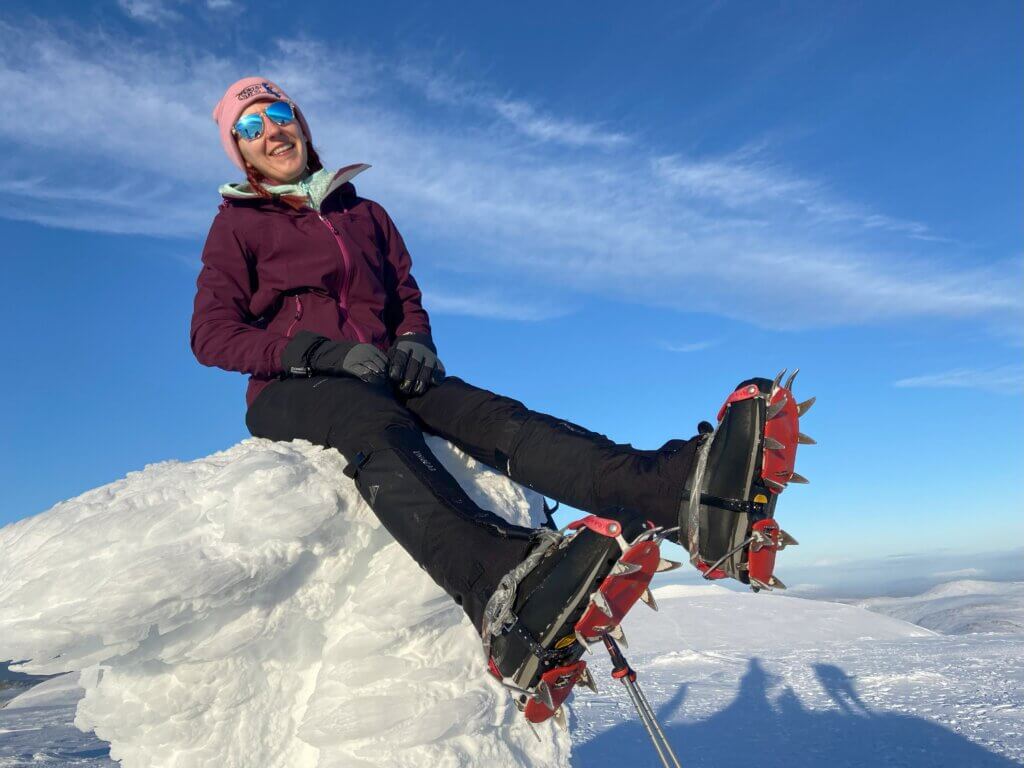
Check out the crampons – New Year Winter Walking 2022 – 2023
When not in use, your ice axe should be carried securely but remain quickly accessible.
The conventional rucksack attachment — threading the shaft through the axe loop and securing it with the pick pointing upwards — is not ideal. This often leaves the pick exposed at an aggressive angle.
Preferably, the axe should be stowed under the side compression straps of the pack, with the head uppermost and the pick pointing downwards and away from the shoulder.
It is also possible to carry the axe slipped behind a shoulder strap or between your back and the rucksack. This allows rapid deployment when you reach snow without stopping to remove your pack.
Once on snow or ice-covered slopes, the axe should usually be carried in the hand. Hold it by the head with the pick pointing backwards and the adze forwards.
When traversing a slope, always carry the axe in the uphill hand, enabling self-belay should you lose your footing. Zig-zagging uphill requires frequent hand changes. A permanently attached leash would significantly reduce speed and efficiency in these situations.
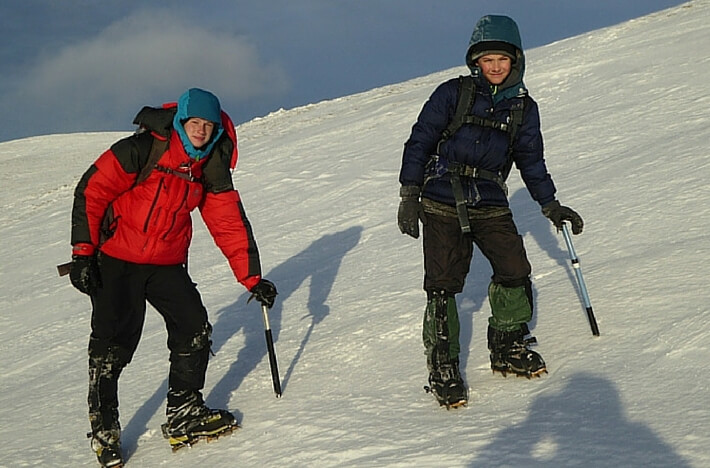
5 day and 2 day winter skills courses in the Cairngorms
At Scot Mountain Holidays, Andy is very clear about how crampons should be carried.
We do not recommend carrying crampons on the outside of a rucksack unless there is an integral, secure crampon pouch. Crampons are heavy and can easily work loose. Unprotected on the outside of a pack, they can also be hazardous — particularly in high winds or crowded environments.
Instead, crampons should be stored in a sturdy crampon bag and carried inside your rucksack. This keeps them secure, protects your pack and other equipment, and prevents accidental loss on the hill or injury to other people.
In winter conditions, place the crampon bag near the top of your pack so it can be accessed quickly without unpacking everything else.
Always adjust and fit your crampons to your boots at home. You should be completely familiar with the process before heading into winter conditions, as cold hands and strong winds make everything more difficult.
Do not put your crampons on while sitting down. You need your full body weight on your feet to ensure proper sole-to-crampon contact.
Choose a flat, stable place — firm snow or a rock platform. Lay the crampons on the ground with all straps clear, step into the crampon, and secure it carefully. Do not wait until you are already on steep or icy ground before fitting them.
General winter walking technique is straightforward but requires attention. A slightly wider gait is advisable, and you must lift your feet properly to avoid catching a crampon point.
As slopes steepen, more specific techniques are required. These skills take practice and should ideally be learned and refreshed in appropriate conditions with experienced guidance.
Winter days are short, so plan conservatively and allow more time than you would in summer. Check mountain weather forecasts and ground conditions carefully, and be prepared to change plans if conditions are unsuitable.
Practise using your winter equipment before your trip, and ensure everyone in your group understands when and how crampons and ice axes should be used.
Safe winter hill walking represents a genuine step up from summer walking — an expansion of skills and judgement rather than a move into something extreme.
If you are considering developing your winter walking skills, our winter courses and guided winter walking trips are designed to build confidence from the ground up.
On all Scot Mountain Holidays winter courses, we revisit core winter skills, including how to carry and use crampons and an ice axe. Every introduction to winter skills begins with a full equipment check, with Andy personally checking crampon fit and compatibility with boots.
He explains how and why adjustments are made, ensuring guests understand not just what works, but why. This attention to detail helps develop good habits early, avoids common mistakes, and builds long-term confidence in winter terrain.
Good habits learned early make winter walking safer, more enjoyable and far more rewarding.
If you are planning winter walking in Scotland after Christmas and would value experienced guidance while developing these skills, we would be delighted to help you prepare.
Frequently asked questions
Yes, the horses are very comfortable around people and are accustomed to us walking with them. They also work as riding ponies so are very used to being around people.
Make sure you let your guide know if there are any issues at all during the walk but there is really no reason to feel at all uneasy if you are comfortable in the outdoors. There are no large predators in Scotland and there is something very comforting about walking in the company of the ponies whose rhythem is very calming.
There is no need for guests to wear helmets as you will not be riding the ponies. You will be walking as a group between the 2 ponies who will be carrying the bags and camping equipment.
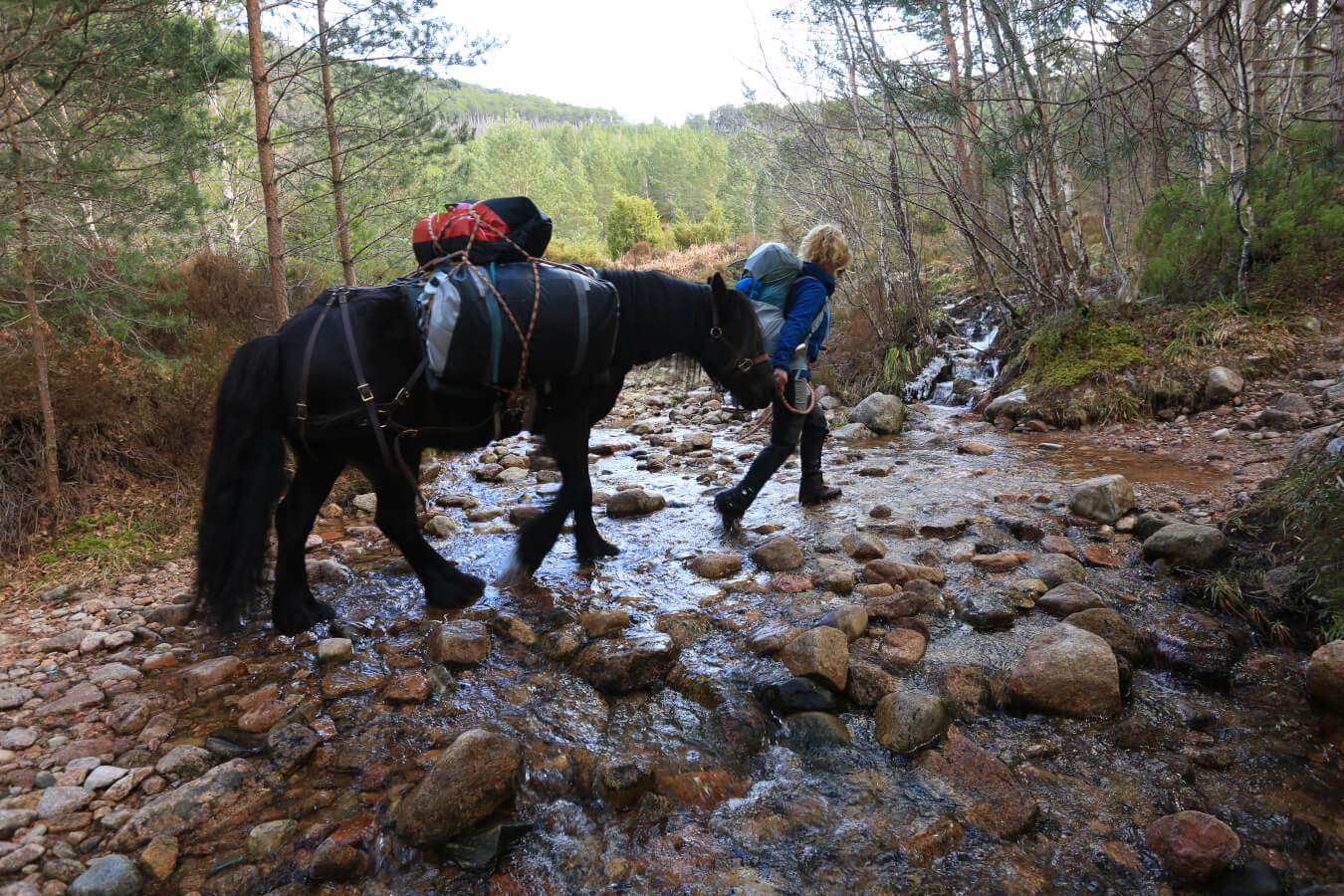
No. This is a relatively gentle to moderately strenuous hiking and wild camping (hot tenting) trip accompanied by pack ponies Foxy and Maggie. The pones carry all the camping gear leaving you to carry little more than a day rucksack plus a change of clothing.
To offer this trip at the advertised price we need at least 2 people to book. If you are a single person trying to book on a trip that already has guests on it please just simply phone us (+44 1479 831 331) and we will book you on the trip. If you are a single person trying to book on a trip that as yet has no one else booked on please call us on the above number and we can put you on a waiting list.
We have made exceptions in the past but we do try to minimise the disturbance to the wildlife. Odours left by dogs in the natural environment can affect the wildlife. Also barking dogs very much increase the level of disturbance as well as there being a question mark with respect to how they behave around horses.
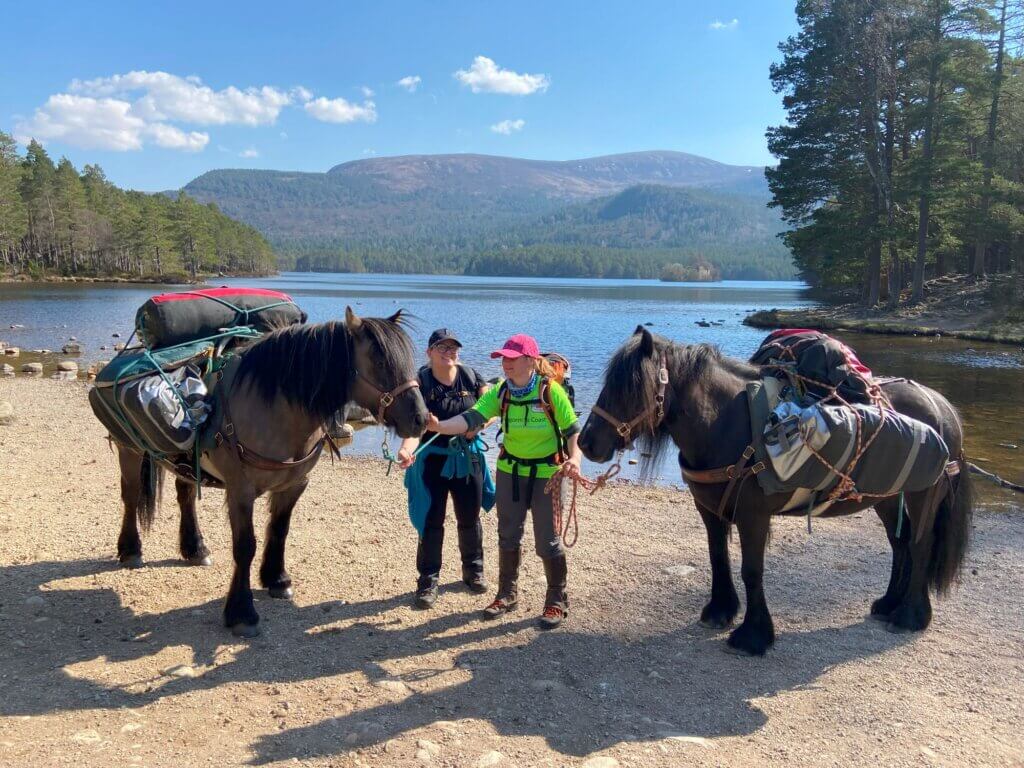
No. This is a hiking trip not a riding holiday. We may have guests on the trip who are not necessarily used to being around horses plus there would be a question mark as to whether the horses would get on with our ponies. Sections of the route in and out to our campsite are not suitable for riding due to overhanging branches. We also camp in any environmentally sensitive area so again want to minimise the disturbance.
As the saying goes: ” there’s no such thing as bad weather, just the wrong clothing.”
No, we have deliberately created a trip which can run in most kinds of weather without being dangerous. We can change the routes and activities a wee bit. The main thing is that everyone will remain safe and cosy.
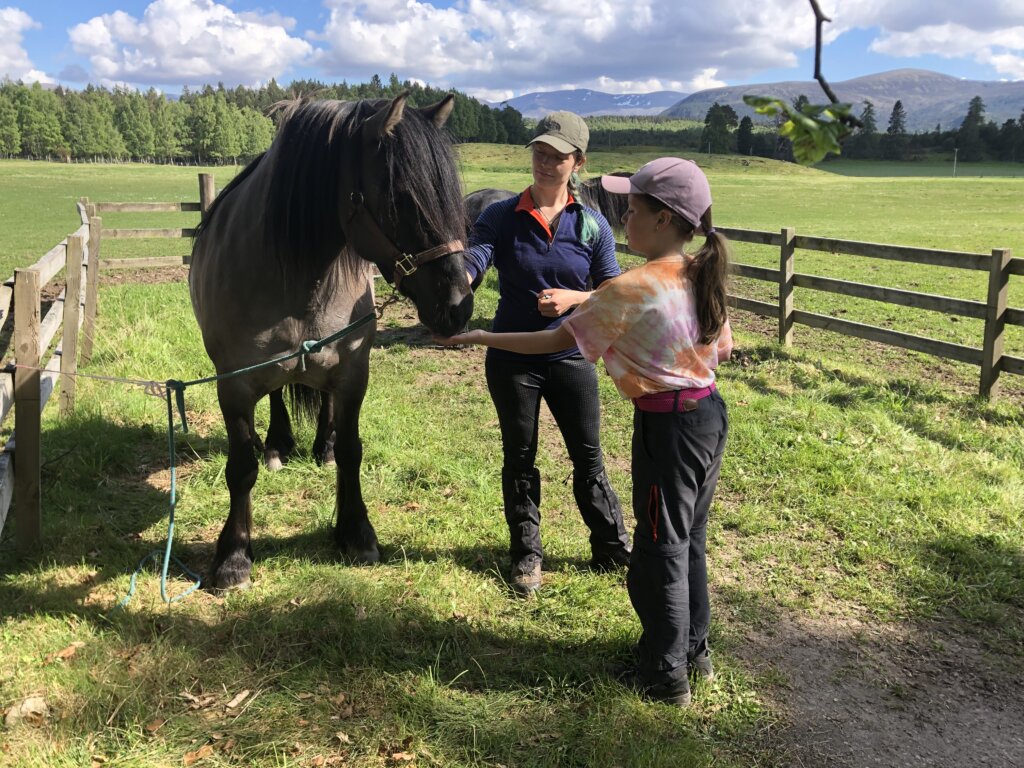
Interaction with Horses:
Can I pet or interact with the horses before the walk?
Yes, you can pet the horses.
How do I approach a horse safely?
Ask the guides about the best way to approach the ponies, but try to make sure that you don’t walk behind them, and don’t approach them where they can’t see you as this may make them nervous.
Are there specific rules for feeding or treating the horses during the walk?
Always check with the pony handlers who usually carry mints as treats for the ponies during the walk. They will treat themselves a lot as they walk though. As with most “ruminant” animals, they need to eat a lot to produce enough energy for the day.
Experience Level:
Do I need any prior experience with horses to participate?
You don’t need any prior experience with horses or ponies to take part in the trip, but it is a good idea to know if you are comfortable around them before you sign up. The handlers will manage the ponies throughout the trip but ponie are sensitive to human emotions so always try to be calm and friendly when around them.
Are the walks suitable for beginners, or are they more advanced?
Trail Information:
What kind of trails will we be walking on?
The trails are mostly very well graded and suitable for all abilities but there are short sections of very rough going, especially close to our campsite – which keeps it private! You will need to wear full walking boots to keep your feet dry and your ankles well protected. Comprehensive route details are provided in the trip information including the stats on the length of walks and anticipated ascent etc.
Weather Considerations:
What happens if the weather is inclement?
Our trips are carefully scheduled in periods where the weather is traditionally benign. Despite the popular belief that our weather in the UK is unpredictable; there are periods when you can expect dry periods and also periods when we’d anticipate more precipitation.
Group Size and Guides:
How large are the walking groups, and is there a guide accompanying us?
Groups are small; no more than 8 people.
This is a guided trip. There will be a guide on all activities.
Physical Requirements:
Is there a weight limit for participants?
There is no weight limit for the people but there is a weight consideration for the bags the ponies are carrying.
Do I need to be physically fit to walk with horses?
You do need to be able to walk up to 10km without feeling under too much strain. If you are at all worried about the walk in, or walking during the trip then please don’t hesitate to give Andy a call. There is some rough walking immediately before the camp site because it is a true wild camp and ont on a prepared campsite.
Booking and Logistics:
How do I book a walking experience with horses?
You should be able to book directly on the website, but if you are looking for a private departure for your family or group of friends, please do contact us first with your preferred dates so we can put them aside for you.
What is the cancellation policy?
We charge a 25% deposit which is non-refundable. For full terms and conditions please check here.
Are there age restrictions for participants?
We don’t really recommend the trip for children under 8 or anyone with mobility issues. However, you know your capabilities best, so if you are any doubt just give us a call or send us a message.
Photography and Personal Items:
Can I take photographs during the walk?
Absolutely. Do take as many photos as you want. We’ll set up a WhataApp group and you’ll be able to share your photos with everyone in the group and us (if you want).
Is it advisable to bring personal items like water bottles or snacks?
It is advisable to bring your own favourite water bottle but we’ll provide plenty of snacks in your packed lunches (though usually not sweeties). There will be chocolate bars, sandwiches and other snacks and you will receive a request to let us know what your favourite snacks are so we can accommodate as many as we can.
It is a good idea to limit your personal possessions as much as possible as you could well end up carrying the majority of the extras. The ponies only have so much capacity and will be carrying all the heavy stuff like the tent, chairs, stove etc so you are comfortable at camp. You should have space for a pack of cards or Bananagrams though!
Post-Walk Care:
Are there facilities for washing up or cleaning after the walk?
You’ll be returning to Fraoch Lodge at the end of the trip to the room you had before you set off. You’ll have access to all the facilities at the Lodge and there are both a toilet and a shower tent at camp; so you don’t have to return smelly at all.
Can we spend time with the horses after the walk?
Absolutely – though the ponies are always keen to catch up with their mates in the herd at the end of the trip and may not want to hang around with us. At camp though you can spend time with both ponies.
Now’s a great time to pause and reflect on last year’s walks. Which routes gave you a sense of calm and connection? Which felt hurried, stressful, or under-prepared? Maybe there were days when weather, gear, or logistics cut a walk short — or others when you underestimated how much time you needed.
By thinking back — asking what worked, what didn’t, and what you’d love to improve — you’ll be in a much stronger place to set walking goals that are both inspiring and achievable.
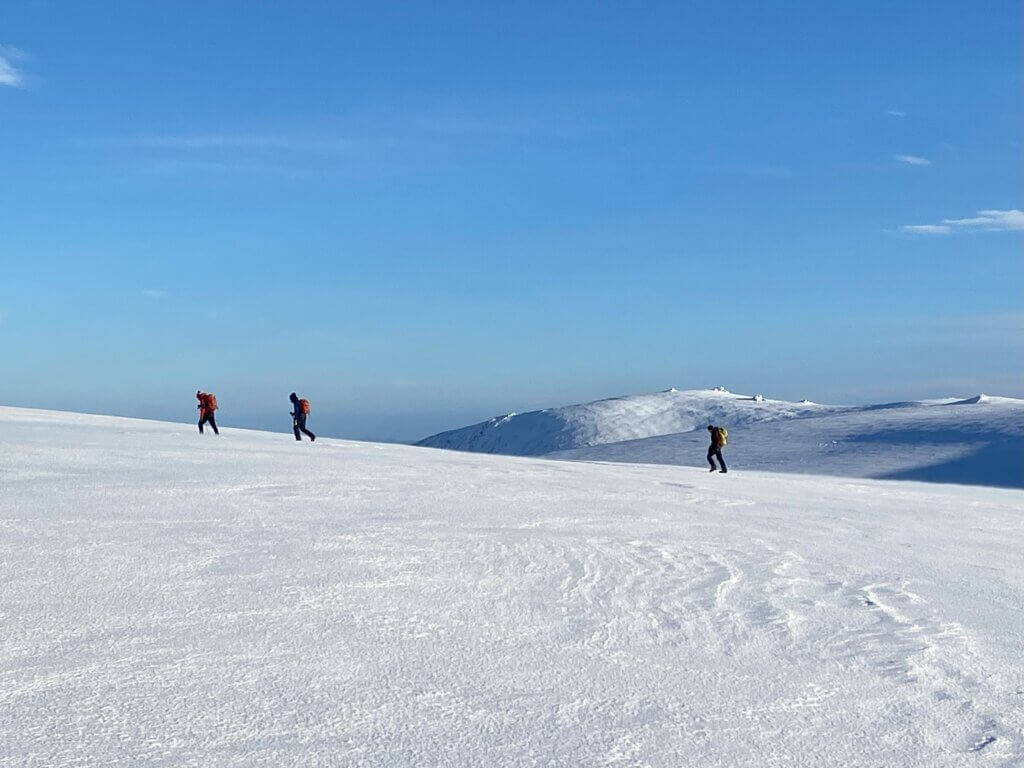
What a view! – New Year Winter Walking 2022 – 2023
Scotland is a popular destination for outdoor-focused holidays, and data highlights strong interest in hillwalking, hiking and nature-based activities. Early booking gives you the best choice — particularly for small lodges like Fraoch Lodge, or peak-week guided walking.
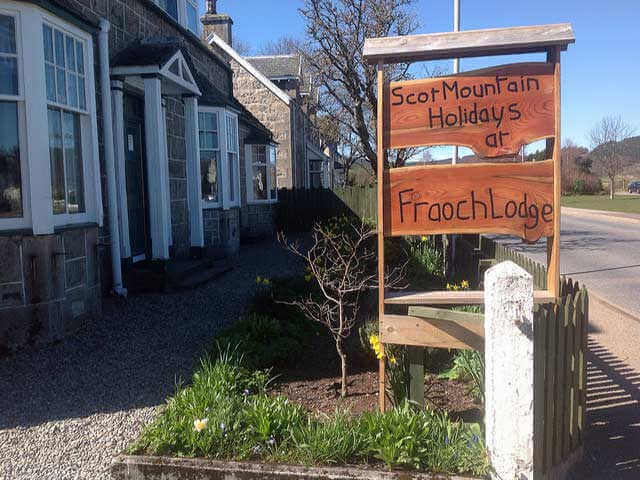
Relax and unwind in the heart of the Highlands of Scotland
Walking regularly brings measurable health benefits, and building up gradually helps avoid injury. A structured plan also makes longer or steeper routes feel far more achievable.
Early planning gives you time to check kit, test boots, refine routes, and handle travel arrangements — all without last-minute stress.
Industry insights show rising interest in slower, restorative travel that emphasises nature, quiet and wellbeing. This aligns closely with walking holidays and time spent in small, nature-rich areas like the Cairngorms.
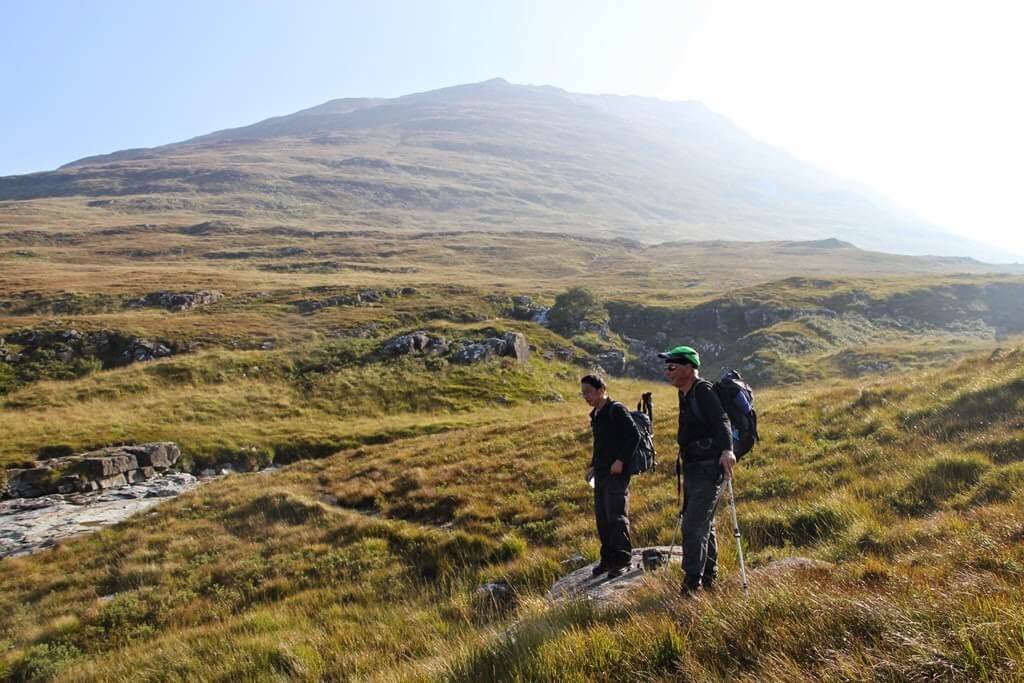
Recent VisitScotland data shows walking, hiking and hillwalking continue to be the top activities for visitors, with more people exploring forests, coastal routes and accessible low-level paths. Families and older travellers, especially, are seeking gentle but immersive itineraries.
Several travel-behaviour reports indicate that UK travellers are booking earlier — often several months ahead — especially for meaningful, special-interest trips. Walking holidays fit that pattern, making early planning more useful than ever.
You don’t need every detail locked in — just a few simple steps can turn vague hopes into real, enjoyable adventures.
Review last year’s walks
Set a clear walking goal for 2026
Pick tentative dates
Book accommodation (Fraoch Lodge, huts, transfers, guiding)
Start your fitness build-up
Test gear on short walks
Sketch out your route options
Consider family or group needs (pace, distances, weather flexibility)
Finalise logistics
Confirm transport
Review progress toward fitness goals
Prepare your packing lists
Enjoy — confident, prepared, well-equipped and ready for the experience
Note what felt good
Note what you’d change
Start thinking about next year’s goals
The best walking holidays don’t happen by accident — they’re created through a mix of dreaming, early decisions, and gentle preparation. Whether you’re longing for peaceful Highland mornings, a family adventure, or a personal challenge, planning ahead gives you more choice, more calm, and more enjoyment.
When most people picture a walking holiday, they imagine the trails: winding routes through ancient forests, high plateaus brushed with heather, summits opening onto vast Highland skylines. Yet what often transforms a good walk into a full on holiday is what happens beyond the trail — in the meals that refuel you, the spaces that welcome you back, and the small touches of comfort that help your body recover for another day outdoors.
At Scot Mountain Holidays, we’ve seen again and again how the right food and accommodation don’t just support a walking holiday — they elevate it.
After hours on the hill, food isn’t a luxury — it’s fuel, comfort, and pleasure wrapped into one. Tired walkers need meals that genuinely feed the body but also celebrate where they are. That’s why our menus at Fraoch Lodge draw deeply from the Highlands: fresh local vegetables, regional cheeses, berries in summer, slow-cooked stews in cooler months, and homemade breads and cakes that feel like a reward after enduring some of the weather the gods throw at you here in the Highlands.
Well-fed walkers recover more quickly, sleep better, and start the next day with more energy. It’s amazing how often our guests tell us the meals were one of the unexpected highlights of their trip — hearty, flavourful, nourishing, and reflective of the landscape they’ve been exploring.
We design our meals specifically with walkers in mind. After a day on the hill, the body needs warmth, calories, hydration, and colour — and that’s exactly what appears on the table.
Some of our regular staples include:
Hearty homemade soups — carrot and ginger, lentil and spinach, creamy celeriac, or a rustic vegetable broth made from whatever’s freshest that week. Perfect as a warming starter or a lighter lunch on an easier day.
Seasonal produce-led mains — think roasted vegetables with herb-crusted chicken, slow-cooked beef with root veg, tagines packed with chickpeas and apricots, or Thai-style curries that bring heat and vibrancy.
Freshly baked breads and cakes — ideal for filling the gaps before dinner or rewarding yourself after a long, wet descent.
Balanced, colourful plates — plenty of protein, good carbs, bright flavours and textures, and always with the aim of restoring tired legs and lifting spirits.
We also cater for a wide range of dietary needs. Vegetarian, vegan, dairy-free, gluten-free — whatever your requirements, you won’t be getting the “afterthought option.” Every plate gets the same care and creativity. Check out the recipes our guests have asked us to share with them.

Recovery isn’t just about food. It’s also about the environment you return to after a long day.
At Fraoch Lodge, we’ve shaped the space around what walkers actually need:
Warm, comfortable beds that invite deep rest — the kind where you wake up ready to stride out again.
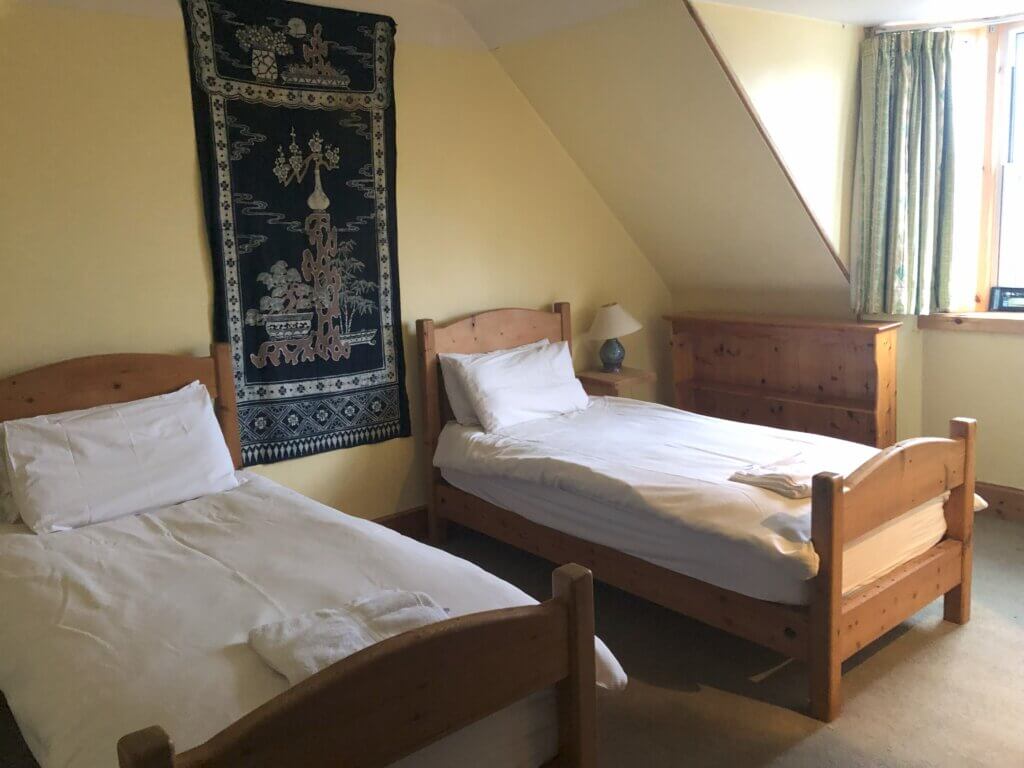
A reliable drying room that quietly works its magic on sodden boots, waterproofs and gloves. A day that began in the rain doesn’t have to carry into the next morning.

Dry clothes & boots for the morngin
Cosy communal spaces — the wood-burner lit, tea and cake waiting, and room to spread out maps, compare routes, chat with fellow walkers or simply unwind with a book.
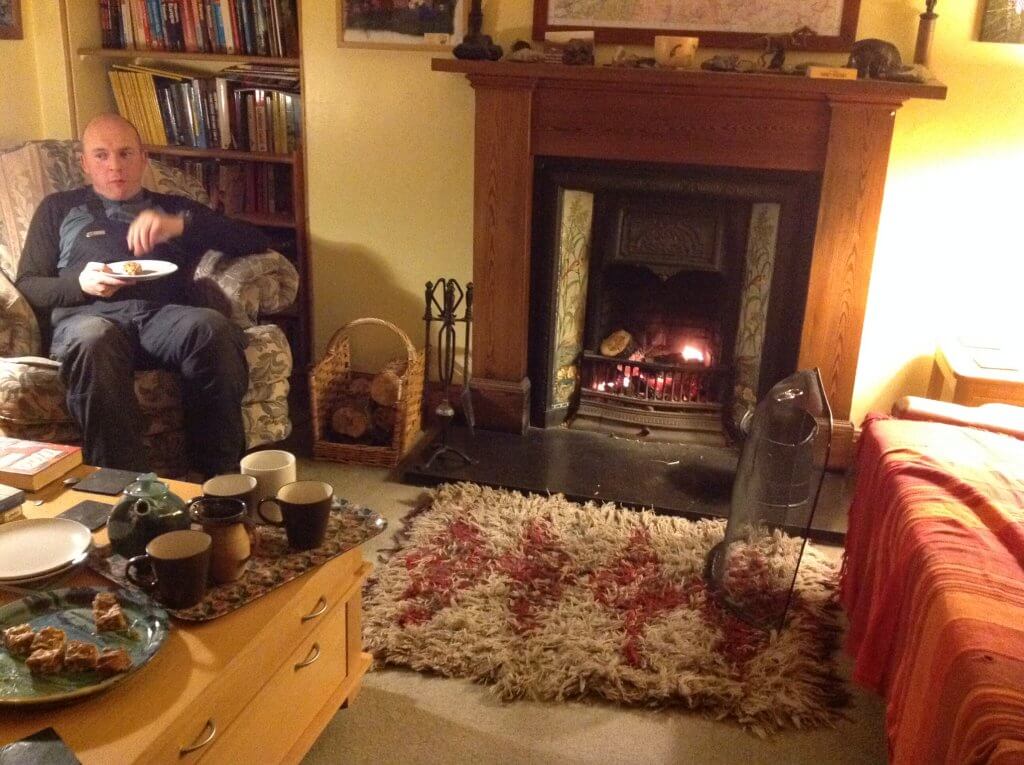
Everyone loves an open fire, almost as much entertainment as the TV
Outdoor areas to enjoy in summer — perfect for a post-walk drink in the fresh Highland air.
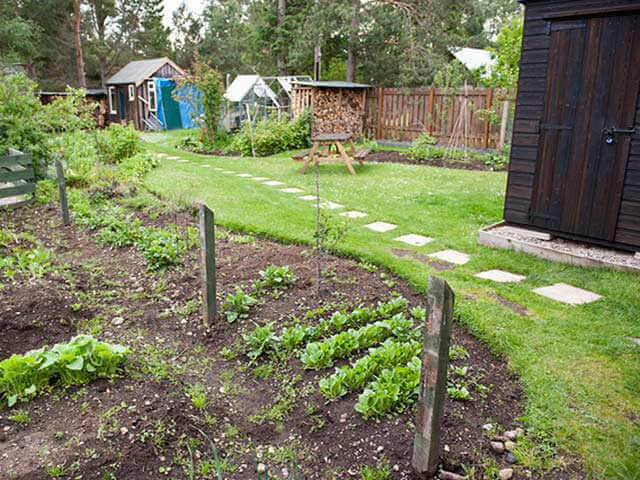
Our edible garden behind Fraoch Lodge
Comfort isn’t indulgence. It’s part of the rhythm that allows you to fully enjoy the landscape day after day.
There’s a rhythm to running a walking lodge, a kind of choreography that unfolds each afternoon.
While you’re on the hill:
Soup simmers on the stove, ready to welcome you home.
Kit is checked, drying racks cleared, and everything reset for incoming gear.
Bread or cake is in the oven, offering that irresistible “just baked” aroma as soon as you step inside.
Dinner prep is underway, with vegetables chopped, sauces stirred, and the menu shaped around the weather, the season, and the energy needs of the group.

Home made souffles served with salad fresh from the garden
We keep an eye on the forecast, adjust plans and meals, and ensure the spaces you rely on — the sitting room, the drying room, the dining table — are all ready for your return. Our goal is simple: you focus on the walking; we handle everything else.
The Cairngorms will give you the views, the challenge, the exhilaration of moving through real wilderness. But it’s the food, comfort and care waiting at the end of each day that give your body and mind the chance to fully absorb it.
At Fraoch Lodge, we’re here to make sure your walking holiday isn’t just memorable — it’s restorative, flavourful, and deeply enjoyable from the first step to the last bite.
The Cairngorms are special. Anyone who has walked through ancient Caledonian pines; been lucky enough to spot a golden eagle, a capercaillie, a crested tit or a red squirrel; discovered our wild larder; or admired the stunning open views of peaks stretching as far as the eye can see definitely appreciate this. At Scot Mountain Holidays, we feel a deep responsibility to protect these landscapes—not only for today’s walkers, but for the generations who will follow.
Caring for the land isn’t a slogan we pin to the wall; it’s woven into everything we do, from how we run Fraoch Lodge to how we guide you on the hill. Here’s a look at the practical steps behind our “walk gently” ethos, and how these choices make your time here richer and more meaningful.
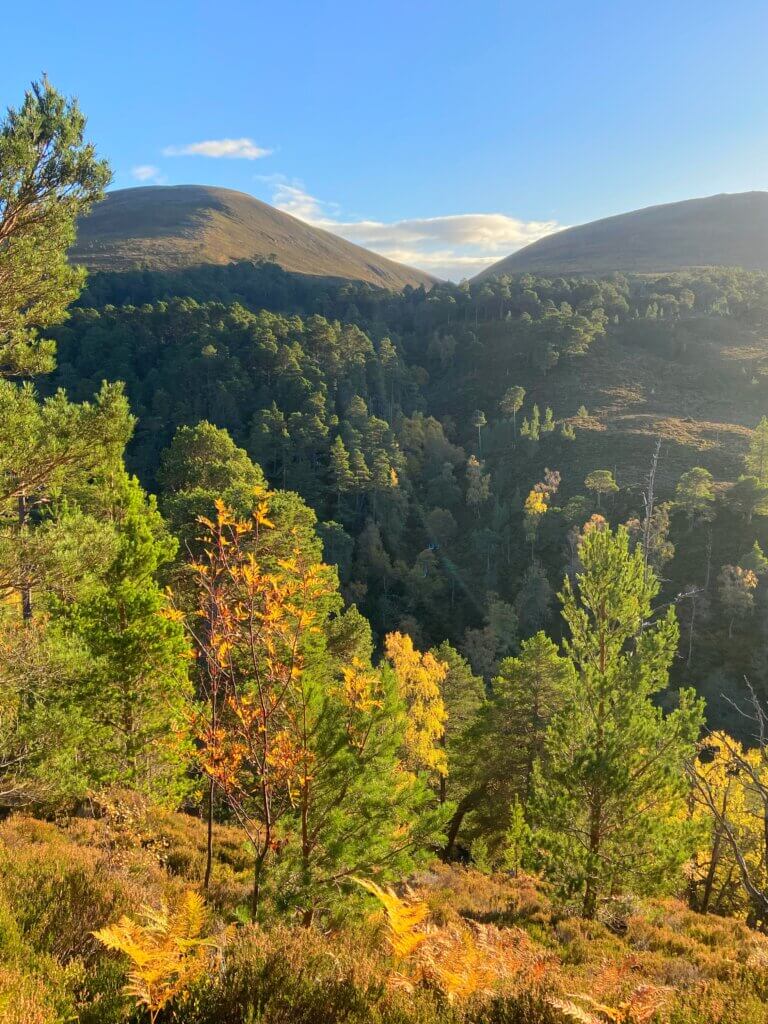
We strive to keep our footprint as light as possible. At Fraoch Lodge, composting, recycling, and smart menu planning ensure we minimise food waste. Purchasing in bulk, consciously choosing products with reduced packaging, and reusing wherever possible also helps us keep our waste stream small.
When we take the business mobile (on our trips to other regions in the Highlands, we take our composting ability with us as we’ve invested in a food waste recycler which dries, grinds and compacts all our food waste to be used in our home garden when we return).
These aren’t grand gestures—they’re simple, thoughtful routines that collectively make a big difference over the course of a busy walking season.
Food is a big part of the Scot Mountain Holidays experience. Sourcing locally isn’t just good for the planet: it supports small farms, reduces food miles, and brings the freshest possible produce to the table.
Depending on the season, you might enjoy berries from nearby growers, meats from Highland producers, herbs from our garden, and homemade breads or preserves. Many guests tell us that meals at Fraoch Lodge become some of their standout memories—and the taste of place is a major reason why.
We invest in local meat producers like Lynbreck Croft and the Cairngorms Connect partnership. Their meat boxes will sell out in under 10 minutes there’s such a demand for good quality, wild meat which has not been medicated.

Spiced beef stuffed lettuce leaves
Our guiding philosophy is rooted in respect for the landscape. We choose routes to avoid erosion, guide groups at sizes that minimise impact, and adapt plans when we know a certain area needs a rest or is particularly sensitive during breeding seasons. We work as closely as we can with the RSPB and local estates to make sure we are working to achieve the same targets for the environment.
By moving with awareness, we can enjoy the wildness without contributing to its wear.
Many visitors are already nature-first in their thinking, but Scotland’s landscapes—especially the Cairngorms—have their own particular sensitivities. We believe education enhances the outdoor experience, so we always take time to share knowledge that helps you walk more mindfully.
We encourage walkers to use established paths where they exist, helping reduce erosion and protect surrounding vegetation. When paths don’t exist, we guide you on durable terrain—gravel, rock, short grass—so fragile mosses and heather aren’t trampled.
Our guests often come hoping to spot red squirrels, ptarmigan, mountain hare, or the elusive capercaillie. We support those opportunities while emphasising the importance of giving animals space, particularly during nesting or winter stress periods.
Even small acts—like pausing quietly instead of approaching for a better photo—help keep wildlife wild.
From carrying out litter (including the tiny bits) to responsible toileting in remote areas, we share practical Leave No Trace guidance throughout our trips. These habits not only protect the land, they help ensure the next walker feels the same sense of wonder you did.
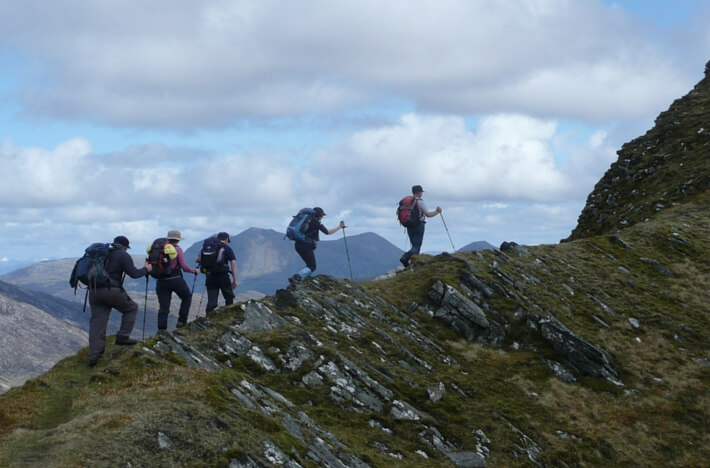
Guided walking in Knoydart
Caring for the Cairngorms extends beyond land management—it’s about supporting the community that helps steward it.
We work closely with local producers, accommodation partners, artisan makers, guides, and activity providers. Whether it’s sourcing ingredients for dinner, collaborating on outdoor skills training, or recommending local shops, we aim to keep tourism income circulating within the region.
By choosing to holiday with us, you’re contributing directly to the resilience of small Highland businesses.
Protecting Scotland’s wild places isn’t just the right thing to do; it profoundly enriches the walking experience. When paths are healthy, wildlife thrives, and communities are supported, the landscape feels more alive—and your connection to it deepens.
Walking gently allows space for discovery: a rare plant, a quiet glen, the sudden sweep of views when the mist lifts. It ensures the magic remains intact for you, and for those who will walk these hills long after we’re gone.
At Scot Mountain Holidays, our hope is that you leave not just refreshed and inspired, but also more connected to the environment that hosted you. Together, step by gentle step, we can keep Scotland’s wild places truly wild.
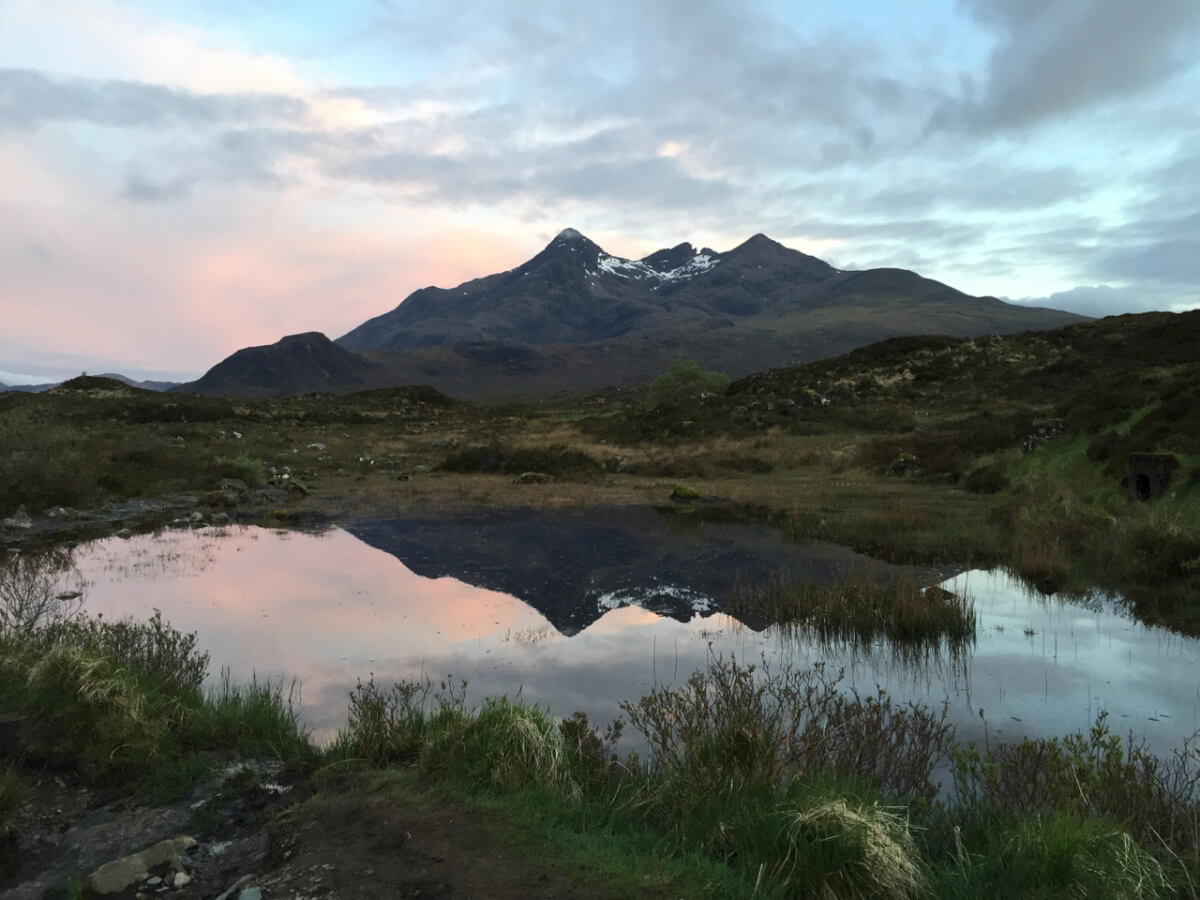
Winter in the Scottish Highlands offers some of the most extraordinary light of the year. With the sun hanging low in the sky and darkness arriving early, the season transforms the Cairngorms into a photographer’s dream — and a walker’s paradise for those who love quiet trails and dramatic skies.
In December, daylight in the Cairngorms lasts only about 6½ hours — roughly from 8:45 a.m. to 3:15 p.m. This low sun angle gives rise to long shadows and a beautifully soft light that seems to paint the hills in shades of gold, rose, and icy blue.
Because the sun never climbs higher than about 12° above the horizon (compared to over 50° in summer), even midday light has the warm, angled quality photographers call the “golden hour.”
Best sunrise spots: Loch Morlich (for reflections of the Cairngorm plateau), Loch an Eilein (with its castle island framed by winter mist), and the summit of Meall a’ Bhuachaille (a short, rewarding climb near Glenmore).
Best sunset spots: The top of Craigellachie Nature Reserve above Aviemore, the shores of Loch Insh, or the moorlands around Dorback for open, west-facing views.

Sunset at Loch Morlich
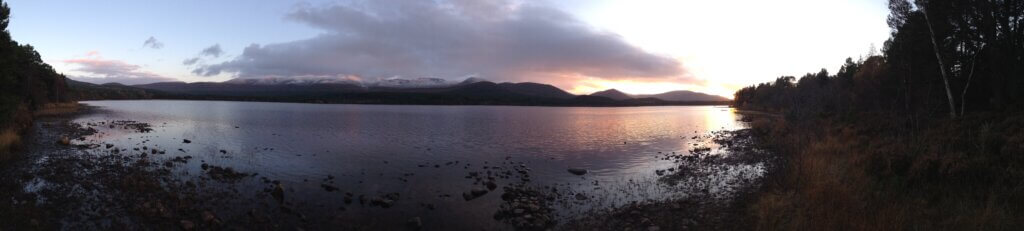
Once the sun dips below the horizon, the show continues overhead. The Cairngorms are part of a Dark Sky Park, one of the best stargazing areas in northern Europe. In winter, when skies are clearest, you can often see the Milky Way arching across the sky with the naked eye.
Best viewing months: November to February, when nights are longest and atmospheric moisture is lowest.
Where to go:
Loch Morlich Beach — wide open views with easy access from Glenmore.
Tomintoul & Glenlivet Dark Sky Park — designated observation areas with information panels and minimal light pollution.
Fraoch Lodge, Boat of Garten — step outside after dinner; on clear nights, Orion, Cassiopeia and the Pleiades are easily visible, and occasional aurora borealis displays can appear on the northern horizon.
The northern lights are never guaranteed, but Scotland averages around 15–20 aurora sightings per year visible from the Cairngorms area — particularly in late autumn and midwinter.
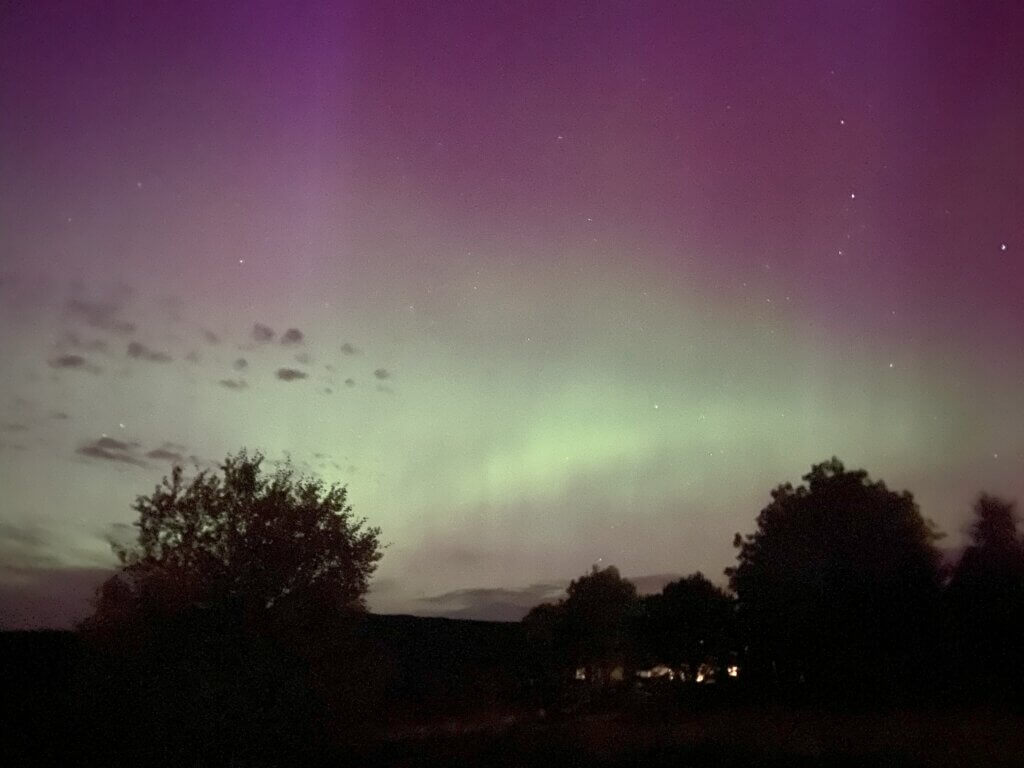
Use the low sun to your advantage. Light at this angle emphasises texture — perfect for snow-covered pines, frozen lochs, and moorland grasses.
Golden hours are longer. Around 45–60 minutes at sunrise and sunset, compared to 15–20 minutes in summer.
Bring a tripod. Light levels drop quickly; even phone cameras benefit from stability for sharp images.
Check the weather and apps. Use tools like Clear Outside for cloud cover forecasts and AuroraWatch UK for northern lights alerts.
Photographers love Loch Garten at first light and at the end of the day, where the mist often rises through Scots pines, and Ryvoan Bothy near An Lochan Uaine for its emerald water against pink skies.
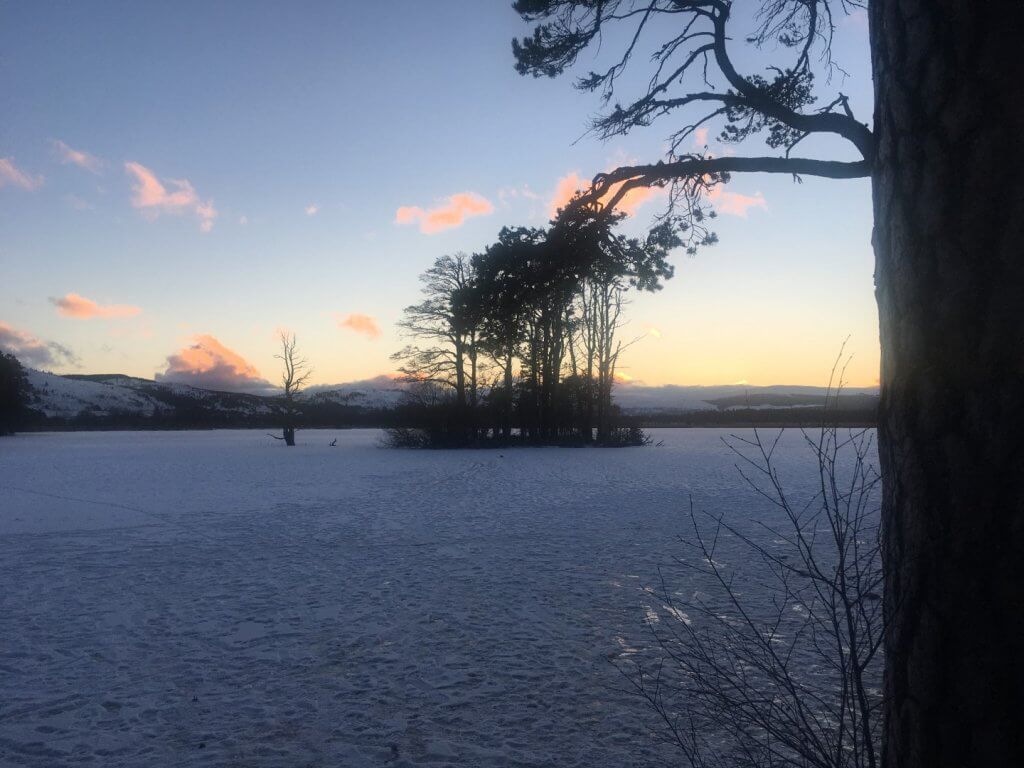
Lockdown winter explorations on Loch Mallachie, RSPB Loch Garten
Why Slower Winter Walking Rewards Careful Observation
Winter walking in the Highlands isn’t about ticking off peaks — it’s about immersion. Shorter days and variable conditions encourage slower, more mindful exploration. Temperatures often hover around –5°C to 5°C, and snow frequently transforms the hills from late November through March.
Guided winter walks with Scot Mountain Holidays focus on observation and safety — reading snow conditions, spotting wildlife tracks, and noticing how the light shifts through the glens. You might see:
Red deer grazing in the open,
Mountain hares in their white winter coats,
Or Ptarmigan blending into the snow near higher ridges.
Taking your time allows you to experience the landscape as it changes minute by minute — the sort of quiet beauty that photographs can’t fully capture.
Base yourself: Fraoch Lodge, Boat of Garten — ideal access to Glenmore, Rothiemurchus, and the Cairngorm plateau.
Don’t miss: Loch an Eilein at sunrise, the Cairngorm funicular for panoramic sunset views, and a starlit evening walk around Loch Garten.
Bring: Warm layers, insulated boots, and a thermos — plus a headtorch for those dusky afternoon descents.
Join Scot Mountain Holidays this winter for guided walks, photography-friendly itineraries, and cosy evenings by the fire. Discover how Scotland’s shortest days can offer its brightest moments.
 Scot Mountain Holidays (Ltd),
Fraoch Lodge, Deshar Road,
Boat of Garten,
PH24 3BN
Scot Mountain Holidays (Ltd),
Fraoch Lodge, Deshar Road,
Boat of Garten,
PH24 3BN




All content © Copyright Scot Mountain Holidays 2026
Responsive web design by Summit Web Solutions
