








This website uses cookies to improve your experience. We\'ll assume you\'re ok with this, but you can opt-out if you wish. Read More
In case of sale of your personal information, you may opt out by using the link Do Not Sell My Personal Information
It’s no secret that exercise is extraordinarily beneficial to achieving a happy, healthy lifestyle. Extensive research states that exercise not only improves physical health but also works wonders on mental health, and guided hiking health benefits are no different.
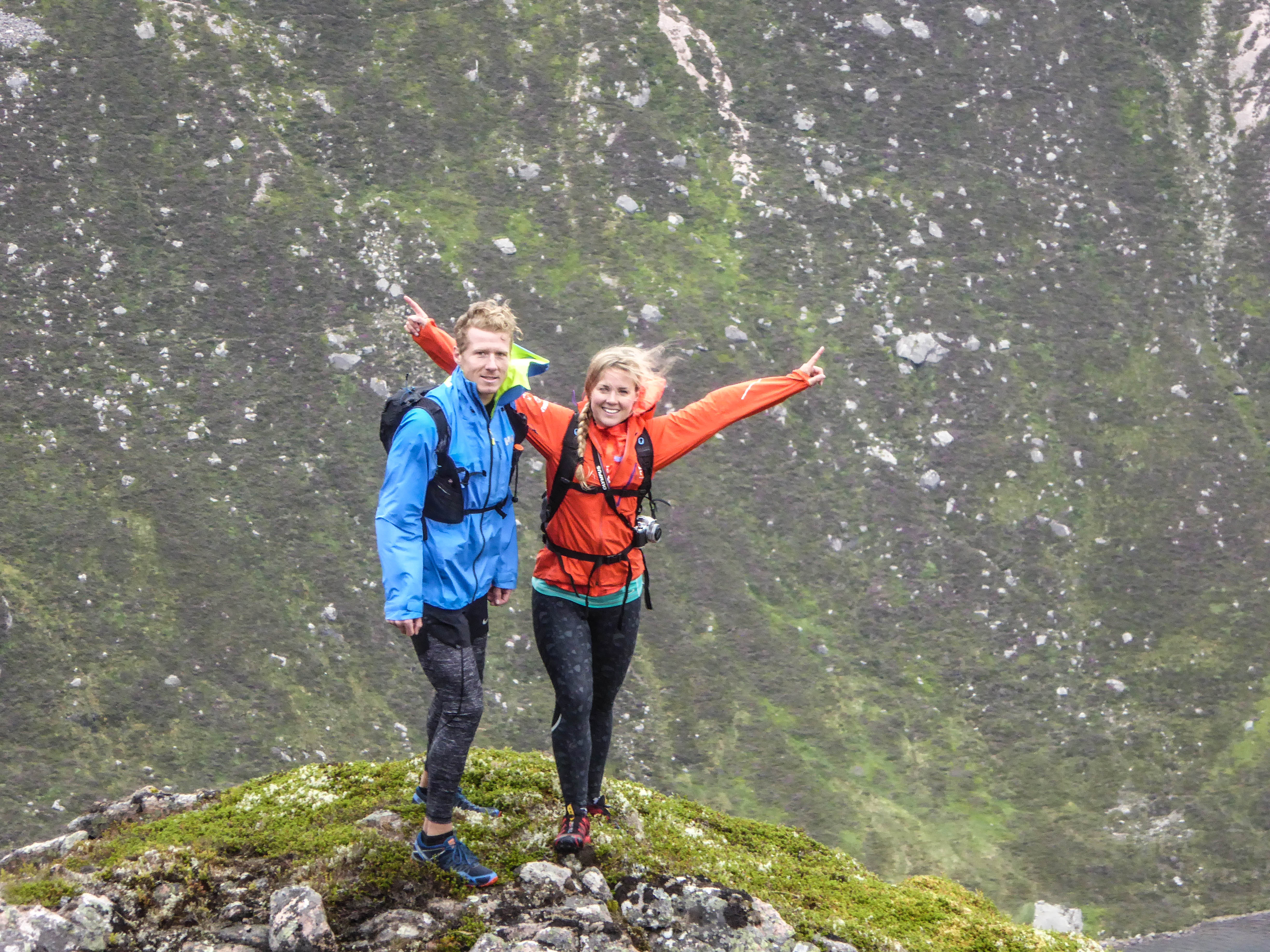
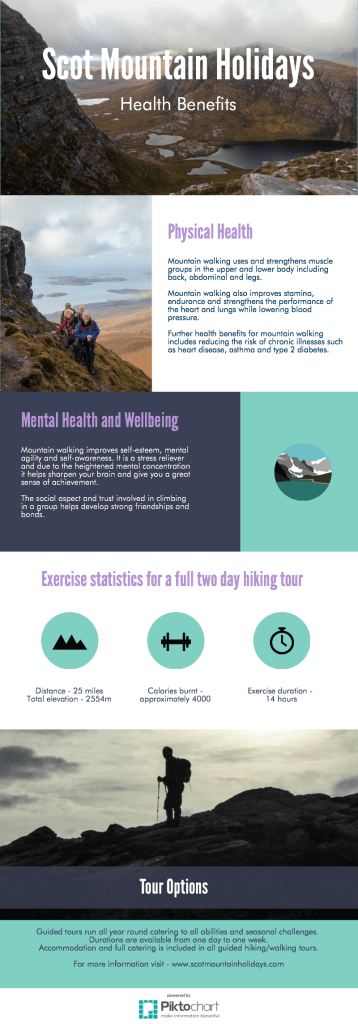
Hiking uses some of the body’s biggest muscles resulting in an all-body workout. The legs, doing the grunt work will result in a workout of the gluteus maximus, quadriceps, hamstrings and calves. Hiking also strengthens the back and the abdominal improving overall stamina and endurance.
But it goes deeper then improving physical changes. The physical effort required in uphill walking strengthens the performance of the heart and lungs whilst lowering blood pressure. Studies have also shown that hiking and mountain walking reduces the risk of chronic illnesses, asthma and type 2 diabetes.
Mental health is extremely important and hiking is an amazing tool in benefiting this positively. The physical changes from mountain walking are a great incentive to continue exercising. They also work wonders with improving self-esteem and self-awareness. Due to the heightened mental concentration hiking requires it strengthens mental agility, helps sharpen brain activity and is an amazing stress reliever. And hiking can be challenging. But successfully completing such a strenuous activity gives you a great sense of achievement and a positive headspace.
Group hiking is just another point to put on the pro list. Guided hiking with Scot Mountain Holidays gives you have a leader to follow, eliminating the stress of figuring out where you are and allowing you to fully concentrate on the task at hand. The group aspect also builds social bonds and completing challenges together will develop strong friendships and trust.
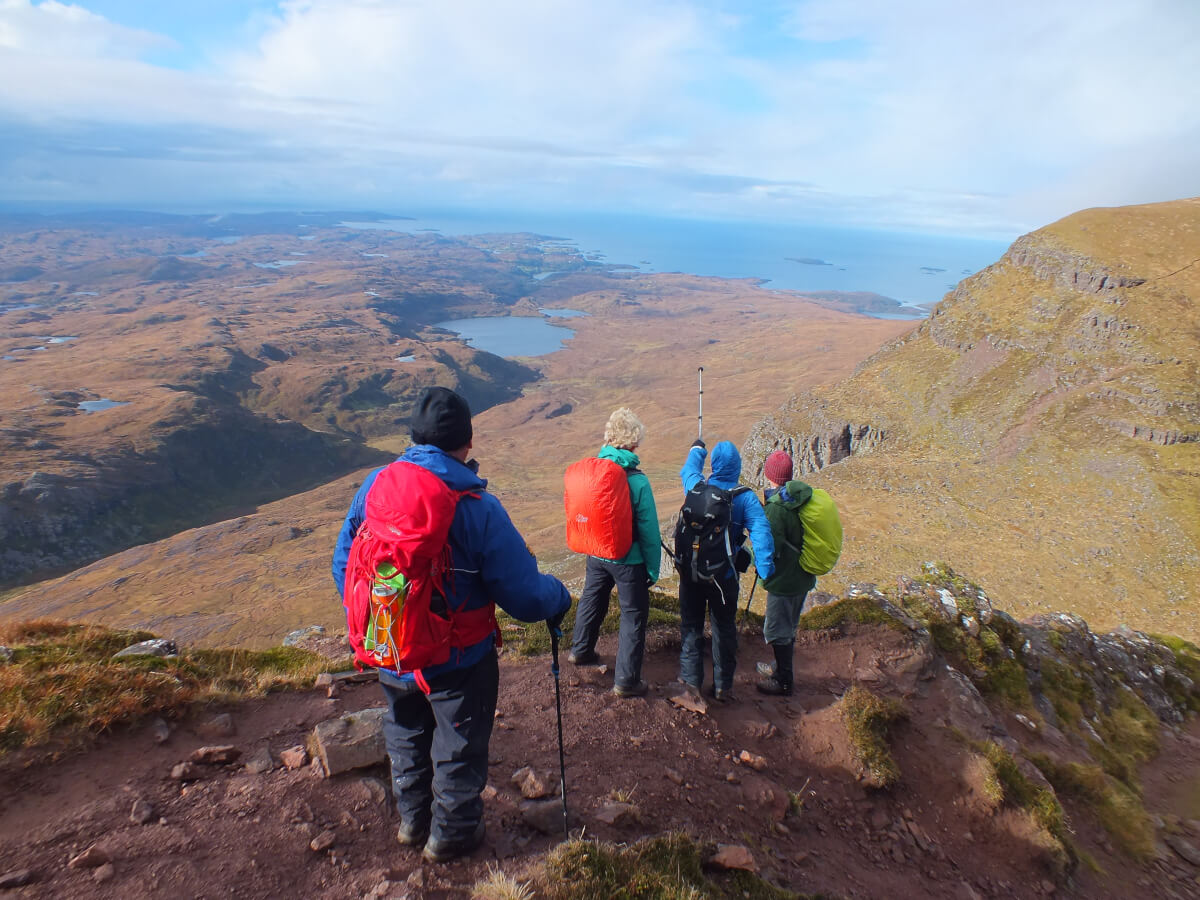
The truly great thing about hiking is that not only do you get the fantastic physical, mental and social benefits, but everything is enhanced due to the exposure of the elements. Along with burning calories you will profit from vitamin D, fresh air and more.
For more information on guided walking visit Scot Mountain Holidays and Courses.
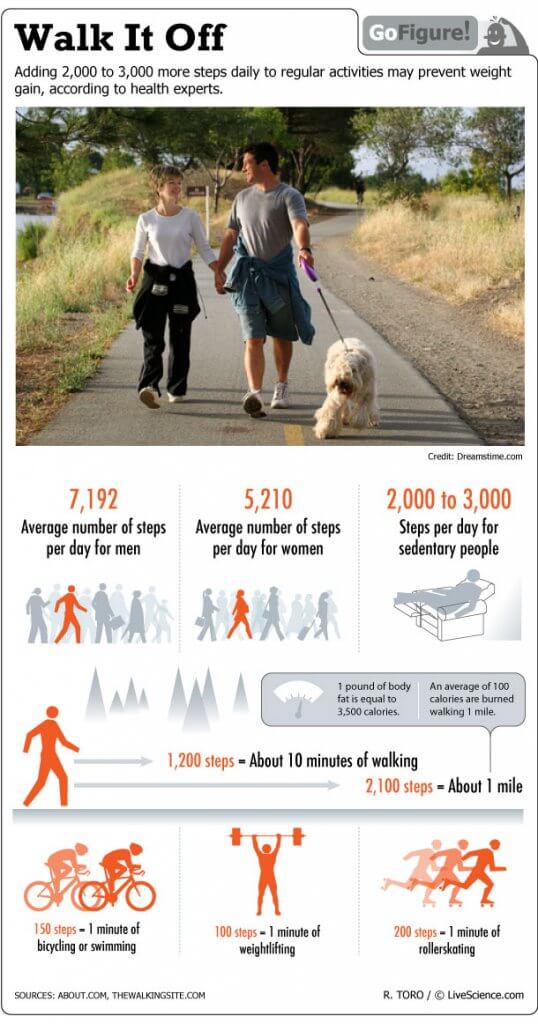
The benefits of walking far outweigh many other forms of exercising, including going to the gym.
Top 50 Long Distance Hiking Trails In The USA
19 Physical and Mental benefits of spending time outdoors
The challenge of hiking in Scotland can be underestimated. Below we’ve given our top tips for hiking in the Highlands of Scotland. The mountains here are not the giants of Everest or the 4000m peaks of the alps but they are mountains nonetheless. Only the roots remain of what were 7000m peaks in geological history; but they are still a challenge to conquer and offer rewarding vistas to rival those abroad.
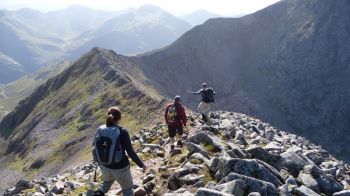
Scotland’s highest peak,Ben Nevis is a mere 1309m above sea level, but the route starts from sea level and ascends all the way to the summit. A climb/hike of 1000m ascent is a good long day out in most people’s estimation and should not be attempted unless you are fully prepared for a mountain day with over the ankle walking boots, extra layers of clothing, waterproofs, food, water, map and compass.
Mountain days in Scotland can involve long routes taking 8 or more hours to accomplish. The Cairngorm 4000ers trip which is run by Scot Mountain Holidays involves one day out whereby the bottom of the mountain is accessed by mountain bike to give at least a small chance of returning to base before dinner. Therefore to make the most of your time during you challenge, you’ll need to prepare beforehand by stepping up your fitness regime to build your stamina. Most challenges will last for more than one day, hence your fitness regime will need to take place more than one day of the week.
Travelling up to Scotland is not always a cheap option. To get train budget train tickets you either need to know you’re planning to travel 12 weeks in advance; be in the right place at the right time to see a special offer or win a competition; or have a railcard. Booking rail tickets close to your time of travel can add significantly to the cost of your trip.
Flights to Scotland are available from budget airlines like Easyjet and Ryanair, but again the price can vary considerably as there is less choice for flights directly intoInverness- though you could always try linking with flights into Edinburgh.
A guide will know the local terrain like the back of his or her hand. They’ll be able to keep the pace on track, regulate breaks etc so that the day does not extend too late into the evening, it’s their responsibility to manage the group and they’ll have all the necessary emergency equipment and contacts.
The best sites to monitor are:
The Mountain Weather Information service: the best resource for mountain weather information
The Met Office: go to the specialist forecasts section and check the mountain forecast.
If you also monitor the web cams in the week leading up to your trip it’ll give you an idea of what to expect on the ground.
For the Cairngorms the web cams are:
The weather in the UK, and particularly in the Highlands, is maritime and not continental i.e. it is constantly changing. When people say we can have 4 seasons in one day, they’re not joking – particularly in the spring one minute it can rain, the next snow, the next glorious sunshine … just don’t expect weeks of glorious sunshine; if we did, then Scotland would not be so beautifully green and lush. Always a good idea to have a warm hat and gloves at the bottom of your bag.
You can top up your water bottle from the streams on most of the hills in the Highlands as the water is potable. Dehydration is one of the most insidious hazards dangers in the hills.
In Scotland there are no alpine style mountain huts where you can stop and pick up provisions. There used to be a lot more emergency huts but they have never had wardens or been stocked with provisions. Hiking in the hills here in the UK means that you need to be self-sufficient and be prepared for any emergency. This is a philosophy we Brits take abroad when we hike so you can always spot us in the Alps. We’re the ones with the huge rucksacks with all our emergency supplies as opposed to many of the European hikers with their tiny packs relying on the huts for supplies.
May and September are when we have the longest days and most reliable weather in the Highlands of Scotland. Mid summer has it’s own hazards even if summer thunder storms are less common than in the Alps. We have midges and ticks to contend with in the summer particularly if the weather is still and you are on the west coast (Glen Coe and Skye are hot spots.)
You’ll be able to fit your route on to one side of the map and not have to readjust the map part way in to your route.
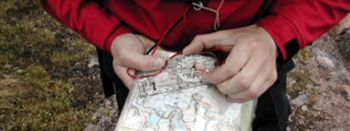
The tried and tested manual navigation aids which will always help you out
Not only do we climb Ben Nevis on this challenge but we do it by the most spectacular and challenging route including the Carn Mor Dearg Arete with stunning views of the cliffs which make up Ben Nevis’ north face. We also ascend Cairngorm via the overlooked north ridge and visit the popular winter climbing venue of Craig Meagaidh also known for it’s long cliff-face. The final route is on Ben a’Ghlo.
All routes are strenuous on their own so fitness is a priority for this trip
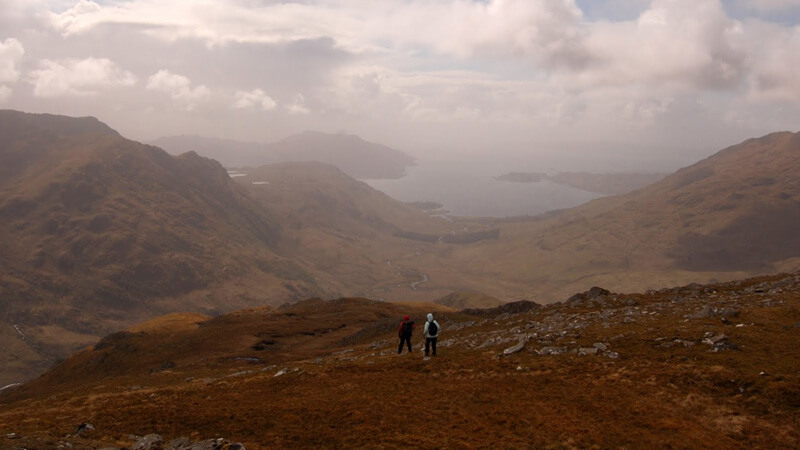
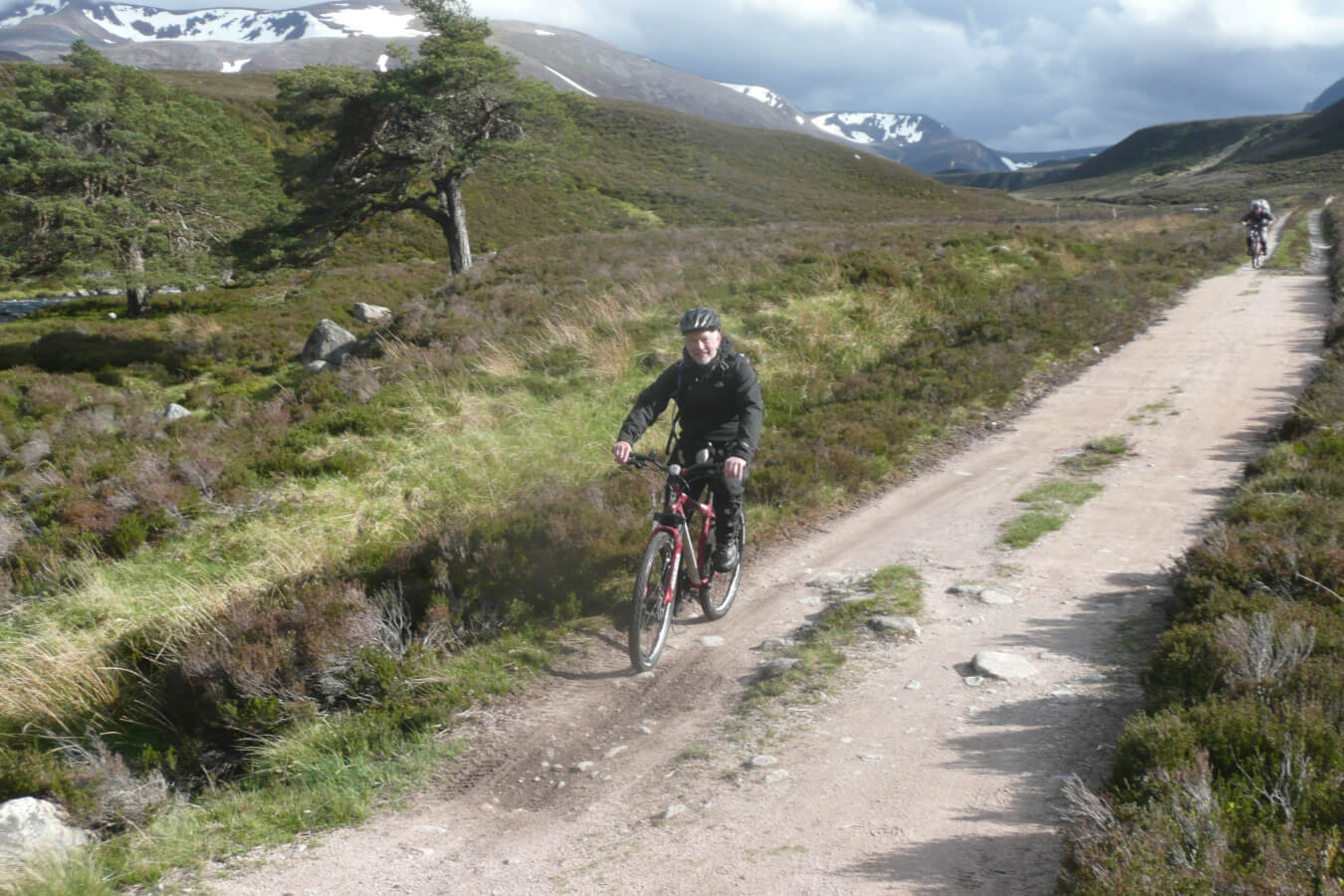
Climb across Scotland’s rooftop, the highest, most extensive area of mountain plateau with an average annual temperature of zero degrees. This is a challenge you can build into as the longest day is generally the last day of the trip but is bi-modal due to the length of the route. Only the fittest of people attempt this challenge. You must be capable on a mountain bike.
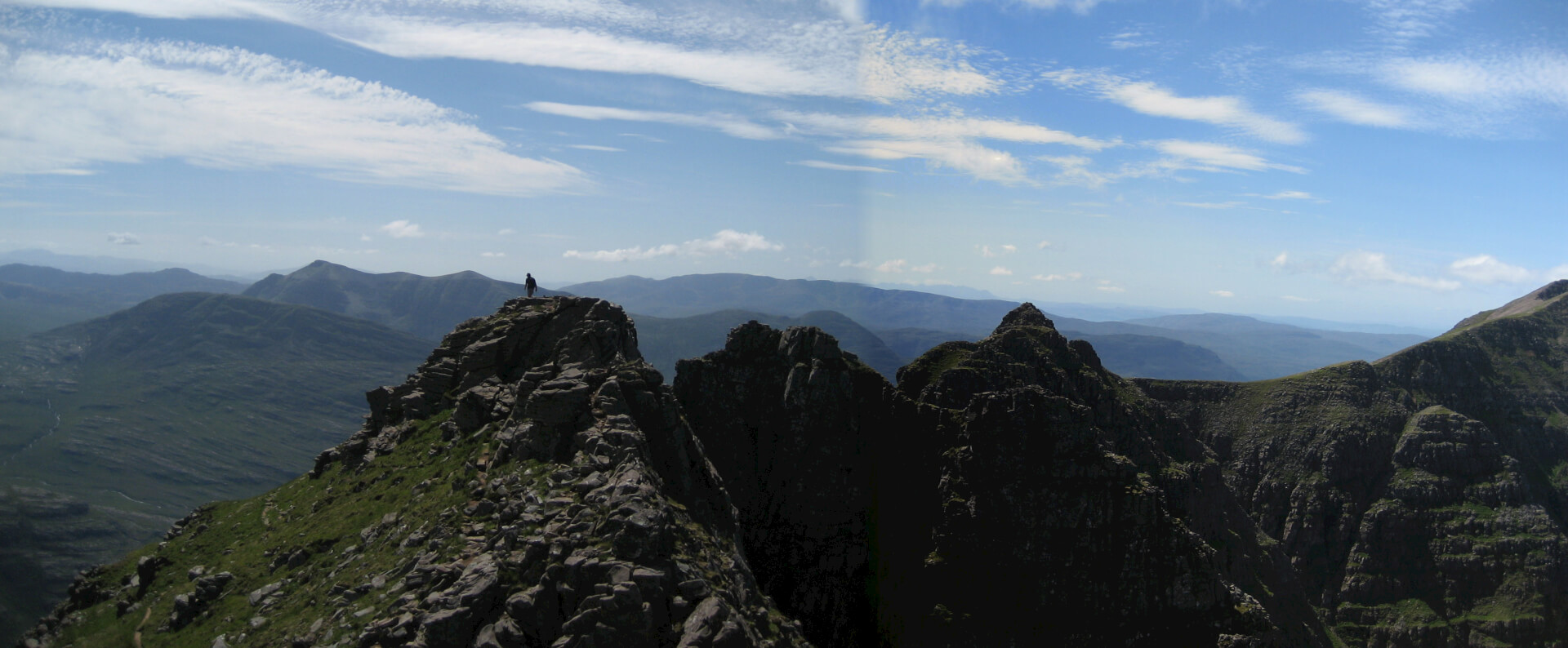
Ascend the classic mountains in the Torridon range. An area of the Highlands which is greatly under-rated, perhaps by it’s proximity to Skye, Torridon has really to be seen to be amazed. Glen Coe, with its dramatic history, and Skye, by reputation and movie fame, receive a far higher number of visitors, but the scenery in Torridon can certainly hold its own in this company
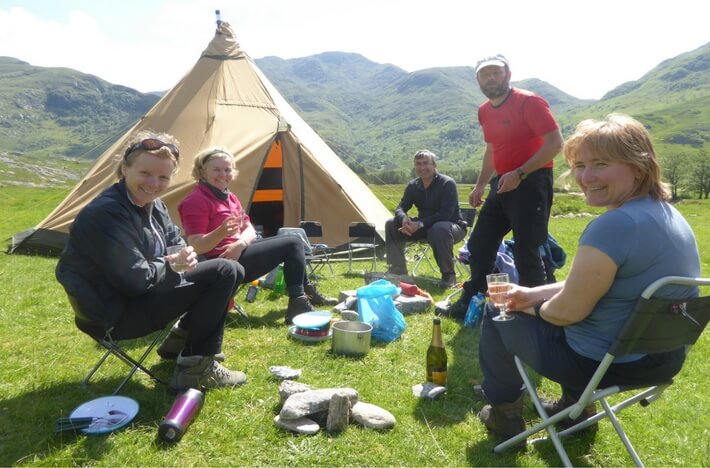
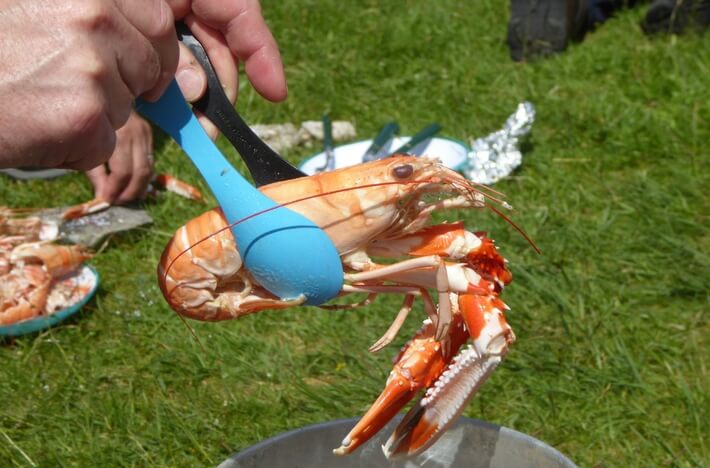
Please enquire for details. Current top destination is Knoydart. Perfect for a sleeper weekend – long weekend would be best to make the most of the opportunity. Hot shower facilities also supplied.


We’re spoiled for choice here in the Highlands when it comes to hiking opportunities. This can make choosing a walk even more difficult. Where do you start when you’re trying to make a decision on where to go? First you need to decide where your priorities lie:
Have you already seen loads of beautiful pictures of a particular area? Are you planning to tour around the majority of the Highlands? If hiking or mountain biking are your main interests you may want to consider reducing the amount of car travel you do during your stay in Scotland. Instead it would be a good idea to concentrate on one area in particular and explore it in more depth. If you enjoy this visit, then perhaps you can be persuaded to come back and explore again; or visit another area and explore this one too. Remember, if you’ve seen lots of beautiful shots of a particular area, it probably means that loads of other folk have seen them too and this might reduce your enjoyment of the area when you get there and find hoards of people there.
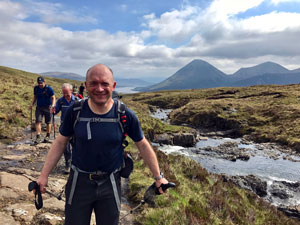
Once you’ve decided on an area (not the easiest thing to do), you’ll want to think about how long you plan to walk. Do you want to follow a multi-day, long distance route or would you rather return to a comfortable base at the end of the day? Do you want to walk all day? Would you rather incorporate some attractions into your walk or for a rest between walk days?
Long distance, way-marked paths in the Highlands, like the West Highland Way are really the only way to enjoy linear walks, unless you have 2 vehicles at your disposal. Public transport to most hiking areas is virtually non-existent, so trying to return to the start of the walk to pick up your vehicle can be a nightmare. Unless of course you sign up to a transfer service, like we offer for our self-guided itineraries: Self-guided Cairngorms, Lairig Ghru Logistics or for mountain biking.
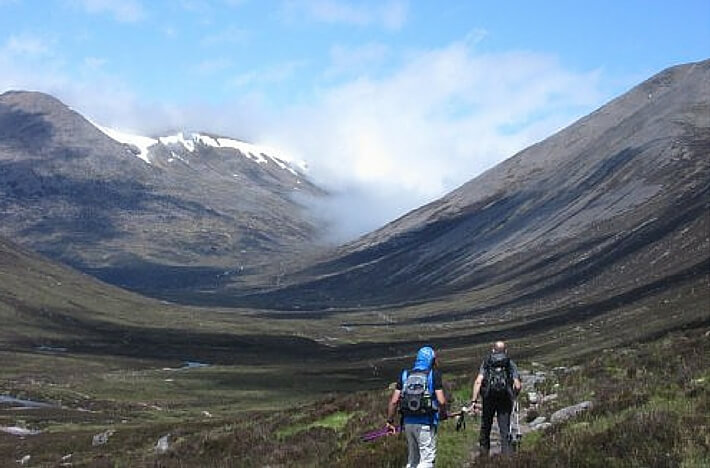
Most people are amazed by the scenery they see when they visit the Highlands of Scotland. What a lot of people don’t realise is that much of the scenery they are seeing is heavily influenced by man-management of the land. For example, if you visit the west coast of Scotland, you’ll notice a lot of barren hillside. This is the influence of many years of over-grazing by deer. The reason the deer numbers are so high: no predators other than human hunters. Unfortunately though we have the red deer commission to regulate deer numbers, many estates are privately run and maintain relatively high numbers of deer so as to offer the opportunity of shooting a stag to their clients.
Here in the Cairngorms, we have a landscape which offers a wider variety of habitats including Caledonian pine forests, moorland and sub-arctic tundra. The variety of habitat is one of the reasons the area is so popular with bird watchers.
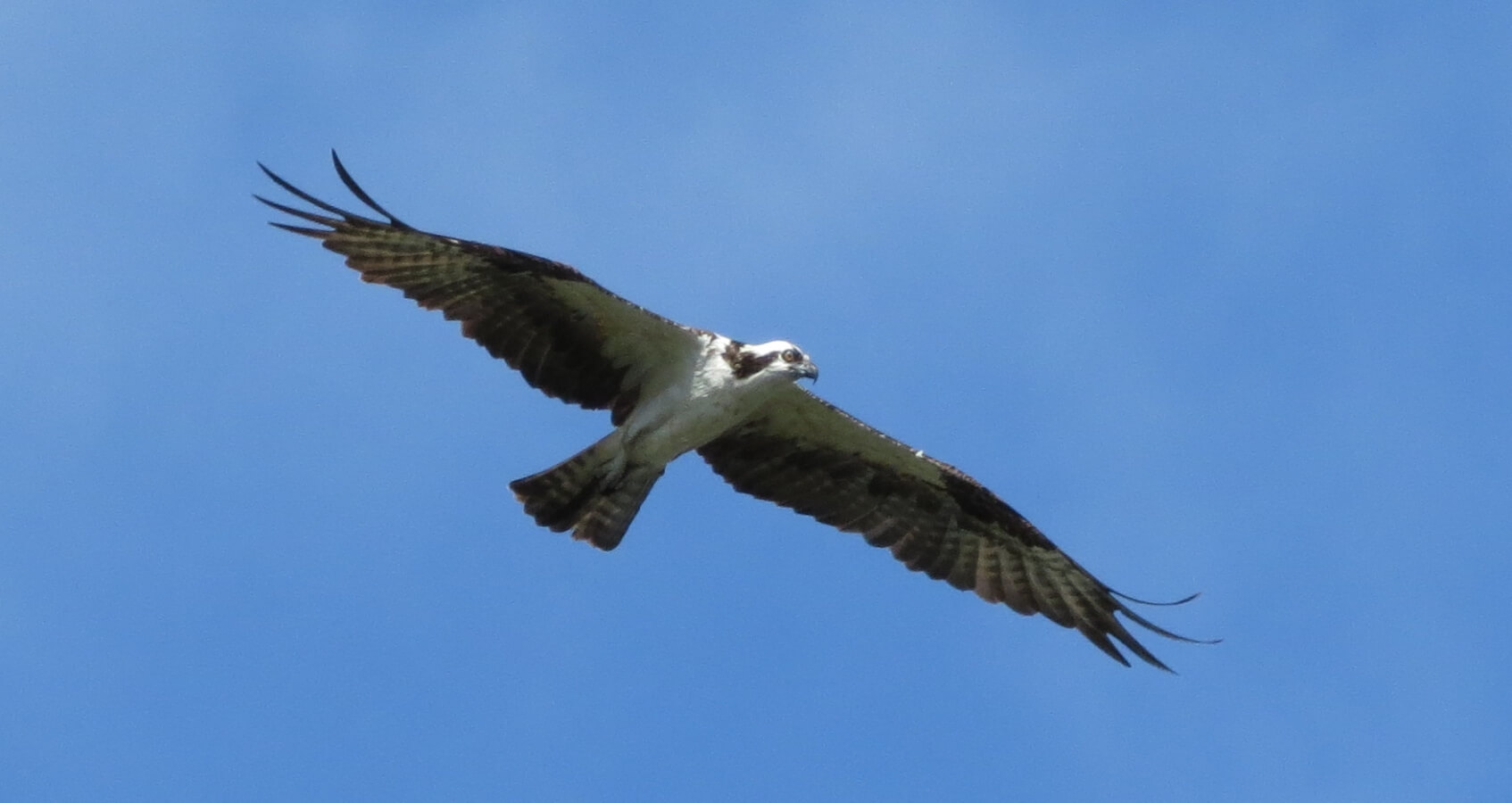
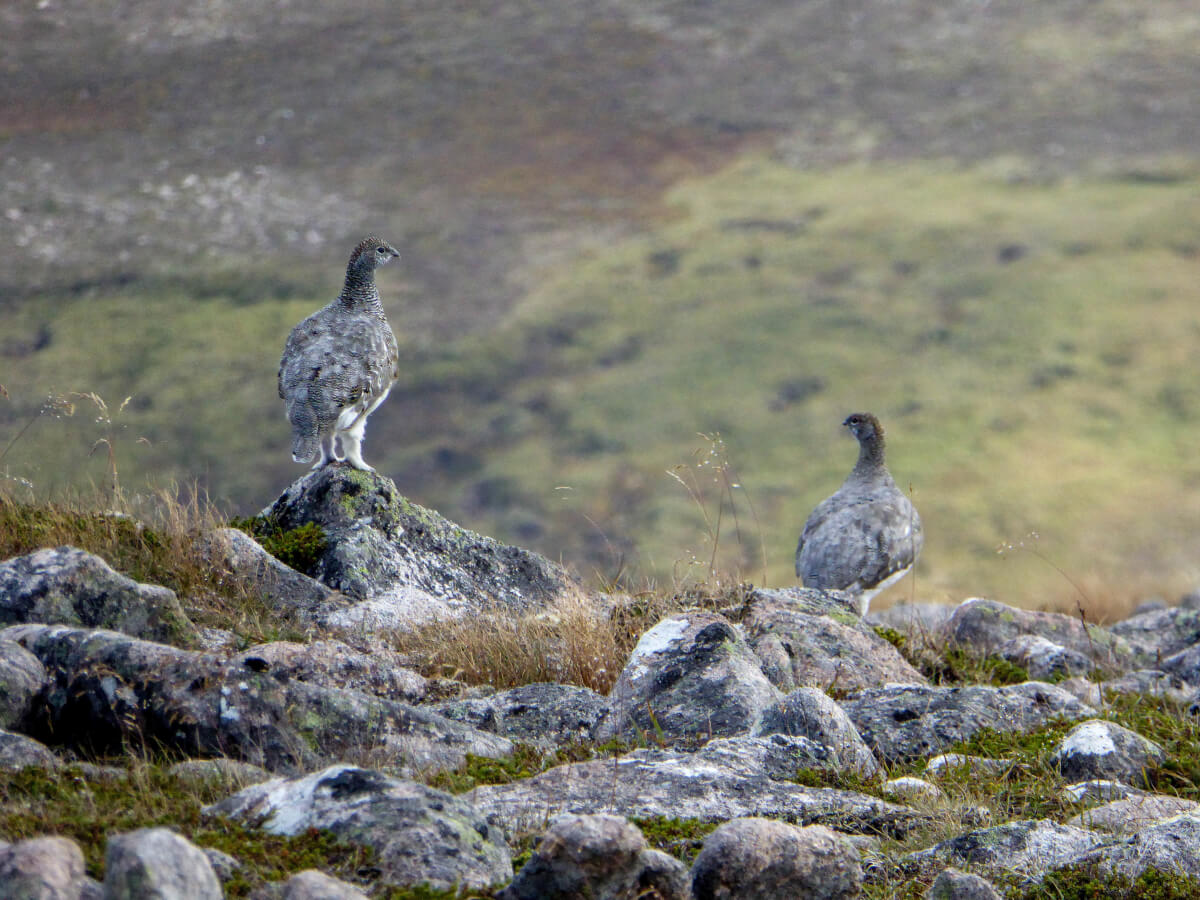
You might also want to consider the wildlife watching opportunities when you are choosing a walk. Some coastal walks are great for spotting otters, seals and even dolphins, but you won’t see ptarmigan. In the Cairngorms, you’ll probably see at least 2 different kinds of deer alongside plenty of birdlife (crested tits, ptarmigan, scottish crossbill, buzzards, red and black grouse and if you’re lucky a Capercaillie).
Have you come to Scotland with any preconceived ideas? Do you have a tick list of features you want to see? You might be surprised by the opportunities which open up if you let a guide make the choice for you. This works particularly well if you’ve never been to the area before. It is obviously more expensive than exploring on your own, but you can learn so much with an experienced guide that we can guarantee that your guided day will provide plenty of fodder for chatting about your experiences with your friends.
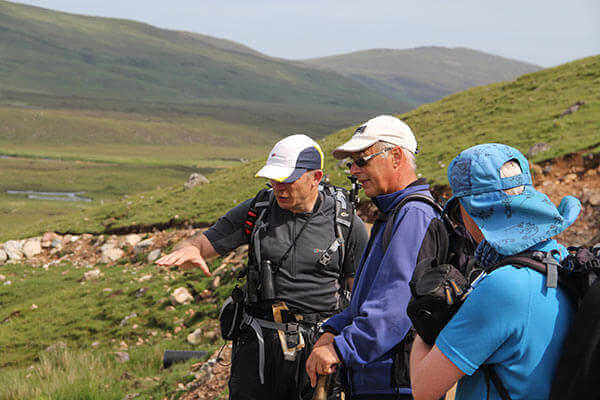
The Highlands of Scotland cover a massive area and there are literally 1000s of routes which could be walked. Some days it feels like everyone and their dog have chosen to visit the same spot as you. This almost always applies if you are choosing a walk in certain honey spot locations: Ben Nevis,the Old Man of Storr, Glenmore or Rothiemurchus, Meall a’Bhuchaille and certain Munros particularly on sunny days.
Fortunately it is possible to walk away from the crowds. You can also avoid the crowds completely by choosing less well-known routes and less well-known areas. For example, the Outer Hebrides are very well-known for glorious white sand beaches – far fewer people venture into the hills of Harris. In the Cairngorms, there are routes up many hills but there is no public transport down Glen Feshie. Far fewer people make it here, but it is one of the most glorious parts of the Cairngorms – don’t tell everyone!
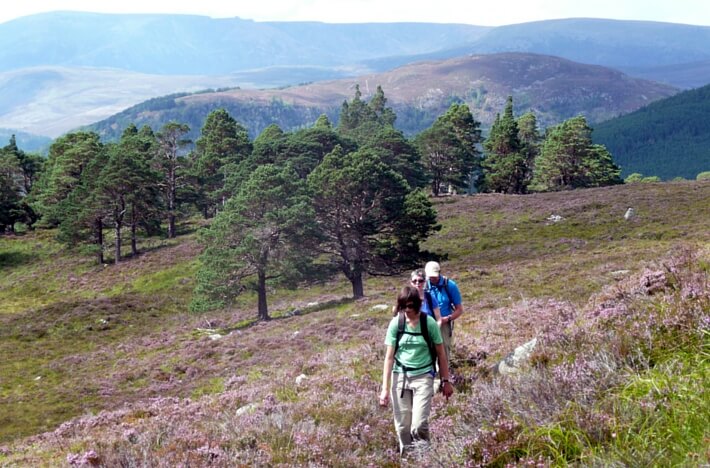
What will you see when you reach the climax of your route? Do you want to climb a mountain or hill? It’s always good if your walk will offer you a change of perspective. It feels so much more rewarding at the end of the day when you have some magnificent photos to show for your efforts.
Fortunately Scotland is small enough that a great number of hill walks will also offer a view over the coast. There is something about the combination of mountains and coastal scenery which is so satisfying for us. This is one of the utter joys of the Assynt area. The hills look stunning and grand, but are actually not too high, and they’re right next to the sea. Definitely an area which we love to visit. If you have the time, add it to your bucket list as it is just as stunning as Skye, but receives far fewer visitors because it is north of Inverness.
Don’t you ever wonder how the mountains got their shapes? Nature is so intricate that there is always something to provide us with interest and fascination. When children are young they find the outdoors endlessly fascinating. Parents can then be much more relaxed as the outdoors with all the rocks, sticks and water provide entertainment (or education) in and of themselves.
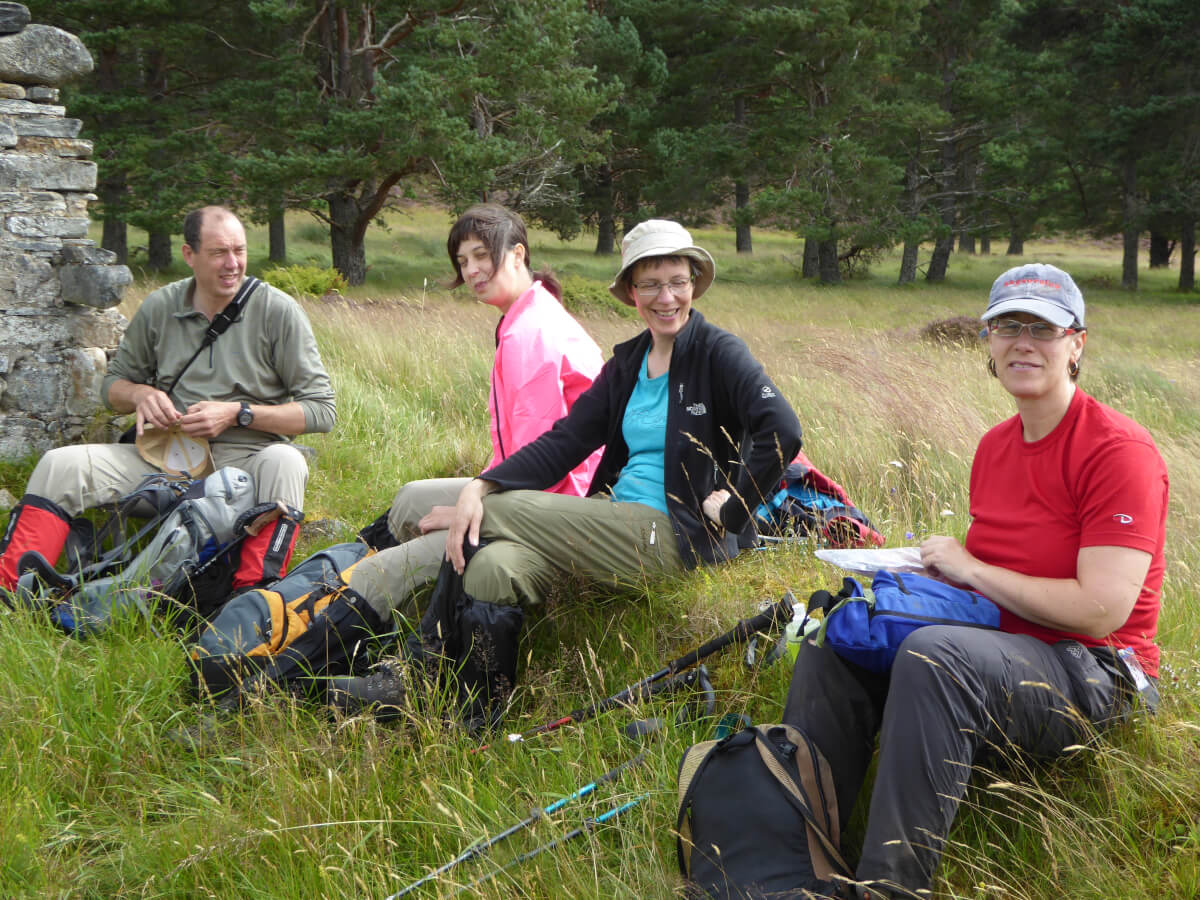
Or book a guide and leave the choice to him/her once you have talked with them.
Of course if you are having trouble balancing all the various factors yourself, or if you don’t have a lot of experience choosing a walk in Scotland, you may want to go for a safer option. Let someone else make the choice for you. In 2017, we launched our first week long Cairngorm Self-guided itinerary. It has proved to be very popular, particularly with our French visitors. We’ve selected a range of walks in the area; we’ve collated the transfers and we’ve provided the accommodation, maps, meals etc. You don’t even need a car. What could be simpler!
We did of course already offer a logistical package to facilitate the Lairig Ghru This 2 day package includes 2 nights accommodation, transfers and all meals to help access a popular 18 mile hike through the centre of the Cairngorm National Park. If organised by yourself you have the logistical nightmare of hours by public transport to return to your vehicle and a longer walk to access the main road – amongst other problems.
Choosing a walk in Scotland – which area to visit
In the heart of the Cairngorms National Park lies it’s namesake, the Cairngorms. The Cairngorms, a range of mountain peaks adorning the skyline, are rich with historical importance, and full of nature and wildlife. The soul of the Cairngorms, boast four of the five highest peaks in the United Kingdom. Conveniently, this is located just a short drive from Fraoch Lodge, home of Scot Mountain Holidays.
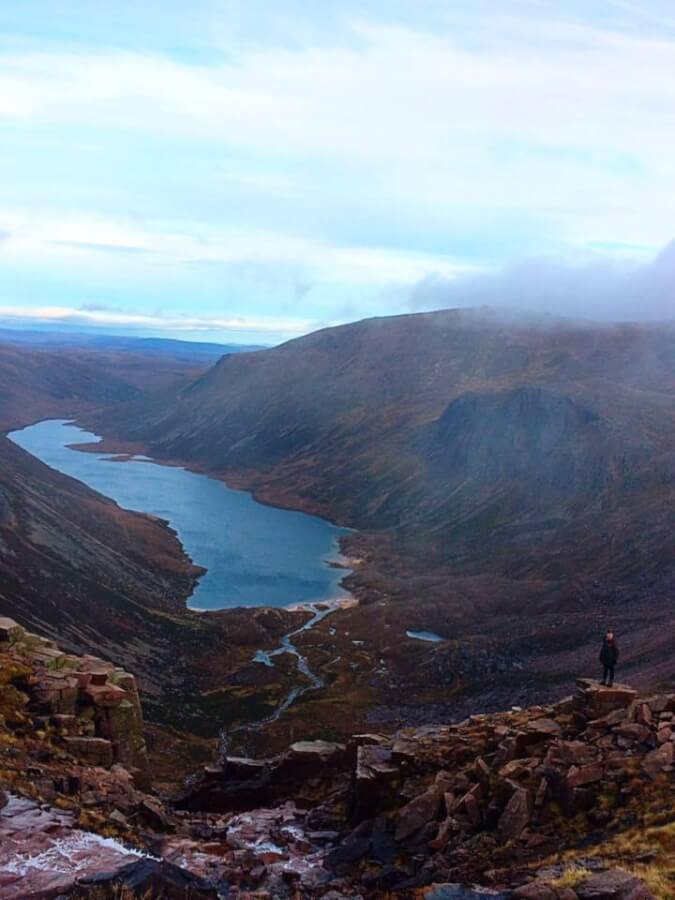
Ben Macdui, at 1309 metres was our destination. Departing Fraoch Lodge we set out for a full day of hiking with the group tour leader, Andy. As someone who hasn’t done much hiking I was in good hands. Scot Mountain Holidays offered plenty of advice, tips and tricks. I felt well equipped in handling the changing climate, the potential wet weather, and cool temperature ahead of us.
Andy is knowledgeable in not only the secrets of the mountain, but also fauna, wildlife and navigation. This became increasingly comforting as the heavy fog set in the higher we climbed. Transforming the landscape into a world of grey, it wasn’t long before the dips, plains and landmarks of the mountain became a sea of similarity for me.
But, with what appeared to be second nature to Andy, we headed away from the path ready to experience the Cairngorms, raw and untouched. Appreciating the full benefits of guided touring, it was as simple as follow the leader. It’s also advised to keep a camera at the ready for wildlife that Andy has a knack for spotting. We also had Andy’s storytelling keeping us company as we rose higher, with stories of history and legends wealthy with detail and fascinating to hear.
Before long, history came to life in the form of a plane crash memorial. Pieces of the aircraft littered the mountainside and somewhat eerily seemed almost untouched 70 years on from the impact. Andy’s knowledge of the Cairngorms secrets continued to be show cast during the ascent and decline. Continuing to hike away from the track we came across no one. Allowing us to appreciate the solidarity, and peacefulness of the mountainous environment. With gorgeous views, and amazing landscape treating us as the cloud cover ebbed and waned. The experience of hiking Ben MacDui was memorable and a great combination of challenging and rewarding.
After a full day of hiking we returned to the homely comforts of Fraoch Lodge. Arriving to a roaring fire and well-deserved coffee o’clock it was a warm and welcoming homecoming. Rebecca’s home cooked meal, delicious and restaurant quality was the perfect way to finish a great day. Scot Mountain Holidays is a perfect blend of leadership, knowledge and homely comforts resulting in an amazing experience for group tour hiking.
Walking is one of the best forms of exercise being gentle, easy and free. It’s something everyone can do, and extremely beneficial to your wellbeing. So, it’s no wonder masses of people are beginning to introduce walking to their daily lives. But to keep the habit up it’s important to ensure you’re not letting your walking become a chore. So to avoid this, try these easy steps to turn a walk into an adventure.
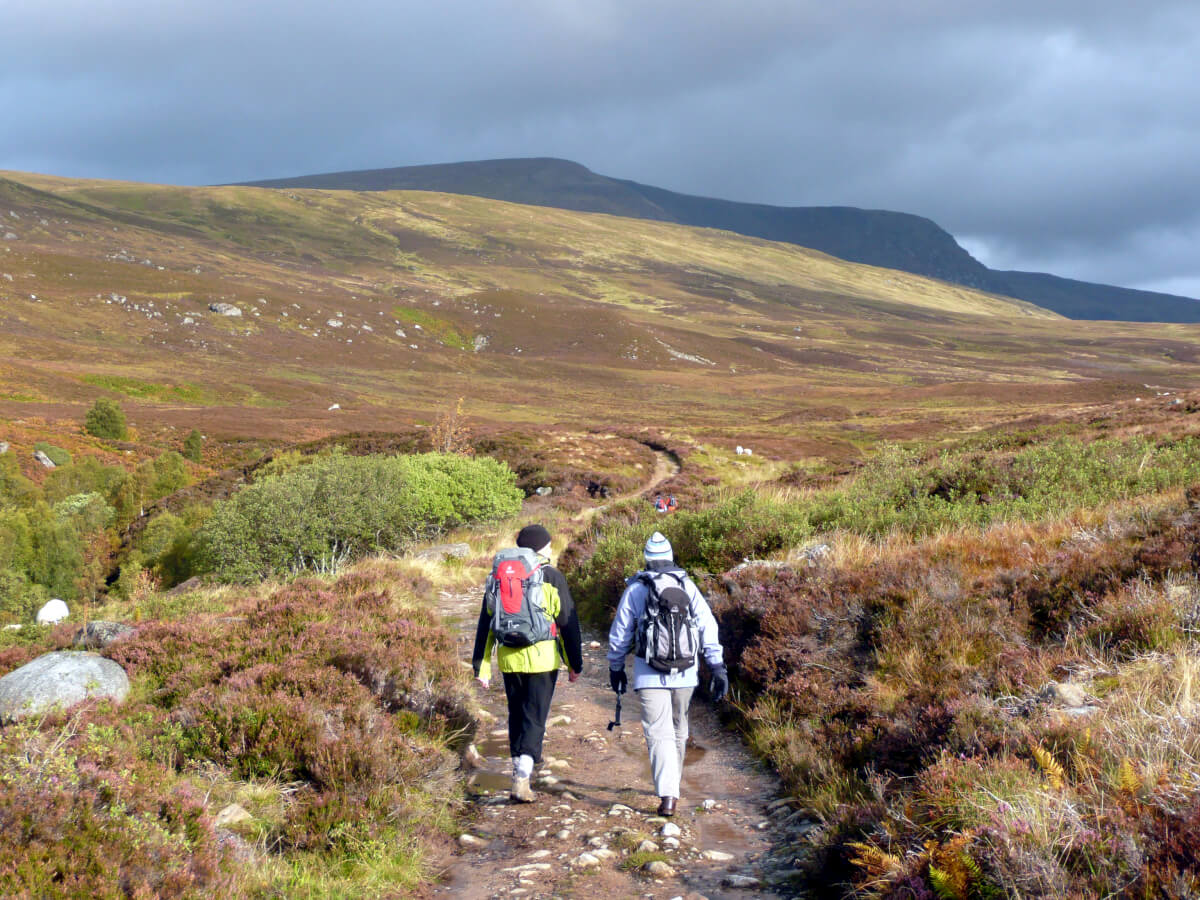
Walking has been proven to assist you in maintaining a healthy weight, prevent or manage various conditions including heart disease and high blood pressure and additionally, it strengthens your bones and muscles. Not only this, but it’s extremely positive to your mental wellbeing. And, it’s a great excuse to take some time for yourself.
Firstly, it’s time to get off the beaten path. Head away from the pavement and hit the trails. The Cairngorm National Park is full of gorgeous forest, river and mountain walking so you’re rich for choice.
Once you’re away from the roads, and traffic of the world, take some time away from technology. Leave your phone at home, turn the music off and appreciate the beauty of nature. This will not only be a refreshing break and an opportunity for you to restart. But, you will find yourself so much more connected to nature, and you’re much more likely to spot wildlife and fauna. This will add a level of appreciation, and excitement to your walks.
This goes hand in hand with switching off. If you have some sense of direction, try to avoid planning out your route prior to your walk. Follow your instinct, keep things fresh and go somewhere new each day. Making a split second decision at each fork you come to, will add a sense of exhilaration to your walking adventures.
These three easy to do steps will be just the thing to turn your walking into memorable adventures.
No doubt if you’re travelling from further afield – Canada, the US, Australia- then you want to see a bit of Scotland; experience the culture; try the iconic foods and meet some genuine Scottish folk. How can you do this within your limited time and budget?
Researching a trip takes time, energy and to make the trip extra special, a wee bit of local knowledge. If you’re lucky you can pick this up from your friends and relatives who may already have visited the area you want to go to. If not, you’re left with the wide morass of the internet and the opinions of strangers. You can cut through the confusion and distraction though by booking an initial introductory trip with a local expert.
A good indication that your guide has the technical navigation skills and training to lead groups is to make sure that he/she has one of the following qualifications:
These are the national governing body certificates which cover the technical skills a group leader needs in the mountain environment. In Scotland, for mountain/hill walking, it is best to check that your guide has a winter mountain leader award as there can be snow on the ground in May/June or on Ben Nevis, most of the year. We have taken clients out in the Cairngorms in July and August and still found patches of snow in shady, north facing areas.
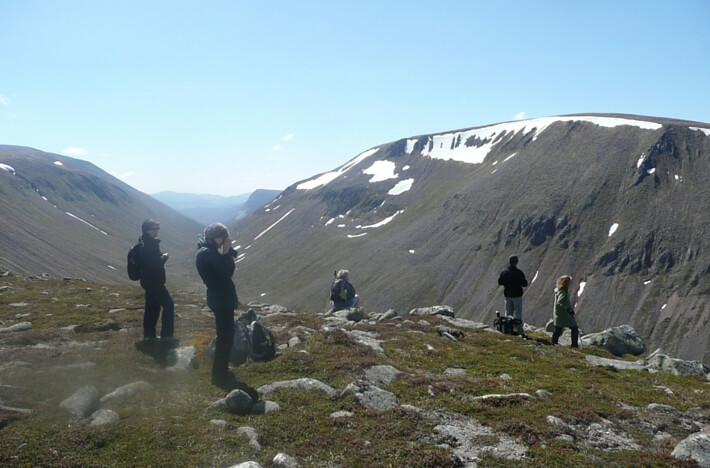
Check carefully to make sure your hiking guide is or has been resident in the local area for some time. If so they are more likely to have intimate knowledge of the best spots to take their clients/guests. It would also be an idea to see if your guide has interests which coincide with your own:
If you are a keen wildlife enthusiast, make sure your hiking guide has a good grounding in the local wildlife. For example, here in the Cairngorms the species to keep an eye out for, along with the iconic red deer, are:
Capercaillie, red grouse, black grouse, ptarmigan, crested tits, Scottish crossbills, red squirrels and golden eagles among many others.
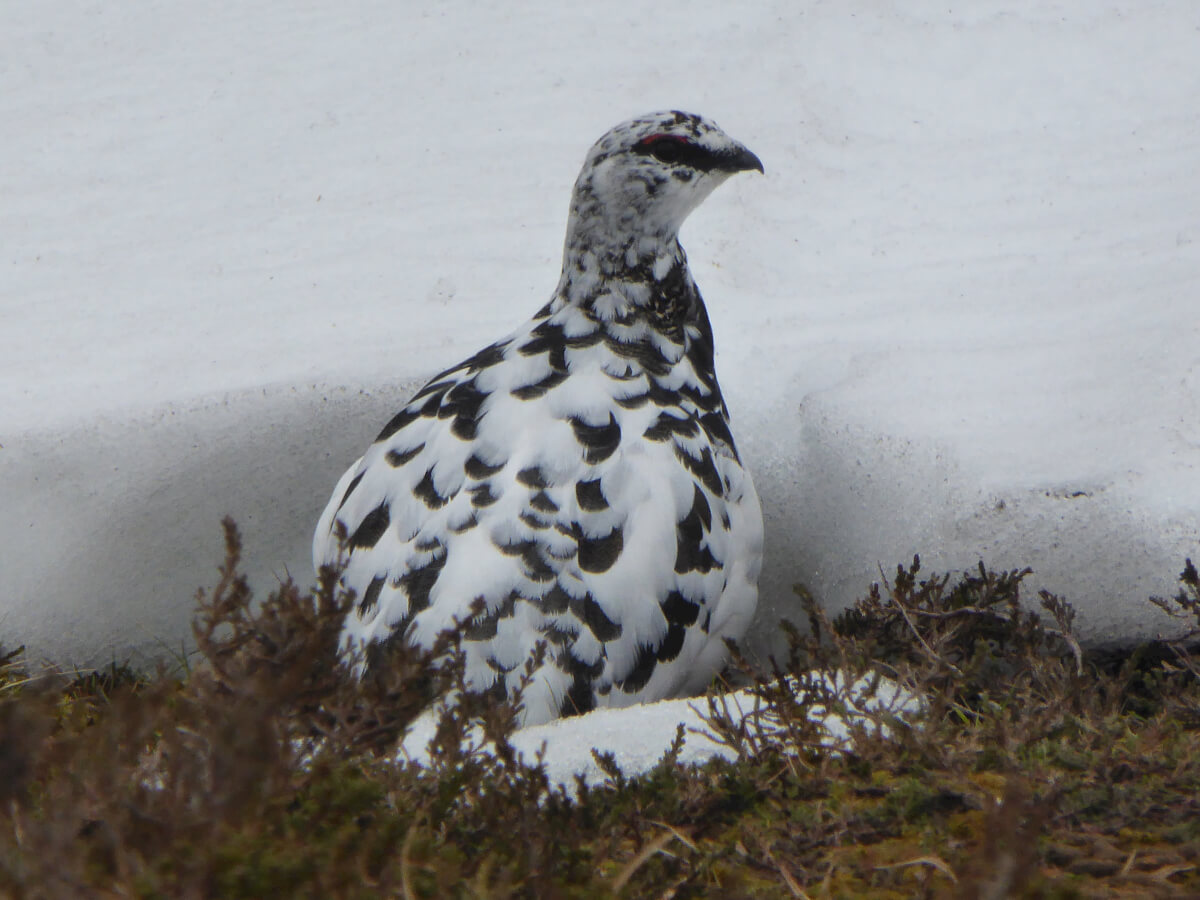
If you have an interest in geology, it’s also worth investigating the depth of your hiking guide’s knowledge. You might find that some hiking guides, especially the younger guides, have only very superficial knowledge of the geology of the area, particularly if they are not resident all year round.
If you are interested in local history, it is especially important to make sure your hiking guide has been resident in the area for some time. He or she should also have an interest in the history which has formed his environment. This really is the only thing which is going to improve their knowledge of local history.
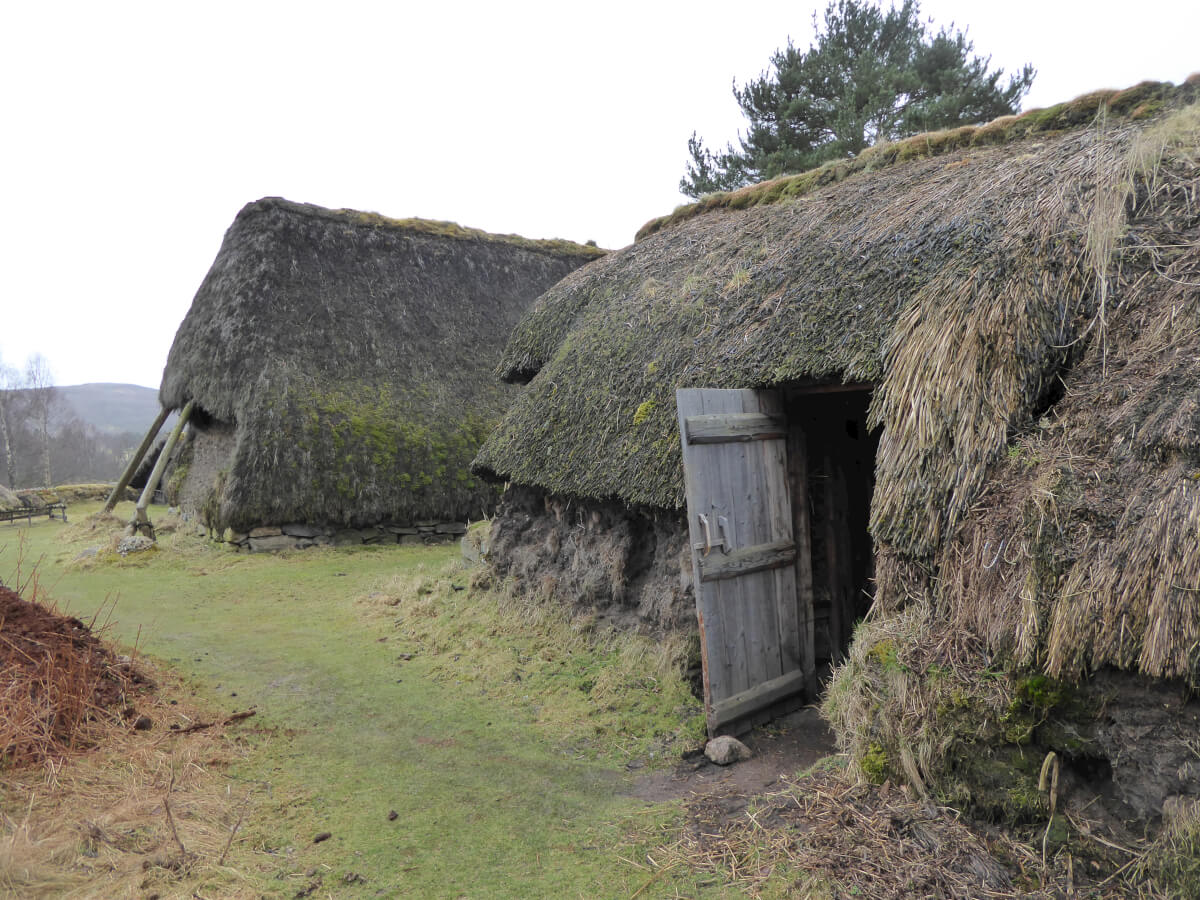
If you’re interested in local cuisine, it’s again a good idea to book a hiking guide who is local to the area as they will probably have the most up-to-date information about the local cafes and restaurants. You never know one popular local eating venue might have changed hands or lost their chef since they were last listed in a guidebook or reviewed online. Online reviews are usually only snapshots of one person’s experience at that moment, your guide (if local to the area) will probably have accumulated a more rounded impression of the various local establishments.
If you are particularly lucky, you might find a hiking guide who has an interest in wild foraging who can introduce you to the spectacular harvest Scotland’s nature has to offer.
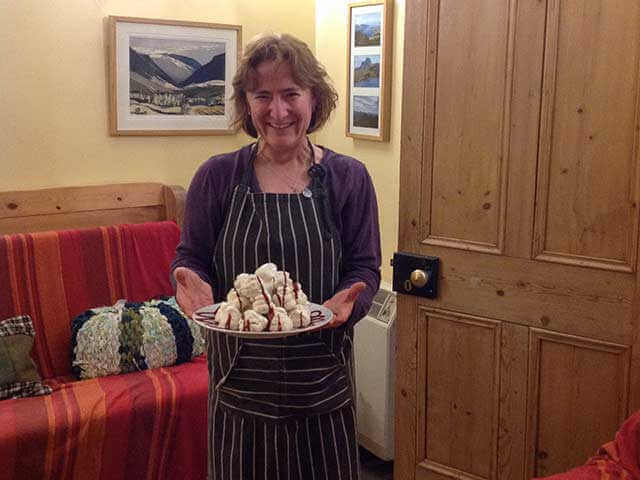

To check out the profile of our own main guide and company director, Andy Bateman, view his profile.
We’re often asked when it is a good time to come to Scotland. For us every season has it’s advantages and perhaps disadvantages, depending on your point of view. There are definitely certain times of year which are better for hiking than others. There are also certain times of year when it is best to be in particular areas. If you’re a weather geek, you can find out for yourself which are statistically the best weeks to plan your trip by studying the “weather singularities”.
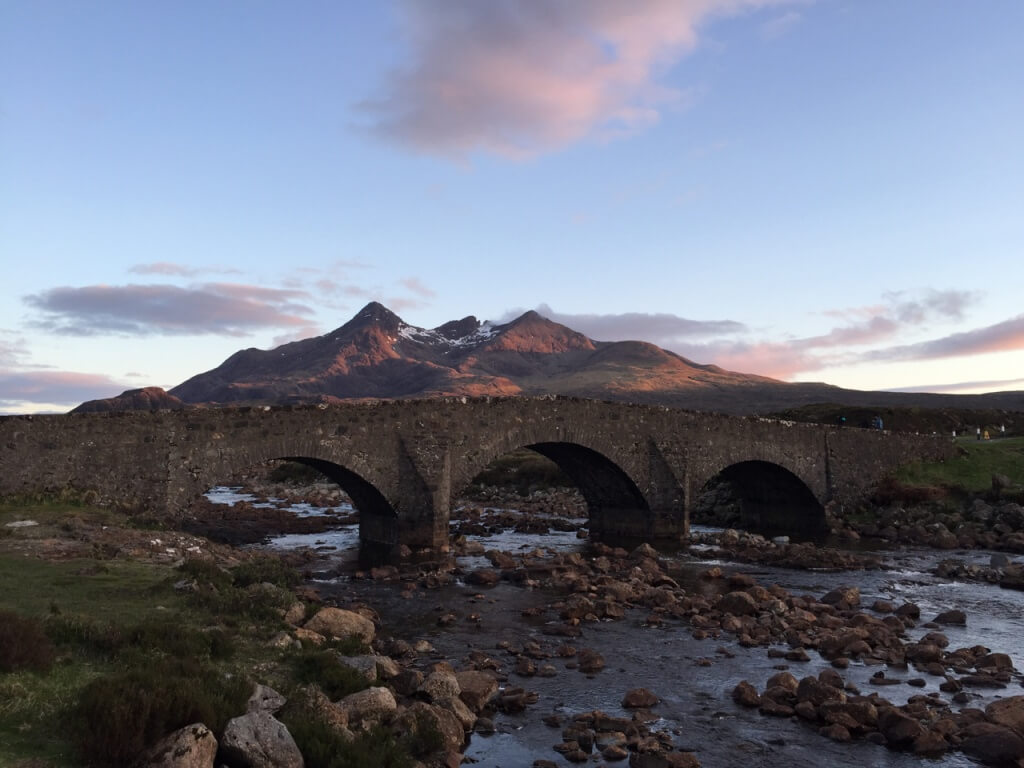
Sunset over Am Basteir from Sligachan on the Isle of Skye during the Skye Munros itinerary
Weather singularities are statistically proven times of year when the same weather tends to re-occur e.g. always dry that week. In fact, these have been noted so frequently in some cases that they even have traditional names like: “St. Luke’s Summer” or “Old Wives Summer”. Andy has studied the weather very closely and plans our west coast trips around the times of year when we are statistically likely to have the best conditions. This is why one of the most frequent comments we have as guests depart is: “Haven’t we been lucky with the weather?” Mind you, that might also be due to the fact that they come expecting to be rained on every day. Any day which is dry is considered to be a bonus!
You can choose by season which would be the best time of year to plan your trip. Whether it will rain or not, is not necessarily the only factor which would influence your decision. You may also want to consider what wildlife will be around or how long the day will be.
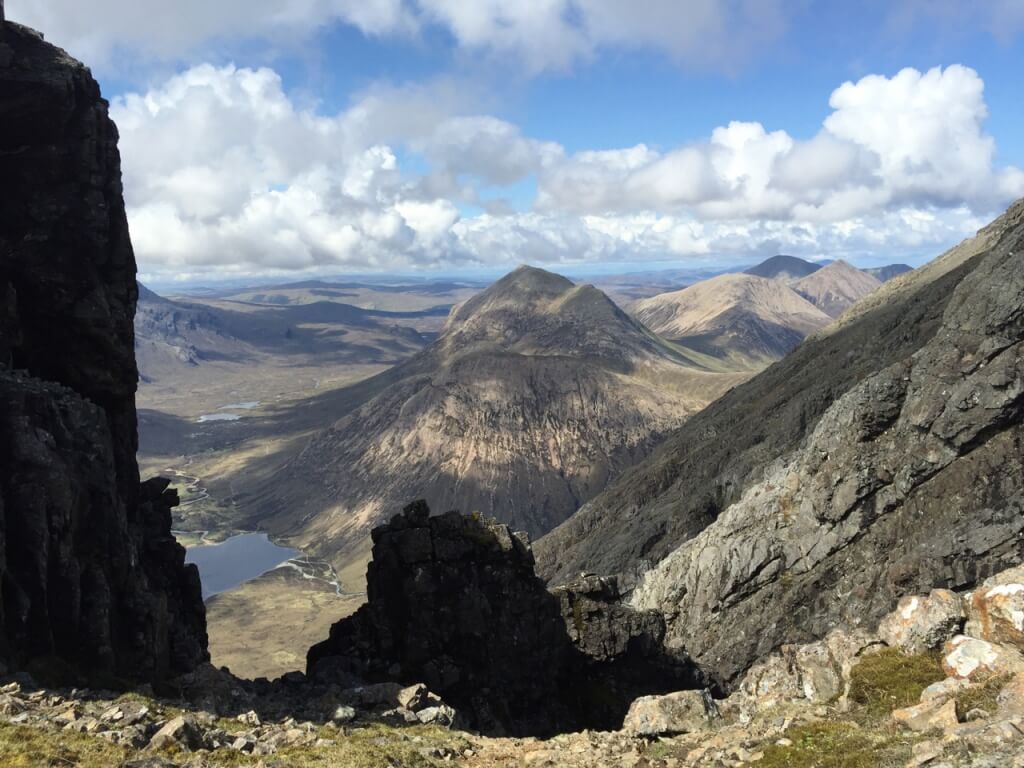
Spectacular views for the Cuillins on the Isle of Skye
The division for the Spring months may be surprising, but here in the Highlands of Scotland, Spring doesn’t really arrive until April. Skye is a wee bit more of a warmer climate than by our home base in the Cairngorms. Being closer to the sea, Spring can arrive earlier and the wildflowers will often start to put on an appearance in March. Our Spring months are more often than not April, May and June. Spring is an amazing time to visit Skye, in particular, as more often than not the dreaded midge has not awoken from her winter slumbers; the days are long and the weather is frequently dry and more often than not, sunny.
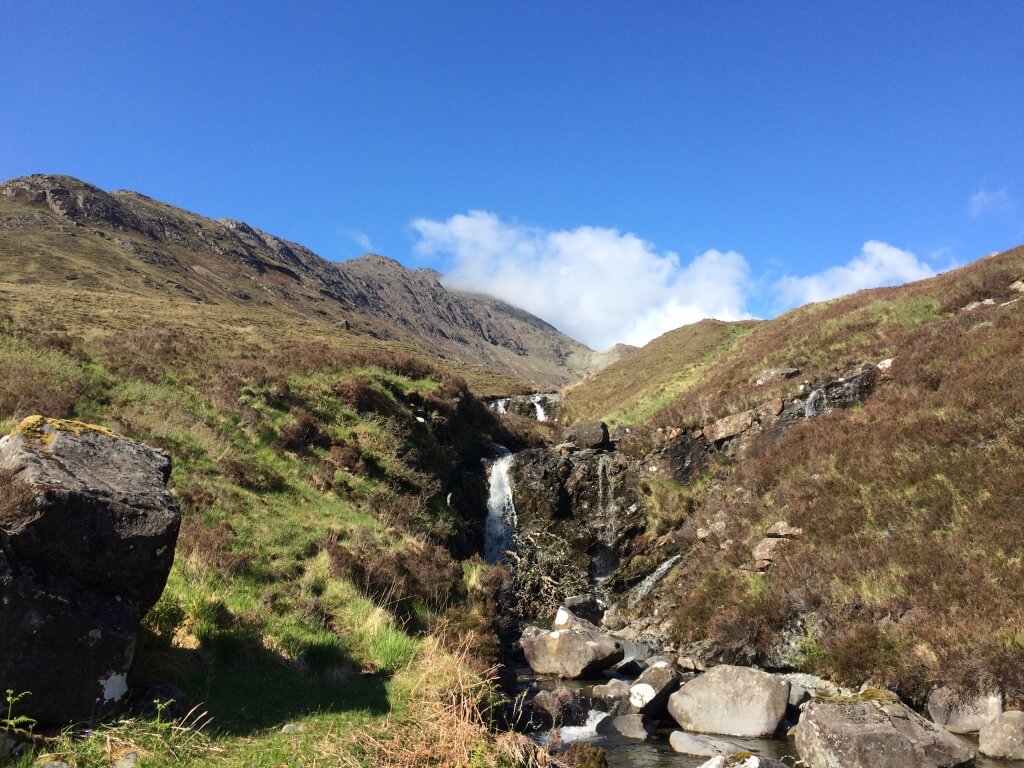
It’s hard hiking the Munros on Skye but all the views make is well-worth it in blue sky weather.
The seabirds, like the gannets and guillemots’ start to return to the cliffs surrounding Skye in Spring. Sea Eagles and Golden Eagles nest on Skye. The Sea Eagles tend to lay their eggs early in the Spring with a 6 week incubation period. The chicks could well be hatching around the time we will be on Skye in May. Once the chicks hatch the Sea Eagles and Golden Eagles are very active hunting for food to feed them. Spring is a very good time to spot the eagles.
Baby lambs will be playing in the fields. Skye is certainly a good place to spot lambs. Plenty of sheep in the lower fields of Skye as well as a thriving wood industry producing both yarn and cloth.
Another advantage of Spring, particularly May, is that the daylight hours are so long. Though we’re not quite at the longest day (mid-June), you can still be out at 10pm without the need for a headtorch.
Seeing the sun still up at 10pm and 3am or earlier is something which astounds most tourists. Be sure to make sure your accommodation has good curtains though if you’d rather have a good night’s sleep. If the sun is out, it can be glaring at 4am and most of us don’t appreciate that when we’d rather be sleeping.
July is the month to see the best of the orchids.
In August, there are plenty of wading birds to be found on the shores of the lochs and the heather is out in full bloom turning the sides of the hills purple. It’s also a really good time to spot whales, dolphins and porpoises.
The biggest disadvantage of visiting Skye in the height of summer is the sheer volume of tourists with the same idea. It can be extremely difficult to find accommodation and the road’s there just aren’t built for the volume of traffic.
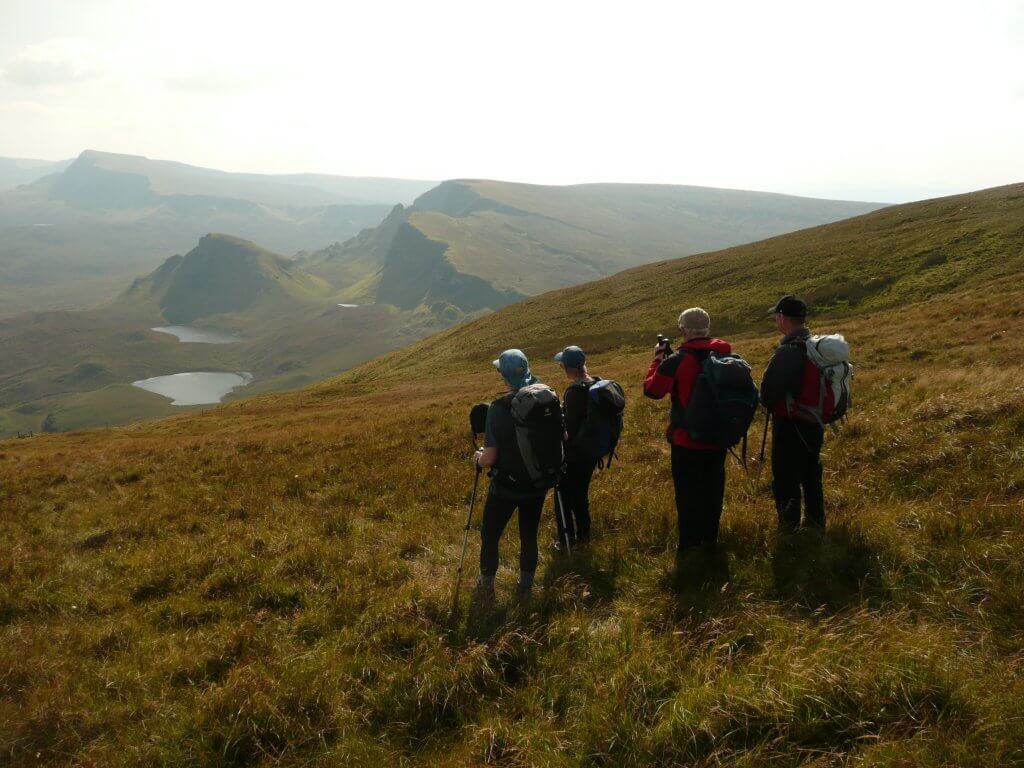
The Trotternish ridge on the isle of Skye
October is far and away the best time to spot the northern lights from Skye and November is the time to see the fireworks display at Dunvegan Castle. The display includes setting fire to a Viking longship. The difficulty for hikers though is that the sun sets before 5pm meaning that it is difficult, but not impossible, to complete a full mountain day in the light. The plus side though is that both sun rise and sun set can be glorious. It’s much easier to spot a good sunrise when it takes place around 7am rather than in the early hours of the morning.
December is an extremely good time to spot the sea eagles who are in the midst of their mating rituals now. The eagles will be soaring in the sky displaying and getting ready to pair up. Winter can also be a very good time to spot red deer who tend to come lower down the hills and can be spotted at the roadside in search of food. It’s also the best time to look for otters.
We’ve picked a prime week in May to visit Skye and pick off the Cuillin Munros. The guided trip will be fully inclusive of accommodation and meals as well as transport to the walks and pick up from Inverness airport, Fort William and Aviemore station depending on your travel arrangements.
We also have our Superlative Skye trip available to groups of 4 or more people. It’s not currently scheduled and our calendar for 2017 is rapidly filling up so do get in touch soon if you’re hoping for us to run this itinerary. We could even make a plan for 2018!
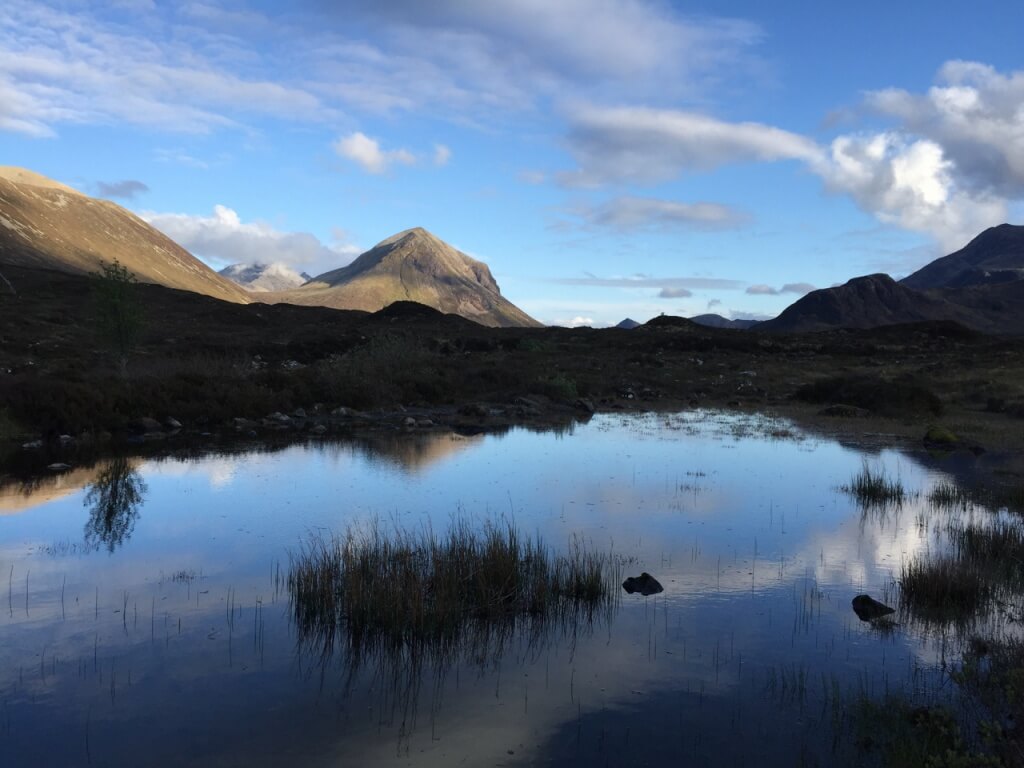
Perfect weather in May 2017 when our group picked off all the Munro summits.
Making the most of your time on Skye
When to visit the Glendale area of Skye
The weather statistics for Glendale
WOW Scotland: the best time of year to visit the Highlands of Scotland
So you’re considering going on a hiking holiday? Firstly; great choice. Not only is hiking extremely beneficial to your health and wellbeing. But it’s also a cheaper way to travel and allows you to experience the essence of a place. Hiking holidays are becoming increasingly popular, but there is the question, how to choose a hike in Scotland when there’s such a wide range available?
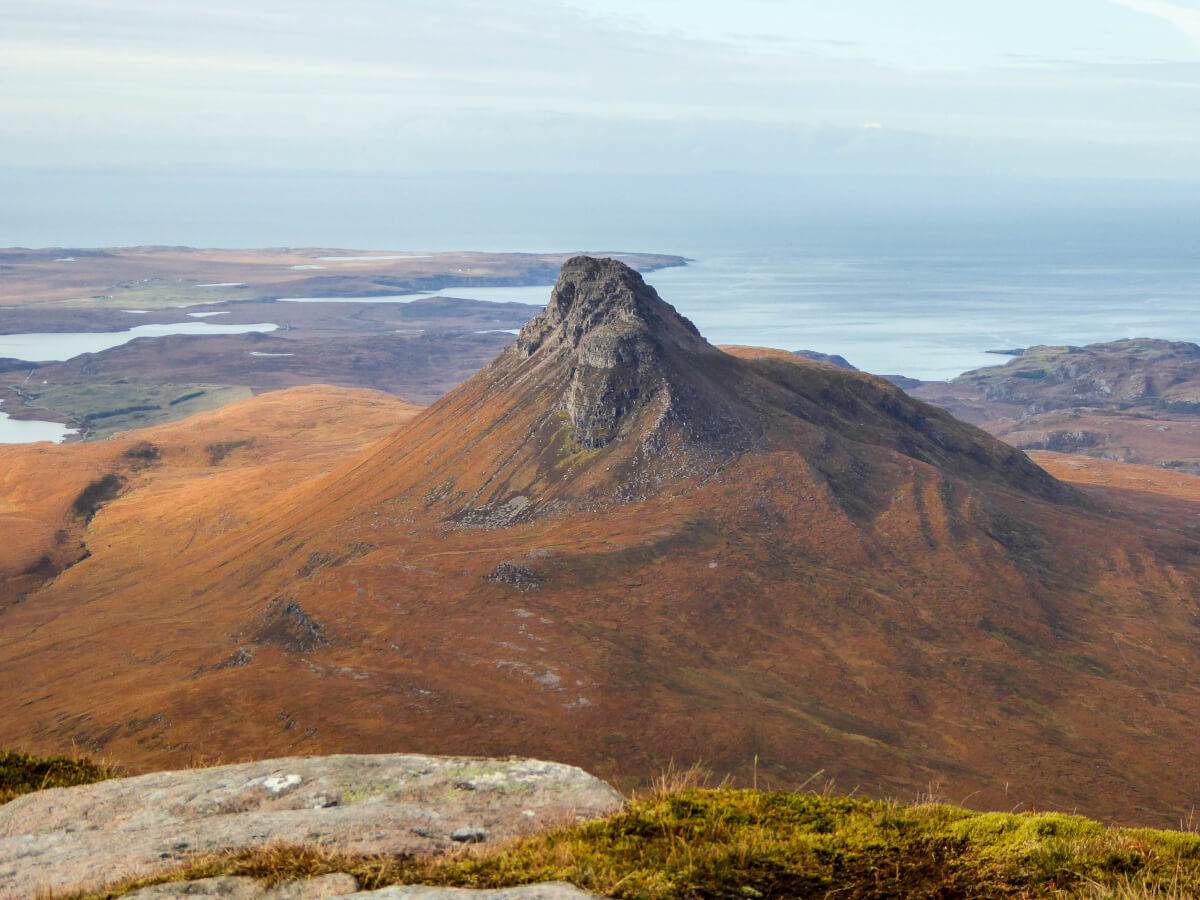
The first thing to consider is if you want to go on a hike or a walk.
Do you want or need a guide? Fortunately, Scot Mountain Holidays have a range of group hiking holidays, tailor made tours, and private guiding options available, so you’ll definitely find the right hike for you. But to ensure you’ve found the perfect hike you do need to consider certain aspects.
Are you intending to go on an inn-to-inn hike? Follow a long distance trail? Or do you want to get into the mountain wilderness areas and have a truly unique and off the beaten track experience?
Are you quite happy hiking on your own but you’d like some guidance on choosing routes, support with transport? Find out about Scot Mountain Holidays self-guided options for the more adventurous.
Tours with Scot Mountain Holidays range from weekend getaways to seven days long. With tours running throughout the year, all that is required is for you to decide on your availability.
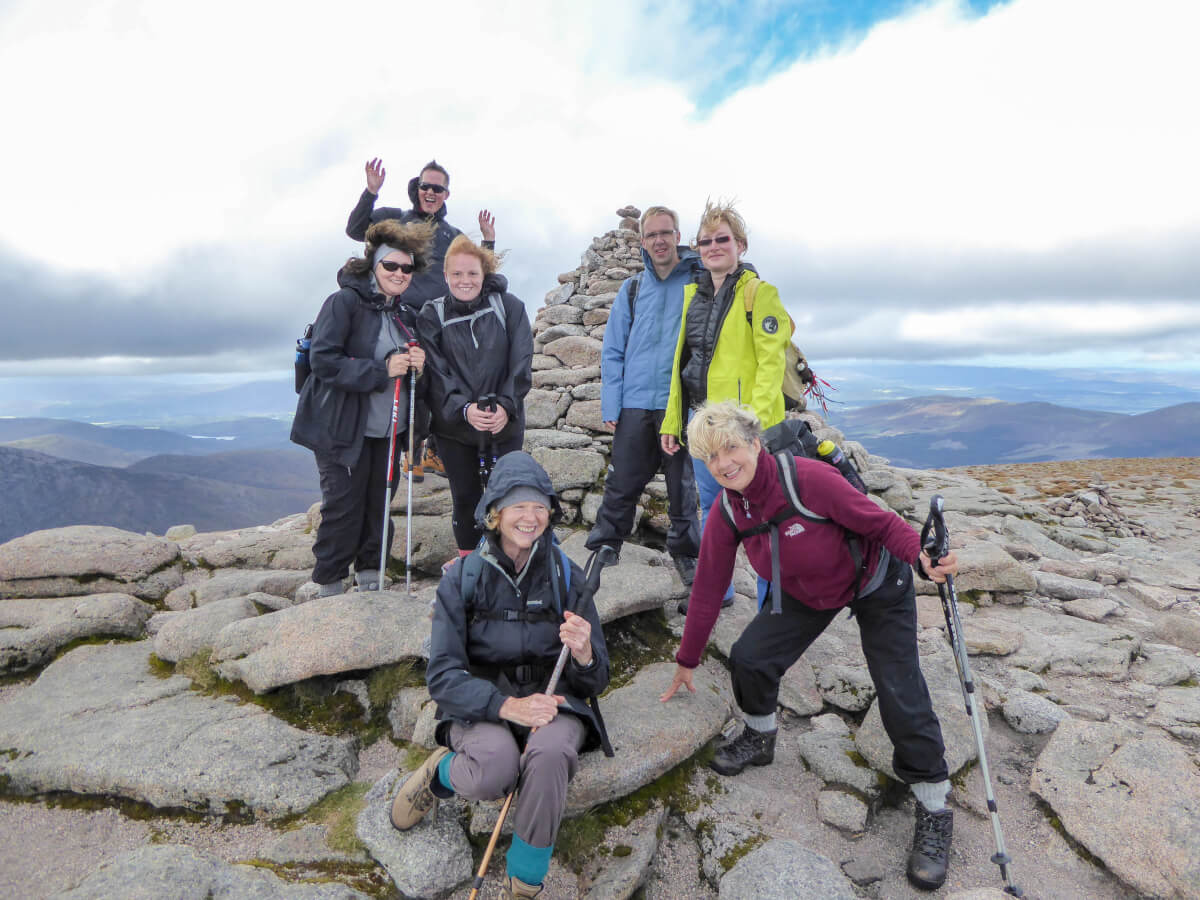
Choosing a season is one of the most important decisions in finding the right hike for you. Spring and summer are the most popular hiking periods and also provide the most pleasant hiking conditions. Perfect for those with families or first time hikers. Autumn is a wonderful season for hiking due to the beautiful colours, the changing environment and lack of climbing traffic. Autumn is suitable for everyone, and ideal for those who prefer a cooler temperature. Winter is considerably more difficult to hike in, and we recommend winter hiking for those confident in their abilities. This is due to the additional gear required and the added challenges of often hiking through snow. Winter is however often a more rewarding experience, with the raw beautiful scenery, clear winter views and the satisfying sense of accomplishment.
Scot Mountain Holiday tours are graded on a level of difficulty from two to five, with five being the most difficult. When considering how to choose a hike in Scotland it’s important to take into account your own level of fitness and choose a tour suited to you. For an overview, refer to the Scot Mountain Holidays grading system.
All Scot Mountain Holidays tours are all inclusive. So, all you need to do now, is chose a hike. To ensure the experience pre, during and post hike is completed stress free for you, Scot Mountain Holidays will take care of the rest.
Winter is a time where people retreat inside and exercise unfortunately takes a backseat. Well not at Scot Mountain Holidays! With the gorgeous Scottish countryside transformed into a winter wonderland, the cooler season becomes one of our favourite. Winter walking also has many benefits. These include, staying active, clear winter views and a sense of accomplishment. So for winter walkers old and new; here are our top tips for winter walking.
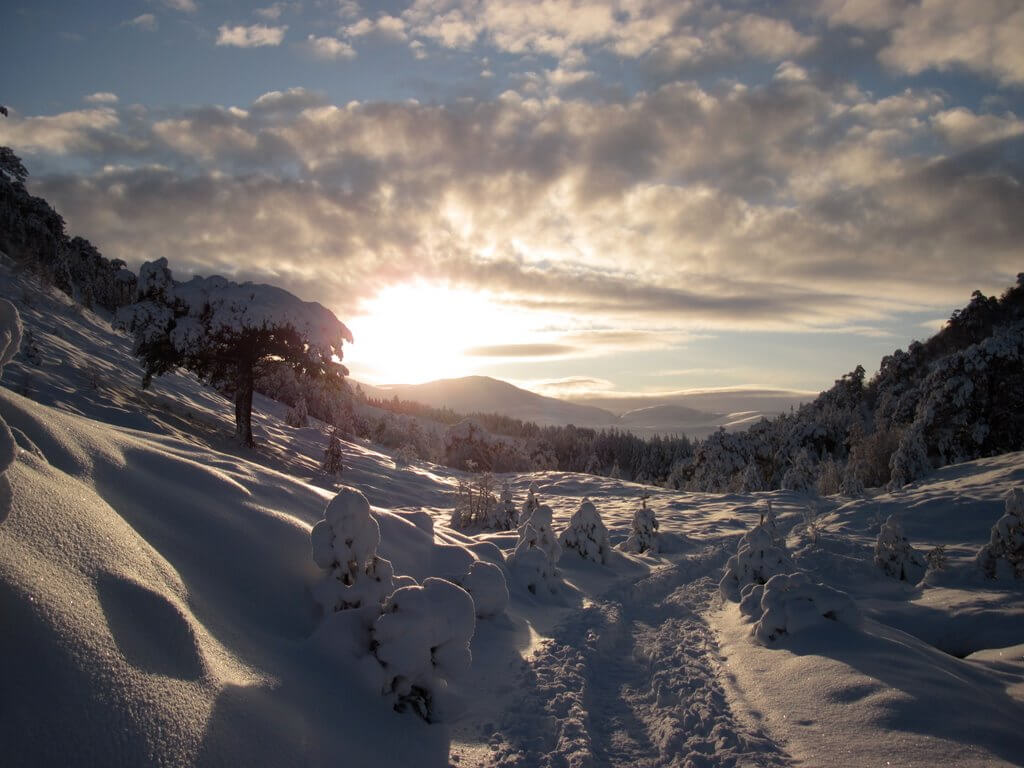
It makes sense that one of the most important things to consider for winter walking is your own comfort. Layering up is a great way to stay warm, and allows easy accessibility to avoid overheating. Avoid materials that will stick to your skin if wet and go for Thermals, fleeces and waterproof jackets.
Getting the right gear for winter walking is vital. Waterproof trousers and jackets are a must have to compete with the mist and snow you might experience. Goggles are a great idea for your face protection along with a buff. And of course, remember to protect your extremities with gloves and a warm hat. However, arguably the most important is boots. Invest in a good pair of hiking boots that have grip and ankle support. Keep in mind that boots, and gear is available for hire through Scot Mountain Holidays, so don’t despair if you don’t have everything you need.
Before heading out ensure you have a big warm breakfast of something substantial. This will keep you’re energy levels up, warm you up and be the right move in starting your day right.
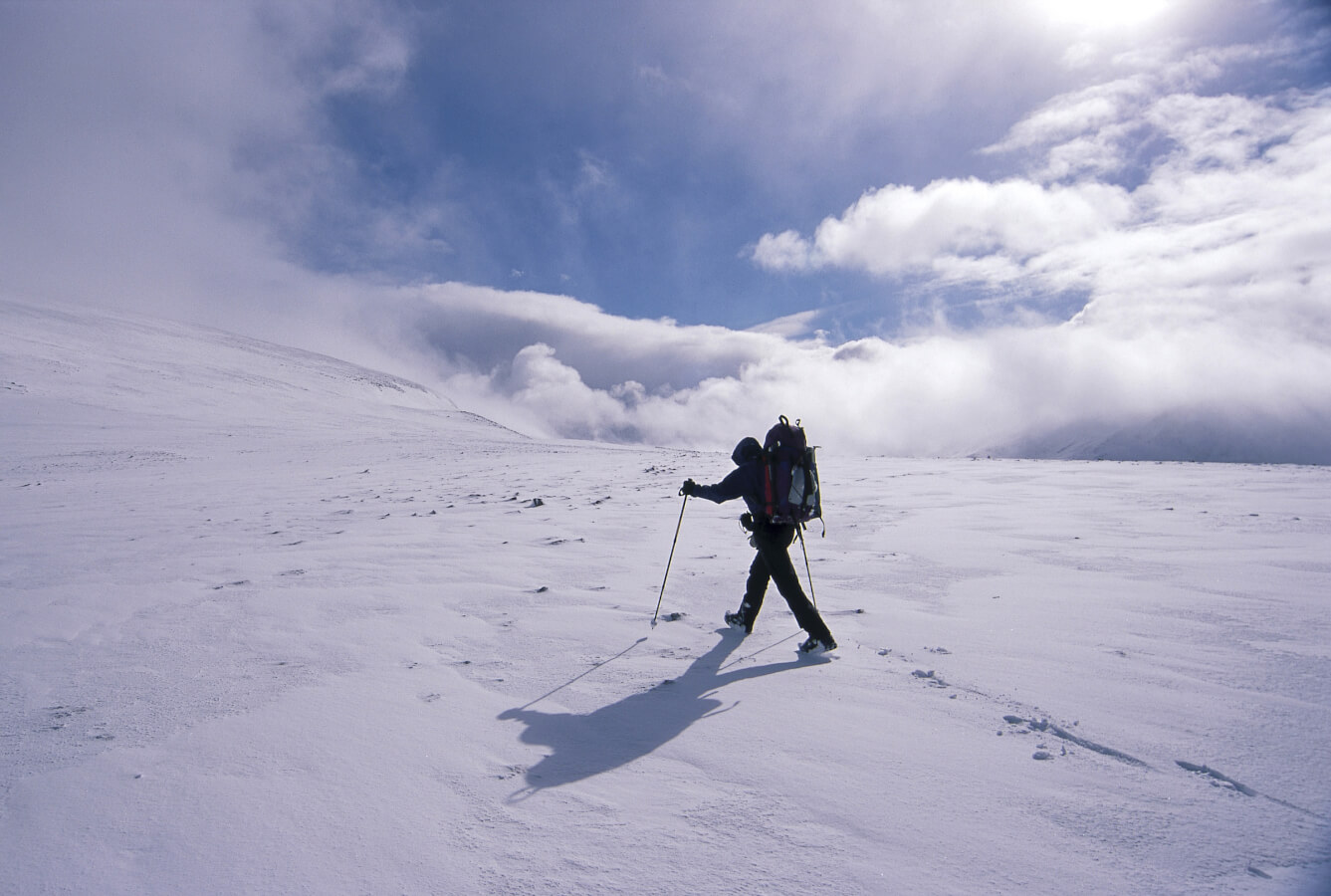
Whether you’re on a guided walking tour with Scot Mountain Holidays or a self guided tour, staying active in the elements is very important. Although you may be tired, remember hyperthermia can set in if you are stationary for too long. So keep your breaks to a maximum of ten minutes, and try to nibble on something every time you stop.
We know that keeping your fluids up in winter is harder than in summer. But, it is by no means less important. When winter walking it’s important to stay hydrated. So similar to eating, remember to hydrate every time you stop and keep your bottle somewhere warm to avoid freezing.
Winter has well and truly hit Scotland and now’s the time to join Scot Mountain Holidays on a winter walking tour. Our top tips for winter walking is just the thing to get you active and reap the rewards this winter.
Travel experiences play one of the most important roles in why so many of us continue to explore the world. Although this age of technology allows us to document almost every part of our day, nothing compares with experiencing something firsthand.
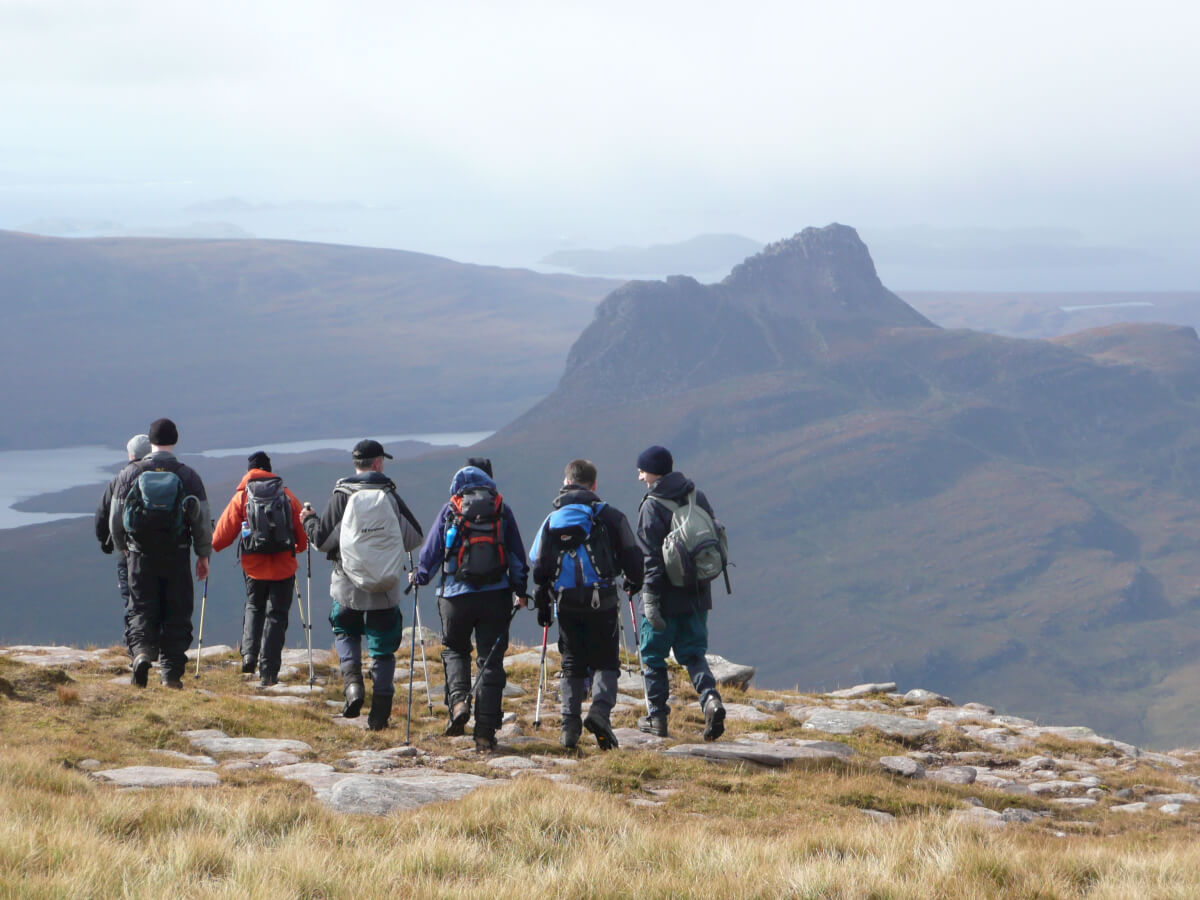
Visiting somewhere you’re not familiar with already means you have an open mind. But exposing yourself to the unexpected when travelling often allows you to broaden your mind so much further. This includes with culture, religion, food and people. Having an open mind and being willing to dive head first into an experience will make travel experiences exceptional.
One of the best things you can do when travelling is get out of your comfort zone. Pushing yourself mentally, physically and emotional often yields the most wonderful of rewards. Scott Mountain Holidays will stretch your boundaries through both tailor made and structured group trips. But not to worry. Your boundaries may be stretched, but with Andy as your guide you’ll be well looked after.
Creating a special travel experience means you need to be willing to embrace interacting with locals, nature and culture alike. This will provide you with a well-rounded experience of a place and the opportunity to interact with likeminded individuals from across the world. Completing a tour with Scot Mountain Holidays will also allow you the rare opportunity to really embrace Scotland.
Photos and videos are such a wonderful way to capture the very best moments of a trip. However travelling is also a wonderful opportunity to take a step away from technology. When travelling, you can be present in the moment rather than experience it through the lens of your phone. So make your travel experience extra special and take the opportunity to really appreciate the place you’re in and what you’re exposed to. Scot Mountain Holidays hiking and walking trips allow you the chance to do this with plenty of opportunities to whip out your camera.
Scot Mountain Holidays is all about the experiences. Participate in walking, hiking or mountain biking holidays in a stunning Scotland, and you’ll go home with travel memories and experiences that will stay with you forever.
 Scot Mountain Holidays (Ltd),
Fraoch Lodge, Deshar Road,
Boat of Garten,
PH24 3BN
Scot Mountain Holidays (Ltd),
Fraoch Lodge, Deshar Road,
Boat of Garten,
PH24 3BN




All content © Copyright Scot Mountain Holidays 2026
Responsive web design by Summit Web Solutions
