




 On October 8, 2026
 By Rebecca Field
You’ve walked with us before. What comes next?
For many of our guests, choosing a walking holiday with Scot Mountain Holidays starts quite simply. They see a trip on our website that appeals to them – perhaps a week in the Cairngorms, a Munro trip on Skye or a walking holiday in Assynt – and decide that it is an area or a set of mountains they’d like to explore. We have already chosen the base, planned the programme and worked out the logistics; their decision is whether that particular holiday is right for them.
But some of our guests don’t stop there. We’ve had people come back to walk with us year after year – and after a while, planning their next holiday becomes a rather different exercise.
If someone has already climbed a good number of the Cairngorm Munros, walked in Assynt, explored Skye and tackled some of the classic routes, where do you take them next?
As it turns out, there is still quite a lot of Scotland left to explore.
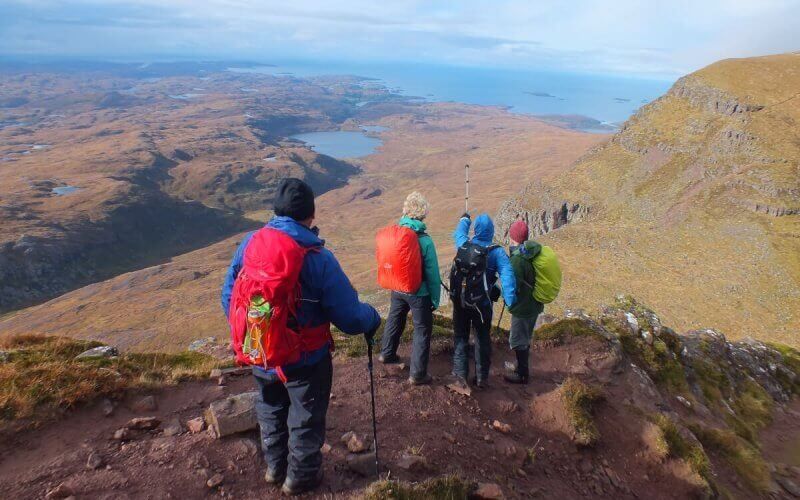
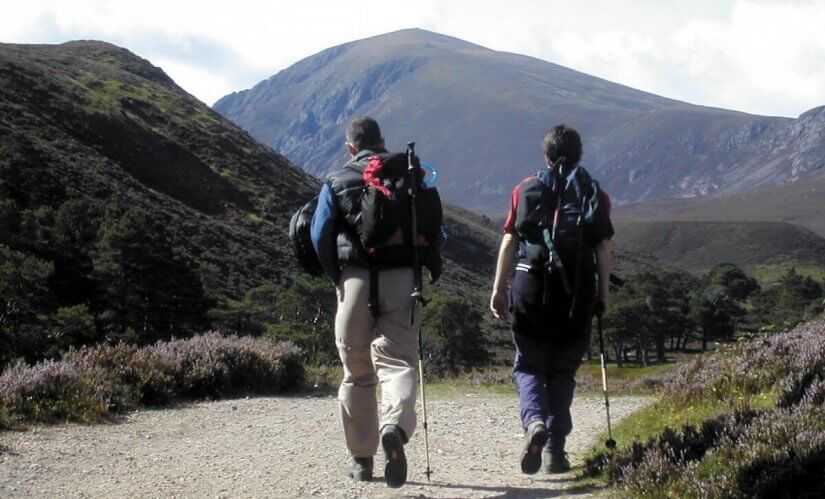
Hikers descending from a long day’s hike in the Assynt area (Scotland)
The guest isn’t starting from scratch
For a first-time guest, the starting point is usually the trip itself. For a returning guest, the starting point is what they’ve already done with us.
Over several trips, we’ve got to know how they walk, what they enjoy and what they are comfortable with. We know whether they particularly enjoy long mountain days or prefer a mixture of walking, scenery and exploring. We may know that they have a particular interest in geology or wildlife, or that they are keen to continue working their way through the Munros.
We also have a much better idea of what sort of accommodation and pace suits them.
That makes planning the next trip rather more interesting. Instead of starting with a blank sheet of paper, Andy can start with what the group has already experienced and work out where they might go from there.
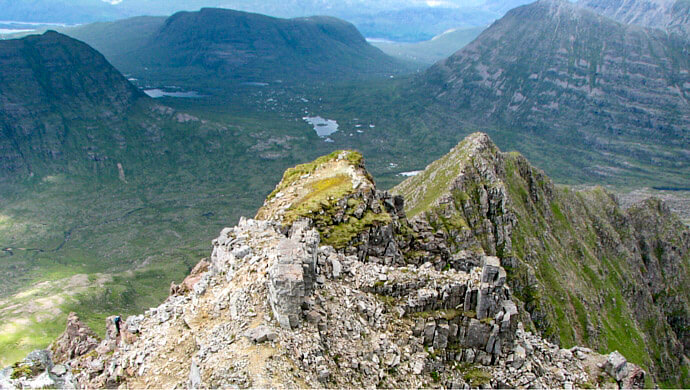
The spectacular sandstone peaks of Torridon, over 2500 million years old
“We’ve got some Munros left…”
One of the conversations we particularly enjoy is the one that starts with something along the lines of: “What should we do next?”
For some returning guests, the answer is fairly straightforward. They still have a list of Munros they haven’t climbed, perhaps in an area they’ve already enjoyed, and Andy can look at the map and work out which ones make sense to combine into a week.
It isn’t necessarily as simple as choosing the next five or six mountains on the list, though. The hills need to work together as a programme, and there needs to be some flexibility in the choice of routes and objectives.
Sometimes there will be a group of unclimbed Munros which fit naturally into a particular area. At other times, the fact that someone hasn’t visited a particular part of the Highlands before becomes the starting point.
This means that some of our walking holidays don’t begin with a trip that already exists on the website. They begin with a conversation about where someone has already been, what they have enjoyed and what they would like to explore next.
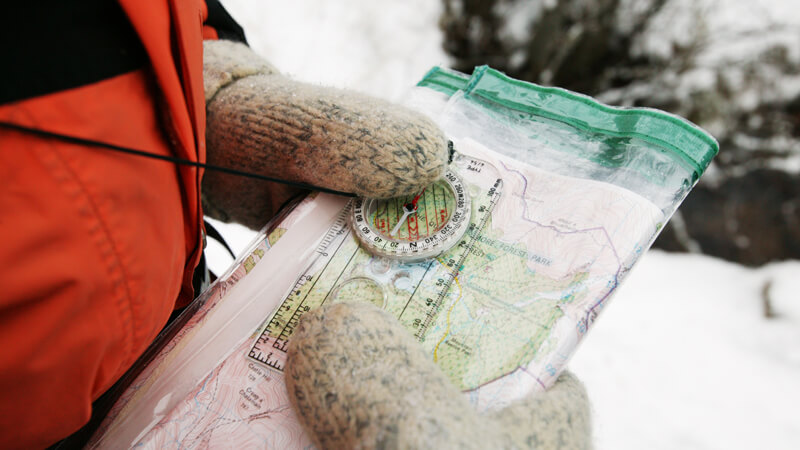
Andy then starts looking at the map.
Winter walking in the Cairngorm Mountains, Aviemore, Scotland. Photograph shows Andy Bateman, a professional mountain guide who runs a holiday walking company called Scot Mountain Holidays (c) David Mansell
The map looks rather different when you know what they’ve already done
For a first visit to Scotland, there are plenty of obvious choices. The Cairngorms, Skye, Glencoe, Torridon and Assynt all have mountains and landscapes that people may have been dreaming about visiting for years.
But once you’ve explored some of those places, the question changes.
Perhaps there are still some Munros to climb. Perhaps there is a whole area you have driven through but never really explored on foot. Or perhaps you’ve climbed plenty of mountains and are now more interested in seeing a different side of the Highlands.
That is where having someone who knows the area well can make a difference.
Andy isn’t just looking at which hills are left on a list. He’s thinking about how they fit together, what else there is to see, where the group could stay, how the walks might work as a week and what alternatives there would be if the weather doesn’t cooperate.
And because we’re usually based in one place for several nights, the programme can be built around an area rather than around moving from one accommodation to another.

Gentle walking in the Cairngorms
Sometimes the next trip is about something different
Returning guests don’t necessarily want to spend every subsequent holiday ticking off more Munros.
After several years of mountain days, it can be just as appealing to explore somewhere new, walk some less obvious routes or spend more time looking at the landscape itself.
That might mean a week in an area known for its geology and wildlife, a mixture of longer and shorter walks, or simply going somewhere the group hasn’t been before.
One of the advantages of having walked with the same people previously is that we don’t have to start by explaining what a walking holiday with us is like. We can build on what they already know and concentrate on finding something that will interest them this time.
There is still plenty of Scotland left
This is perhaps the best thing about having guests return year after year. Scotland doesn’t run out of possibilities simply because you’ve climbed a few mountains.
There are more Munros, of course, but there are also Corbetts, lower-level hills, glens, lochs and coastal landscapes. There are areas where the geology is as interesting as the walking, wildlife to look for, historic sites to explore and completely different landscapes just a few hours’ drive away.
And sometimes the most enjoyable challenge is not finding another mountain to climb, but finding somewhere that feels completely different from the places you’ve already walked.
We’ve always enjoyed designing holidays around the people coming on them. With returning guests, that process becomes even more rewarding because we have a shared history to work from.
So if you’ve walked with us before and are wondering what comes next, you don’t necessarily need to find the answer yourself.
Give Andy a map, tell him where you’ve already been, and see what he comes up with.