




 On May 20, 2026
 By Rebecca Field
Discover what 25 years delivering guided walking holidays in Scotland has taught us
When I moved up to the Cairngorms National Park in 1999, I was completely unprepared.
For me, it was an adventure rather than a carefully thought-out life plan. I had very little sense of the geography and only a vague understanding of what daily life in the Highlands might actually look like. Fortunately, Andy had been thinking about moving to Scotland for years. He already knew the area far better than I did and had long imagined building a life here, although at the time the finances didn’t quite stretch to making it happen.
Then, gradually, the stars aligned and the move became a reality.
Looking back now, after 25 years of living and working in the Cairngorms, neither of us would choose to return to the lives we left behind. The landscape becomes part of you in ways that are difficult to explain until you’ve spent time here through all the seasons — long June evenings, crisp winter mornings, the first dusting of snow on the hills, the brief intensity of heather in late summer.
The comments our guests make at the end of a holiday often reassure us that we made the right decision to stay.
Weather is Rarely the Thing People Remember Most
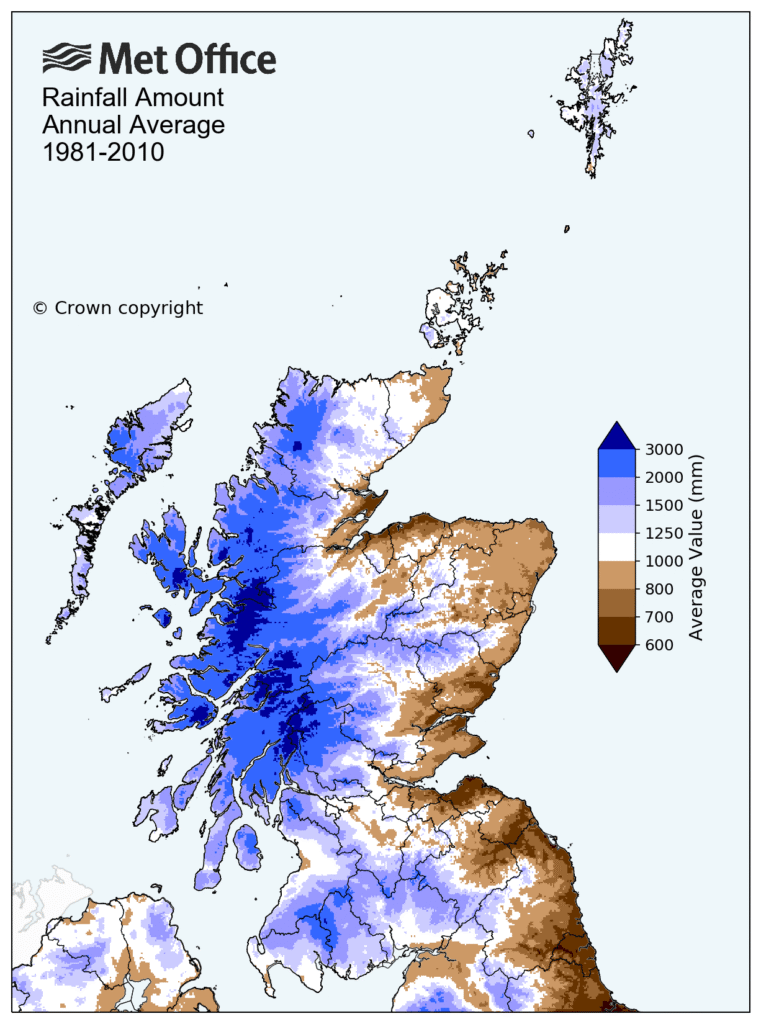
Before we moved north, we knew that this part of Scotland had a drier climate than many people expect. Compared with the west coast, the eastern side of the Highlands receives significantly less rainfall and, thankfully, fewer midges. That was definitely part of the attraction for us.
One of the most common comments we hear from guests is:
“We’ve been so lucky with the weather.”
Usually, though, it isn’t luck.
Many visitors arrive expecting relentless rain because their impression of Scotland has been shaped by images of stormy glens or previous visits to the west coast. In reality, the Cairngorms often sit in their own weather system. During the Jurassic Age, this area would even have been described as arid.
One thing 25 years here teaches you is how much local weather patterns matter. A forecast showing rain for the northern Cairngorms does not necessarily mean a wet day on the trails. Very often, if the forecast only shows a 30% chance of rain, it never arrives at all.
Over time, you also learn not to obsess about forecasts. Conditions change quickly in the Highlands and some of the best walking days begin with low expectations.
And yet, despite all the conversations about weather, it is rarely the thing people remember most vividly when they return home.
Guests are far more likely to talk about:
- the silence on a forest trail;
- watching light move across the hills late in the evening;
- spotting red squirrels
- returning to warm hospitality after a day outdoors;
- or simply the feeling of having space to breathe properly again.
If they’ve joined us for guided walking, they often remember how quiet the routes felt compared with the more heavily promoted Highland hotspots. Solitude is something that still exists here — if you know where and when to look for it.
-
The best days are often not the biggest summit days
When we first moved to the area, our attention was very firmly fixed on the mountains. There seemed to be an endless number of Munros right on the doorstep and, naturally enough, they became our focus.
At that stage, I don’t think we fully appreciated the extraordinary diversity of the landscape around us. That appreciation has grown slowly over the years.
Now, some of our favourite days are not necessarily the big summit days at all. They are the quieter walks through regenerating pinewoods, the lower-level routes alive with birdsong in spring, or the evenings when the light filters sideways through the ancient Scots pines.
Occasionally, over the years, we’ve had guests joking that “the trees spoil the view”. Fortunately, that view is becoming much less common. More and more visitors now arrive specifically because of the forests and the growing awareness of landscape restoration taking place across the Cairngorms.
Projects such as Cairngorms Connect and Scotland: The Big Picture have helped people understand that this landscape is not simply a backdrop for walking holidays, but a living ecosystem slowly rebuilding itself.
Many guests are genuinely moved by seeing young native woodland spreading across hillsides that would once have been almost bare. Others are surprised by how much wildlife returns when habitats are given space to recover.
After 25 years here, one of the biggest lessons has been that the Cairngorms reveal themselves gradually. The mountains may first draw people in, but it is often the quieter details — the forests, rivers, wildlife and sense of space — that keep them coming back.
-
Small groups work better in wild places
We’ll never be millionaires, but we genuinely love what we do.
One of the pleasures of running a small business is being able to offer a personal experience to the people who choose us to show them the Highlands. Over the years, this landscape has become deeply woven into our lives. Whenever we travel away, there is always a real sense of homecoming when we return to the Cairngorms.
Living here year-round also reminds us not to take the area for granted. We know how fortunate we are to call this place home and we want our guests to experience it in a way that feels calm, unhurried and connected to the landscape around them.
That is one of the reasons we keep our groups small.
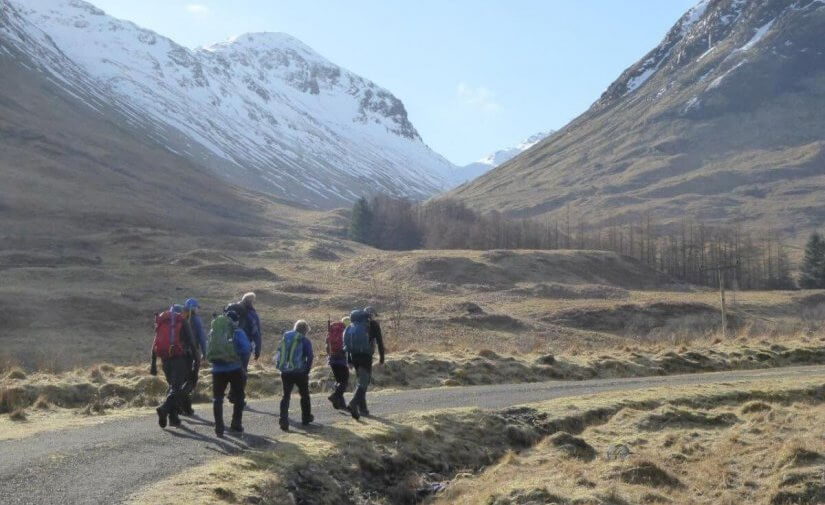
In wild places, smaller groups simply work better. We move more quietly through the landscape, which means we are far more likely to spot wildlife. Conversations are easier. The pace feels more relaxed. Plans can be adapted more naturally to weather, energy levels or opportunities that arise during the day.
In winter especially, smaller groups also allow us to look after people more carefully in challenging conditions. Good guiding is never just about reaching a destination; it is about creating an environment where people feel confident, supported and able to enjoy being outdoors safely.
-
Guests Value Flexibility More Than Ticking Boxes
We publish itineraries for all our trips and we genuinely aim to follow them as closely as possible. However, when guests ask Andy about the plan for the next day, he is often reluctant to commit to much more than the breakfast time.
After 25 years in the Highlands, we have both learned that forecasts can change overnight and that plans sometimes need to adapt to conditions, energy levels and the interests of the group. Occasionally, we also discover over breakfast that not everyone is quite as enthusiastic about an early start as they were the night before.
Admittedly, this approach can make logistics and catering a little more complicated behind the scenes, but it is also one of the reasons many guests choose to return to us year after year.
Of course, many people join our trips specifically to walk Munros and there is still enormous satisfaction in reaching a long-planned summit. But most guests are not simply interested in “ticking off” peaks. They want to enjoy the experience: to see the views, stay safe, avoid the worst weather where possible and finish the day feeling they have had a rewarding day in the mountains rather than simply endured one.
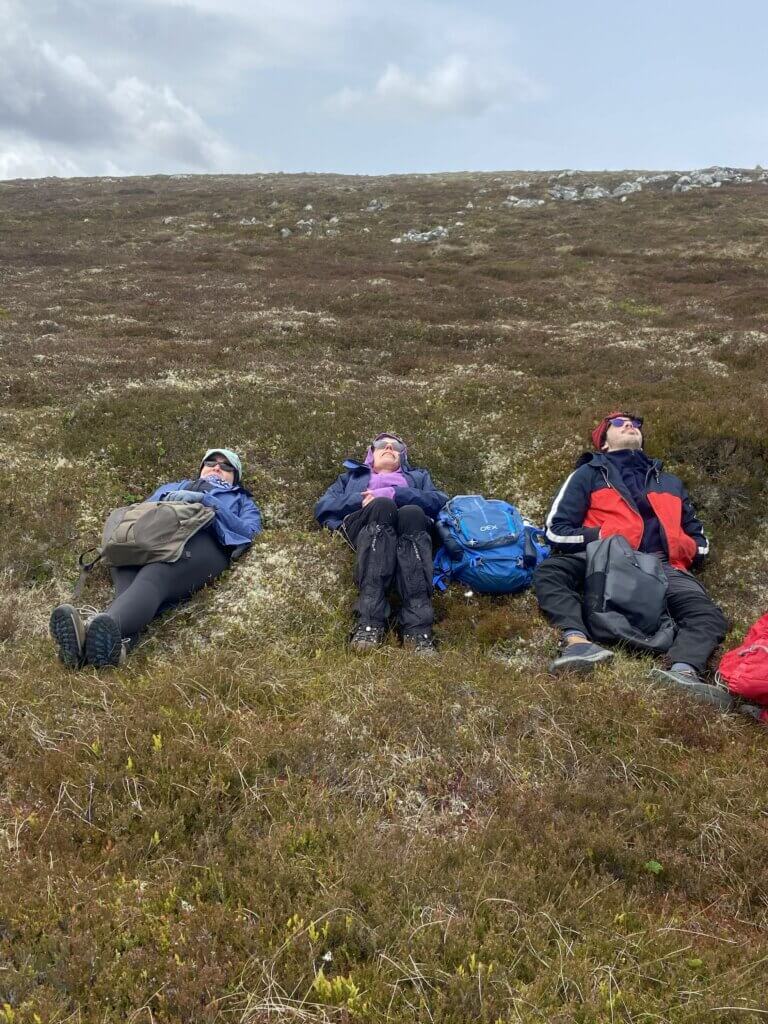
Sometimes, changing the order of walks during the week makes all the difference. A route that would feel bleak and difficult in cloud and rain can become unforgettable in clear evening light a day later.The Scottish weather will always do what it wants. Our job is simply to make the best possible use of whatever conditions the Highlands decide to offer.
-
Wildlife sightings come from knowledge not luck
Andy has always been an amateur wildlife enthusiast. It probably began with birdwatching in the garden when he was younger and developed further during his years working as a gardener, where paying attention to seasonal changes and wildlife became part of daily life.
Now, after more than 25 years of guiding walks in the Scottish Highlands, he seems to have developed almost a sixth sense for spotting wildlife. He will invariably notice deer long before I do — even when he’s the one driving.
Guests are often amazed by how much wildlife they see during a week with us, but many sightings are less about luck than about experience, timing and knowing how to move quietly through the landscape. Smaller groups help too.
At the end of a walking day, Andy will often come home talking as enthusiastically about the wildlife and wildflowers people spotted as he does about the walk itself. It might be a golden eagle overhead, an early orchid beside the trail, or simply noticing how the birdlife changes between the pinewoods and the open moorland.
And even after all these years, there is still plenty to learn. If we spot something unfamiliar or unusual, the identification books usually appear after dinner. One of the pleasures of spending so long in the Cairngorms is realising that the landscape never quite stops teaching you something new.
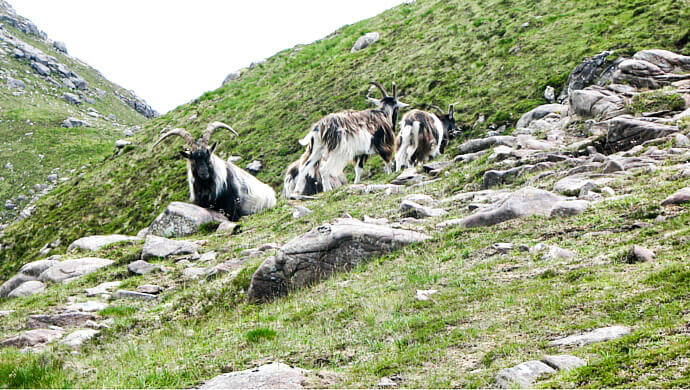
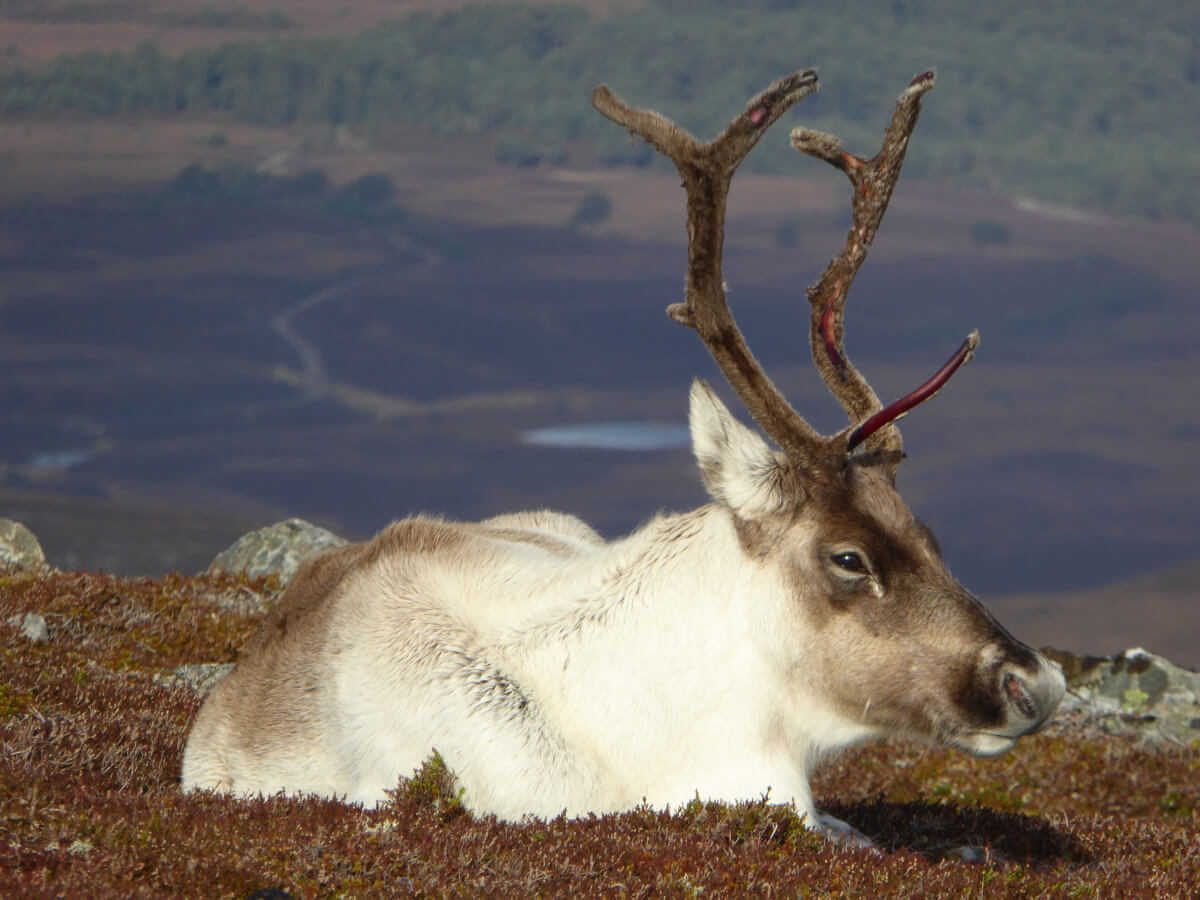
There’s unusual wildlife to spot as well in some spots.
-
Hospitality matters as much as guiding
We have always chosen to offer hospitality alongside the guiding rather than treating the walking as a completely separate experience. Looking back, that probably comes from our own travels over the years.
The trips that stay with us most strongly are rarely the ones with the grandest hotels or the busiest itineraries. They are the experiences where local people welcomed us warmly, shared their knowledge generously and helped us feel connected to the place we were visiting.
We have tried to create that same atmosphere here in the Cairngorms.
For many guests, the walking may be the reason they first book a holiday with us, but it is often the small moments around the edges of the day that become equally memorable: conversations over breakfast, returning to tea and cake after a wet afternoon outdoors, discussing route options over dinner or sharing stories with other guests in the evening.
Over the years, we have also noticed that many of our returning guests place enormous value on those personal connections. Quite a few have strong family traditions of walking, travelling or spending time outdoors together, and perhaps that is one of the reasons small-group holidays resonate so strongly with them.
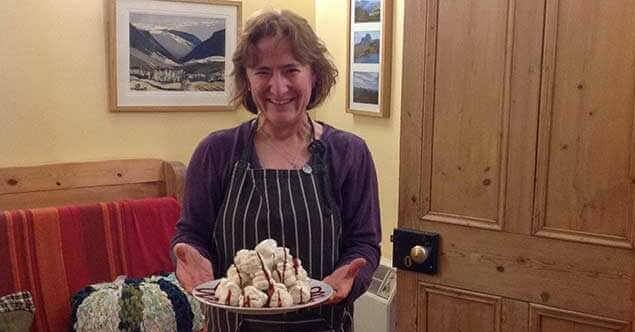
Amazing meals at Fraoch Lodge
Conclusion
After 25 years in the Cairngorms, one of the biggest things we have learned is that people rarely come to the Highlands simply to “complete” walks or tick famous places off a list.
What they remember most vividly is how a place made them feel.
The weather, the mountains and the scenery all matter, of course, but so do the quieter things: the sense of space, the wildlife, the conversations, the flexibility to adapt to conditions and the feeling of being guided by people who genuinely know and love the landscape themselves.
Perhaps that is why so many of our guests return. The Cairngorms are not somewhere you ever fully finish discovering — and after all these years, we still feel we are learning too.