




 On February 18, 2026
 By Andy Bateman
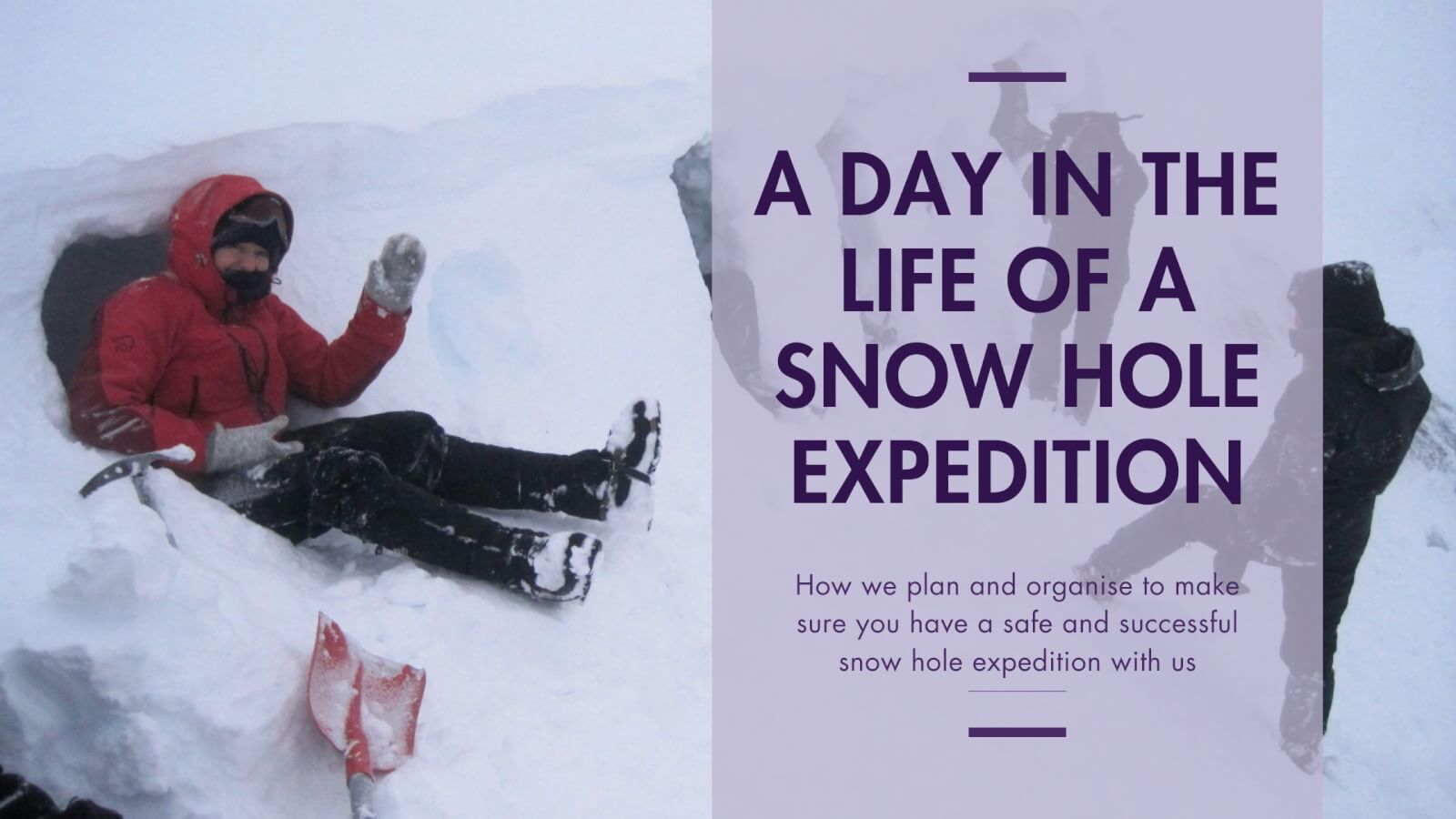
A Day in the Life of a Winter Snow Hole Expedition
Snow-Holing in the Cairngorms with Scot Mountain Holidays
What is it really like to spend a night snow-holing in the Cairngorms?
For many of our guests, a guided winter expedition in Scotland is something they’ve dreamt about for years. Sleeping in a snow-hole, digging into a drift high on the plateau, cooking a hot meal by candlelight — it sounds adventurous (and it is). But it’s also carefully planned, methodical and rooted in decades of experience.
Here’s what expedition day actually looks like.
6:30am — Weather First, Always
Expedition day starts early.
The radio goes on at 6:30am and the first task — before tea is even finished — is checking the mountain weather forecast. In the Cairngorms, conditions can shift dramatically overnight. A promising forecast can tighten into a narrow weather window. A calm day can gain edge.
Key questions shape the plan:
-
Is the forecast holding?
-
Are wind speeds within safe limits for the plateau?
-
Do we head further for a wilder feel?
-
Or do we choose a nearer site with easier retreat options?
Winter skills guiding in Scotland is about flexibility. The plan is never rigid. Even once we leave the lodge, we continue assessing the weather and snow conditions throughout the day.
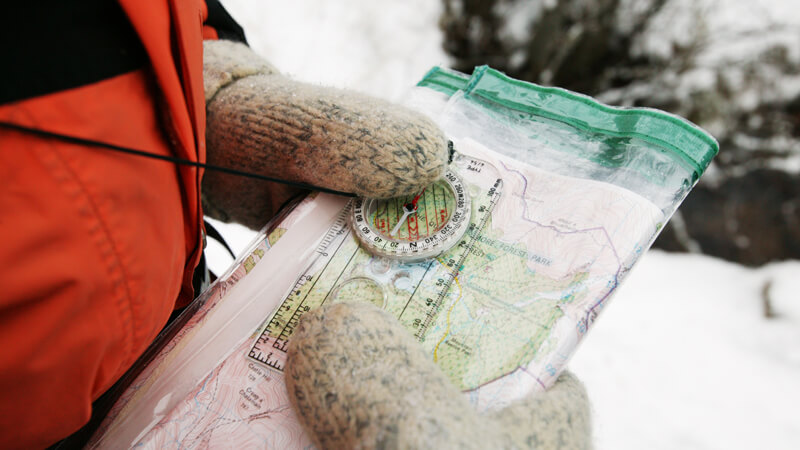
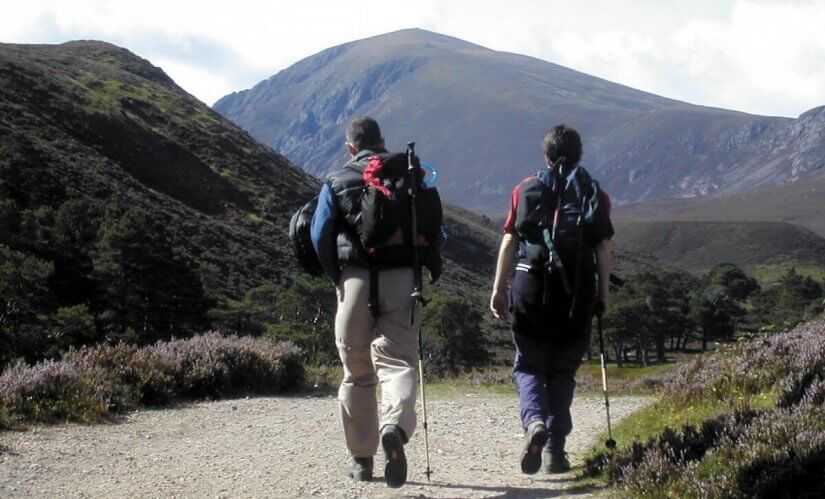
Winter walking in the Cairngorm Mountains, Aviemore, Scotland. Photograph shows Andy Bateman, a professional mountain guide who runs a holiday walking company called Scot Mountain Holidays. Walkers are taught winter mountain skills such as navigation, using an ice axe and walking across ice using crampons.
map reading using a compass
photograph by David Mansell.
Breakfast, Kit Checks & Snow-Hole Design
Over breakfast we talk through the day. Guests check gloves, sleeping mats and personal kit. In winter, small details matter.
Before we leave, there’s a briefing on snow-holing technique — and design.
Snow-holes in Scotland are different from the textbook alpine versions you may have seen online.
The Cairngorms are often cold, but perhaps not in the way people expect. While valley bottoms have recorded temperatures approaching -30°C, the Cairngorm summit record is closer to -16°C. At typical snow-holing height on the plateau, seasonal lows might reach -10°C, but most winter nights are nearer -5°C or above.
So Scottish snow-hole design is not about trapping heat at all costs.
It’s about:
-
Efficient digging
-
Strong structural integrity
-
Good ventilation
-
Managing condensation
-
Avoiding unnecessary complexity
There’s no need for elaborate sleeping platforms or deep cold-air drains. Instead, we focus on airflow and safety. Ventilation is critical. So is keeping the build time realistic in winter conditions.
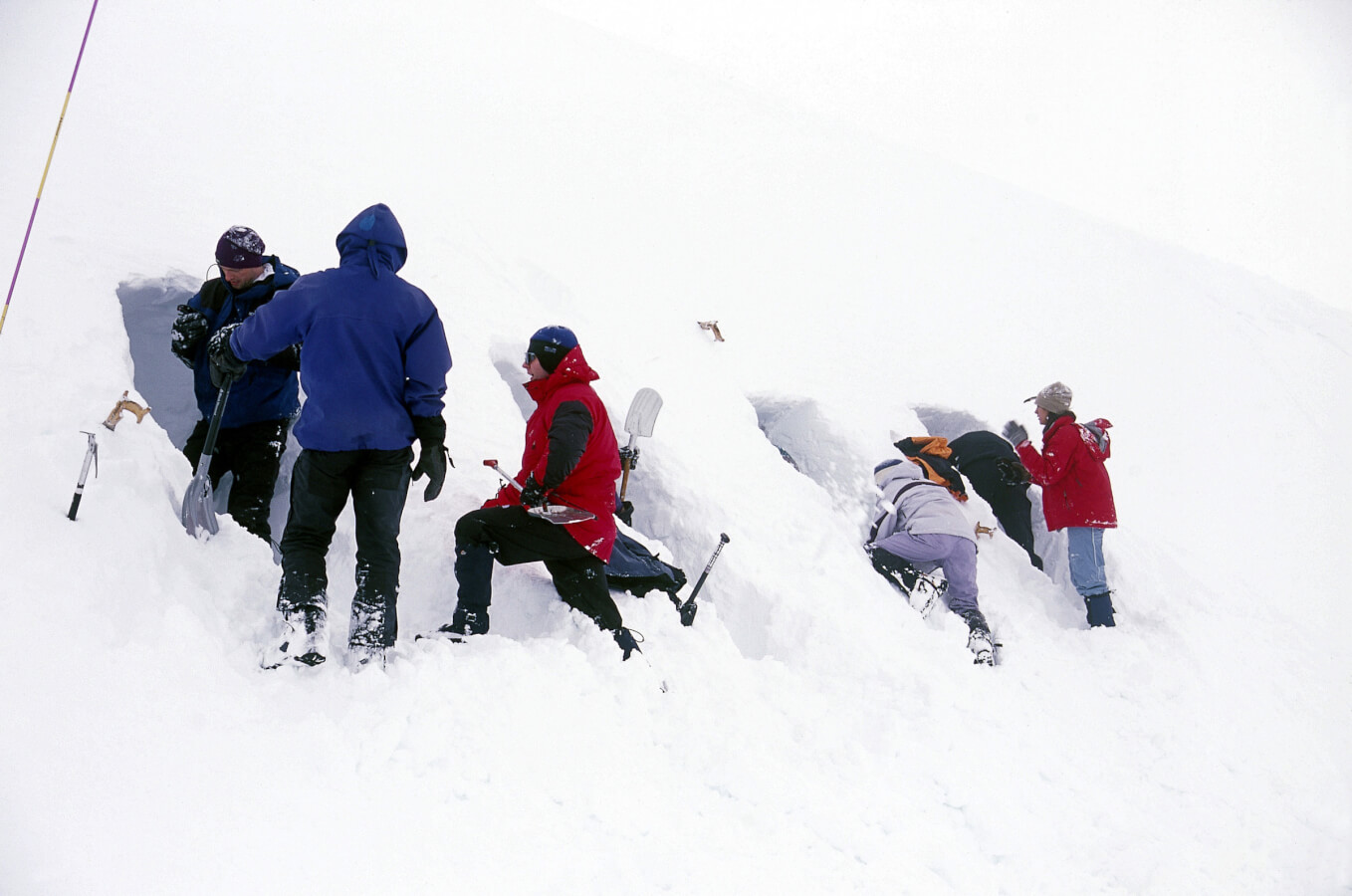
Digging in for a snow hole overnight in the Cairngorms
Packing the Communal Kit
Each person carries a shovel. Snow saws are shared — and in Scottish snow they need to be robust. Our winter snow can range from light powder to what I can only describe as “alabaster marble.” A weak saw doesn’t survive long.
Alongside digging tools, we carry:
-
Cooking stoves and fuel
-
Candles
-
Camping pots and pans
-
Dehydrated homemade meals (weight matters)
-
Group safety equipment
With packs loaded, we head up and out onto the Cairngorm plateau — often towards the Ben Macdui massif — into a true winter landscape.
Choosing the Snow-Hole Site
On arrival at a potential site, the group rests while I assess:
-
Snow depth
-
Snow stability
-
Wind loading
-
Angle of slope
Ideally, we dig into a deep, stable bank. A steeper face reduces digging time. But if there are any concerns about wind slab or structure, we move to a gentler gradient — which means more work, but greater safety.
Once the site is confirmed, entrances are marked out.
Guests pair up — two to a doorway. I’m not a fan of isolated two-person snow-holes. Snow absorbs sound remarkably well. Separate holes can leave people feeling disconnected from the wider group. A communal design provides both psychological comfort and practical awareness.
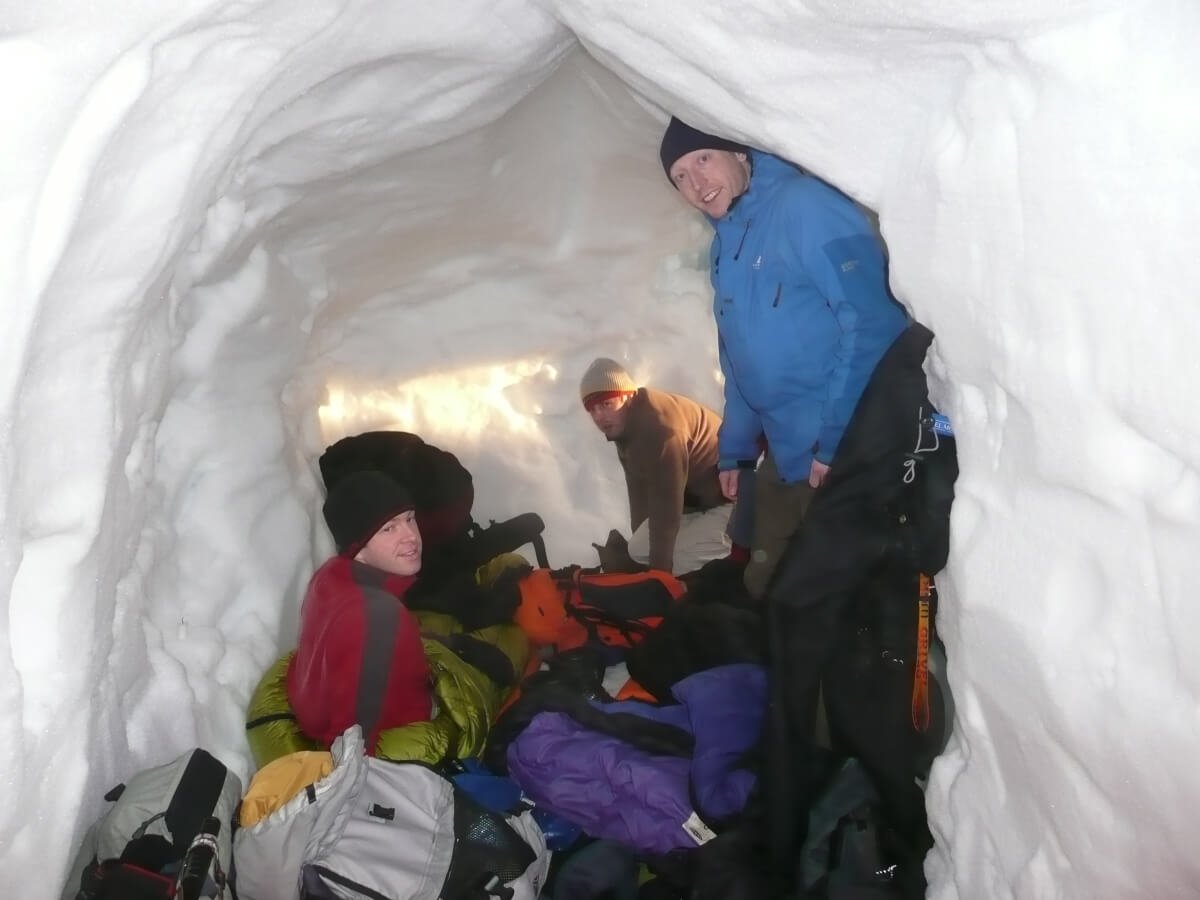
Here you can see quite clearly the shape of the apex centre for our snowhole.
The Dig: Slow Progress, Then Breakthrough
The first metre is about strength.
Each entrance is driven in at least a metre before we widen the chamber. This maintains a solid front wall — critical for structural integrity.
At first, progress feels slow.
You dig forward 1.5 metres. There’s no sense of space yet — just compact snow and the steady crunch of shovels. You turn sideways and begin cutting toward the neighbouring team. The only sound is your own effort.
Then — faintly — you hear another crunch.
Not yours.
Another. Louder this time.
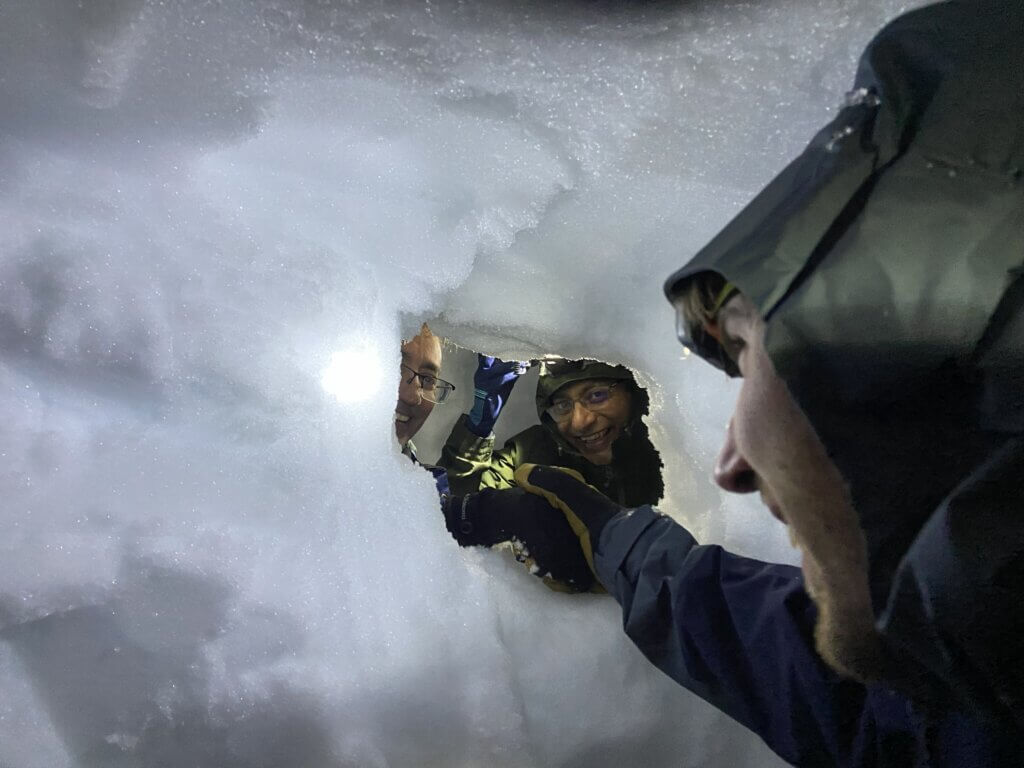
Momentum builds. Suddenly there’s the unmistakable clash of blades as the two tunnels meet. Relief. Laughter. Energy returns.
Now the chamber opens quickly. Snow is removed from three sides. Walls are squared. The floor is levelled. The apex of the roof is shaped carefully for strength. Ventilation holes are angled upward at high points.
Doorways are partially blocked with snow blocks — but never without ensuring airflow remains sufficient.
Ventilation is checked. Then checked again.
Inside the Snow-Hole: Warmth & Simplicity
Once complete, the transformation is remarkable.
Outside: wind, spindrift, shifting cloud.
Inside: stillness.
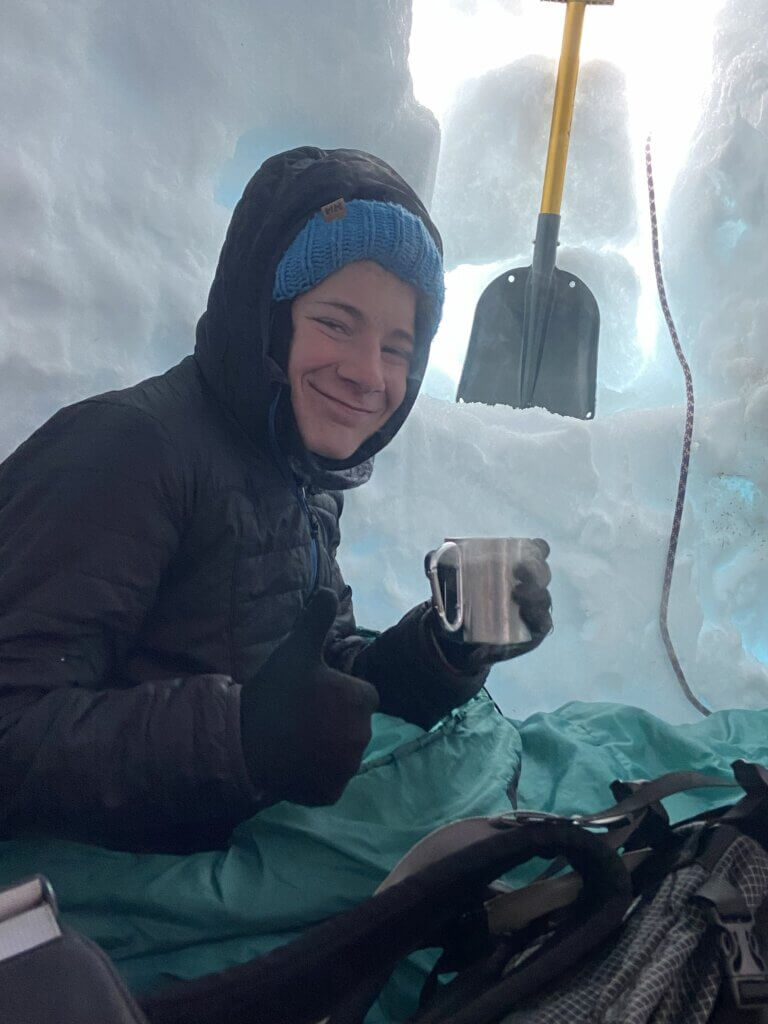
Guests change into dry layers and settle into sleeping bags while I set up the cooking area. Stoves are lit. Candles glow against snow walls. Steam rises quickly in the cold air.
Dinner is simple but deeply satisfying after a full day of digging:
-
Homemade carrot and cardamom soup
-
Chorizo and vegetable casserole with couscous
-
Apricots and custard
Everything is prepared in advance and dehydrated to keep pack weight manageable — a key principle in winter expedition planning.
There’s conversation. The occasional dram appears. The sense of achievement is palpable.
By around 10pm, the stoves are off. Candles extinguished. The plateau falls silent again.
And finally, I zip into my own sleeping bag.
It’s been a long day. But it’s also one of the most rewarding experiences winter in the Cairngorms can offer.
Why Snow-Holing in Scotland Is So Special
Snow-holing isn’t just about survival skills. It’s about:
-
Understanding winter mountain conditions
-
Working as a team
-
Reading snow and terrain
-
Experiencing true self-sufficiency
-
Spending a night immersed in the Highland winter landscape
For many guests, it becomes the highlight of their winter skills course or guided expedition in Scotland.
There’s something uniquely satisfying about creating your own shelter in the snow — and sleeping safely inside it.