




 On May 27, 2026
 By Rebecca Field
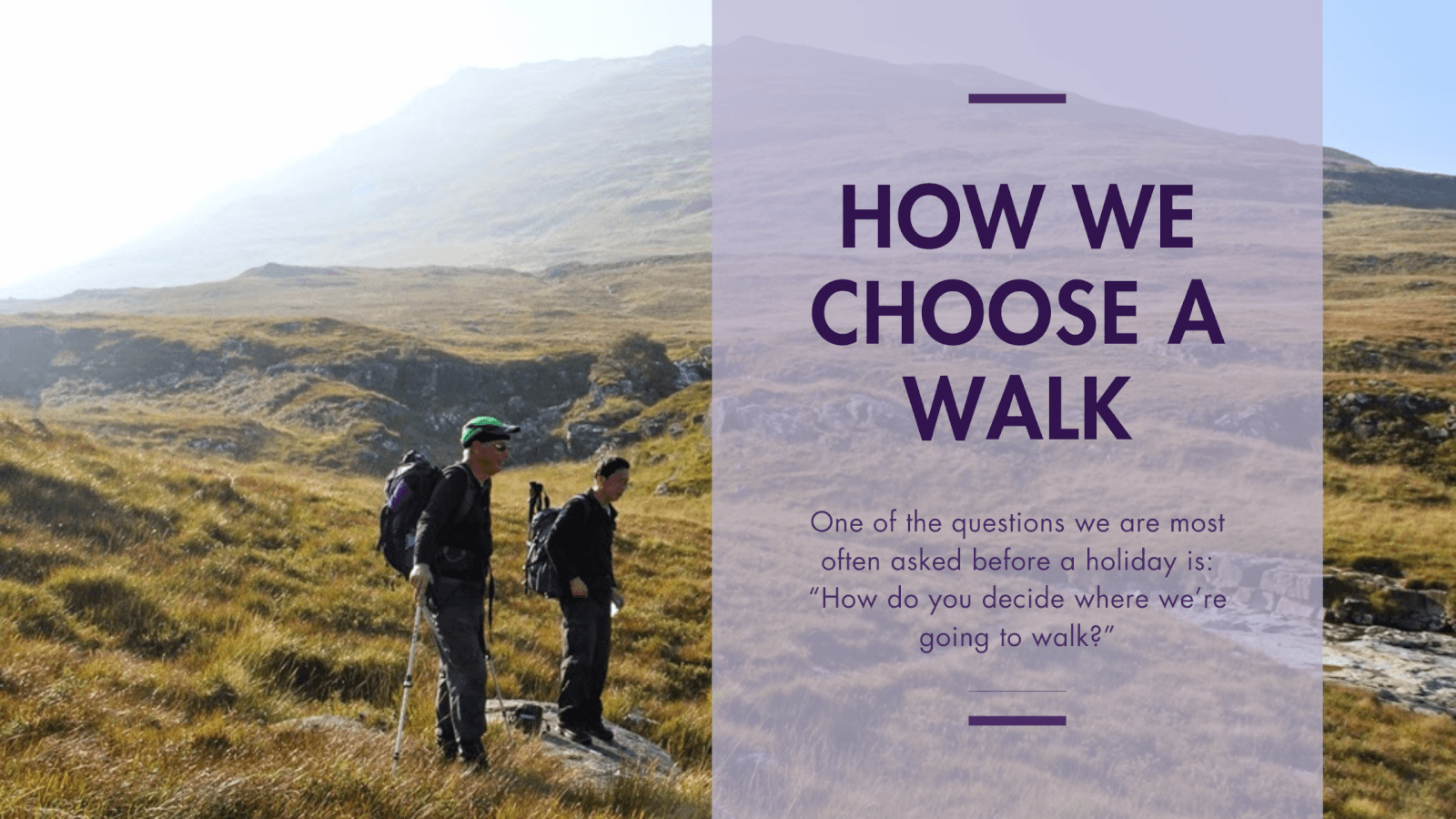
One of the questions we are most often asked before a holiday is:
“How do you decide where we’re going to walk?”
Usually, though, the real questions underneath are:
- “Will I be fit enough?”
- “Will I slow people down?”
- “Will this suit me?”
- “Will they understand the kind of experience I’m hoping for?”
After more than 25 years of running walking holidays in the Highlands, we know that choosing the right walk is about far more than simply selecting a route from a guidebook.
The conversation before a holiday often tells us more than a booking form ever can.
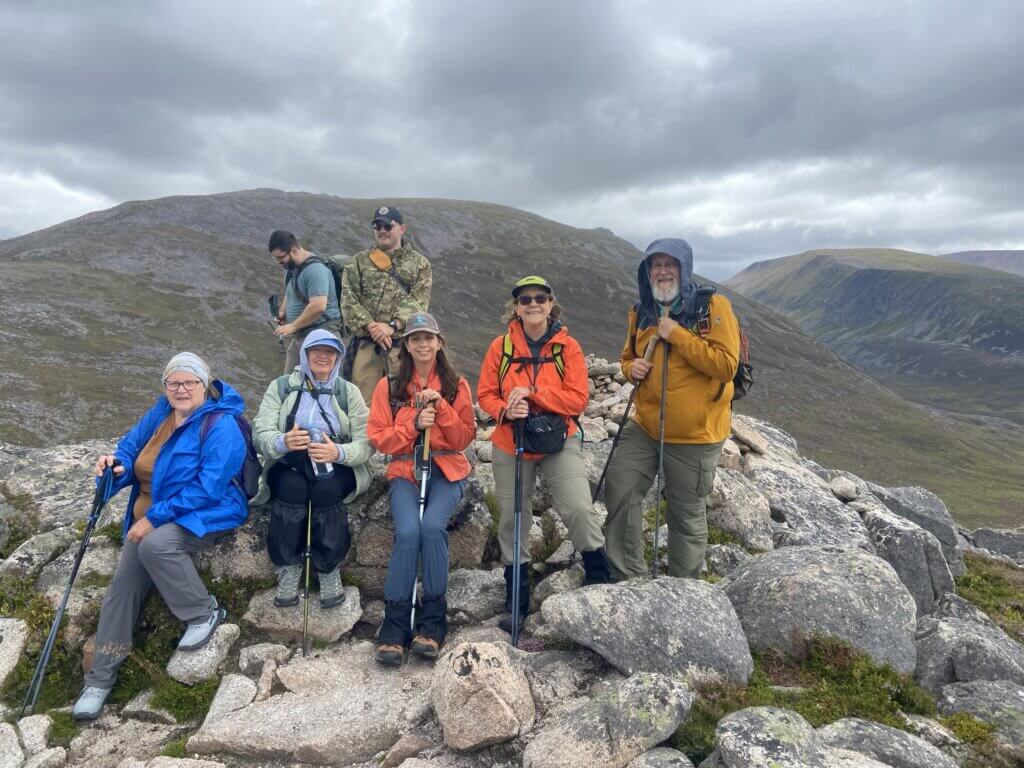
Every group is different on our guided walking holidays
There are actually two slightly different processes behind the walking holidays we offer.
The first is for private guiding bookings, whether that is a single day walk or several days of hiking. The second is for the scheduled week-long holidays we advertise on our website.
Both involve a surprising amount of planning behind the scenes.
Planning private guided walks
For private guests, the planning usually begins with a conversation.
Because Andy may not meet guests until the morning of the walk itself, he spends time beforehand discussing previous walking experience, fitness, confidence on different terrain and what people are hoping to get out of the day.
Some guests want a challenging mountain day. Others are looking for quieter routes, wildlife, photography opportunities or simply a memorable experience in the Highlands without feeling pushed beyond their comfort zone.
Those conversations matter enormously.
Someone who happily walks 15 miles at home may find rough Highland terrain much harder than expected, while another guest with less experience may cope extremely well because they move steadily and are comfortable outdoors.
Before every trip, Andy will study several weather forecasts, check conditions carefully and spend time looking again at the maps, even for routes he has walked many times before. In the Highlands, small changes in wind, cloud level or recent rainfall can completely alter the best choice for the day.
If guests are staying with us at Fraoch Lodge beforehand, that helps even more. Over dinner or breakfast, there is often time for a more relaxed conversation about expectations, worries and ambitions before heading out into the hills.
Highland mountains can be more serious than they first appear
One conversation Andy often has over the breakfast table is about how deceptively challenging Highland mountains can be for overseas visitors.
On paper, Scottish peaks do not look especially high compared with mountain ranges such as the Alps or Rockies. Many visitors arrive assuming that lower altitude automatically means easier walking.
In reality, the combination of northern latitude, rapidly changing maritime weather and exposed terrain can make conditions in the Highlands feel far more serious than people expect.
A comparison Andy often uses is the treeline. In the Scottish Highlands, the natural treeline sits at roughly 750 metres. In the Alps, treeline is usually somewhere between 1,800 and 2,300 metres — roughly the climatic equivalent of many Scottish summits.
In other words, even relatively modest Highland mountains can experience conditions comparable to much higher alpine terrain.
That does not mean people need to be intimidated by walking in Scotland, far from it. But it does explain why careful planning, appropriate equipment and flexibility matter so much here.
It is also why local knowledge becomes incredibly valuable. Knowing when conditions are suitable for a bigger objective — and when a lower-level route will provide a far better day — is an important part of good guiding in the Highlands.
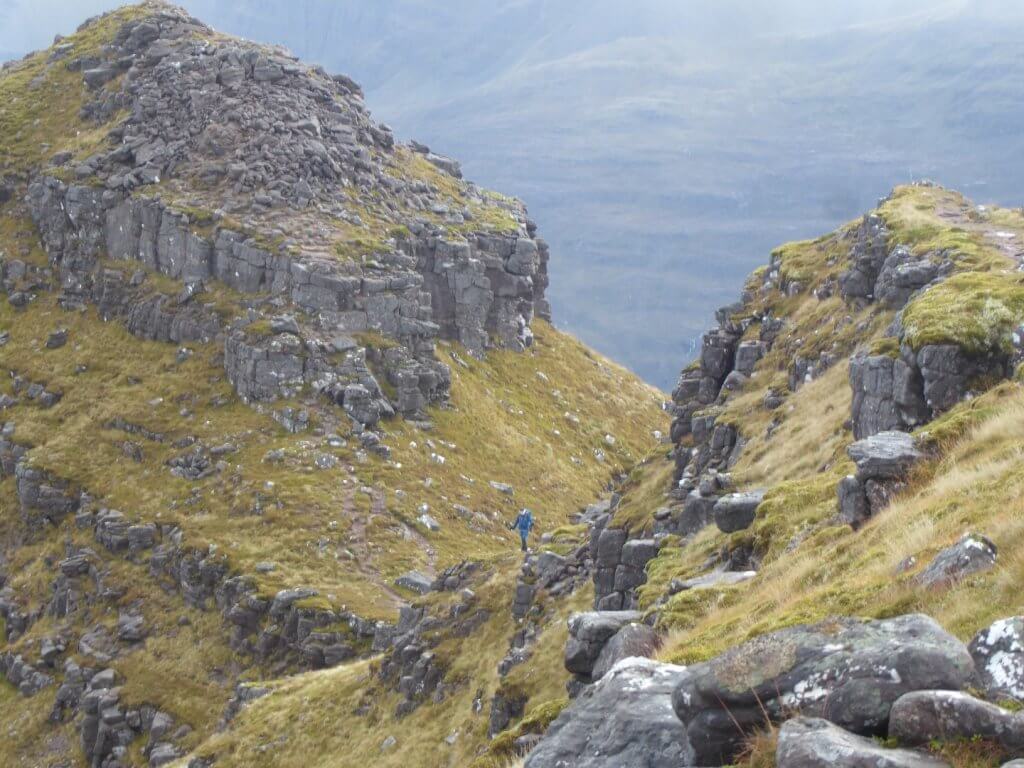
Classic Torridon, September 2021
Designing a week-long walking holiday
Planning a full week of hiking is another level entirely.
A huge amount of work goes into creating a walking itinerary that feels balanced, enjoyable and achievable across an entire week, especially when many guests return to us year after year and are looking for new experiences.
Andy can spend hours studying maps and designing routes using detailed mapping software that calculates walking times using Naismith’s Rule. Unfortunately, the software also has an unfortunate habit of freezing at inconvenient moments.
Years of experience mean that Andy now reads an OS map almost like a story. He can often tell from the contours, terrain and access points how a route is likely to feel long before setting foot on the ground. For those of us less familiar with maps, they may look like colourful 2D puzzles, but experienced guides see far more hidden detail.
When planning a week, we also think carefully about:
- how difficult each day feels in relation to the next;
- driving distances;
- weather alternatives;
- escape routes if conditions deteriorate;
- variety of scenery;
- opportunities for wildlife;
- good lunch spots;
- and, occasionally, where to find decent coffee and cake afterwards.
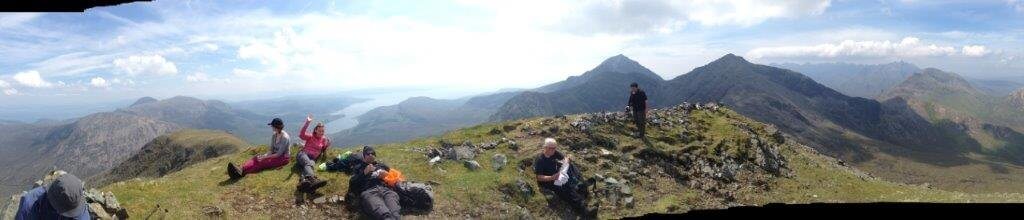
Enjoying a well-deserved break with views in the Cuillin hills
Why flexibility matters
One thing we have learned over the years is that guests usually value flexibility far more than rigid itineraries.
The Highlands rarely reward inflexible planning.
A route that looks perfect on paper can become unpleasant in strong winds or low cloud, while an alternative glen a few miles away may suddenly offer sunshine and clear views.
That is why Andy is often reluctant to promise too much about the next day’s route until after checking the latest forecasts in the evening — and sometimes again over breakfast.
Most guests quickly realise this is actually reassuring rather than frustrating. It means decisions are being made based on current conditions, group energy and experience rather than simply following a fixed schedule regardless of the circumstances.
Of course, we always have Plan B and usually Plan C as well.
Small details matter too
People sometimes imagine guided walking holidays are only about the mountains themselves, but the small details shape the experience just as much.
A good lunch spot out of the wind can transform a difficult day. Timing a walk to avoid the busiest car parks can completely change the atmosphere of a route. Knowing when to pause quietly beside a forest edge often leads to wildlife sightings that would otherwise be missed.
These are rarely things you will find on social media or in standard guidebooks.
Much of what makes a successful week in the Highlands comes from accumulated local knowledge and years of experience adapting to changing conditions.
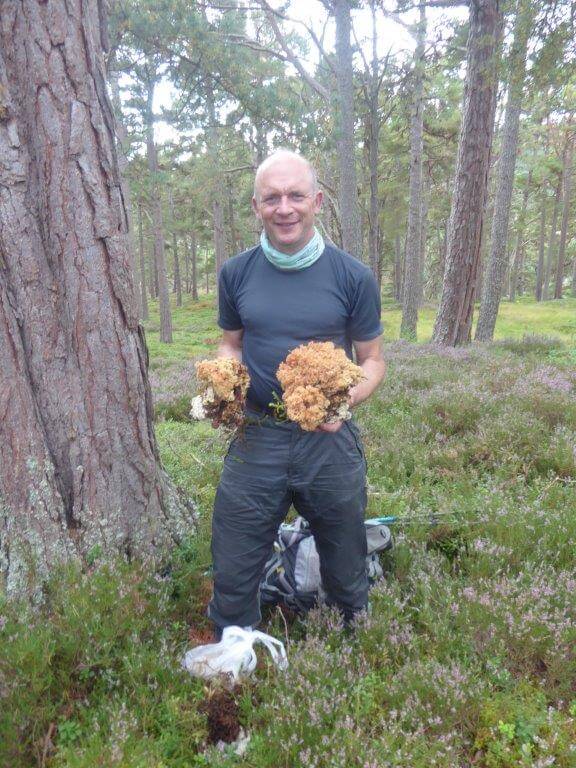
Cauliflower fungus – a prize specimen. Yum.
Choosing the right walk is about more than distance
After all these years, one of the biggest lessons we have learned is that the “best” walk is rarely the one with the biggest statistics.
A successful day in the Highlands is the one where guests return tired but happy, having felt challenged appropriately, safe in the conditions and genuinely connected to the landscape around them.
Sometimes that happens on a summit ridge.
Sometimes it happens on a quiet trail through the pinewoods with nobody else in sight.
And often, it is the flexibility to recognise the difference that matters most.