




 On November 12, 2025
 By Andy Bateman
Scottish Snow-holing: Best Practice in Modern Conditions
Snow-holing has a long and established tradition in Scotland’s winter mountains and in alpine and arctic regions worldwide. Vast amounts of snow still build up in sheltered lee areas on the high, wind-swept Cairngorm Plateau. Many snow-hole sites often hold snow into July, making this a sustainable winter mountaineering activity. However, as Andy Bateman* of Scot Mountain Holidays questions, it’s worth asking whether traditional snow-holing techniques remain appropriate for Scotland’s increasingly mild and variable winter climate. Do we stick with traditional and when it doesn’t work declare snow-holing “dangerous”, or do we prioritize safety and adapt?
Understanding Scottish Winter Temperatures
Although the Scottish Highlands occasionally make headlines for extreme cold, mountain temperatures never reach true Arctic levels. Recorded lows of below –20°C occur in valley inversions, where cold air pools in glens while summits remain relatively warmer.
For example, Aviemore experiences a wider temperature range than the summit of Cairngorm, whose lowest recorded temperature is only –16.5°C (12 January 1987). By contrast, nearby Nethy Bridge reached an unofficial –31.3°C (10 January 1982)!
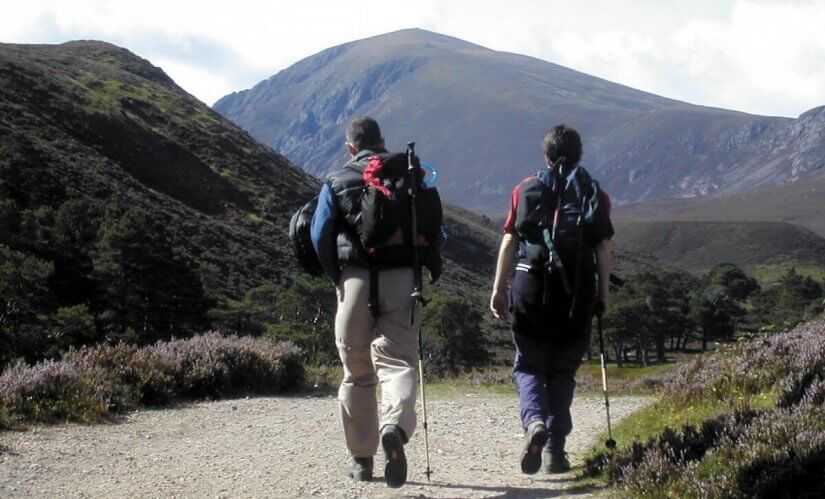
At around 1100 m — the typical altitude of many Cairngorm snow-hole sites — winter extremes tend to sit between –8°C and –10°C, with many days around –5°C or warmer. Scotland’s proximity to the North Atlantic Drift keeps conditions comparatively mild, yet still demanding enough to test even experienced snow-holers.
Capture or Release? Managing Air in Scottish Snow-holes
Traditional snow-hole design aims to capture warm air, using raised sleeping platforms, doorways lower than the living area, and cold air drains. Are these features appropriate when winter temperatures in Scotland approach the melting point of the very material providing shelter?
In conditions near 0°C, the focus should be on adequate ventilation to manage internal air temperature and maintain structural stability.
An important point to note is that it takes appreciable heat energy to convert snow at 0 deg C to water at 0 deg C. It means that whilst there may not be a rise in temperature, you may still be “injecting” appreciable heat energy into the snow pack around your snow-hole.
Avalanche Awareness and Site Selection
Snow-holing naturally occurs where snow collects deeply — often on steep slopes with the potential for avalanche release. Avalanche risk must therefore be the primary consideration when selecting a site.
If there is any uncertainty about snow-pack stability:
• Avoid slopes steeper than 30 degrees.
• Excavate horizontally from the top of the door at least 1.7 m for slopes of 30 degrees or less before widening the chamber to ensure a minimum 1 m-thick roof.

Essential Tools for Scottish Snow-holing
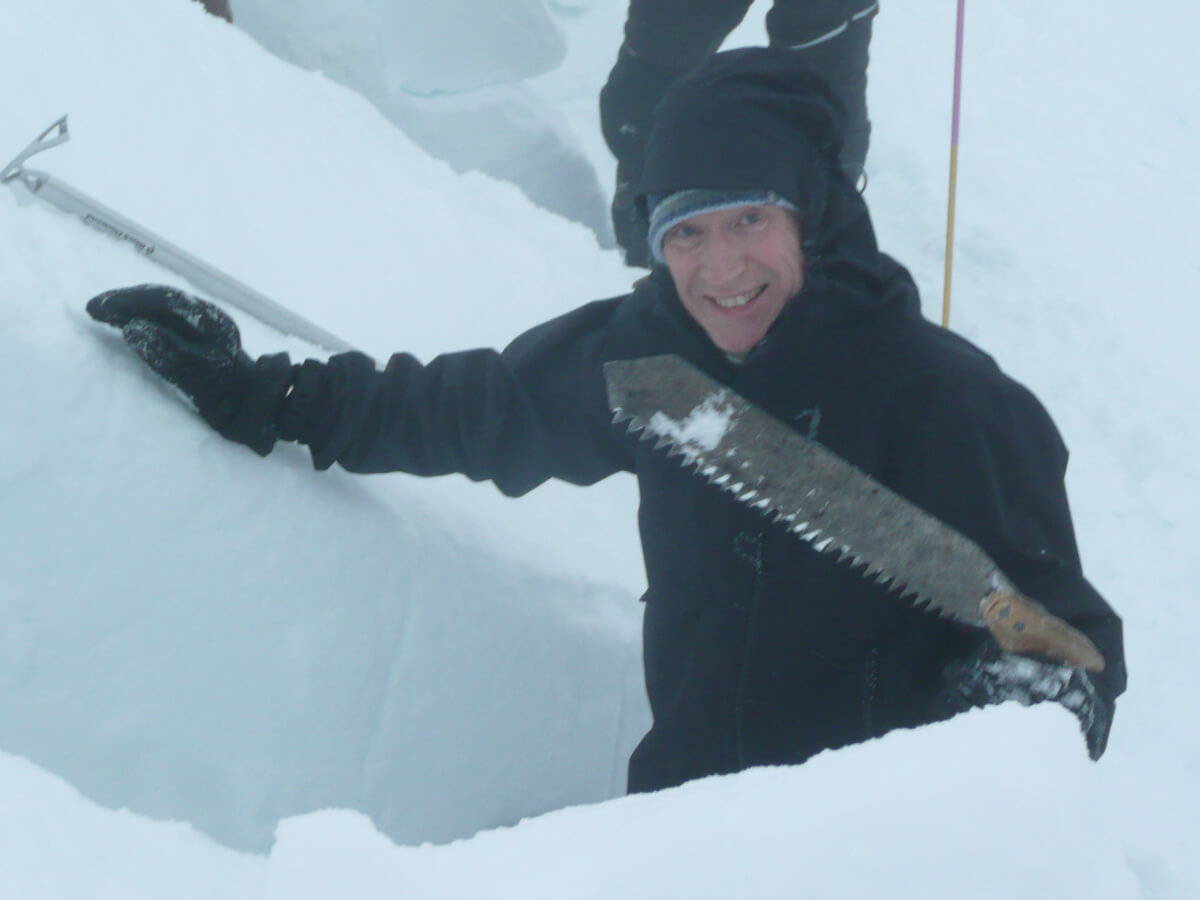
Scottish snow often becomes extremely hard after repeated cycles of wind, thaw, and refreeze, demanding robust equipment. Ensure you carry:
• A metal-bladed snow shovel – polycarbonate models are largely ineffective in dense, refrozen snow.
• A snow or “carpentry” saw capable of cutting blocks efficiently when snow is too hard to shovel. A number of dedicated snow saws falter when it comes to Scottish snow.
• A 3-metre avalanche probe to confirm adequate horizontal snow depth before excavation.
• A durable ground sheet or tarp for collecting and dragging excavated snow clear of the entrance.
The correct tools greatly improve both efficiency and safety, especially in hardened Scottish snow conditions.
Structural Strength and Vaulted Ceilings
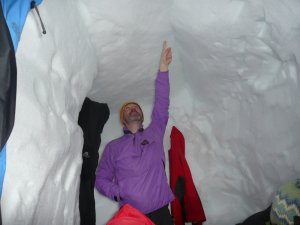
A snow-hole’s roof design is critical to both safety and durability. In Scottish conditions, attention to vault ceiling and load distribution is essential to minimize unsupported snow.
To achieve a stable structure:
• Keep the floor width to no more than two body widths (about 1.2 m) between the inner front and back walls.
• Excavate upward to form a steeply angled vaulted or apex ceiling, which removes large unsupported sections and promotes strength.
This design offers five major benefits:
1. Eliminates triangular sections of unsupported snow.
2. Prevents flat areas that become drip points.
3. Encourages melt water to drain with the snow pack.
4. Provides limited standing height without unnecessary excavation.
5. Directs warm air toward ventilation holes at the apex.
A properly shaped vaulted ceiling is the key to structural longevity. Reducing unsupported ceiling weight matters more than temperature alone. One snow-hole built by Andy Bateman on 25 March remained intact and safe when re-entered on 19 May after a prolonged thaw, with no roof deformation. Similarly, a BBC Travel Show snow-hole I built endured until late June; though its roof was only 30 cm above the floor, it never collapsed. Nearby structures that had become open hollows.
Roof thickness is equally important. When shaping the vault, avoid thinning the roof excessively — thicker is stronger.
• Minimum roof thickness: at least 1 m of snow overhead.
• Light test: blue light will penetrate up to 1m into the snow. If a pale blue glow is visible through the roof, it’s getting too thin.
• Front-wall strength: ensure the wall is no less than 1 m thick at its narrowest point to bear roof loads safely.
In Scottish snow-holing, roof geometry and thickness are the foundations of safety and endurance.
Ventilation: A Critical Safety Factor in Snow-holing
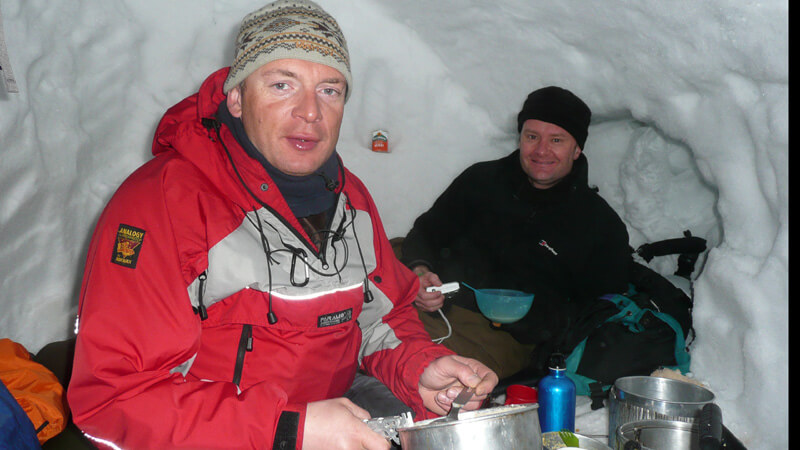
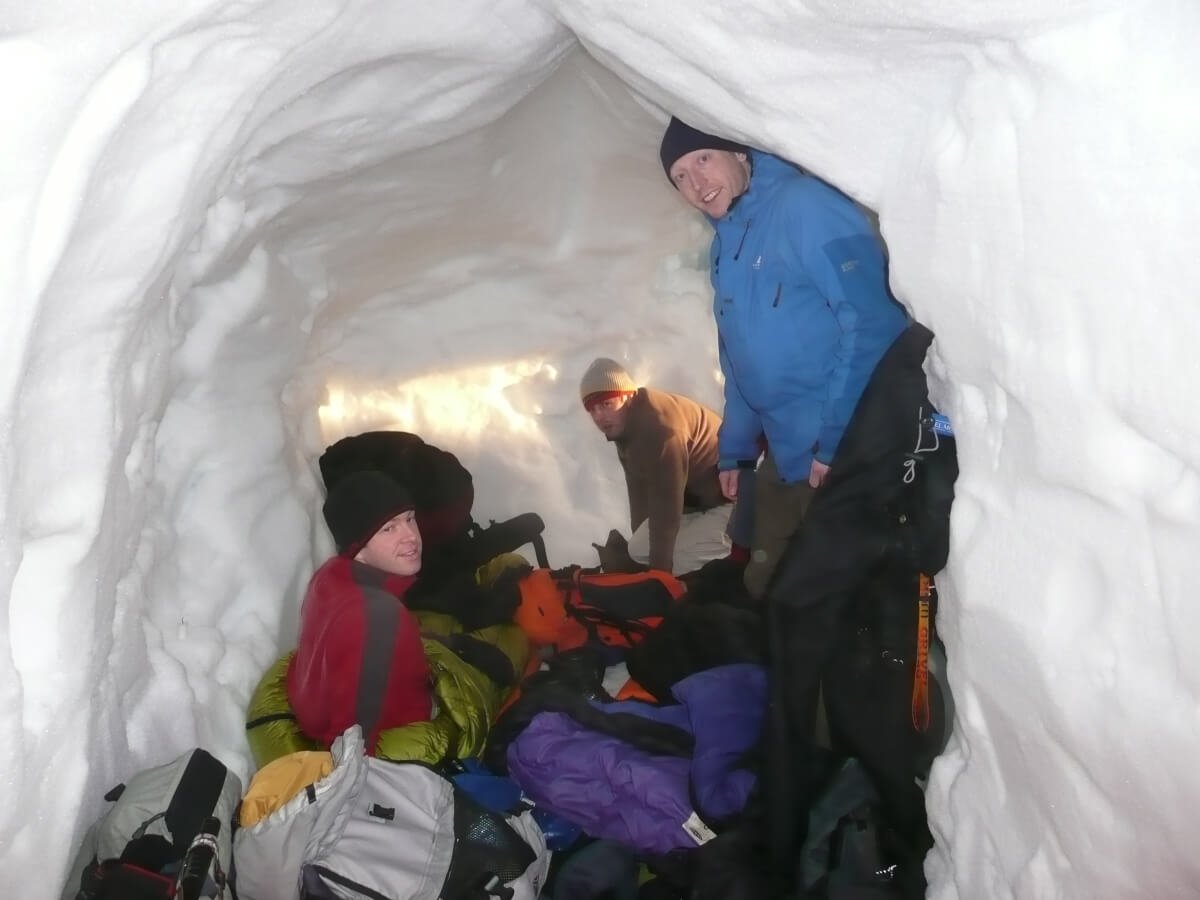
Effective ventilation is vital for safety in any snow-hole. Inadequate airflow when cooking, can lead to dangerous levels of carbon monoxide (CO) — a colourless, odourless gas produced by incomplete combustion.
All pressure stoves operate by first oxidising fuel to CO and then fully converting it to carbon dioxide (CO₂). Flame colour variations indicate this combustion process. When airflow is restricted, the secondary oxidation step fails, increasing CO production.
Simple ventilation test: exhale — if your breath drifts sideways, airflow is likely sufficient.
Even with good ventilation, a pan of icy water can quench the flame temperature, disrupting combustion and increasing CO output. Research by the British Antarctic Survey (BAS) found that raising pan supports slightly above the burner significantly reduced CO levels during snow melting. Snow-holers should understand the symptoms of CO poisoning, which can include headache, nausea, and dizziness.
While no recorded deaths from CO poisoning have occurred in Scottish snow-holes in recent years, some have reported headaches consistent with exposure. Carrying a small portable CO detector is strongly advised. Always extinguish candles before sleeping — they too emit small amounts of CO.
Key safety guidelines:
• Confirm adequate ventilation before lighting stoves.
• Be aware that even with airflow, cold pans increase CO output by cooling the flame.
• Add snow gradually when melting for water to prevent flame quenching.
• Use a compact CO detector for real-time monitoring.
Overnight snow drift can block entrances and reduce airflow. Studies indicate that with all flames extinguished, hypoxia is not a risk. Poor sleep quality will alert you to low oxygen levels, prompting you to reopen vents instinctively.
Maintaining clear ventilation routes and monitoring air quality are non-negotiable safety practices in winter snow-holing.
Adequate Size: Make them big!
A larger snow-hole is safer. Not only are the ventilation characteristics better and but it also gives you space. One potential hazard of digging a small snow-hole is you don’t have enough room to put the snow after severe drifting. Do not underestimate how quickly the snow can drift into some of these snow-hole sites. 1 m per hour is not unusual. On one occasion I did have to tunnel out 1 ½ m before I hit the surface!
Leave No Trace: Responsible Waste Management in Snow-holing
Many Scottish snow-hole sites are located near watercourses, and persistent snow cover slows natural decomposition. Managing human waste responsibly is essential to avoid contamination and maintain site sustainability.
Best practices:
• Use a carry-out system for all human waste.
• Participate in local initiatives such as Cairngorm Mountain’s Snow White Project, which supports sustainable snow-hole waste management.
Following these practices preserves the natural environment and ensures these snow-hole sites remain safe and viable for future mountain users.
Conclusion: Safe Snow-holing in Scotland’s Winter Mountains
All mountain adventure activities carry inherent hazards, and snow-holing in Scotland’s winter mountains is no exception. Instructors and guides must understand these hazards and apply appropriate techniques to reduce risk.
It’s been claimed that Snow-holing is dangerous. Compared with winter climbing (for which there is a whole qualification scheme) it isn’t, and mountain rescue statistics support this. However, attempting to snow-hole in Scotland using methods suited for Arctic conditions at -20°C is likely to cause problems in milder Scottish winters.
Structural integrity is critical. One of the most important factors for safety and longevity is avoiding large areas of unsupported roof or ceiling. A properly vaulted ceiling, sufficient roof thickness and ventilation, and careful internal design prevent collapse even as temperatures rise, whereas improperly supported snow-holes quickly lose their structural integrity. Put simply, if more than two people can sleep side by side, your ceiling is too wide!

* Andy holds the WML and IML awards and has over 20 years Mountain Leading experience. He has guided well over 30 commercial snow-holing trips in this time and although none of the mountaineering qualifications have a remit that covers snow-holing, he is one of the few guides deemed competent by HSE criteria of “relevant experience” to run snow-holing trips.
** British Antartic Survey helped in a BSc thesis. Available on request from andrew@scotmountainholidays.com
Medical references:
www.ncbi.nim.ni.gov/pubmed/18665947
www.ncbi.nim.ni.gov/pubmed/9340627
www.ncbi.nim.ni.gov/pubmed/8355417
www.ncbi.nim.ni.gov/pubmed/15265339