On October 28, 2026
 By Rebecca Field
Winter isn’t always the easiest time of year to get out into the Scottish hills. The days are shorter, the weather can be challenging and a walk that was straightforward in summer can become a much more serious undertaking when snow and ice arrive.
But winter also brings some of the most memorable days in the mountains. Frost transforms the landscape, low sunlight picks out the shape of the hills, and on the right day the views seem to stretch for miles. Familiar routes take on a different character, and there’s a particular satisfaction in returning from a day out in the cold to somewhere warm and comfortable.
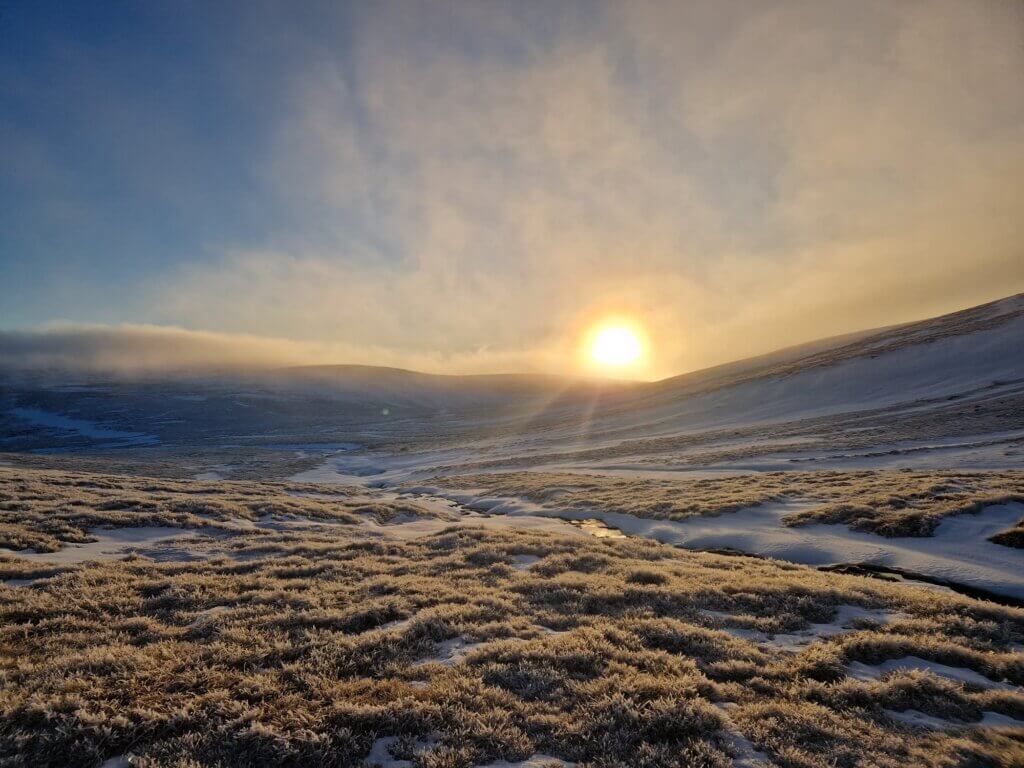
Winter has always been a huge favourite of Andy’s. Even now, he gets very excited at the prospect of snow – and that’s after nearly 30 years of guiding in the Highlands. Here are some of the reasons he thinks it’s worth getting out into the hills when the temperature drops.
1. See the mountains in a different light
One of the biggest attractions of winter walking is the landscape itself. Snow and frost reveal details that can be less obvious in summer, while the low sun creates long shadows and dramatic contrasts across the hills.
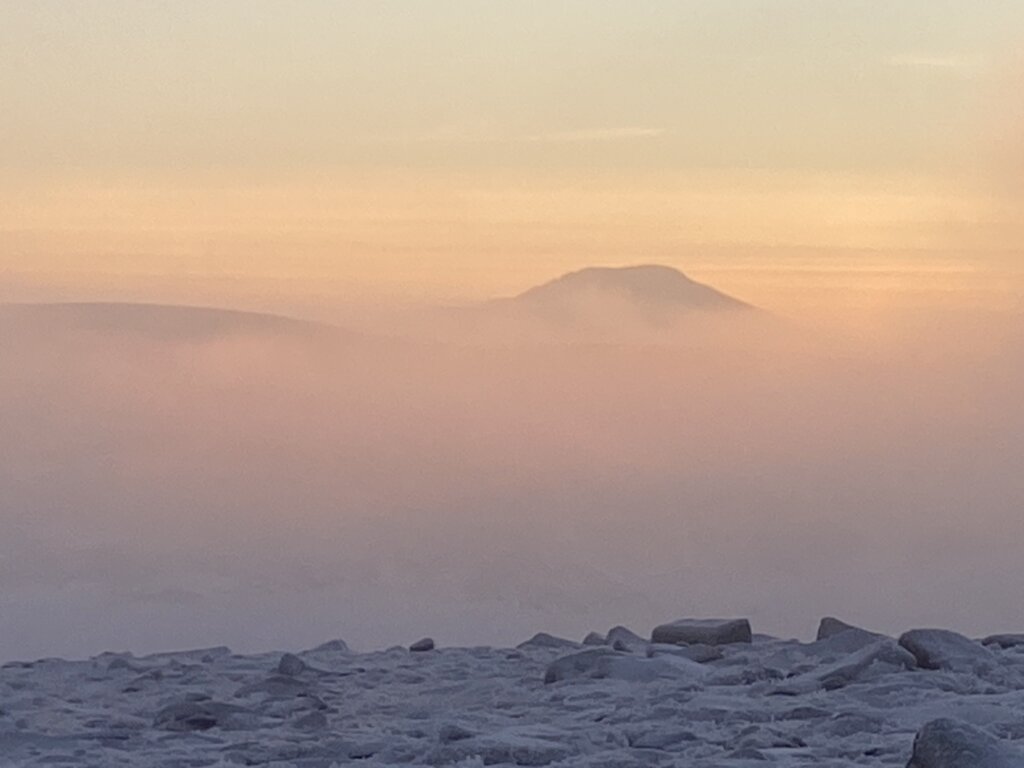
On clear days, the views from the higher Cairngorms can be exceptional. Sometimes an inversion leaves the summits above a blanket of cloud; at other times, distant mountains stand out against a crisp blue sky. Sunrise and sunset can bring extraordinary colours, too.
Of course, winter doesn’t guarantee clear skies. Mist, cloud and snowfall are all part of the season, and visibility can change quickly. But when the conditions come together, the results can be spectacular.
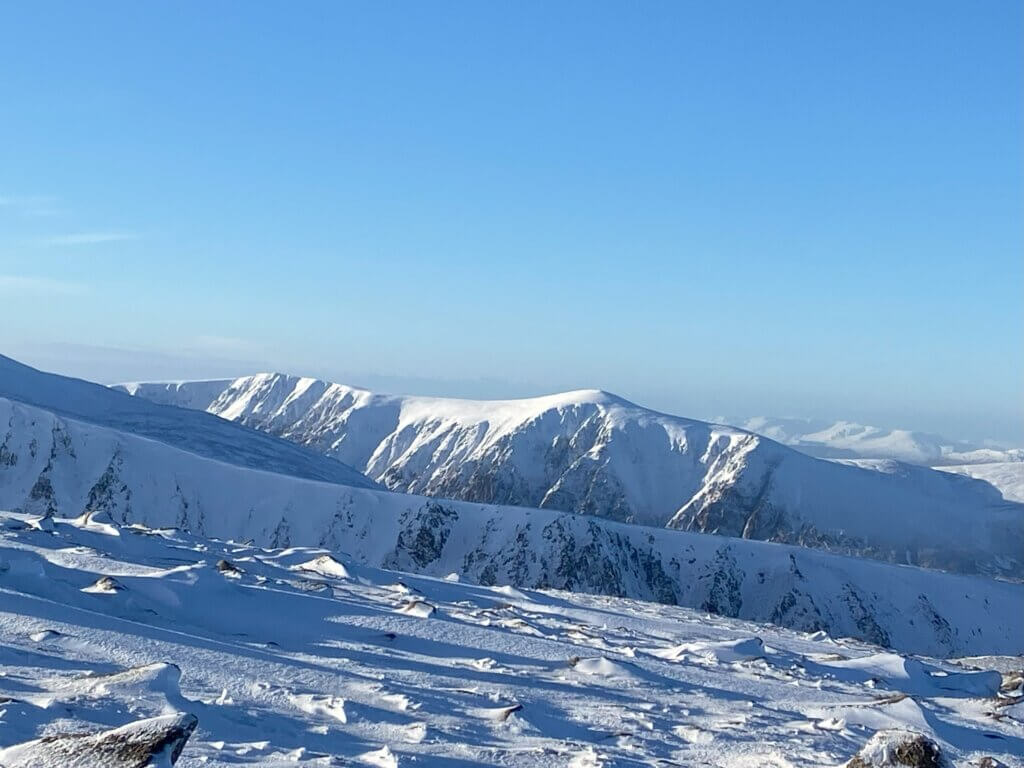
Can’t beat these views! New Year Winter Walking 2022 – 2023
2. Experience a different kind of challenge
Walking in winter asks more of you than following a familiar summer route. Snow can make progress slower, icy slopes require care, and navigation becomes particularly important when the paths disappear beneath a covering of white.
That added challenge is part of the attraction for many experienced hillwalkers. It encourages you to develop your judgement, pay closer attention to the landscape and think carefully about each stage of the day.
You don’t necessarily need to aim for the highest summit, either. A good winter walk is one that suits the conditions and the people taking part. Sometimes a lower route offers the most rewarding day; on other occasions, settled weather and good snow conditions may allow a more ambitious outing.

3. Keep moving through the winter months
It’s easy to become less active when the days shorten and the weather turns cold. Having a walking trip planned gives you a reason to keep getting outside rather than waiting for spring.
A full day in the hills can be physically demanding, particularly when you’re walking through snow or over rough ground. Regular walking helps maintain fitness and stamina, while a week of walking can provide a welcome opportunity to build on the exercise you manage in everyday life.
There’s no need to make it about step counts or calories. For most of us, the better motivation is having somewhere interesting to go, a route to explore and a good reason to put on our boots.

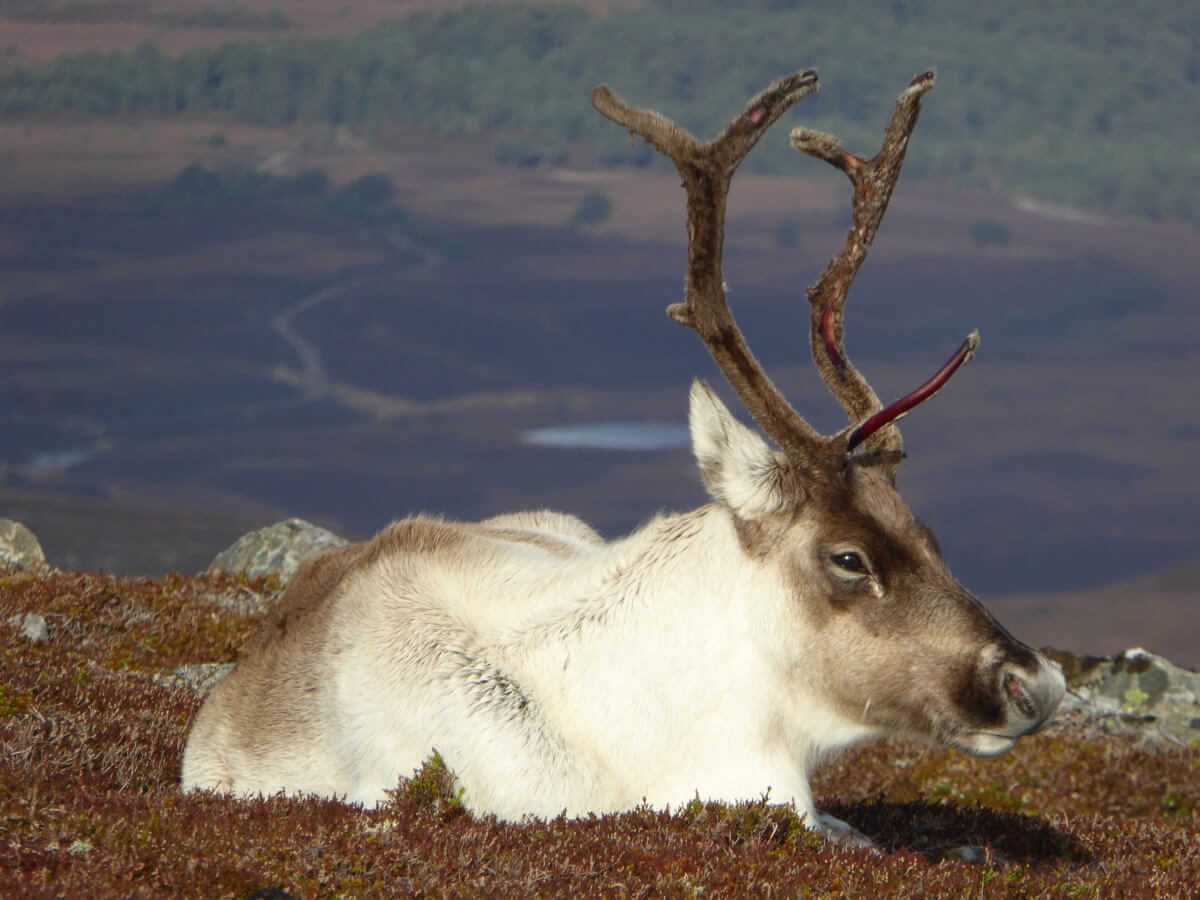
Always a memorable sight – the Cairngorm Reindeer herd
4. Learn new skills and build confidence
Winter walking brings skills into sharper focus. Understanding mountain weather, navigating in poor visibility, recognising icy terrain and knowing when to change your plans are all important parts of travelling safely in the hills.
If you’ve mostly walked in summer, the prospect of winter conditions can feel daunting. A winter skills course is a way to learn the techniques and decision-making involved, with instruction and practice in suitable conditions.
For those who want to concentrate on the walking itself, going out with an experienced local guide can also be a good way to discover winter mountain terrain. A guide can help choose an appropriate route, assess the conditions and adapt the plan as the day develops.
Winter mountains deserve respect, and the right skills and preparation make a real difference.

Self-arresting on a winter skills course in the Cairngorms
5. Enjoy the camaraderie
There’s something satisfying about sharing a day in the hills when everyone has had to make a little extra effort. You might be following a line across a snowy plateau, stopping to admire a view or finding shelter for a short break out of the wind.
Walking gives people time to talk. Conversations wander from the mountains to family, work, travel and all sorts of other subjects. By the end of a trip, a group has shared far more than a collection of photographs and summit names.
The camaraderie isn’t unique to winter, of course. But a memorable day in challenging conditions can give people a particular sense of achievement and a story to tell afterwards.
If you look closely at the picture below, you’ll see a group of people who have been coming on trips with us for over 10 years – many of them come annually or bi-annuallly to be part of the same group. See Mike below – so integrated he even has the same jacket as Andy (in the centre of the picture).

6. Rediscover the fun of snow and ice
For anyone who enjoys being outdoors, snow can bring out a sense of playfulness. Crunching across frozen ground, watching spindrift blow across a ridge or learning how to move confidently with crampons can make the mountains feel like a completely different environment.
On a winter skills course, activities such as practising ice-axe techniques and learning how to move on snow have a serious purpose: they help develop the skills needed for winter travel. But there’s plenty of satisfaction in learning something new, practising it and seeing your confidence grow.
And there’s no denying the simple pleasure of being out in a snowy landscape on a bright winter’s day.
7. Discover a different side of Scotland
Winter is an opportunity to see familiar places from another perspective. The Cairngorms can feel vast and remote under snow, while woodland and lower-level routes offer their own rewards when the high ground is less inviting.
You don’t need a perfect summit day to enjoy being outside. A walk through frost-covered woodland, a view across a frozen-looking corrie or the changing colours of the sky at the end of the afternoon can all make a day memorable.
The key is being prepared to adapt. Winter walking isn’t about going out regardless of the conditions; it’s about finding the right experience for the day.
Is winter walking in Scotland for you?
If you already enjoy hillwalking, winter can open up a whole new dimension of the activity. If you’re newer to the hills, there are ways to build experience gradually, starting with appropriate routes and learning from qualified instructors or guides.
The important thing is to be realistic about your experience, equipment and the conditions. Winter mountain walking can involve serious hazards, including ice, poor visibility, strong winds and rapidly changing weather. Some days, the right decision is to choose a different route or stay off the high ground altogether.
At Scot Mountain Holidays, our winter walking programme gives us the opportunity to explore the mountains with local knowledge and a flexible approach to route choice. We plan around the conditions rather than treating a summit as an obligation.
If you’re curious about winter walking in the Cairngorms, take a look at our winter walking holidays. If you’d prefer to develop your own winter mountain skills, you can also find out about our winter skills courses.
Winter won’t always deliver blue skies and snow-covered summits. But it offers a different way to experience the Scottish mountains, and some days will stay with you long after the snow has melted.