+44 (0) 1479 831 331 info@scotmountainholidays.com

All things hiking Crafts Events in the Cairngorms News Suggested things to do

Autumn in the Cairngorms: things to do when the days are shorter

Autumn is a lovely time to visit the Cairngorms. The summer crowds have thinned, the landscape takes on a completely different character and the changing colours of the birch and Scots pine forests can make even a familiar walk feel new.

But there is one obvious difference from summer: the days are getting shorter.

For some people, that makes autumn the perfect time for a Highland break. You don’t necessarily need to plan a full week of long mountain days. Instead, you can combine shorter walks with wildlife watching, cycling, learning new skills or simply enjoying some of the other things that make the Cairngorms such a special place.

Here are some of our favourite ways to make the most of an autumn visit.

Enjoy a shorter day on the hills

There’s no rule that says a walking holiday has to involve an eight-hour day in the mountains.

In fact, autumn can be an excellent time for shorter walks. Cooler temperatures make walking more comfortable, the forests are often at their most colourful and the lower angle of the sun can give the landscape a particularly atmospheric quality.

A shorter walk also leaves time to do something else with your day. You might spend the morning exploring a hill or forest trail and have an afternoon to visit somewhere interesting, enjoy a good lunch or simply relax back at Fraoch Lodge.

For walkers who don’t have a full week available, this makes an autumn walking break particularly appealing. A few days away can still provide plenty of time outdoors without needing to make every day a full mountain expedition.

Of course if mountain walking is your thing, you can still do longer hikes (or turn them into expeditions with an early start deep in the mountains to make the most of the daylight); but be sure to pack a headtorch and make sure you are very familiar with your proposed route or join us for an autumn munros extravaganza.

If you’re lucky we might even be able to offer one of the really special experiences of the autumn – the northern lights!
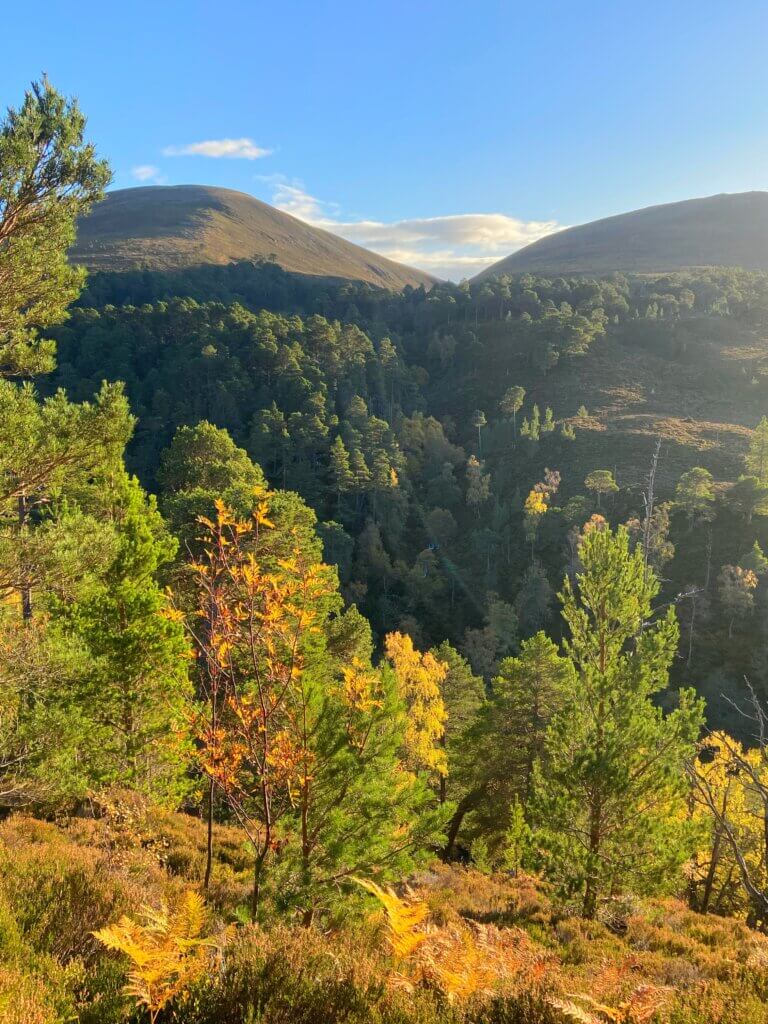
autumn in the Highlands

Look for wildlife in the autumn

Autumn brings some exciting wildlife opportunities to the Cairngorms.

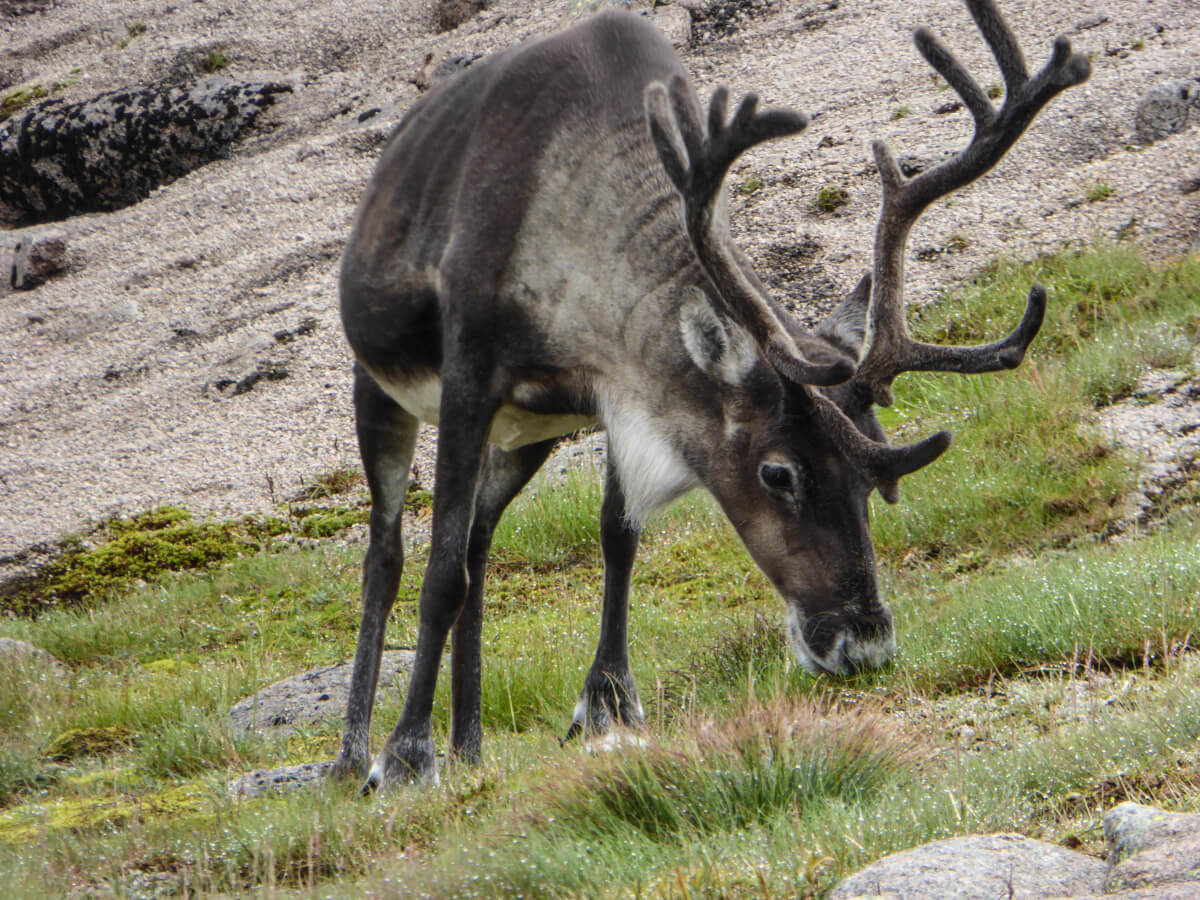
One of the most spectacular is the annual red deer rut. As the stags compete for the attention of the hinds, the hills and glens can echo to the sound of roaring. Seeing deer during the rut is never guaranteed – these are wild animals in a large landscape – but autumn is a particularly memorable time to be out looking and listening for them.

As the evenings draw in, there are also opportunities to experience some of the Cairngorms’ nocturnal wildlife.

An evening mammal watch, for example, gives you a very different perspective on the countryside. Rather than concentrating on covering miles, you can slow down, sit quietly and see what appears as daylight fades.

This is one of the advantages of autumn: activities that would involve waiting until quite late in the evening during midsummer suddenly become much more accessible. If you’re interested in a mammal watch as part of a full itinerary, check out our Wild Cairngorms itinerary
Walking, whisky and wildlife

A close encounter with the wild Reindeer roaming the Cairngorms National Park

Autumn is a good time to improve your navigation

If you’ve spent the summer walking familiar routes, autumn is also a good time to develop your navigation skills.

Shorter days and less predictable weather make it particularly important to know where you are and where you are going. But you don’t have to wait until you’re caught out in poor conditions to learn.

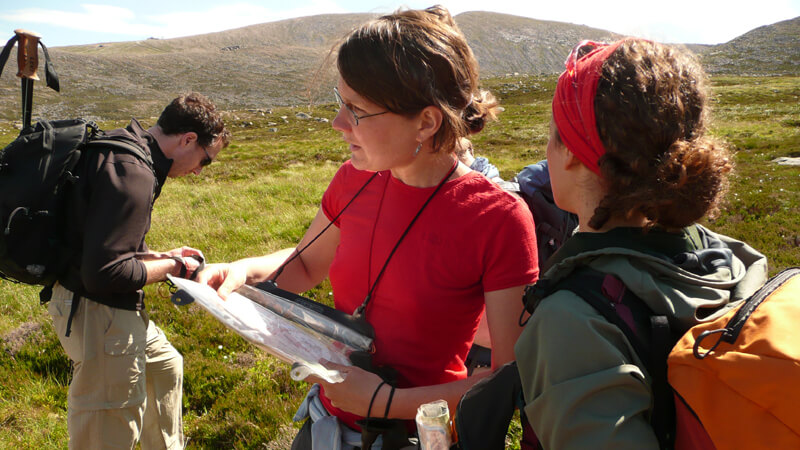
A navigation course or weekend can give you the opportunity to practise using a map and compass, understand contours, plan a route and build confidence away from well-marked paths.

It’s also a good time of year to think ahead. The skills you learn on an autumn navigation weekend can make you more confident when winter walking arrives.
mountain navigation

Map reading in the Cairngorms

Get out on a mountain bike

Autumn isn’t just for walkers.

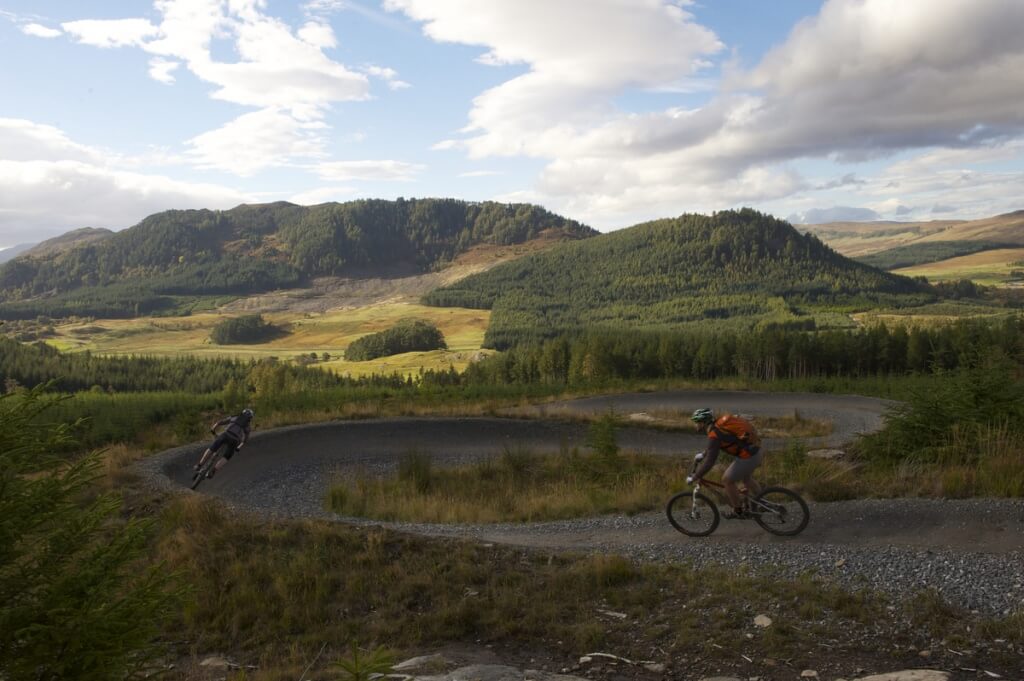
The Cairngorms have an excellent network of tracks and trails, making them a great destination for a mountain biking short break. Cooler temperatures can make cycling particularly enjoyable, while the changing colours of the forests provide a very different backdrop from summer.

A short break can work well if you don’t have time for a longer holiday. You can spend your days exploring trails by bike and still have time to enjoy the food, scenery and hospitality of the Highlands.

Book our Classic Cairngorms Mountain Biking trails or ask us for a centre based break or combine the 2. You can even put together a mountain biking and whisky tasting break if that floats your boat.
Acitive activities and events in the Cairngorms

Mountain Biking in the Cairngorms

Try something completely different: the Highland Yarn Weekend

Not every autumn adventure needs to involve a hill.

Autumn is, after all, a rather good season for wool, knitting and other crafts. As the evenings become longer and cooler, there is something particularly appealing about settling down with a project after a day exploring the Highlands.

This November we’re trying something a little different with our Highland Yarn Weekend, created in collaboration with Sarah at Flock and Saunter, Johnston’s Wool Mill (Elgin), & Auld Mill Alpacas. Hopefully the Crafty Guid Wives will join us too to show us how crafts have developped down the ages.

The weekend combines knitting tuition and local wool-related experiences with accommodation, meals and time to enjoy the Cairngorms. There are opportunities to learn about the journey from fleece to finished yarn, meet local producers and makers, and spend time with other people who enjoy making things.

It isn’t a walking holiday – and that’s rather the point.

The weekend is another way of experiencing the Highlands, with the landscape, local producers, good food and the relaxed atmosphere of Fraoch Lodge providing the setting.

highland yarn weekend

Make a short Highland break work for you

Perhaps the biggest advantage of visiting the Cairngorms in autumn is that you don’t have to approach your trip in exactly the same way as a summer holiday.

You might spend one day on the hills, another learning navigation, and another exploring by bike. You might make time for a wildlife experience in the evening or simply enjoy an afternoon with a book and a cup of tea after a morning’s walk.

For those with limited holiday time, this can make an autumn short break surprisingly rewarding. You can still have plenty of time outdoors, but you don’t need to spend every daylight hour chasing a summit.

And there are things you can experience in autumn that you simply can’t experience in the same way at the height of summer – from the colours of the forests and the sound of roaring stags to darker evenings that make nocturnal wildlife watching much more practical.

So if you’re wondering whether it’s worth coming to the Cairngorms once the summer holidays are over, our answer is yes.

You just need to change the rhythm of your Highland adventure.

Walking in Assynt: What a Guide Notices

Assynt is one of those places that seems to have remained slightly under the radar.

Mention Skye to most visitors to Scotland and you’ll usually get an immediate response. Mention Assynt and, particularly when we’re talking to guests at Fraoch Lodge, we’re often met with a blank look.

And yet many people who have driven the North Coast 500 have already passed through Assynt without necessarily realising quite what they’ve seen. Others have heard of Suilven, perhaps, but haven’t yet discovered the landscape around it.

We’ve always thought that was rather a good thing.

Assynt has some of the most extraordinary mountain scenery in Scotland, but it also has a wild coastline, lochs, beaches, ancient landscapes and a sense of space that is difficult to find elsewhere. For walking, in particular, it is a remarkably rewarding place.

After many years of walking and guiding there, however, I don’t think of Assynt simply as a collection of mountains and walks. Guiding in Assynt is about reading the landscape and making decisions about how best to experience it on any particular day.

The mountains aren’t really the whole story

There are some obvious stars.

Suilven is perhaps the most recognisable, with its distinctive shape visible from miles away. Then there are Canisp, Cul Mor, Cul Beag and Stac Pollaidh, each with its own character.

It would be easy to assume that walking in Assynt is therefore about working your way through a list of summits.

But when we’re guiding, the summit is only part of the decision.

We’re constantly looking at the weather and visibility, the condition of the ground, the wind direction and what the forecast is doing. We’re also considering the people we’re walking with. How is the group feeling? What sort of day are they enjoying? Is everyone up for a longer outing, or would a shorter walk make for a better experience?

And then there’s the landscape itself.

Sometimes a mountain that looked like the obvious choice on the map isn’t the best choice once we’re actually there. At other times, a little patience can transform the day. A mountain may be hidden in cloud in the morning and emerge dramatically later in the day.

That’s one of the things I enjoy about guiding in Assynt. The landscape isn’t a fixed backdrop. It changes constantly.

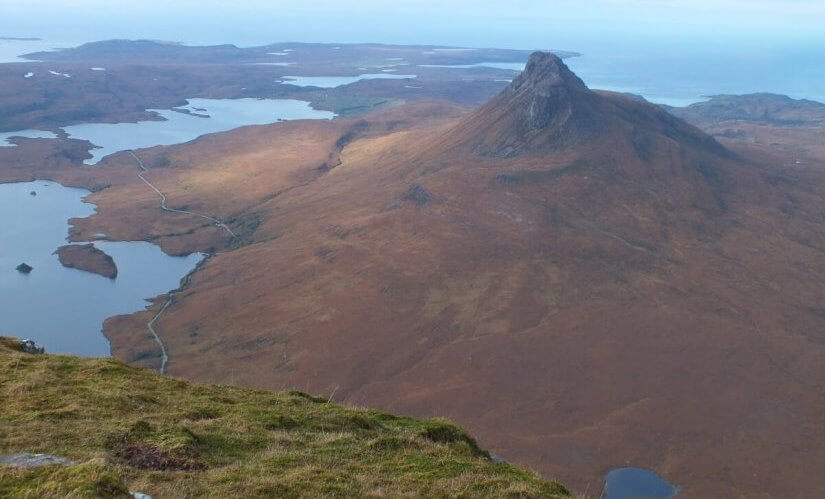
lochs and mountains Scotland

Spectacular Scottish coastline, Assynt (Scotland)

Assynt rewards flexibility

A map can tell you how high a mountain is. It can tell you how far you’re going to walk and how much ascent there is.

It can’t tell you whether the cloud will lift from Suilven at lunchtime.

It can’t tell you whether the wind will make a particular ridge uncomfortable, or whether the light on the mountains across a loch is going to make a lower-level route far more rewarding than climbing higher.

And it certainly can’t tell you how the people you’re walking with are going to feel on the day.

This is why, when we’re guiding in Assynt, we don’t regard an itinerary as something that has to be followed rigidly regardless of circumstances.

We have a plan. But we also have options.

A change in the weather might mean changing the route. A particularly good forecast might make it worth waiting for a particular viewpoint. Or perhaps the conditions simply aren’t right for the mountain we’d originally considered, but there is another walk that will give us a much better day.

That flexibility is particularly important in a place like Assynt, where the weather can change the character of the landscape remarkably quickly.

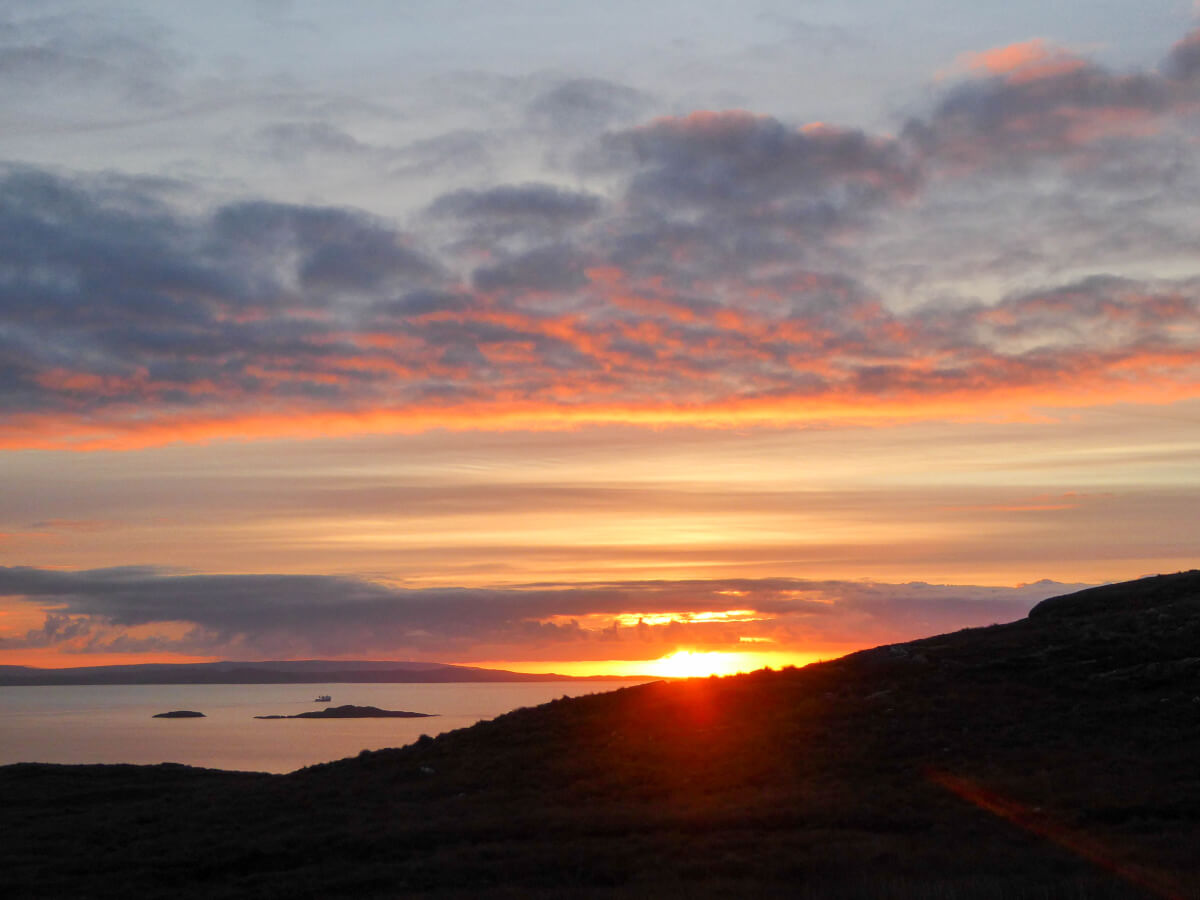
autumn sunset, Assynt (Scotland)

Perfect autumn sunset scenery and light in Assynt, Scotland

Looking at the whole landscape

One of the pleasures of walking with someone who knows an area well is that you start to notice things you might otherwise walk straight past.

We’re not just thinking about where the path goes or where the summit is.

We’re looking at the relationship between the mountains and the lochs, the coastline and the hills behind it. We’re noticing the geology beneath our feet and the way the light is changing. We’re watching for wildlife and looking at how the landscape has been shaped by both natural processes and people.

Sometimes the best route is the one that gives the group the most interesting journey rather than the most impressive tick on a list of summits.

And that’s something that is difficult to convey in a standard walking guide.

You can download a route. You can follow a line on a map. But knowing when to take a different route, stop for a while, change the day’s objective or simply make the most of what is in front of you comes from spending time in the landscape.

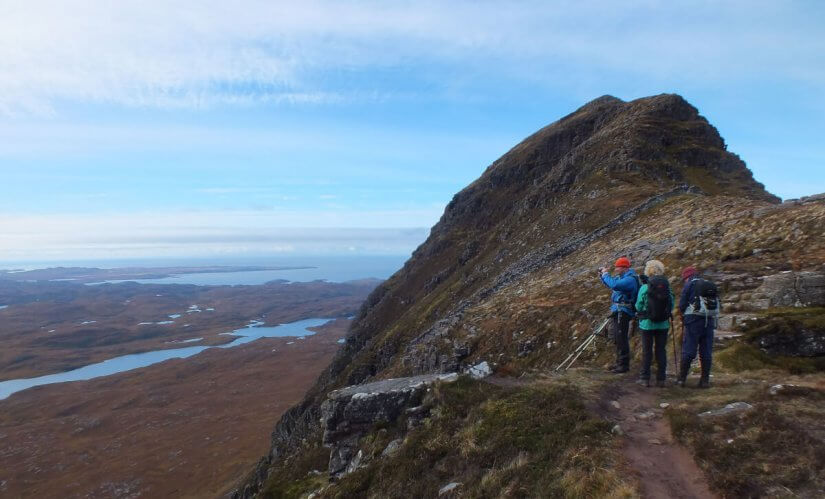
HIking in Scotland (Assynt)

Heading up the ridge, Assynt (Scotland)

The best day isn’t necessarily the hardest day

We love a good mountain day. There is nothing quite like reaching a summit after several hours of walking and seeing the landscape opening out around you.

But I don’t think the quality of a walking day can be measured simply by distance, height gained or the number of summits reached.

Sometimes the memorable day is a big one.

Sometimes it is a shorter walk where the cloud lifts at exactly the right moment.

It might be an unexpected wildlife encounter, an almost deserted beach, the light catching the mountains across a loch, or simply finding a quiet place to stop for lunch with an extraordinary view.

Those are the experiences that stay with people.

And they are one of the reasons we don’t approach every day in the mountains as an endurance test. The aim is to have a great day outside, not simply to come back having walked the greatest number of kilometres.

Hiking holiday in Scotland

Spectacular views abound in Assynt even though the mountains are not the grandest in height.

Why we keep going back

We’ve walked in Assynt many times, but that’s precisely why we enjoy returning.

Familiarity doesn’t make the landscape less interesting. If anything, it gives us more possibilities.

We know the routes, but we also know the alternatives. We know where conditions can make a difference and where there are opportunities to change the plan. We have a better understanding of how different walks fit together and how to make the most of whatever the weather decides to give us.

And every visit still produces something unexpected.

That is particularly true when we’re walking with a different group of people. A route that we’ve walked many times can feel completely different when you’re experiencing it through somebody else’s eyes.

This September we’re heading back to Assynt for our Empty Quarter walking holiday. It is one of our favourite areas to guide, and perhaps one of the best examples of why we value local knowledge and flexibility when we’re walking in the Highlands.

Assynt may not have the same fame as Skye.

We’re quite happy about that.

For now, it remains one of Scotland’s great places to discover on foot – and somewhere we think is well worth getting to know.

If you’re new to Assynt, take a look at our guide to [20 reasons to visit Assynt], which introduces some of the area’s highlights. This article is a little different: it’s about how we approach walking there as guides.

Walking in Assynt: frequently asked questions

Is Assynt good for hiking?
Yes. Assynt offers a wide range of walking, from demanding mountain routes to shorter walks around lochs and the coast. The area is particularly rewarding because the landscape combines distinctive mountains, lochs, coastline and beaches.

What are the best walks in Assynt?
Popular mountain walks include Suilven, Stac Pollaidh, Canisp, Cul Mor and Cul Beag. However, the best walk depends on weather, conditions and the experience and interests of the walkers.

Can you walk in Assynt without a car?
Some walks can be accessed by public transport, but having a car gives you considerably more flexibility in this remote area. For a guided walking holiday, transport between walks are usually included as part of the experience.

When is the best time to go walking in Assynt?
Assynt can be walked throughout much of the year, but conditions vary considerably between seasons. Late spring, summer and early autumn generally provide longer daylight hours, while autumn can bring particularly atmospheric conditions and colours. Summer is probably the time we would avoid Assynt (given the choice) but only because of the high possibility of midge infestations.

All content © Copyright Scot Mountain Holidays 2026

Responsive web design by Summit Web Solutions