








This website uses cookies to improve your experience. We\'ll assume you\'re ok with this, but you can opt-out if you wish. Read More
In case of sale of your personal information, you may opt out by using the link Do Not Sell My Personal Information
Snow-holing has a long and established tradition in Scotland’s winter mountains and in alpine and arctic regions worldwide. Vast amounts of snow still build up in sheltered lee areas on the high, wind-swept Cairngorm Plateau. Many snow-hole sites often hold snow into July, making this a sustainable winter mountaineering activity. However, as Andy Bateman* of Scot Mountain Holidays questions, it’s worth asking whether traditional snow-holing techniques remain appropriate for Scotland’s increasingly mild and variable winter climate. Do we stick with traditional and when it doesn’t work declare snow-holing “dangerous”, or do we prioritize safety and adapt?
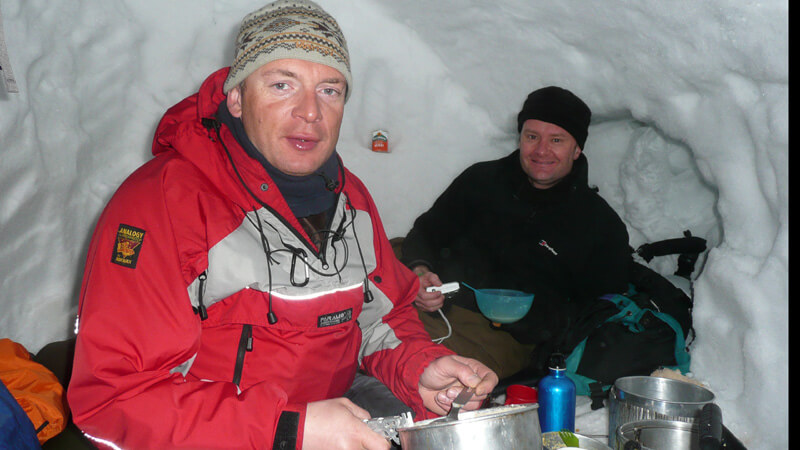
Although the Scottish Highlands occasionally make headlines for extreme cold, mountain temperatures never reach true Arctic levels. Recorded lows of below –20°C occur in valley inversions, where cold air pools in glens while summits remain relatively warmer.
For example, Aviemore experiences a wider temperature range than the summit of Cairngorm, whose lowest recorded temperature is only –16.5°C (12 January 1987). By contrast, nearby Nethy Bridge reached an unofficial –31.3°C (10 January 1982)!
At around 1100 m — the typical altitude of many Cairngorm snow-hole sites — winter extremes tend to sit between –8°C and –10°C, with many days around –5°C or warmer. Scotland’s proximity to the North Atlantic Drift keeps conditions comparatively mild, yet still demanding enough to test even experienced snow-holers.
Traditional snow-hole design aims to capture warm air, using raised sleeping platforms, doorways lower than the living area, and cold air drains. Are these features appropriate when winter temperatures in Scotland approach the melting point of the very material providing shelter?
In conditions near 0°C, the focus should be on adequate ventilation to manage internal air temperature and maintain structural stability.
An important point to note is that it takes appreciable heat energy to convert snow at 0 deg C to water at 0 deg C. It means that whilst there may not be a rise in temperature, you may still be “injecting” appreciable heat energy into the snow pack around your snow-hole.
Snow-holing naturally occurs where snow collects deeply — often on steep slopes with the potential for avalanche release. Avalanche risk must therefore be the primary consideration when selecting a site.
If there is any uncertainty about snow-pack stability:
• Avoid slopes steeper than 30 degrees.
• Excavate horizontally from the top of the door at least 1.7 m for slopes of 30 degrees or less before widening the chamber to ensure a minimum 1 m-thick roof.
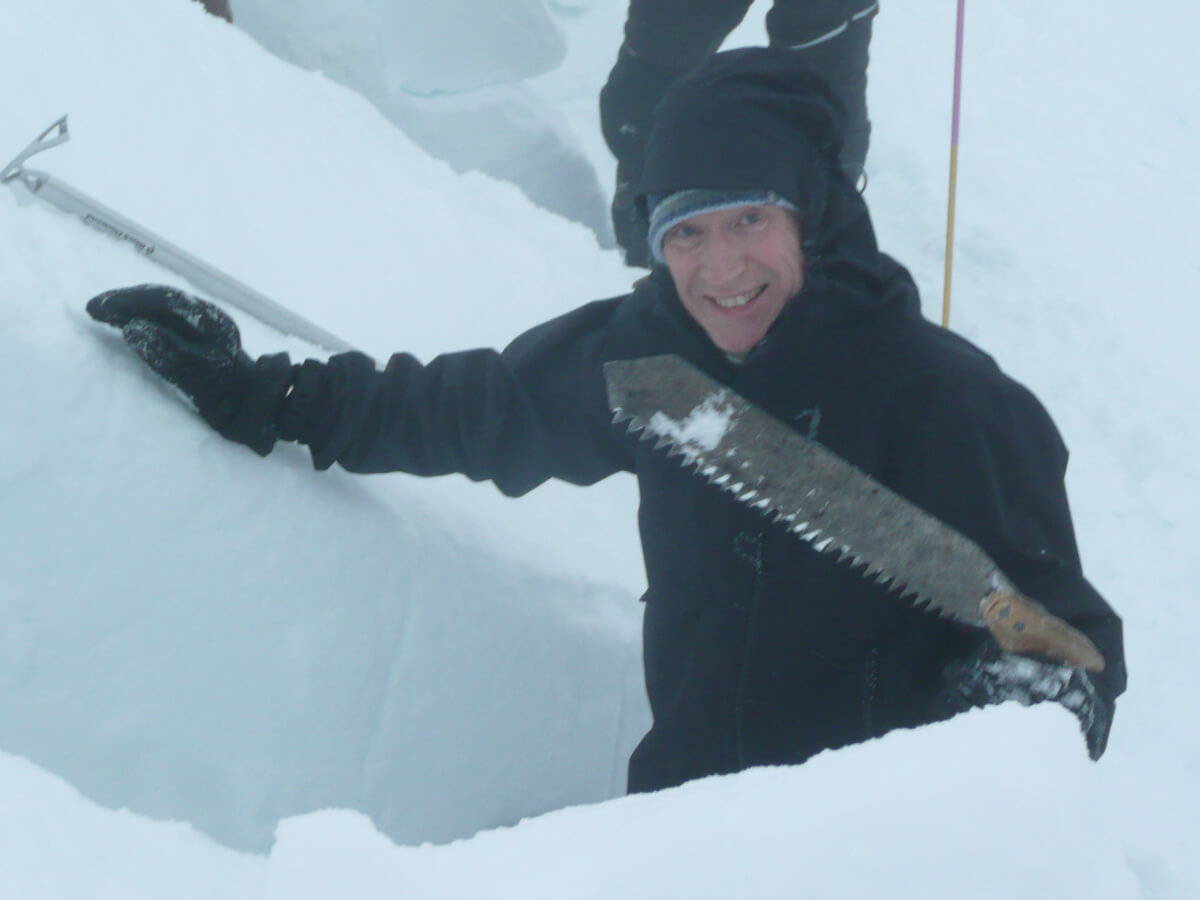
Scottish snow often becomes extremely hard after repeated cycles of wind, thaw, and refreeze, demanding robust equipment. Ensure you carry:
• A metal-bladed snow shovel – polycarbonate models are largely ineffective in dense, refrozen snow.
• A snow or “carpentry” saw capable of cutting blocks efficiently when snow is too hard to shovel. A number of dedicated snow saws falter when it comes to Scottish snow.
• A 3-metre avalanche probe to confirm adequate horizontal snow depth before excavation.
• A durable ground sheet or tarp for collecting and dragging excavated snow clear of the entrance.
The correct tools greatly improve both efficiency and safety, especially in hardened Scottish snow conditions.
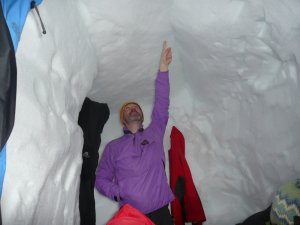
A snow-hole’s roof design is critical to both safety and durability. In Scottish conditions, attention to vault ceiling and load distribution is essential to minimize unsupported snow.
To achieve a stable structure:
• Keep the floor width to no more than two body widths (about 1.2 m) between the inner front and back walls.
• Excavate upward to form a steeply angled vaulted or apex ceiling, which removes large unsupported sections and promotes strength.
This design offers five major benefits:
1. Eliminates triangular sections of unsupported snow.
2. Prevents flat areas that become drip points.
3. Encourages melt water to drain with the snow pack.
4. Provides limited standing height without unnecessary excavation.
5. Directs warm air toward ventilation holes at the apex.
A properly shaped vaulted ceiling is the key to structural longevity. Reducing unsupported ceiling weight matters more than temperature alone. One snow-hole built by Andy Bateman on 25 March remained intact and safe when re-entered on 19 May after a prolonged thaw, with no roof deformation. Similarly, a BBC Travel Show snow-hole I built endured until late June; though its roof was only 30 cm above the floor, it never collapsed. Nearby structures that had become open hollows.
Roof thickness is equally important. When shaping the vault, avoid thinning the roof excessively — thicker is stronger.
• Minimum roof thickness: at least 1 m of snow overhead.
• Light test: blue light will penetrate up to 1m into the snow. If a pale blue glow is visible through the roof, it’s getting too thin.
• Front-wall strength: ensure the wall is no less than 1 m thick at its narrowest point to bear roof loads safely.
In Scottish snow-holing, roof geometry and thickness are the foundations of safety and endurance.
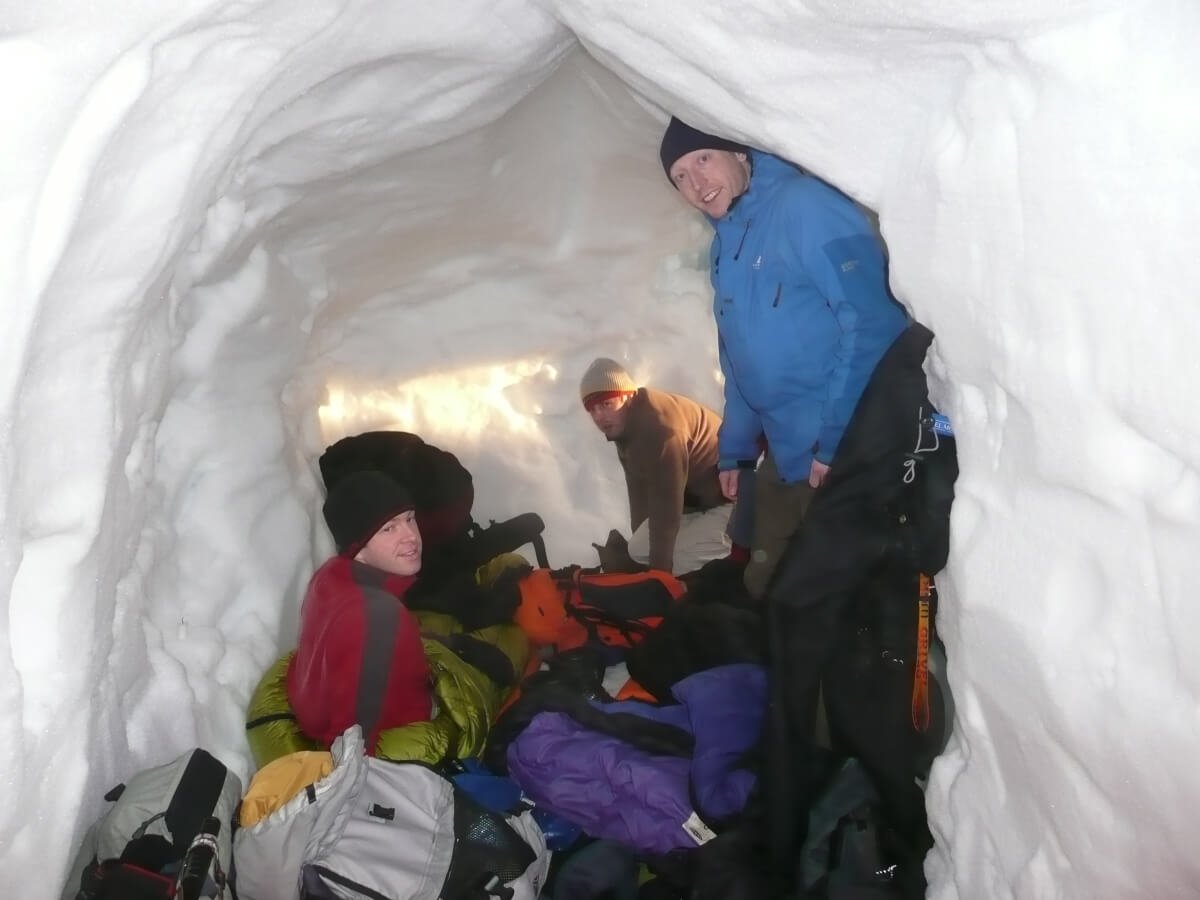
Effective ventilation is vital for safety in any snow-hole. Inadequate airflow when cooking, can lead to dangerous levels of carbon monoxide (CO) — a colourless, odourless gas produced by incomplete combustion.
All pressure stoves operate by first oxidising fuel to CO and then fully converting it to carbon dioxide (CO₂). Flame colour variations indicate this combustion process. When airflow is restricted, the secondary oxidation step fails, increasing CO production.
Simple ventilation test: exhale — if your breath drifts sideways, airflow is likely sufficient.
Even with good ventilation, a pan of icy water can quench the flame temperature, disrupting combustion and increasing CO output. Research by the British Antarctic Survey (BAS) found that raising pan supports slightly above the burner significantly reduced CO levels during snow melting. Snow-holers should understand the symptoms of CO poisoning, which can include headache, nausea, and dizziness.
While no recorded deaths from CO poisoning have occurred in Scottish snow-holes in recent years, some have reported headaches consistent with exposure. Carrying a small portable CO detector is strongly advised. Always extinguish candles before sleeping — they too emit small amounts of CO.
Key safety guidelines:
• Confirm adequate ventilation before lighting stoves.
• Be aware that even with airflow, cold pans increase CO output by cooling the flame.
• Add snow gradually when melting for water to prevent flame quenching.
• Use a compact CO detector for real-time monitoring.
Overnight snow drift can block entrances and reduce airflow. Studies indicate that with all flames extinguished, hypoxia is not a risk. Poor sleep quality will alert you to low oxygen levels, prompting you to reopen vents instinctively.
Maintaining clear ventilation routes and monitoring air quality are non-negotiable safety practices in winter snow-holing.
A larger snow-hole is safer. Not only are the ventilation characteristics better and but it also gives you space. One potential hazard of digging a small snow-hole is you don’t have enough room to put the snow after severe drifting. Do not underestimate how quickly the snow can drift into some of these snow-hole sites. 1 m per hour is not unusual. On one occasion I did have to tunnel out 1 ½ m before I hit the surface!
Many Scottish snow-hole sites are located near watercourses, and persistent snow cover slows natural decomposition. Managing human waste responsibly is essential to avoid contamination and maintain site sustainability.
Best practices:
• Use a carry-out system for all human waste.
• Participate in local initiatives such as Cairngorm Mountain’s Snow White Project, which supports sustainable snow-hole waste management.
Following these practices preserves the natural environment and ensures these snow-hole sites remain safe and viable for future mountain users.
All mountain adventure activities carry inherent hazards, and snow-holing in Scotland’s winter mountains is no exception. Instructors and guides must understand these hazards and apply appropriate techniques to reduce risk.
It’s been claimed that Snow-holing is dangerous. Compared with winter climbing (for which there is a whole qualification scheme) it isn’t, and mountain rescue statistics support this. However, attempting to snow-hole in Scotland using methods suited for Arctic conditions at -20°C is likely to cause problems in milder Scottish winters.
Structural integrity is critical. One of the most important factors for safety and longevity is avoiding large areas of unsupported roof or ceiling. A properly vaulted ceiling, sufficient roof thickness and ventilation, and careful internal design prevent collapse even as temperatures rise, whereas improperly supported snow-holes quickly lose their structural integrity. Put simply, if more than two people can sleep side by side, your ceiling is too wide!

* Andy holds the WML and IML awards and has over 20 years Mountain Leading experience. He has guided well over 30 commercial snow-holing trips in this time and although none of the mountaineering qualifications have a remit that covers snow-holing, he is one of the few guides deemed competent by HSE criteria of “relevant experience” to run snow-holing trips.
** British Antartic Survey helped in a BSc thesis. Available on request from andrew@scotmountainholidays.com
Medical references:
www.ncbi.nim.ni.gov/pubmed/18665947
www.ncbi.nim.ni.gov/pubmed/9340627
www.ncbi.nim.ni.gov/pubmed/8355417
www.ncbi.nim.ni.gov/pubmed/15265339
Crampon compatibility is important, but it’s far from the only factor to consider when choosing a suitable mountain boot for Scotland’s winter hills. With 25 winter seasons of guiding and Winter Skills instruction under his belt, Andy Bateman of Scot Mountain Holidays shares what to look for in a reliable winter mountain boot.
Scotland’s winter mountains are as diverse and changeable as the weather that shapes them. Snow conditions can vary dramatically in both type and depth—far more so than any lingering summer snow. Add to that the range of situations where you may encounter snow and ice, and it becomes clear: limiting yourself with the wrong boots could hold you back before you’ve even begun your ascent. Choosing the correct winter boots is essential.
Winter days in Scotland are short, and efficiency is key. Moving quickly and safely saves both energy and time. That’s why sole rigidity is vital.
The rigidity of a winter boot doesn’t come from the sole itself but from the mid-sole. It’s crucial that the boot is stiff both lengthways and across its width. Most modern boots with rigidity in one direction will have it in the other, too.
A stiff sole concentrates your weight effectively, whether you’re cutting into snow and ice or relying on the boot’s grip. Here’s why this matters:
B2 and B3 boots provide superior grip on snow and ice compared to B1 boots. This can mean less reliance on crampons for minor snow cover. Walking in crampons over thinly snow-covered rocks can be awkward and inefficient; in such conditions, a stiff boot often performs best.
Sometimes it’s faster and more practical to kick a few steps into firm snow rather than stop to put on crampons. Flexible B1 boots often don’t hold up here. When you try to kick “pigeon hole” steps, for example, the boot’s toe can bend upward and bounce off the surface instead of cutting in. This isn’t just inefficient—it’s uncomfortable.
In steep terrain, the ability to “front point” safely is essential. B1 boots are often too flexible: the toe bends upward, the heel drops, and the front crampon points can shear out of the snow or ice, increasing the risk of falling backward out of the step.
Crampons are tough pieces of kit, but they’re not indestructible. A flexible boot places unnecessary stress on the crampon, which can weaken it over time and eventually lead to failure. Using a rigid B2 or B3 boot supports your crampons properly, reduces wear, and ensures greater comfort for your feet.
A stiff, well-structured upper is equally important. In softer, more flexible boots, tightening crampon straps can squeeze and restrict your feet. This can reduce blood circulation, leading to cold feet—or worse, frostbite. B2 and B3 boots are built to prevent this, keeping your feet secure but comfortable.
Winter boots are designed with insulation in mind, which is critical for keeping feet warm in sub-zero temperatures. This insulation also tends to add padding, increasing overall comfort during long winter hikes. Cold feet are uncomfortable at best, and at worst, they can lead to injury or frost damage.
Your boots are as much a tool as your axe or crampons when it comes to winter walking. For the Scottish winter mountains, a B3 boot is not overkill—it’s an investment in safety, efficiency, and comfort. While a B1 boot might be adequate for summer treks involving glacier crossings in the Alps or Himalayas, it simply doesn’t offer the necessary performance for Scotland’s unpredictable winter conditions.
Before heading to your local outdoor gear shop, check which staff members are trained in proper boot fitting and when they’ll be available. Taking the time to find the right boots will make all the difference in your winter walking adventures.
If you’re preparing for your first winter trip—or just looking to upgrade your kit—remember: the right boots will let you tackle Scottish winter mountains with confidence. Also you don’t need to commit the first time you are trying out winter walking – you can hire boots to find out if that’s your thing or not.
Ready to hit the hills? Let Scot Mountain Holidays show you the ropes with expert-led Winter Skills courses.
Walking comes in many different guises from dog walking to marathon walking. Perhaps then there’s a reason why “hiking” is becoming much more common usage for wild walking, long-distance and mountain walking. Hiking in summer and walking in winter can almost be classed as 2 different sports.
You might be a keen walker. Alternatively you might have started to develop an interest in walking later in life. You might be walking for health reasons or you might be Munro bagging. Whatever the reason, once you turn to hiking in the mountains, sooner or later you might want to extend your season so you can continue to hike all year round. You’ll want to go walking in winter.
Hiking in winter has its own distinct rewards from unending views in crystal, clear air conditions to solitude and glistening fresh snow, unblemished by evidence of other people. There are however also obvious hazards and also some aspects to winter walking/hiking, which you might not have considered.
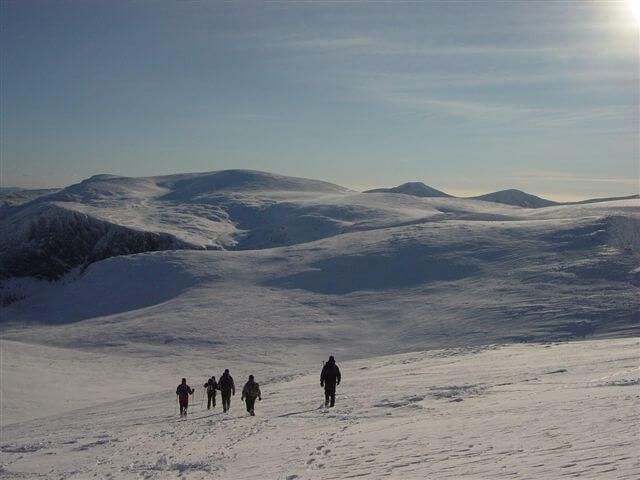
In Scotland the winter mountains will almost invariably have snow on them for at least part of the winter. We live in hope that the season will be longer and the snow will remain, but this year, 2017, even the most stubborn of snow patches melted away completely. It’s nearly the end of October already and there’s as yet no sign of the white stuff returning. Still if you are considering some winter hiking, make sure you have received some formal training in the skills you need to remain safe in winter conditions. There is nothing more sapping than cold weather.
There are a surprising number of avalanches in Scotland but most of them go un-witnessed and hence unreported. Fortunately we do have a very good avalanche information service, especially in the Cairngorms. Throughout the winter they produce a daily report of the avalanche risk. With formal training and a bit of experience, you can learn to interpret the report so that you pick the safest route for the day.
Making sure you have the proper boots for winter is essential. “Your boot is as much as tool as your crampons and ice axe” is a sentence often repeated by our own Andy Bateman when he is talking to winter novices. You must have stiff boots rated as B2 or above. However, the problem with the boots is that they weigh a lot more than boots you will be used to walking in and they are so much stiffer that they force you to walk in a slightly different gait from usual. Over the course of a couple of days, the difference in the boots can take its toll on you. You legs and feet will feel a lot more tired than they usually do for the same amount of summer walking.
Take care when wearing winter boots. Try to baby your feet a wee bit and if you have the opportunity a little bit of simulation will stand you in good stead, even if people give you funny looks when you clump along the beach promenade or up and down the city streets in monster boots.
Your pack, whether for an expedition or a day walk, is inevitably going to be bigger in winter. Not only will you need more in your lunch, but you’ll also need space for the additional gear: your ice axe, your crampons, thicker, warmer gloves etc. You’ll need to be ready for the extra weight.
TOP TIP: always try to pack your crampons within your pack as if you have them tied to the outside of your pack, you run the risk of losing one or both of them quite easily.
In winter Scotland’s hills become mountains due to the severity of the weather conditions. There are regularly winds over 100 miles an hour in storms and though you might not plan to be out in conditions like that, even experienced mountaineers can get caught out. A friend of ours was once out in the Cairngorms when the weather turned. He and his party ended up almost crawling out as they were getting blown over when they stood up. The wind was even strong enough to take a head torch off one of their heads.
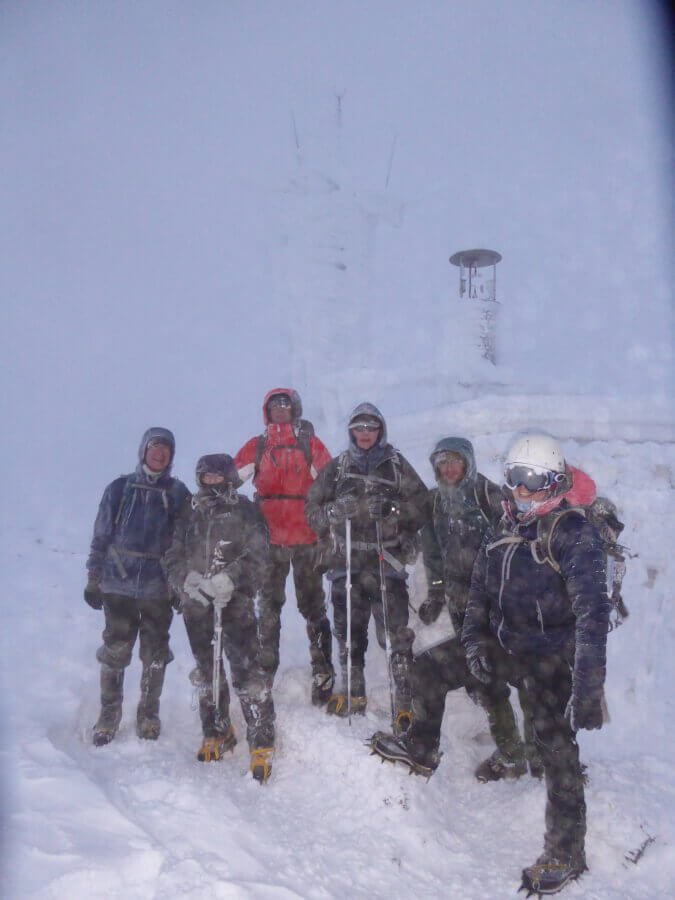
It’s not only the colder weather which helps to burn up more calories. You do have to carry more stuff with you when you go out hiking in winter. The additional weight will help to burn more calories at the end of the day. But always remember, if you put more calories in than you consume you won’t be losing weight. Just heading out for a hike is not a guarantee that you will lose weight – if that is your aim. You need to balance out keeping warm with the number of calories you consume. You don’t want to be cold, but neither do you want to overeat.
How many calories are burned by being cold?
Calories burned in cold weather
Cold air carries less moisture than warm air and therefore produces better visibility. It is warm air streams which bring precipitation. There is some truth to the statement that it is too cold in the arctic to snow.
Fewer people enjoy going out in the cold weather despite the fact that we have amazing gear now which can keep us warm in virtually any conditions. However, this means that those of us who do go out can enjoy a real sense of solitude and space.
There’s nothing better than sharing the story of the day. The warmth of a fire and a cup of tea at the end of the day will be appreciated so much more after being out in cold conditions.
When people come back after a day out in the snow, they almost always have a novel story to share. The risks are greater than in the summer, but then this enhances the benefits too.
If you stop going out in the colder weather, it may be more difficult to get back to your regular hiking than before. The risk of losing your fitness over the winter is greater as you get older. Walking on the treadmill isn’t really an adequate substitute, but if there’s no other choice …
I don’t know why the mountains seem so much more spectacular when covered in snow, but they do. Maybe it’s because they look more pristine. Maybe it’s because if gives them more shape. Whatever the reason, a little snow seems to add some “je ne sais quoi” to the mountain scene.
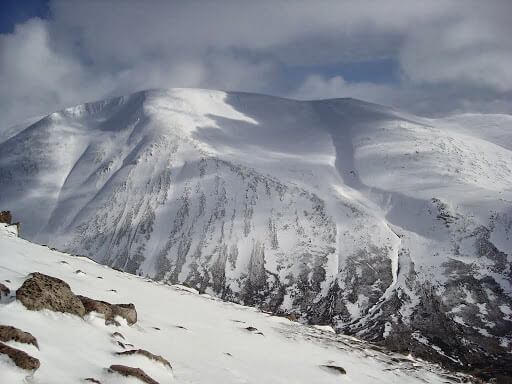
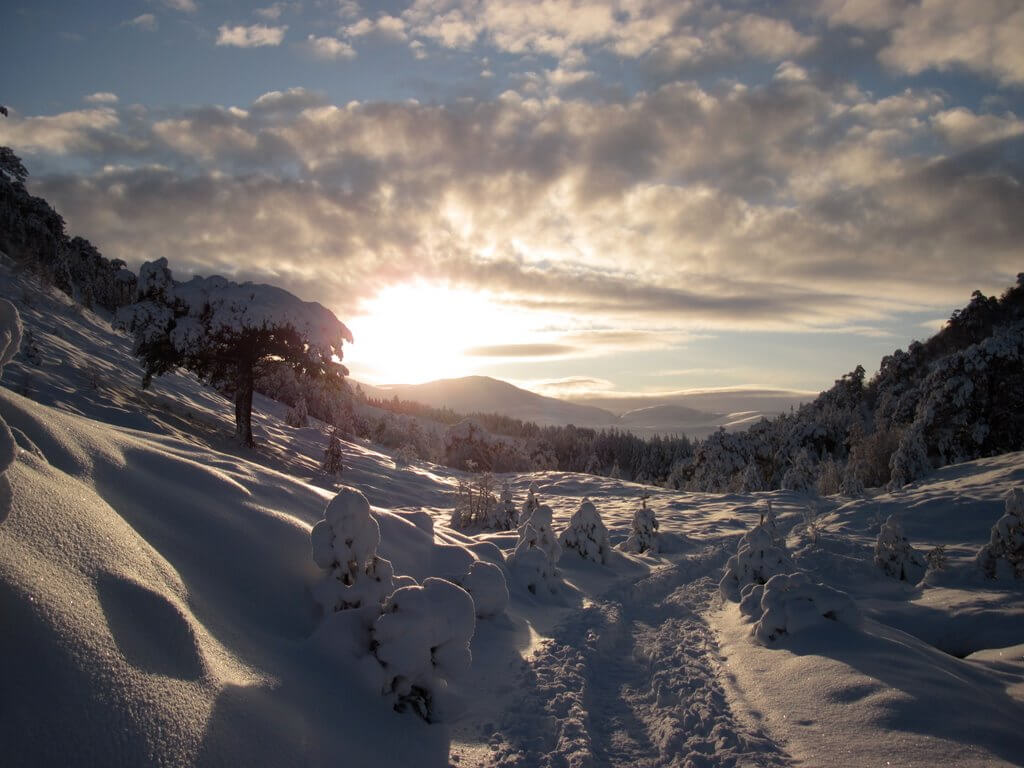
We specialise in guided walking holidays and walking skills here in Scotland.
If you’d like to leap in to winter at the deep end, why not think about a snow hole expedition: not an igloo, a snow hole; not an emergency shelter but a deliberate night out in a purpose built shelter. Check it out:
Winter has descended upon the Scottish Highlands, the familiar hills evolve into awe-inspiring mountains, blanketed in a pristine coat of snow, setting the stage for a winter hiking experience like no other. The landscape, now a picturesque haven, invites adventurers to traverse its snow-laden trails, discovering a unique blend of tranquility and adventure. However, one must always keep an eye on the ever present dangers inherent in winter.
Winter hiking in the Highlands offers a striking contrast to other seasons. The once-green paths are now transformed into a pristine canvas of white, waiting to be explored. Intrepid hikers, armed with waterproof gear and insulated boots, embark on journeys that unveil the Highlands’ winter charm.
Traversing the snow-covered trails is a sensory delight. The crunch of snow beneath each step echoes through the valleys, and the brisk winter air invigorates the senses. The hills, now adorned with a glistening layer of frost, create a visual spectacle that adds an extra layer of magic to the hiking experience.
Never forget though that you need to be extra prepared before you head out into the winter hills. Our top tips include:
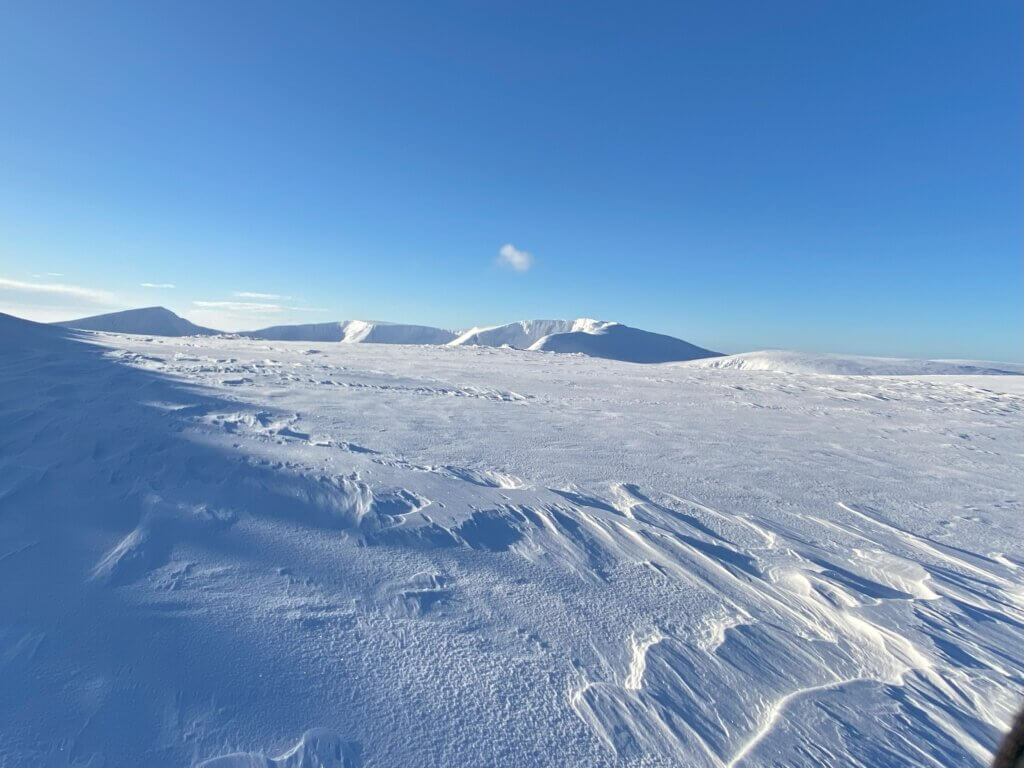
Cairngorm plateau, New Year Winter Walking 2022 – 2023
Preparation is key for those eager to embrace the winter landscape. Layered clothing, including waterproof jackets and insulated gloves, become essential companions (see our blog). As the landscape transitions from hills to mountains, the weather can be unpredictable, and hikers must be equipped to face the challenges that come with the season.
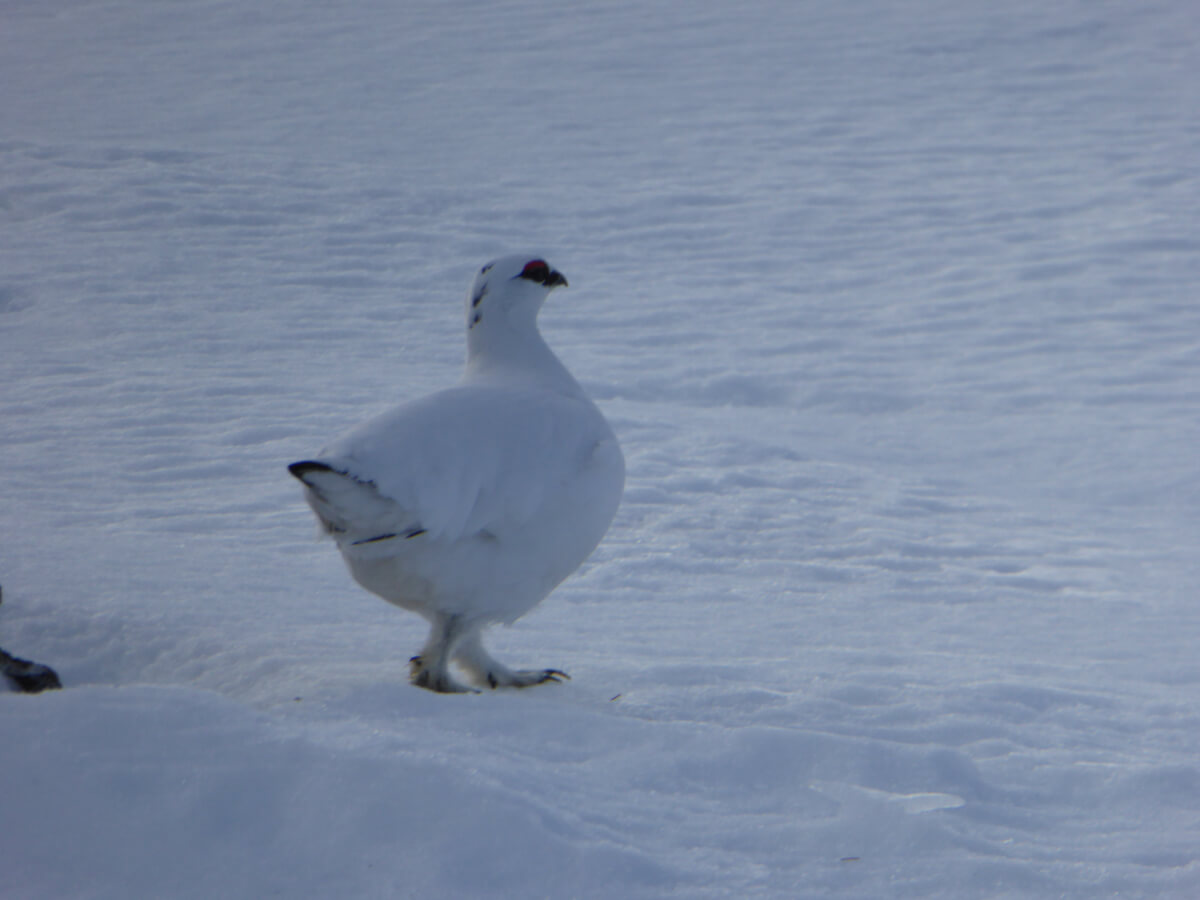
A ptarmigan makes walking across the snow look easy
Popular winter hiking routes in the Highlands include the West Highland Way, the Great Glen Way and the Speyside Way; which transform into a winter wonderland, offering panoramic views of snow-capped peaks and frozen lochs. The Cairngorms National Park, with its diverse trails, provides opportunities to witness the Highland wildlife amidst the winter spectacle; and for the intrepid this area can become a wilderness for the most intrepid to explore and indulge in winter sports and adventures like snow holing.
Hiking in the Highlands during winter is not just a physical adventure but also a journey into solitude and reflection. The silent majesty of the snow-covered landscape imparts a sense of serenity, inviting hikers to connect with nature on a deeper level.
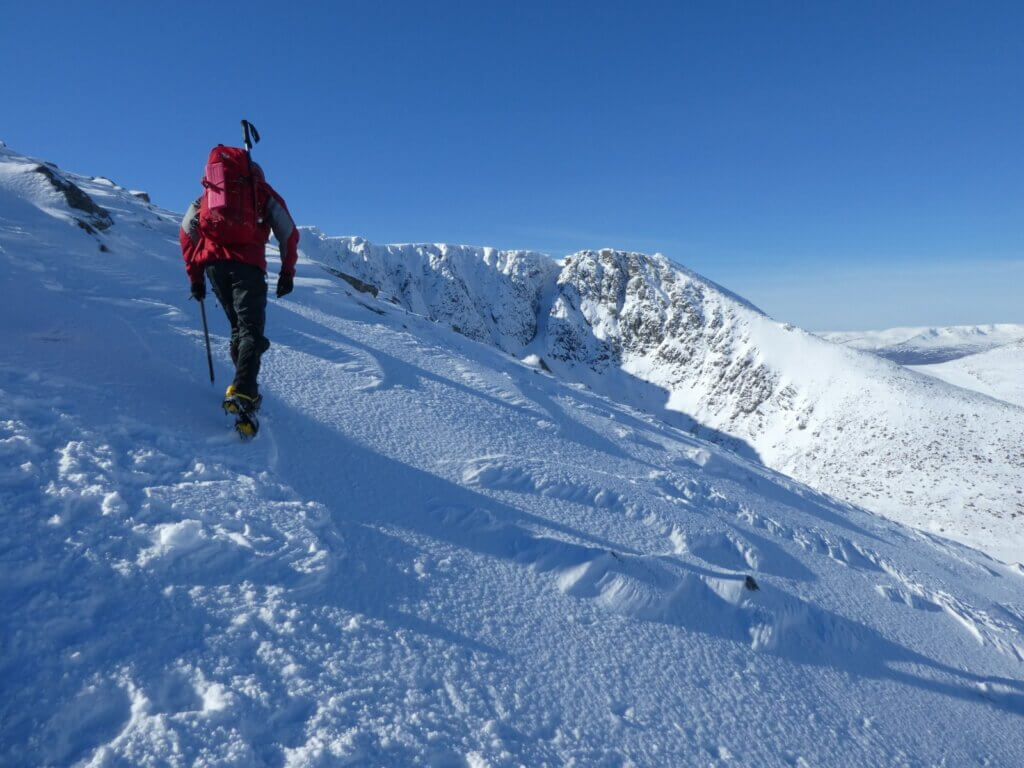
Cozy hostels nestled along the trails and in the villages close by offer refuge after a day of winter exploration. Hostels provide a welcoming retreat where hikers can share stories and relish in the hearty warmth of local hospitality.
Winter hiking in the Highlands of Scotland is a testament to the enduring spirit of nature. It is an invitation to witness the marriage of untamed beauty and the thrill of adventure. So, lace up your boots, embrace the chill, and discover the enchanting transformation that occurs when the hills become mountains in the heart of a Highland winter.
Check out our range of guided winter walking holidays
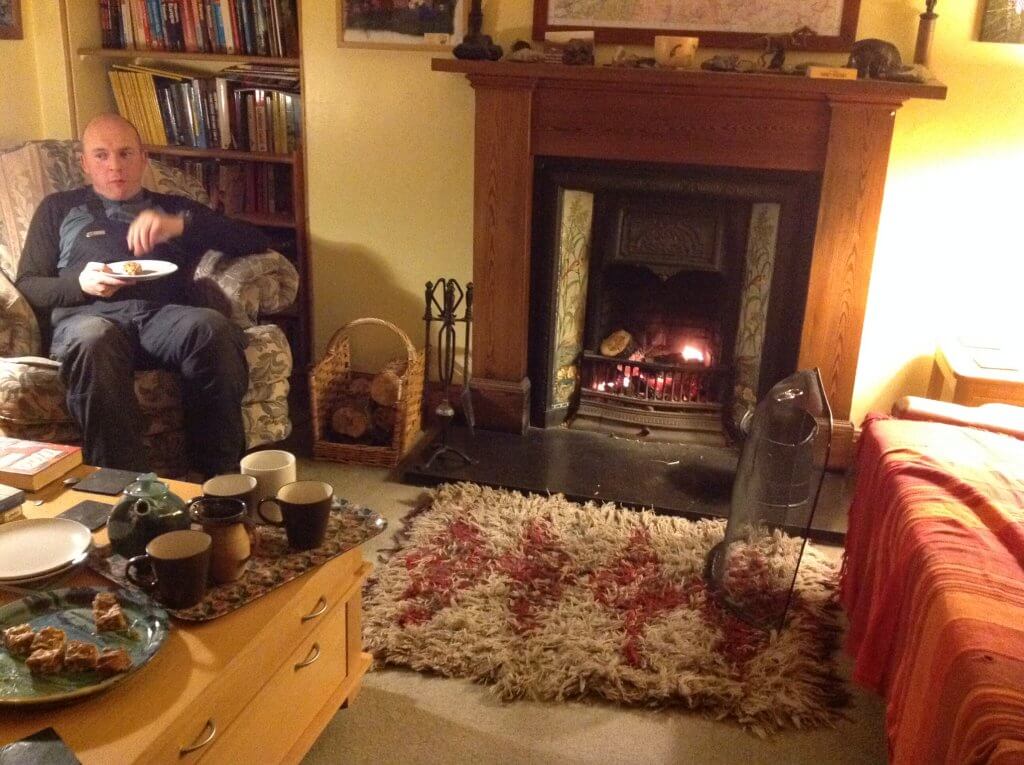
Everyone loves an open fire, almost as much entertainment as the TV
Words of wisdom from the Met Office and the BMC.
Our instructors:
Andy Bateman, our company director, is the main guide for Scot Mountain Holidays. He is a qualified winter mountain leader with 15 years experience instructing in the Cairngorms. He says there is nothing like local knowledge for being aware of the avalanche hotspots and how to avoid them. He keeps a very close eye on the weather from this time of year (November) until winter passes towards the end of April and is out on the snowpack so frequently that he has almost as good an eye for predicting the avalanche weaknesses as the SAIS team.
We also work with experienced mountain instructors who deliver mountaineering and climbing courses for us. The instructors live in the area and have in many cases instructed for the RAF outdoor centres when they were based in Grantown on Spey. All instructors who work for us have a wealth of local knowledge.
Winter courses offered by Scot Mountain Holidays
It is essential if you are planning to go out in the hills on your own or even with a small group of friends that you should all have had some formal training in personal safety skills so you know how to use your crampons & ice axe effectively and have all the gear necessary. Navigation is perhaps the least valued of these skills, but arguably the most valuable. We also offer training in winter navigation techniques.
Winter holidays offered by Scot Mountain Holidays (including expeditions)
If you would like to get out in the winter but are not confident of managing on your own, you might want to join an organised group. Take a look at our dates and see if we have anything which will suit your commitments.
USEFUL LINKS
Mountain Weather Information Service
Scottish Avalanche Information Service
(A synopsis in pictures)
The snow’s back here in the Cairngorms and it’s only 4th November 2014 – plenty of time for the snow to build up for a fabulous Christmas and New Year in the Highlands. Take a look at our selection of winter images below – all taken in during winter seasons in the Cairngorms. Will it be an official white Christmas or just white on the high peaks of the Cairngorms
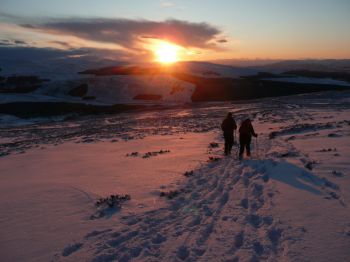
Photo caption: A day out in the snow – heading home in the sunset,
turning the snow pink and giving life to the Cairngorms –
also known as Mhonaidh Ruaidh (the red hills).
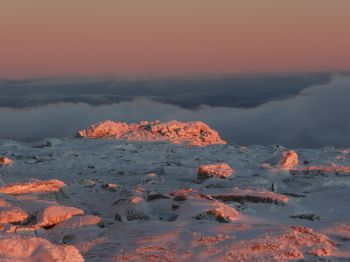
Photo caption: Sometimes a wee bit of cloud can play into your hands
and produce a much more stunning picture than a clear blue sky,
especially in the soft winter light we get here in the Cairngorms,
which is of course enhanced by reflection on the snow.
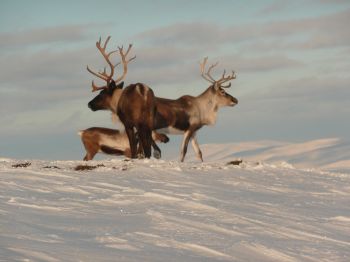
Photo caption: Unique to the Cairngorms National Park,
Britain’s only reindeer herd, which are free-roaming
across the hills in the winter. You could bump into them
on any of our courses or winter walking holidays.
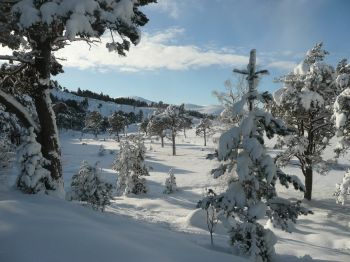
Photo caption: White Christmas? Wouldn’t that be amazing?
This is the kind of snow laden scene
we’d all like to see, but how many of you would like to
experience it yourselves? When the snow lay round about,
deep and crisp and even …

Photo caption: It’s New Year and it’s Scotland – must mean it’s time for a party –
or as you’re in Scotland let’s give it the proper name and join the ceilidh!
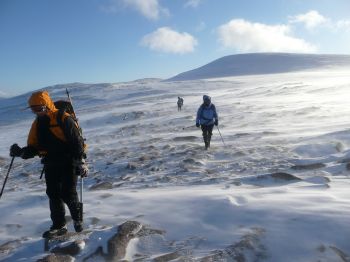
Photo caption: Winter walking holiday across the Cairngorm plateau. Check out the blue skies!
Inspired? Check out some of our winter offerings in the Cairngorms and further afield across the Highlands of Scotland
 Scot Mountain Holidays (Ltd),
Fraoch Lodge, Deshar Road,
Boat of Garten,
PH24 3BN
Scot Mountain Holidays (Ltd),
Fraoch Lodge, Deshar Road,
Boat of Garten,
PH24 3BN




All content © Copyright Scot Mountain Holidays 2026
Responsive web design by Summit Web Solutions
