


This website uses cookies to improve your experience. We\'ll assume you\'re ok with this, but you can opt-out if you wish. Read More
In case of sale of your personal information, you may opt out by using the link Do Not Sell My Personal Information
Winter isn’t always the easiest time of year to get out into the Scottish hills. The days are shorter, the weather can be challenging and a walk that was straightforward in summer can become a much more serious undertaking when snow and ice arrive.
But winter also brings some of the most memorable days in the mountains. Frost transforms the landscape, low sunlight picks out the shape of the hills, and on the right day the views seem to stretch for miles. Familiar routes take on a different character, and there’s a particular satisfaction in returning from a day out in the cold to somewhere warm and comfortable.
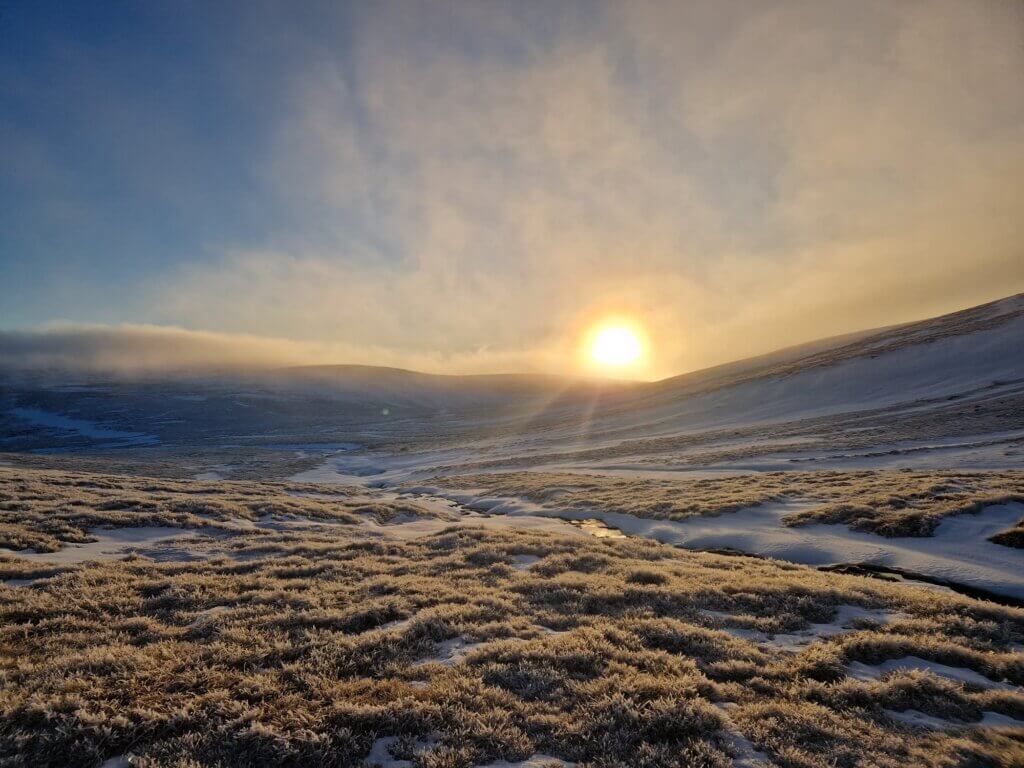
Winter has always been a huge favourite of Andy’s. Even now, he gets very excited at the prospect of snow – and that’s after nearly 30 years of guiding in the Highlands. Here are some of the reasons he thinks it’s worth getting out into the hills when the temperature drops.
One of the biggest attractions of winter walking is the landscape itself. Snow and frost reveal details that can be less obvious in summer, while the low sun creates long shadows and dramatic contrasts across the hills.
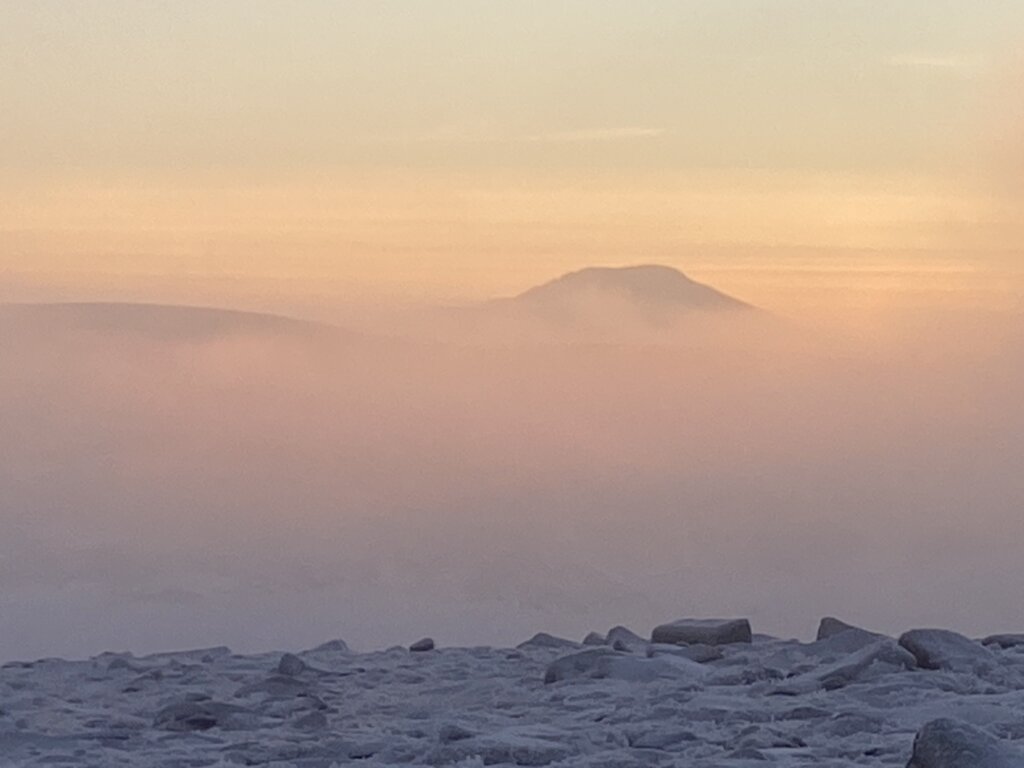
On clear days, the views from the higher Cairngorms can be exceptional. Sometimes an inversion leaves the summits above a blanket of cloud; at other times, distant mountains stand out against a crisp blue sky. Sunrise and sunset can bring extraordinary colours, too.
Of course, winter doesn’t guarantee clear skies. Mist, cloud and snowfall are all part of the season, and visibility can change quickly. But when the conditions come together, the results can be spectacular.
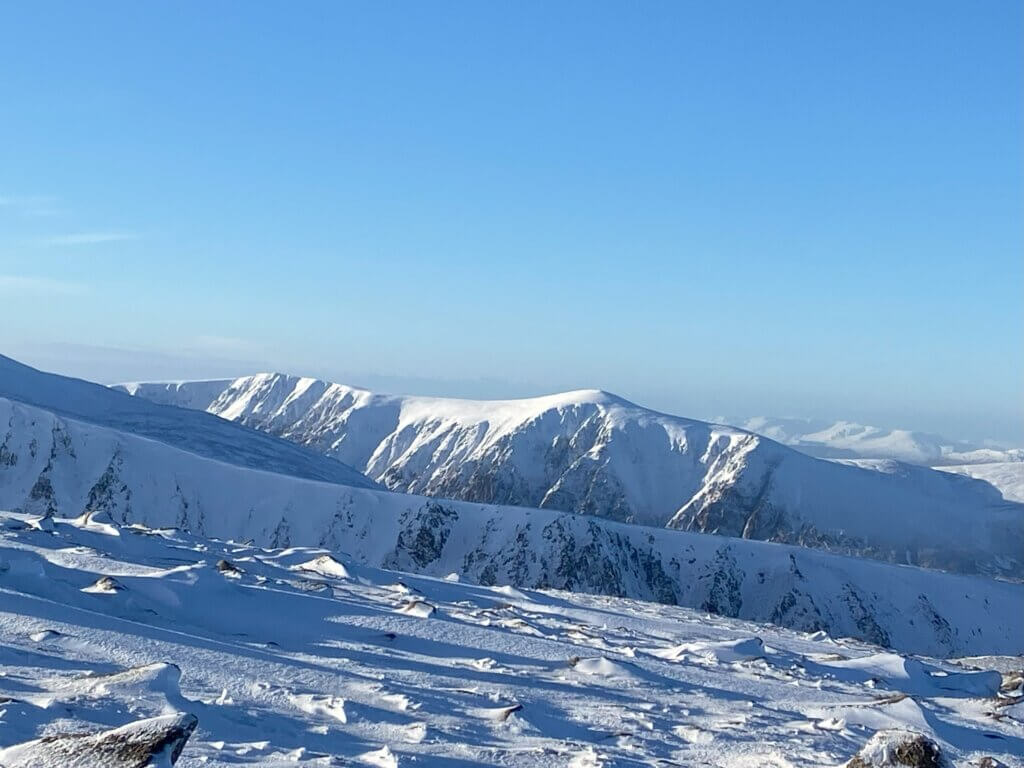
Can’t beat these views! New Year Winter Walking 2022 – 2023
Walking in winter asks more of you than following a familiar summer route. Snow can make progress slower, icy slopes require care, and navigation becomes particularly important when the paths disappear beneath a covering of white.
That added challenge is part of the attraction for many experienced hillwalkers. It encourages you to develop your judgement, pay closer attention to the landscape and think carefully about each stage of the day.
You don’t necessarily need to aim for the highest summit, either. A good winter walk is one that suits the conditions and the people taking part. Sometimes a lower route offers the most rewarding day; on other occasions, settled weather and good snow conditions may allow a more ambitious outing.

It’s easy to become less active when the days shorten and the weather turns cold. Having a walking trip planned gives you a reason to keep getting outside rather than waiting for spring.
A full day in the hills can be physically demanding, particularly when you’re walking through snow or over rough ground. Regular walking helps maintain fitness and stamina, while a week of walking can provide a welcome opportunity to build on the exercise you manage in everyday life.
There’s no need to make it about step counts or calories. For most of us, the better motivation is having somewhere interesting to go, a route to explore and a good reason to put on our boots.

Always a memorable sight – the Cairngorm Reindeer herd
Winter walking brings skills into sharper focus. Understanding mountain weather, navigating in poor visibility, recognising icy terrain and knowing when to change your plans are all important parts of travelling safely in the hills.
If you’ve mostly walked in summer, the prospect of winter conditions can feel daunting. A winter skills course is a way to learn the techniques and decision-making involved, with instruction and practice in suitable conditions.
For those who want to concentrate on the walking itself, going out with an experienced local guide can also be a good way to discover winter mountain terrain. A guide can help choose an appropriate route, assess the conditions and adapt the plan as the day develops.
Winter mountains deserve respect, and the right skills and preparation make a real difference.

Self-arresting on a winter skills course in the Cairngorms
There’s something satisfying about sharing a day in the hills when everyone has had to make a little extra effort. You might be following a line across a snowy plateau, stopping to admire a view or finding shelter for a short break out of the wind.
Walking gives people time to talk. Conversations wander from the mountains to family, work, travel and all sorts of other subjects. By the end of a trip, a group has shared far more than a collection of photographs and summit names.
The camaraderie isn’t unique to winter, of course. But a memorable day in challenging conditions can give people a particular sense of achievement and a story to tell afterwards.
If you look closely at the picture below, you’ll see a group of people who have been coming on trips with us for over 10 years – many of them come annually or bi-annuallly to be part of the same group. See Mike below – so integrated he even has the same jacket as Andy (in the centre of the picture).

For anyone who enjoys being outdoors, snow can bring out a sense of playfulness. Crunching across frozen ground, watching spindrift blow across a ridge or learning how to move confidently with crampons can make the mountains feel like a completely different environment.
On a winter skills course, activities such as practising ice-axe techniques and learning how to move on snow have a serious purpose: they help develop the skills needed for winter travel. But there’s plenty of satisfaction in learning something new, practising it and seeing your confidence grow.
And there’s no denying the simple pleasure of being out in a snowy landscape on a bright winter’s day.
Winter is an opportunity to see familiar places from another perspective. The Cairngorms can feel vast and remote under snow, while woodland and lower-level routes offer their own rewards when the high ground is less inviting.
You don’t need a perfect summit day to enjoy being outside. A walk through frost-covered woodland, a view across a frozen-looking corrie or the changing colours of the sky at the end of the afternoon can all make a day memorable.
The key is being prepared to adapt. Winter walking isn’t about going out regardless of the conditions; it’s about finding the right experience for the day.
If you already enjoy hillwalking, winter can open up a whole new dimension of the activity. If you’re newer to the hills, there are ways to build experience gradually, starting with appropriate routes and learning from qualified instructors or guides.
The important thing is to be realistic about your experience, equipment and the conditions. Winter mountain walking can involve serious hazards, including ice, poor visibility, strong winds and rapidly changing weather. Some days, the right decision is to choose a different route or stay off the high ground altogether.
At Scot Mountain Holidays, our winter walking programme gives us the opportunity to explore the mountains with local knowledge and a flexible approach to route choice. We plan around the conditions rather than treating a summit as an obligation.
If you’re curious about winter walking in the Cairngorms, take a look at our winter walking holidays. If you’d prefer to develop your own winter mountain skills, you can also find out about our winter skills courses.
Winter won’t always deliver blue skies and snow-covered summits. But it offers a different way to experience the Scottish mountains, and some days will stay with you long after the snow has melted.
There is something about the Cairngorms in winter that makes familiar hills look entirely different. Snow picks out the shape of the land, low sunlight throws long shadows across the plateau, and sometimes the cloud sits below the summits, leaving the higher mountains in a world of their own.
Winter walking isn’t always blue skies and perfect snow, of course. Conditions can change quickly, and choosing where to walk is part of the experience. But when the weather and light come together, the mountains can be extraordinary.
With another winter season approaching, we’ve been looking back through some of Andy’s photographs from previous trips. Here are a few of the scenes and moments that remind us why we look forward to returning to the hills each winter.

When the hills turn white here in the Cairngorms, it completely changes the landscape. Familiar routes take on a different character, the contours of the ground become more pronounced and rocks, ridges and corries stand out against the snow. There’s a real sense of anticipation when the first proper snowfall arrives. Everyone gets excited and starts dusting off their winter equipment.
A clear blue-sky day in the Scottish mountains in winter really can’t be beaten. The air is crisp, the light is stunning and the low sun throws long shadows across the snow. On a good day, the views seem to go on for ever. Even hills you’ve walked many times before can look completely different, and it’s hard not to stop regularly to take photographs.
But a covering of snow changes more than the appearance of the hills. It can hide paths and familiar landmarks, make rough ground harder to read and turn straightforward slopes into icy or potentially hazardous terrain. Conditions can also vary considerably between the glen and the summits, and a bright, sunny morning doesn’t guarantee that the weather will stay settled.
That’s part of what makes winter walking so different from summer hillwalking. The rewards can be exceptional, but you need the right equipment, the skills to use it and the judgement to know when conditions call for a change of plan. When the hills turn white, the excitement is real — but so is the need to take them seriously.

Sunrise, sunset and clear air
It’s the light in photographs like these that makes winter days out in the Scottish mountains particularly special. It excites photographers and hillwalkers alike, and it’s difficult to find a match for it at other times of year.
The sun stays low in the sky, picking out ridges and rocky outcrops, throwing long shadows across the snow and bringing out colours you might barely notice in summer. Early starts and shorter days also mean we’re sometimes on the hills as the sun rises or sets, when the sky can turn extraordinary shades of orange, pink and gold.
On clear days, the air can feel remarkably crisp and distant mountains stand out sharply against the horizon. Sometimes the cloud lies below us, leaving the higher summits in sunshine above a sea of white. You can take dozens of photographs, but it’s not always easy to capture the feeling of being there.

Looking into Coire an Sneachda in the Cairngorms in winter
Winter opens up a different side of the mountains, but reaching places like this requires more than enthusiasm and a good pair of boots. Snow and ice change the nature of the terrain, and conditions can make familiar routes much more demanding.
Anyone venturing into winter mountain terrain needs to know how to use an ice axe and crampons, and be confident with navigation when paths and familiar features are hidden by snow. It is equally important to understand the weather, assess the conditions and recognise when a route is beyond your skills or when it is better to turn back.
The rewards can be exceptional, but winter mountain walking calls for preparation, sound judgement and the willingness to adapt your plans.

When the hills turn white – groups crossing the snow
The people we share our winter days with have often been coming back to walk with us year after year. There is something special about sharing these experiences: the anticipation of setting out, the conversations along the way, the views that make everyone stop for a moment, and the satisfaction of getting back after a good day on the hill.
Winter walking can be demanding, but it is also full of moments that stay with you. Sometimes it’s the conditions or the scenery that people remember; sometimes it’s simply the company. A photograph can capture the landscape, but it rarely tells the whole story of a day in the mountains.
For us, these shared experiences are a big part of what makes our winter walking holidays so rewarding.
We’ve always liked to run our trips more like family holidays and distinctly unlike road trips. We prefer to do the majority of the travelling at the beginning and end of a trip, then spend the rest of the time exploring the local area. Rather than packing up and moving on every morning, we can get to know a place properly, discovering different corners of the landscape and finding walks that we might otherwise miss.
This also gives us the flexibility to mix and match walking routes according to the weather and conditions. We’re not committed to moving onwards and upwards each day, or trying to reach a particular destination simply because it’s the next stop on the itinerary. If the wind is howling on the tops, we can look for a more sheltered route; if conditions are good, we can make the most of them. Having a choice of walks within reach of our base makes a real difference.

There are practical benefits for our guests, too. Once they’ve arrived, they can settle into their allocated rooms and stay for the duration, without the daily business of packing and repacking bags, loading the vehicle and checking into somewhere new. There’s time to relax after a day’s walking, enjoy a meal together and feel at home for the week.
For us, a good base isn’t just somewhere convenient to sleep. It needs to give us access to a variety of walks and landscapes, with enough options to make the most of whatever Scotland’s weather brings. It’s a way of getting to know an area rather than simply passing through it.
We start by designing the walks, then look for the best-placed accommodation in the area that suits the size of group we anticipate. There’s a fair amount of thought involved in this, and we won’t give away all our secrets learnt through experience!
Location is the first consideration. We need somewhere that gives us access to a good variety of walks without spending too much of each day travelling to and from the hills. The accommodation itself matters, too. This is going to be our home for the week, so it needs to be comfortable and practical for a group: enough space to relax together, preferably a fire to add to the cosiness, and more than one bathroom.
Finding somewhere that ticks all these boxes isn’t always straightforward. The prettiest cottage isn’t necessarily the best base for walking, and the ideal location on a map doesn’t guarantee that the accommodation will work for the group. It’s a question of getting the balance right.
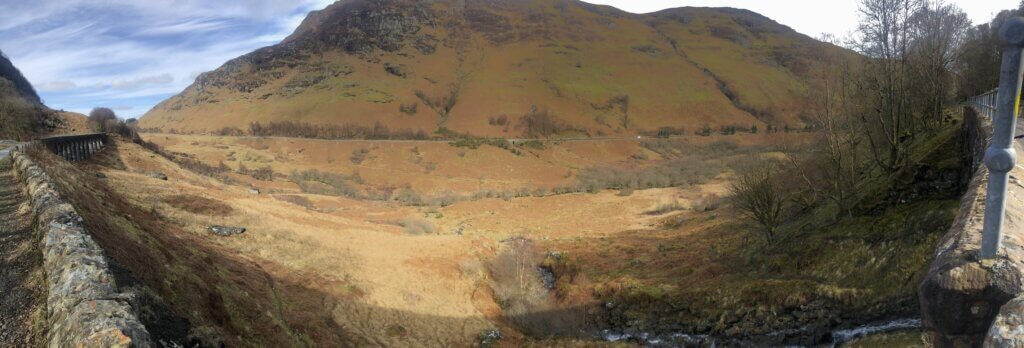
One cottage we’ve used is Tigh Muileann, and we’re planning to return. It works well for us because it’s centrally placed for the area we’re exploring, has plenty of bathrooms and, importantly, more than one twin room.
That last point might seem like a small detail, but it can make a real difference when organising a group. Some guests travel on their own and are perfectly happy to share a room, but would prefer separate beds. Having a choice of twin rooms makes it easier to accommodate everyone’s needs without compromising on the location.
It’s these practical details, alongside the geography, that help make a cottage work as a base for a walking holiday. We want somewhere that allows us to get out into the hills efficiently, gives us options when the weather changes and provides a comfortable place to return to at the end of the day. Tigh Muileann ticks those boxes for us.
For us, choosing a base is an important part of planning a successful walking holiday. It needs to put the right walks within reach, give us alternatives when the weather changes and provide somewhere comfortable to return to at the end of the day. Getting that balance right takes local knowledge and experience, but it means we can spend less time travelling between places and more time exploring the hills. And after a good day’s walking, there’s something to be said for returning to somewhere that feels like home for the week.

Why do guided walking holidays use a single base?
Staying in one place avoids daily packing and unpacking, reduces unnecessary transfers and allows a guide to choose from different walks according to the weather and mountain conditions.
How do you choose accommodation for a walking holiday in Scotland?
We start by planning the walks, then look for accommodation that gives us access to the area we want to explore and suits the size and needs of the group. Comfort, room layouts and bathroom facilities all matter, too.
Does staying in one place limit the walks you can do?
Not necessarily. A well-chosen base can give access to a variety of routes in different directions and at different elevations, allowing the guide to adapt the programme to the weather and conditions.
For many of our guests, choosing a walking holiday with Scot Mountain Holidays starts quite simply. They see a trip on our website that appeals to them – perhaps a week in the Cairngorms, a Munro trip on Skye or a walking holiday in Assynt – and decide that it is an area or a set of mountains they’d like to explore. We have already chosen the base, planned the programme and worked out the logistics; their decision is whether that particular holiday is right for them.
But some of our guests don’t stop there. We’ve had people come back to walk with us year after year – and after a while, planning their next holiday becomes a rather different exercise.
If someone has already climbed a good number of the Cairngorm Munros, walked in Assynt, explored Skye and tackled some of the classic routes, where do you take them next?
As it turns out, there is still quite a lot of Scotland left to explore.
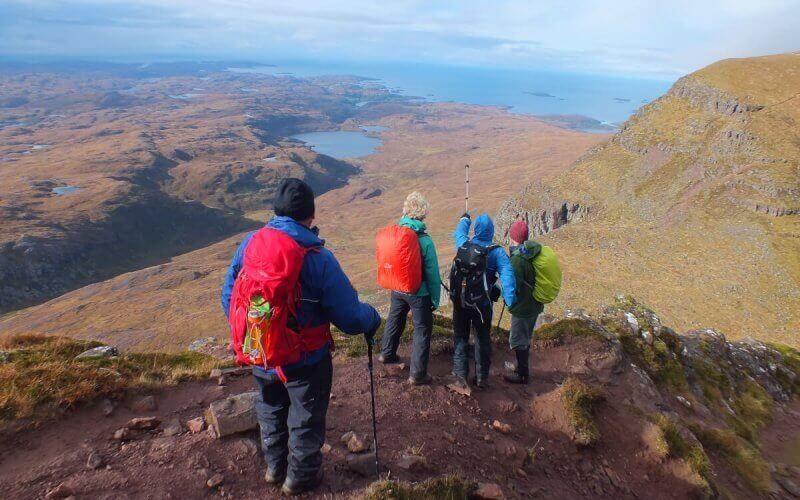
Hikers descending from a long day’s hike in the Assynt area (Scotland)
For a first-time guest, the starting point is usually the trip itself. For a returning guest, the starting point is what they’ve already done with us.
Over several trips, we’ve got to know how they walk, what they enjoy and what they are comfortable with. We know whether they particularly enjoy long mountain days or prefer a mixture of walking, scenery and exploring. We may know that they have a particular interest in geology or wildlife, or that they are keen to continue working their way through the Munros.
We also have a much better idea of what sort of accommodation and pace suits them.
That makes planning the next trip rather more interesting. Instead of starting with a blank sheet of paper, Andy can start with what the group has already experienced and work out where they might go from there.
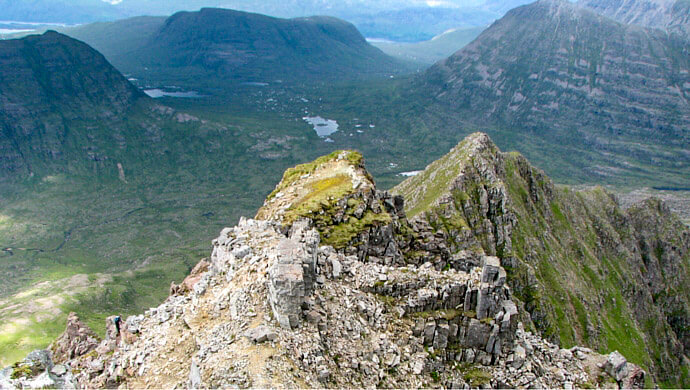
The spectacular sandstone peaks of Torridon, over 2500 million years old
One of the conversations we particularly enjoy is the one that starts with something along the lines of: “What should we do next?”
For some returning guests, the answer is fairly straightforward. They still have a list of Munros they haven’t climbed, perhaps in an area they’ve already enjoyed, and Andy can look at the map and work out which ones make sense to combine into a week.
It isn’t necessarily as simple as choosing the next five or six mountains on the list, though. The hills need to work together as a programme, and there needs to be some flexibility in the choice of routes and objectives.
Sometimes there will be a group of unclimbed Munros which fit naturally into a particular area. At other times, the fact that someone hasn’t visited a particular part of the Highlands before becomes the starting point.
This means that some of our walking holidays don’t begin with a trip that already exists on the website. They begin with a conversation about where someone has already been, what they have enjoyed and what they would like to explore next.
Andy then starts looking at the map.
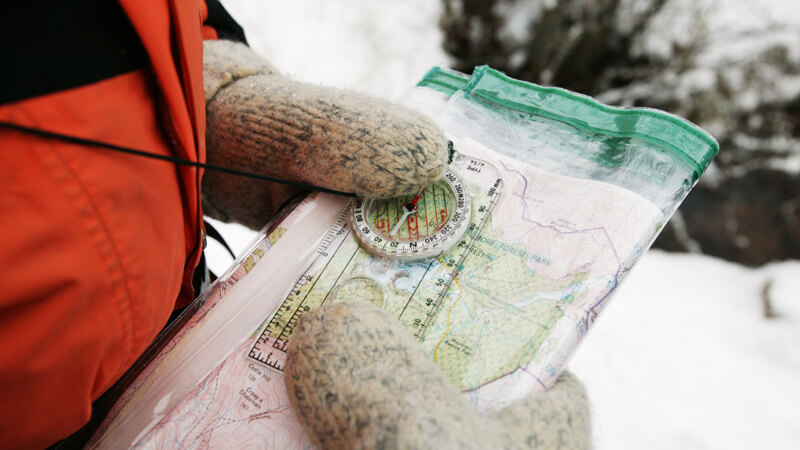
Winter walking in the Cairngorm Mountains, Aviemore, Scotland. Photograph shows Andy Bateman, a professional mountain guide who runs a holiday walking company called Scot Mountain Holidays (c) David Mansell
For a first visit to Scotland, there are plenty of obvious choices. The Cairngorms, Skye, Glencoe, Torridon and Assynt all have mountains and landscapes that people may have been dreaming about visiting for years.
But once you’ve explored some of those places, the question changes.
Perhaps there are still some Munros to climb. Perhaps there is a whole area you have driven through but never really explored on foot. Or perhaps you’ve climbed plenty of mountains and are now more interested in seeing a different side of the Highlands.
That is where having someone who knows the area well can make a difference.
Andy isn’t just looking at which hills are left on a list. He’s thinking about how they fit together, what else there is to see, where the group could stay, how the walks might work as a week and what alternatives there would be if the weather doesn’t cooperate.
And because we’re usually based in one place for several nights, the programme can be built around an area rather than around moving from one accommodation to another.

Gentle walking in the Cairngorms
Returning guests don’t necessarily want to spend every subsequent holiday ticking off more Munros.
After several years of mountain days, it can be just as appealing to explore somewhere new, walk some less obvious routes or spend more time looking at the landscape itself.
That might mean a week in an area known for its geology and wildlife, a mixture of longer and shorter walks, or simply going somewhere the group hasn’t been before.
One of the advantages of having walked with the same people previously is that we don’t have to start by explaining what a walking holiday with us is like. We can build on what they already know and concentrate on finding something that will interest them this time.
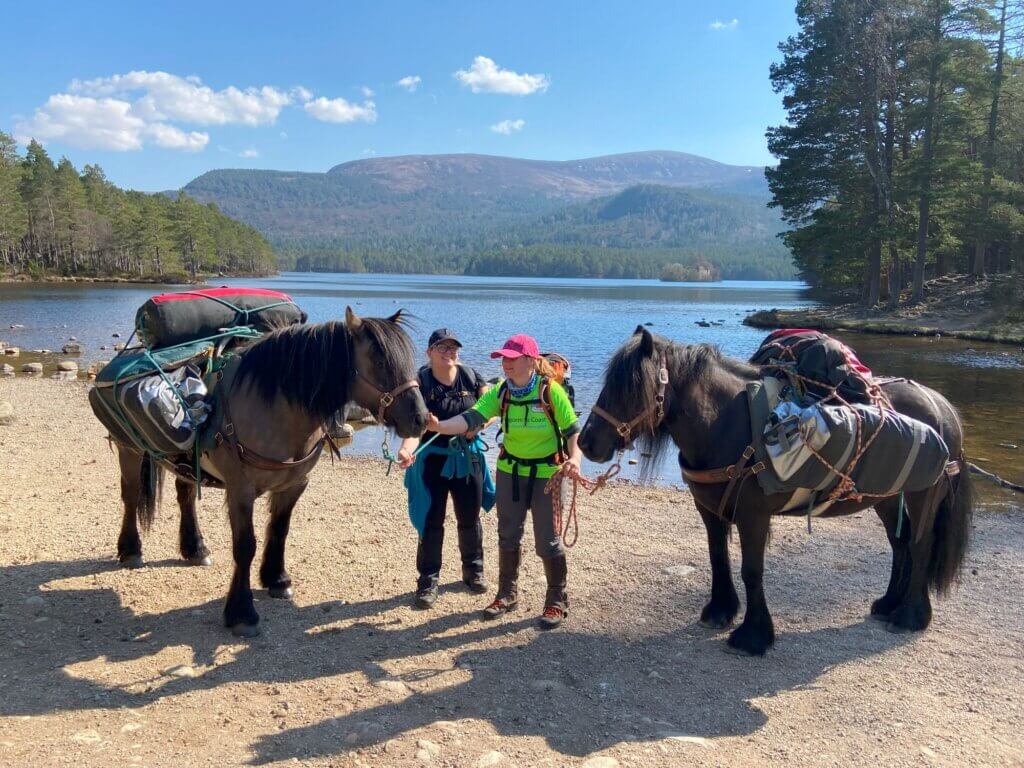
This is perhaps the best thing about having guests return year after year. Scotland doesn’t run out of possibilities simply because you’ve climbed a few mountains.
There are more Munros, of course, but there are also Corbetts, lower-level hills, glens, lochs and coastal landscapes. There are areas where the geology is as interesting as the walking, wildlife to look for, historic sites to explore and completely different landscapes just a few hours’ drive away.
And sometimes the most enjoyable challenge is not finding another mountain to climb, but finding somewhere that feels completely different from the places you’ve already walked.
We’ve always enjoyed designing holidays around the people coming on them. With returning guests, that process becomes even more rewarding because we have a shared history to work from.
So if you’ve walked with us before and are wondering what comes next, you don’t necessarily need to find the answer yourself.
Give Andy a map, tell him where you’ve already been, and see what he comes up with.
 Scot Mountain Holidays (Ltd),
Fraoch Lodge, Deshar Road,
Boat of Garten,
PH24 3BN


All content © Copyright Scot Mountain Holidays 2026
Responsive web design by Summit Web Solutions
