








This website uses cookies to improve your experience. We\'ll assume you\'re ok with this, but you can opt-out if you wish. Read More
In case of sale of your personal information, you may opt out by using the link Do Not Sell My Personal Information
When people think about hiking in Scotland, Munros are often the first thing that come to mind. Scotland has 282 mountains over 3,000 feet, and climbing them all is a perfectly good reason to come here.
But it isn’t the only reason.
Some of our favourite walking holidays are built around exploring an area rather than working through a list of summits. And Assynt, in the far north-west of Scotland, is particularly well suited to this approach.
Assynt has some of Scotland’s most recognisable mountains: Suilven, Stac Pollaidh, Quinag and Canisp are all distinctive landmarks. But you don’t have to climb every one of them to enjoy the landscape.
There are walks along the coast, around lochs and through glens, as well as routes that take you into the hills without necessarily requiring a summit. On a good day, the views can stretch from the mountains to the Atlantic and across to the islands.
And sometimes the weather dictates the walk.
That’s one of the advantages of being on a guided walking holiday rather than arriving with a fixed list of mountains to climb. If the cloud is down on the tops, there are plenty of other possibilities. If the forecast is looking good, we can choose something more ambitious. If the weather is particularly wild, a shorter walk followed by a good lunch can make much more sense than spending seven hours being battered on a mountain.
For us, the aim is to make the most of the landscape and the conditions rather than simply collecting summits.
Autumn is a lovely time to explore Assynt.
The summer crowds have gone, the heather and grasses begin to change colour, and the lower hills and glens take on a different character. The days are shorter, but that doesn’t necessarily mean that the walking has to stop. It simply changes what makes a good day’s itinerary.
An autumn walking day might be a shorter hill walk followed by time on the coast, or a walk through one of the glens with time to stop and look at the landscape rather than rushing to reach a summit.
There is also something particularly appealing about Assynt when the weather is changeable. The mountains can disappear into cloud one minute and emerge dramatically the next. Light moves across the landscape, rainbows appear over the sea and, if you’re lucky, you can get those crisp, clear autumn days when the visibility seems to go on forever.
This is walking for people who enjoy being outside, rather than walking simply to reach a particular point on a map.
When we run a trip in Assynt, we structure the holiday around one base rather than moving accommodation every night.
This year, our base is in Reiff, on the coast near Achiltibuie. In previous years we’ve stayed in Achiltibuie itself and in Ullapool.
The particular location matters, but the most important thing for us is finding the right property for the group.
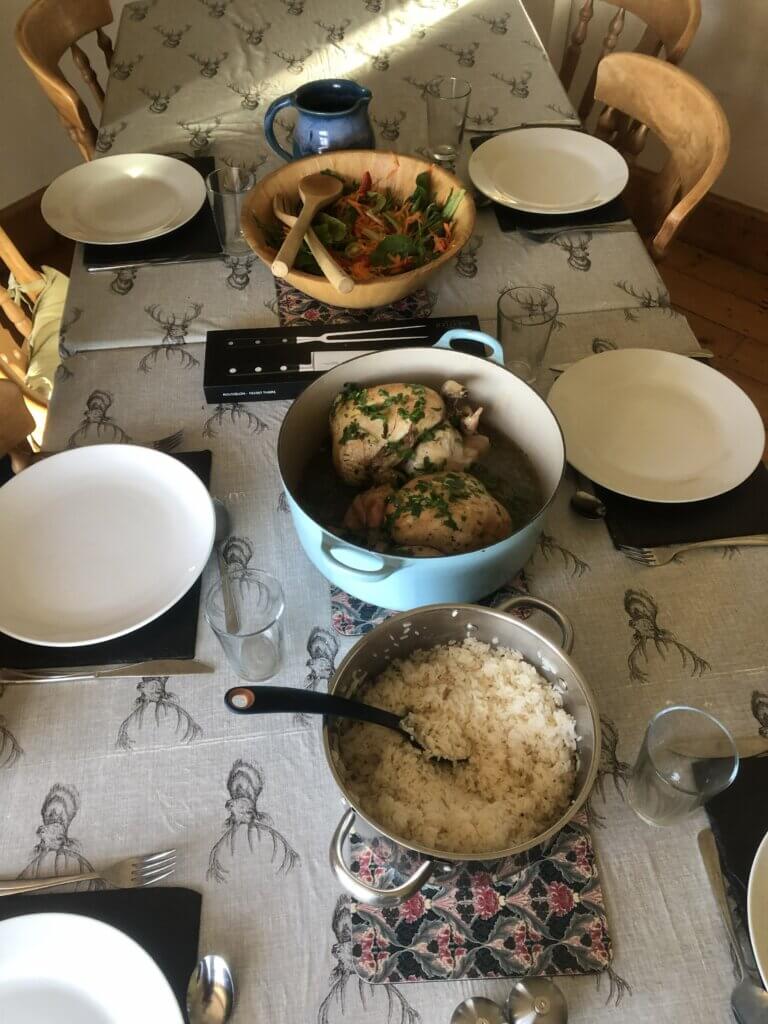
We’re a small company, and our groups are small too. That means we can choose accommodation that works for the particular trip rather than simply booking a block of rooms in a large hotel. We look for somewhere where the group can settle in, eat together and relax at the end of the day.
Once we’ve found the right base, we can build the walking programme around it.
That might mean heading in a different direction each day, depending on the weather and the interests and abilities of the group. We aren’t tied to a particular collection of walks simply because they happen to be close to a particular hotel.
It also means that guests can unpack once and settle in. There is something rather nice about coming back to the same place each evening, knowing where the kettle is and where you’re going to sit after dinner.
There is a tendency to think that a Scottish walking holiday needs to involve big mountains and long days.
It certainly can.
But some of the best days we’ve had in the Highlands haven’t involved a Munro at all.
A good walk can be about discovering a remote beach, following a path beside a loch, finding an unexpected viewpoint or simply having time to stop and appreciate where you are.
Assynt is particularly good for this because the landscape is so varied. The mountains are spectacular, but so are the coastline, beaches, lochs, rivers and smaller hills. You can have a genuinely memorable day without ever needing to stand on a 3,000-foot summit.
And that flexibility becomes even more valuable in autumn, when daylight hours and weather conditions need to be taken into account.
One of the things we enjoy about guiding in places such as Assynt is that we don’t have to follow the same itinerary every time.
We know the area and have a good selection of walks to draw on. We can look at the forecast, consider the conditions underfoot, think about what the group would enjoy and decide where to go each morning.
That might mean changing plans completely.
For us, that’s part of the point of a guided walking holiday. You’re not paying someone simply to show you the way to the top of a mountain. You’re getting local knowledge and the experience of choosing the right day in the right place.
And sometimes the right choice is a Munro.
Sometimes it’s a much smaller hill.
And sometimes it’s a coastal walk with a view of the mountains from below.
If you’ve always thought of walking in Scotland in terms of Munro bagging, Assynt is a good place to try something different.
Come for the mountains, certainly. But don’t feel that you have to climb them all.
Come for the coastline, the big skies, the changing autumn colours and the chance to explore somewhere that feels genuinely wild. Come for good walking without the pressure of ticking something off a list.
And, if you’re travelling with us, we’ll find a base that works for the group and build the holiday from there.
Because for us, a walking holiday isn’t really about how many summits you climb.
It’s about having a good week in the Highlands.
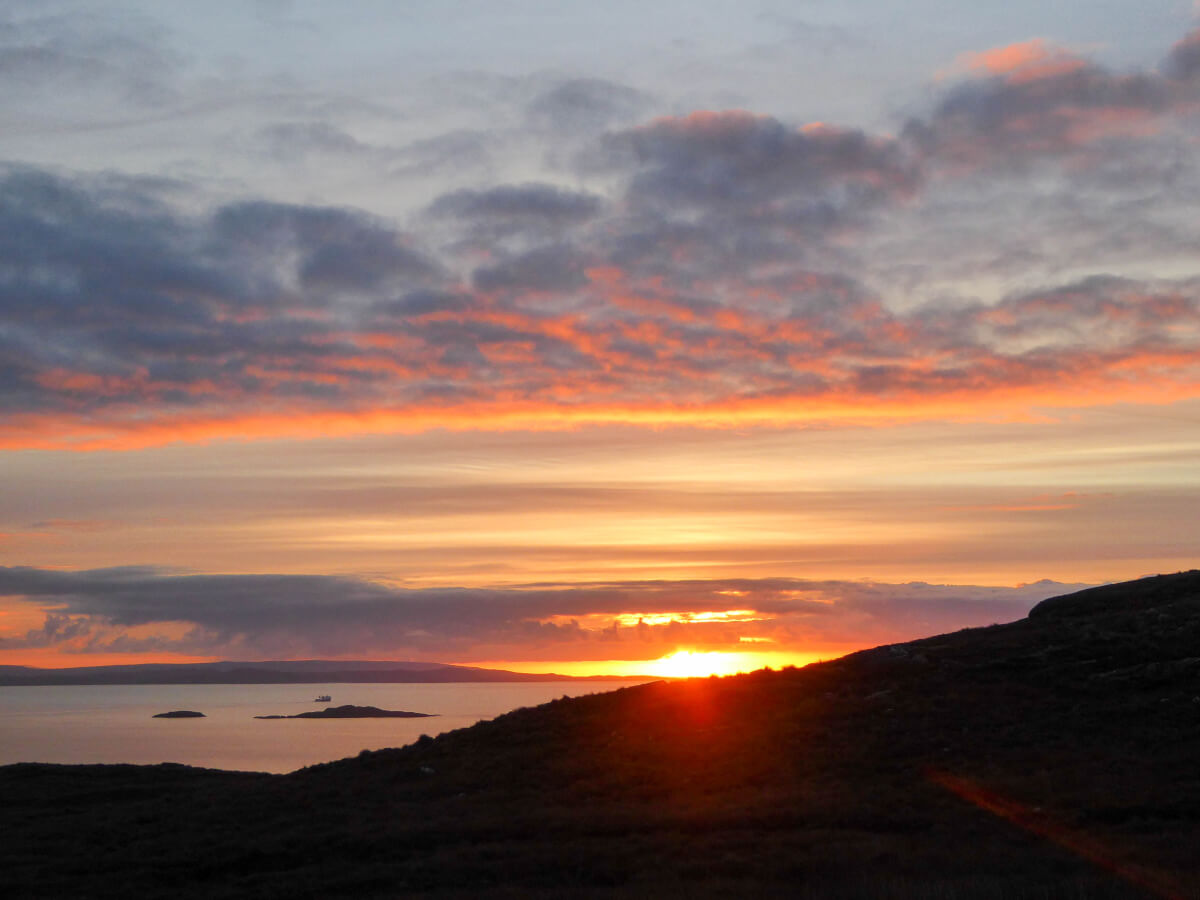
Perfect autumn sunset scenery and light in Assynt, Scotland
One of the pleasures of spending so much time walking in the Scottish Highlands is discovering that there is considerably more to the landscape than what you can see from the path.
At different times of year there are wild berries, herbs, leaves and, particularly towards the end of summer and into autumn, an astonishing variety of fungi.
Foraging gives you another reason to slow down and pay attention when you’re out walking. Once you start looking, you see things you might previously have walked straight past: a cluster of chanterelles beneath the trees, bilberries ripening on the hillside or a large cauliflower fungus hiding amongst the woodland floor.
We’ve been lucky enough to collect quite a few different edible fungi over the years, particularly in the Cairngorms. Some years are considerably better than others, depending on the weather, but a good autumn can produce an impressive harvest.
The combination of rain, warmth and the gradual change towards cooler autumn weather can produce excellent conditions for fungi.
Some years the woods seem to be full of mushrooms. In others, you can walk for miles and find very little. That’s part of the appeal: there is no guarantee of what you’ll discover.
Autumn also brings berries and other wild foods. Bilberries, raspberries and rowan berries are all part of the seasonal landscape, although we’re certainly not the only ones interested in them. The birds usually get to the rowan berries in impressive numbers.
For anyone who enjoys being outdoors, foraging adds another dimension to a walk. You become more observant and start to recognise the relationship between the plants, trees, weather and landscape around you.
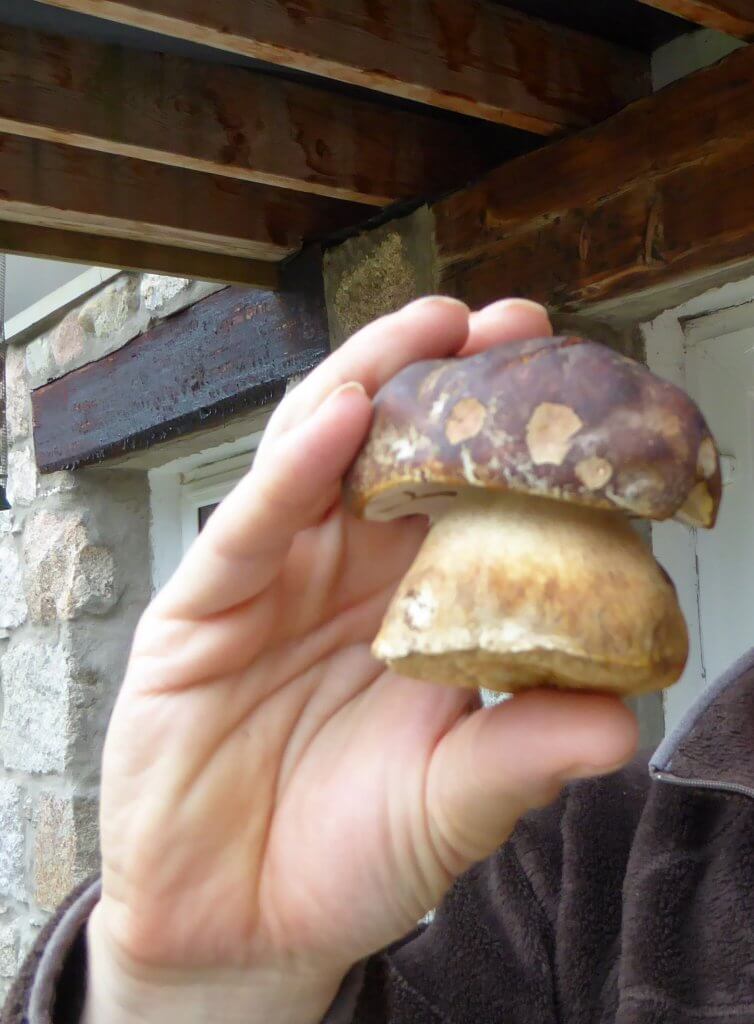
Ceps, or Boletus edulis, are among our favourite finds.
In a good year, they can seem to appear everywhere. We’ve had seasons when it was almost impossible to walk through the woods without coming back with several mushrooms.
Ceps have a firm texture and rich flavour and are particularly good for drying. At one point we had accumulated such a quantity of dried ceps that our larder was rather overloaded.
Fortunately, they keep extremely well and can be used throughout the winter in soups, sauces, risottos and casseroles.
If you’re collecting fungi, make sure you know what you are doing before you start. There are poisonous species which can look similar to edible ones, and a mushroom should never be eaten simply because it looks familiar.
Scottish Wildlife Trust – details on how to identify and where to find the Cep
Further details and intro to “Fascinated by Fungi”
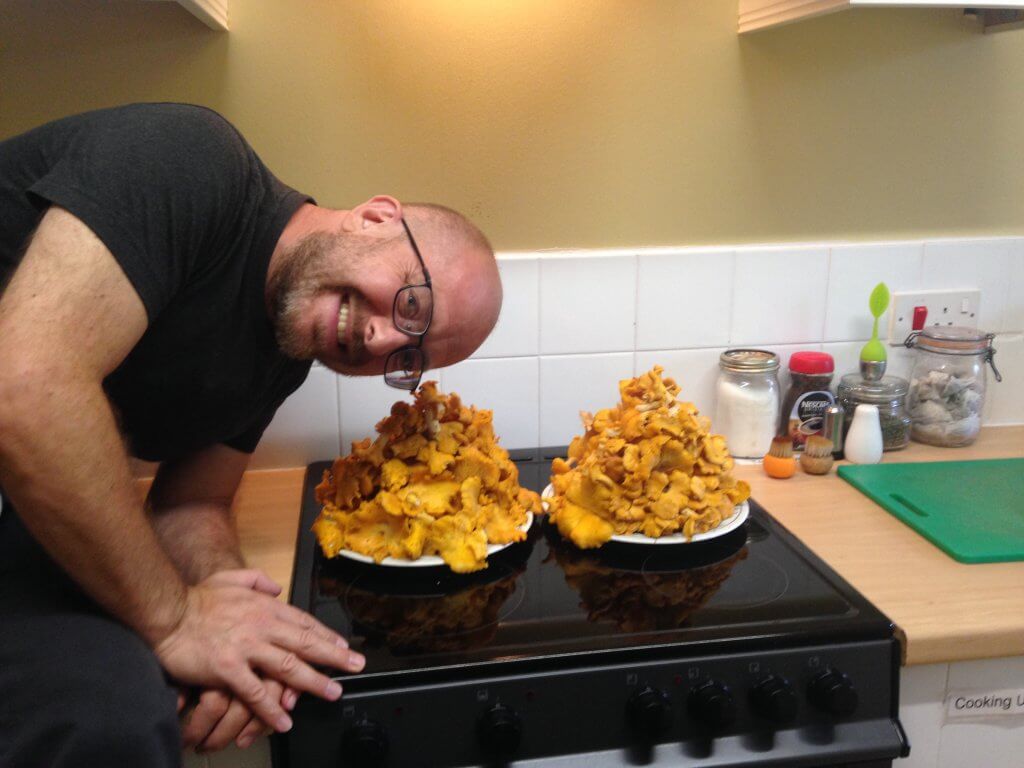
Chanterelles are another favourite and tend to be one of the more reliable edible mushrooms we find.
They have a distinctive yellow colour and can appear in woodland from summer into autumn, depending on conditions. Once you’ve learned to recognise them, finding your first crop can be very satisfying.
We use them fresh in soups and risottos and also freeze them for use later in the year. Freezing makes them a little more watery, but they still work well in cooked dishes and retain much of their texture.
There is also a false chanterelle in the Cairngorms, so this is a good example of why identification matters. We’ve had guests return from a walk with a whole collection of false chanterelles, convinced they had found the real thing!
Learning from someone who knows their fungi is by far the best way to develop your confidence.
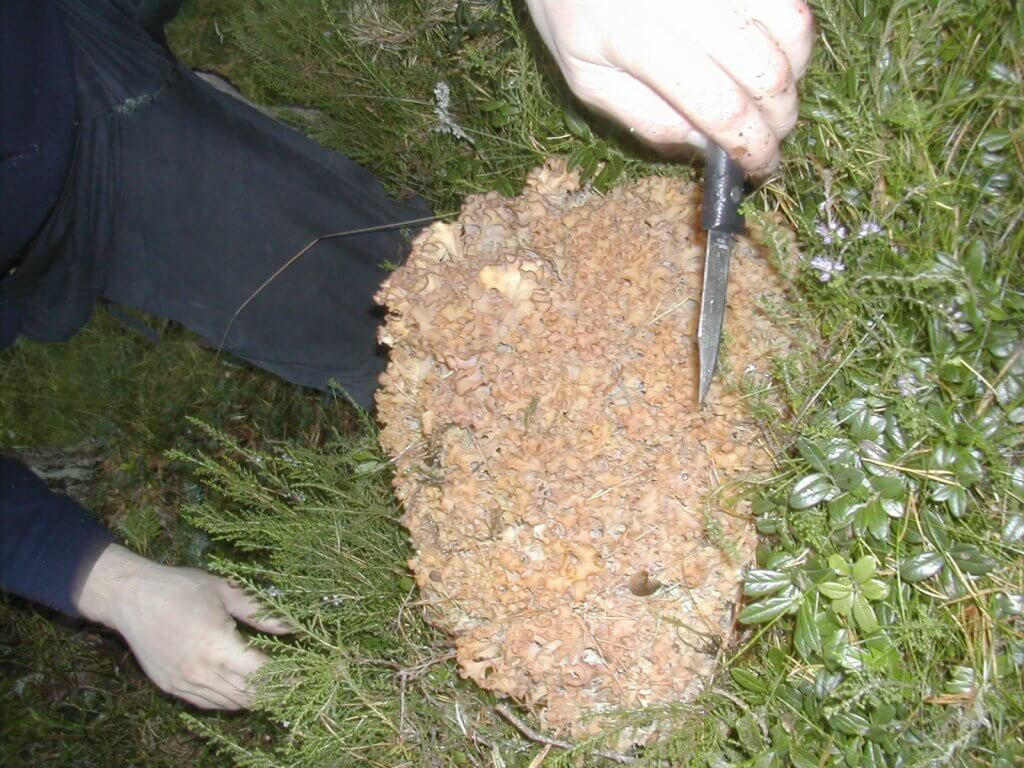
Cauliflower fungus is one of our absolute favourites, although we don’t find it every year.
It is an impressive-looking fungus, forming a large, tangled mass rather like a cauliflower. Unlike many mushrooms, it can be substantial enough to provide several meals.
The flavour is relatively mild but the texture is excellent – firm and quite unlike the mushrooms you buy in a supermarket.
It works particularly well in mushroom soup, risotto and mushroom pie, and is also excellent added to a venison or beef casserole.
The main drawback is cleaning it. All those folds provide plenty of hiding places for insects and bits of woodland debris! It helps to give it a good shake upside down before bringing it home.
Hedgehog fungus is another edible species we occasionally find in the Cairngorms.
It’s a firm mushroom with distinctive spines underneath the cap rather than the familiar gills found on many other species. We don’t come across it as often as we’d like, but it is another good one to know.
And, as with all wild fungi, identification is crucial. If you aren’t completely certain what you’ve found, leave it where it is.
Further details and help with identification
The best thing about foraging isn’t necessarily how much you take home.
It changes the way you experience the landscape.
When we’re walking, we’re normally thinking about the route, the weather, the terrain and what’s ahead. Foraging makes you stop and look more closely. Suddenly the woodland floor becomes interesting. You notice which trees the fungi are growing beneath and start recognising plants and berries that you’ve previously ignored.
It’s also a good way of connecting the landscape with food. Finding something growing wild and then using it in dinner is a very satisfying part of being in the Highlands.
Foraging can be particularly good with children too. It turns a walk into a treasure hunt and encourages them to look closely at what is around them.
But safety comes first. Children – and adults – need to understand that not everything growing in the wild is edible. Wild foods should only be eaten when they have been positively identified by someone who knows what they are doing.
If you’d like to learn more about foraging, a guided day with someone who knows the local plants and fungi is a good place to start.
You don’t need to become an expert in hundreds of species. Learning to confidently identify a handful of edible species, understanding their habitat and knowing which similar-looking species to avoid is much more useful.
And once you start learning, you’ll find yourself looking for them whenever you’re out walking.
For us, that’s one of the pleasures of spending so much time in the Cairngorms. The landscape keeps offering up new things to discover, whether we’re high on the mountains, walking through ancient woodland or simply following a path we’ve used many times before.
If you’d like to combine walking in the Cairngorms with an introduction to foraging, get in touch with us to discuss what might be possible as part of a Scottish walking holiday.
Please remember that fungi and other wild foods should only be collected and eaten when you are completely confident of their identification. Foraging should also be carried out responsibly, with consideration for wildlife, habitats and other people’s enjoyment of the countryside.
 Scot Mountain Holidays (Ltd),
Fraoch Lodge, Deshar Road,
Boat of Garten,
PH24 3BN
Scot Mountain Holidays (Ltd),
Fraoch Lodge, Deshar Road,
Boat of Garten,
PH24 3BN




All content © Copyright Scot Mountain Holidays 2026
Responsive web design by Summit Web Solutions
