








This website uses cookies to improve your experience. We\'ll assume you\'re ok with this, but you can opt-out if you wish. Read More
In case of sale of your personal information, you may opt out by using the link Do Not Sell My Personal Information
One of the questions we are most often asked before a holiday is:
“How do you decide where we’re going to walk?”
Usually, though, the real questions underneath are:
After more than 25 years of running walking holidays in the Highlands, we know that choosing the right walk is about far more than simply selecting a route from a guidebook.
The conversation before a holiday often tells us more than a booking form ever can.
There are actually two slightly different processes behind the walking holidays we offer.
The first is for private guiding bookings, whether that is a single day walk or several days of hiking. The second is for the scheduled week-long holidays we advertise on our website.
Both involve a surprising amount of planning behind the scenes.
For private guests, the planning usually begins with a conversation.
Because Andy may not meet guests until the morning of the walk itself, he spends time beforehand discussing previous walking experience, fitness, confidence on different terrain and what people are hoping to get out of the day.
Some guests want a challenging mountain day. Others are looking for quieter routes, wildlife, photography opportunities or simply a memorable experience in the Highlands without feeling pushed beyond their comfort zone.
Those conversations matter enormously.
Someone who happily walks 15 miles at home may find rough Highland terrain much harder than expected, while another guest with less experience may cope extremely well because they move steadily and are comfortable outdoors.
Before every trip, Andy will study several weather forecasts, check conditions carefully and spend time looking again at the maps, even for routes he has walked many times before. In the Highlands, small changes in wind, cloud level or recent rainfall can completely alter the best choice for the day.
If guests are staying with us at Fraoch Lodge beforehand, that helps even more. Over dinner or breakfast, there is often time for a more relaxed conversation about expectations, worries and ambitions before heading out into the hills.
One conversation Andy often has over the breakfast table is about how deceptively challenging Highland mountains can be for overseas visitors.
On paper, Scottish peaks do not look especially high compared with mountain ranges such as the Alps or Rockies. Many visitors arrive assuming that lower altitude automatically means easier walking.
In reality, the combination of northern latitude, rapidly changing maritime weather and exposed terrain can make conditions in the Highlands feel far more serious than people expect.
A comparison Andy often uses is the treeline. In the Scottish Highlands, the natural treeline sits at roughly 750 metres. In the Alps, treeline is usually somewhere between 1,800 and 2,300 metres — roughly the climatic equivalent of many Scottish summits.
In other words, even relatively modest Highland mountains can experience conditions comparable to much higher alpine terrain.
That does not mean people need to be intimidated by walking in Scotland, far from it. But it does explain why careful planning, appropriate equipment and flexibility matter so much here.
It is also why local knowledge becomes incredibly valuable. Knowing when conditions are suitable for a bigger objective — and when a lower-level route will provide a far better day — is an important part of good guiding in the Highlands.
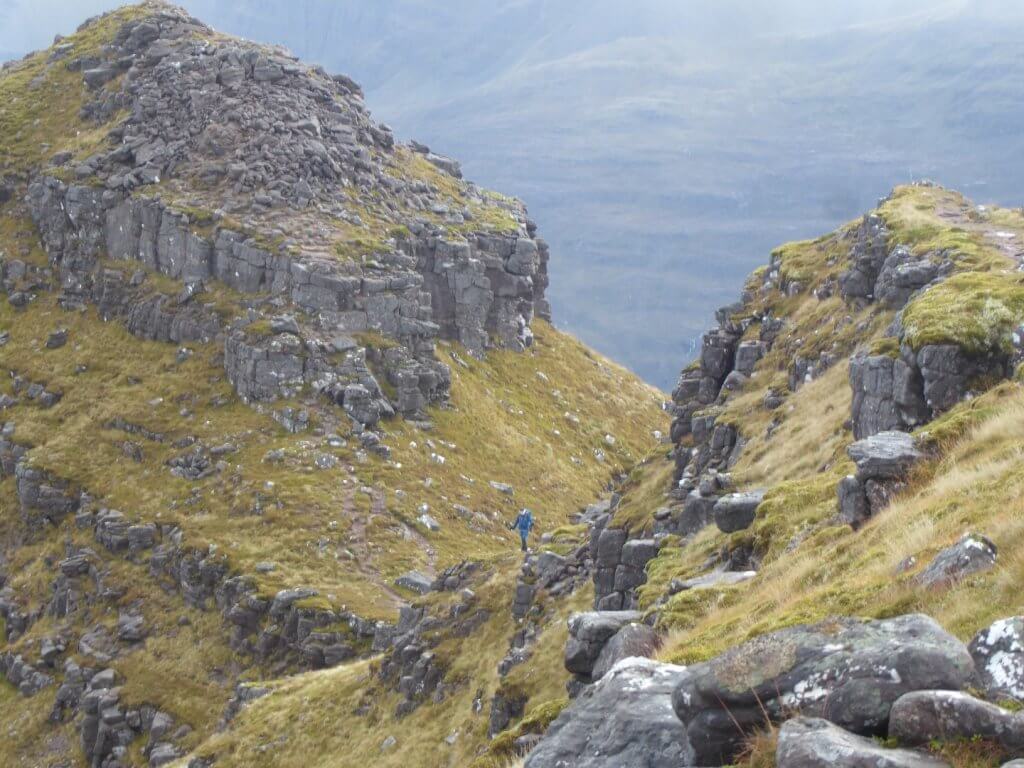
Classic Torridon, September 2021
Planning a full week of hiking is another level entirely.
A huge amount of work goes into creating a walking itinerary that feels balanced, enjoyable and achievable across an entire week, especially when many guests return to us year after year and are looking for new experiences.
Andy can spend hours studying maps and designing routes using detailed mapping software that calculates walking times using Naismith’s Rule. Unfortunately, the software also has an unfortunate habit of freezing at inconvenient moments.
Years of experience mean that Andy now reads an OS map almost like a story. He can often tell from the contours, terrain and access points how a route is likely to feel long before setting foot on the ground. For those of us less familiar with maps, they may look like colourful 2D puzzles, but experienced guides see far more hidden detail.
When planning a week, we also think carefully about:
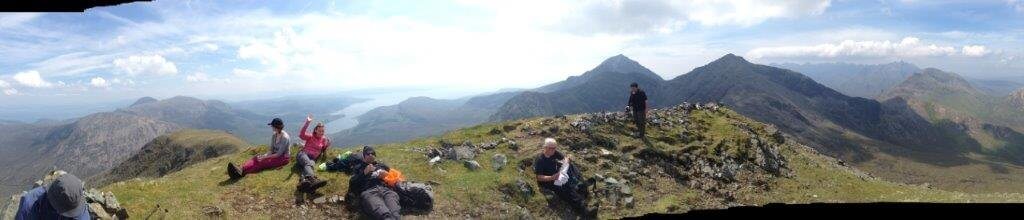
Enjoying a well-deserved break with views in the Cuillin hills
One thing we have learned over the years is that guests usually value flexibility far more than rigid itineraries.
The Highlands rarely reward inflexible planning.
A route that looks perfect on paper can become unpleasant in strong winds or low cloud, while an alternative glen a few miles away may suddenly offer sunshine and clear views.
That is why Andy is often reluctant to promise too much about the next day’s route until after checking the latest forecasts in the evening — and sometimes again over breakfast.
Most guests quickly realise this is actually reassuring rather than frustrating. It means decisions are being made based on current conditions, group energy and experience rather than simply following a fixed schedule regardless of the circumstances.
Of course, we always have Plan B and usually Plan C as well.
People sometimes imagine guided walking holidays are only about the mountains themselves, but the small details shape the experience just as much.
A good lunch spot out of the wind can transform a difficult day. Timing a walk to avoid the busiest car parks can completely change the atmosphere of a route. Knowing when to pause quietly beside a forest edge often leads to wildlife sightings that would otherwise be missed.
These are rarely things you will find on social media or in standard guidebooks.
Much of what makes a successful week in the Highlands comes from accumulated local knowledge and years of experience adapting to changing conditions.
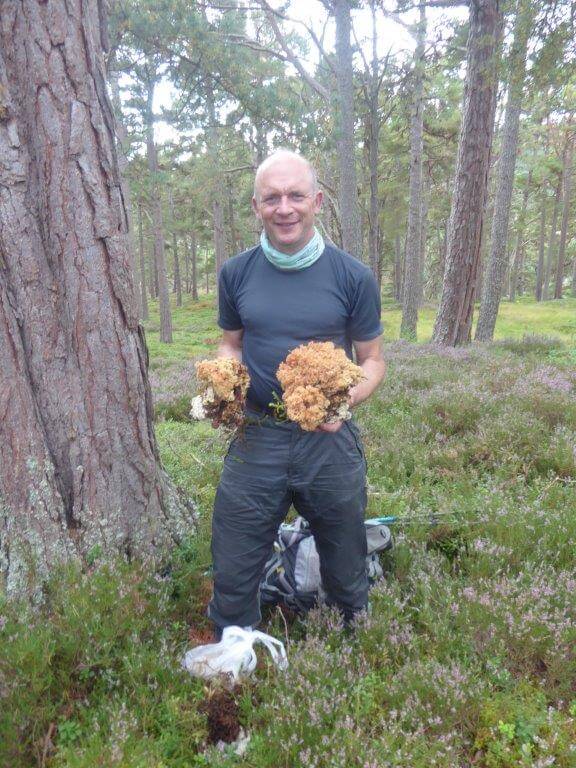
Cauliflower fungus – a prize specimen. Yum.
After all these years, one of the biggest lessons we have learned is that the “best” walk is rarely the one with the biggest statistics.
A successful day in the Highlands is the one where guests return tired but happy, having felt challenged appropriately, safe in the conditions and genuinely connected to the landscape around them.
Sometimes that happens on a summit ridge.
Sometimes it happens on a quiet trail through the pinewoods with nobody else in sight.
And often, it is the flexibility to recognise the difference that matters most.
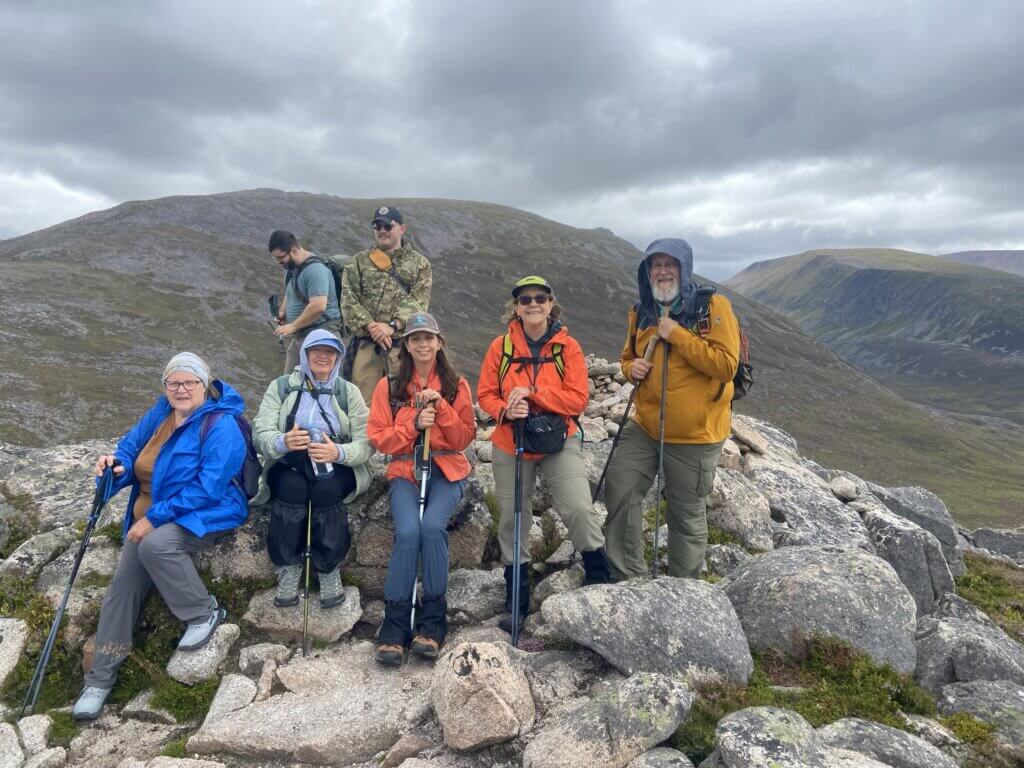
When I moved up to the Cairngorms National Park in 1999, I was completely unprepared.
For me, it was an adventure rather than a carefully thought-out life plan. I had very little sense of the geography and only a vague understanding of what daily life in the Highlands might actually look like. Fortunately, Andy had been thinking about moving to Scotland for years. He already knew the area far better than I did and had long imagined building a life here, although at the time the finances didn’t quite stretch to making it happen.
Then, gradually, the stars aligned and the move became a reality.
Looking back now, after 25 years of living and working in the Cairngorms, neither of us would choose to return to the lives we left behind. The landscape becomes part of you in ways that are difficult to explain until you’ve spent time here through all the seasons — long June evenings, crisp winter mornings, the first dusting of snow on the hills, the brief intensity of heather in late summer.
The comments our guests make at the end of a holiday often reassure us that we made the right decision to stay.
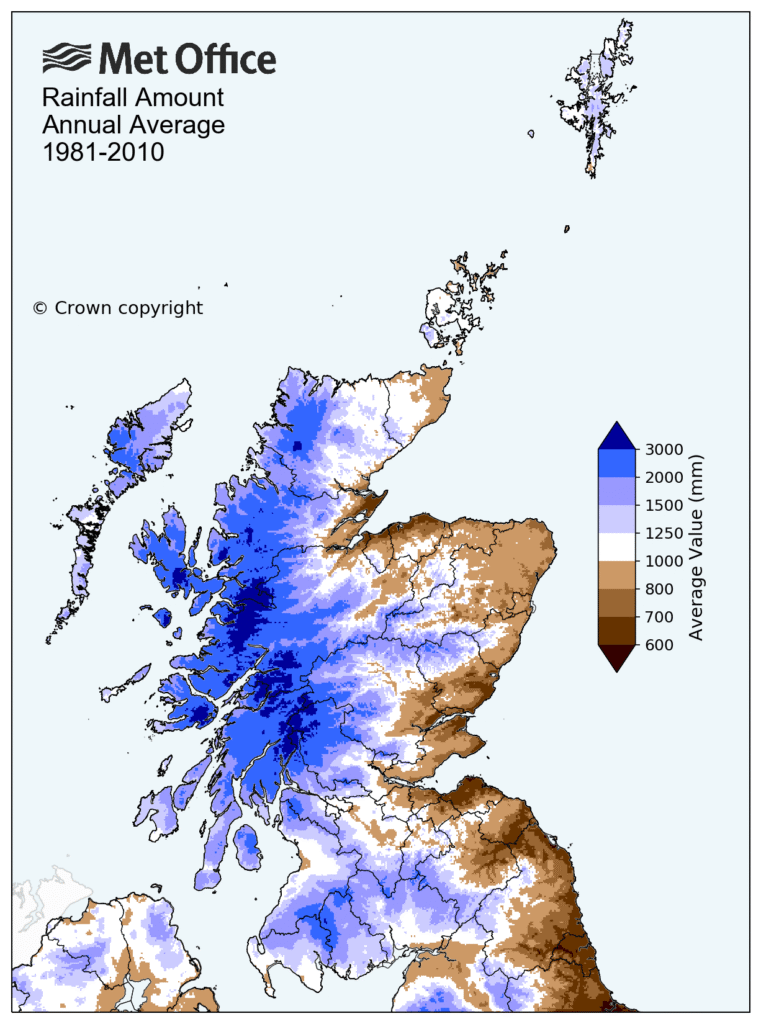
Before we moved north, we knew that this part of Scotland had a drier climate than many people expect. Compared with the west coast, the eastern side of the Highlands receives significantly less rainfall and, thankfully, fewer midges. That was definitely part of the attraction for us.
One of the most common comments we hear from guests is:
“We’ve been so lucky with the weather.”
Usually, though, it isn’t luck.
Many visitors arrive expecting relentless rain because their impression of Scotland has been shaped by images of stormy glens or previous visits to the west coast. In reality, the Cairngorms often sit in their own weather system. During the Jurassic Age, this area would even have been described as arid.
One thing 25 years here teaches you is how much local weather patterns matter. A forecast showing rain for the northern Cairngorms does not necessarily mean a wet day on the trails. Very often, if the forecast only shows a 30% chance of rain, it never arrives at all.
Over time, you also learn not to obsess about forecasts. Conditions change quickly in the Highlands and some of the best walking days begin with low expectations.
And yet, despite all the conversations about weather, it is rarely the thing people remember most vividly when they return home.
Guests are far more likely to talk about:
If they’ve joined us for guided walking, they often remember how quiet the routes felt compared with the more heavily promoted Highland hotspots. Solitude is something that still exists here — if you know where and when to look for it.
When we first moved to the area, our attention was very firmly fixed on the mountains. There seemed to be an endless number of Munros right on the doorstep and, naturally enough, they became our focus.
At that stage, I don’t think we fully appreciated the extraordinary diversity of the landscape around us. That appreciation has grown slowly over the years.
Now, some of our favourite days are not necessarily the big summit days at all. They are the quieter walks through regenerating pinewoods, the lower-level routes alive with birdsong in spring, or the evenings when the light filters sideways through the ancient Scots pines.
Occasionally, over the years, we’ve had guests joking that “the trees spoil the view”. Fortunately, that view is becoming much less common. More and more visitors now arrive specifically because of the forests and the growing awareness of landscape restoration taking place across the Cairngorms.
Projects such as Cairngorms Connect and Scotland: The Big Picture have helped people understand that this landscape is not simply a backdrop for walking holidays, but a living ecosystem slowly rebuilding itself.
Many guests are genuinely moved by seeing young native woodland spreading across hillsides that would once have been almost bare. Others are surprised by how much wildlife returns when habitats are given space to recover.
After 25 years here, one of the biggest lessons has been that the Cairngorms reveal themselves gradually. The mountains may first draw people in, but it is often the quieter details — the forests, rivers, wildlife and sense of space — that keep them coming back.
We’ll never be millionaires, but we genuinely love what we do.
One of the pleasures of running a small business is being able to offer a personal experience to the people who choose us to show them the Highlands. Over the years, this landscape has become deeply woven into our lives. Whenever we travel away, there is always a real sense of homecoming when we return to the Cairngorms.
Living here year-round also reminds us not to take the area for granted. We know how fortunate we are to call this place home and we want our guests to experience it in a way that feels calm, unhurried and connected to the landscape around them.
That is one of the reasons we keep our groups small.
In wild places, smaller groups simply work better. We move more quietly through the landscape, which means we are far more likely to spot wildlife. Conversations are easier. The pace feels more relaxed. Plans can be adapted more naturally to weather, energy levels or opportunities that arise during the day.
In winter especially, smaller groups also allow us to look after people more carefully in challenging conditions. Good guiding is never just about reaching a destination; it is about creating an environment where people feel confident, supported and able to enjoy being outdoors safely.
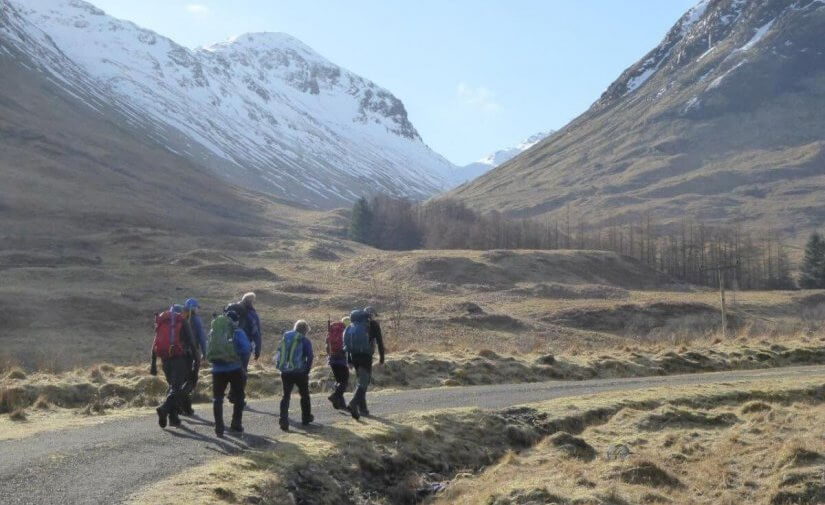
We publish itineraries for all our trips and we genuinely aim to follow them as closely as possible. However, when guests ask Andy about the plan for the next day, he is often reluctant to commit to much more than the breakfast time.
After 25 years in the Highlands, we have both learned that forecasts can change overnight and that plans sometimes need to adapt to conditions, energy levels and the interests of the group. Occasionally, we also discover over breakfast that not everyone is quite as enthusiastic about an early start as they were the night before.
Admittedly, this approach can make logistics and catering a little more complicated behind the scenes, but it is also one of the reasons many guests choose to return to us year after year.
Of course, many people join our trips specifically to walk Munros and there is still enormous satisfaction in reaching a long-planned summit. But most guests are not simply interested in “ticking off” peaks. They want to enjoy the experience: to see the views, stay safe, avoid the worst weather where possible and finish the day feeling they have had a rewarding day in the mountains rather than simply endured one.
Sometimes, changing the order of walks during the week makes all the difference. A route that would feel bleak and difficult in cloud and rain can become unforgettable in clear evening light a day later.The Scottish weather will always do what it wants. Our job is simply to make the best possible use of whatever conditions the Highlands decide to offer.
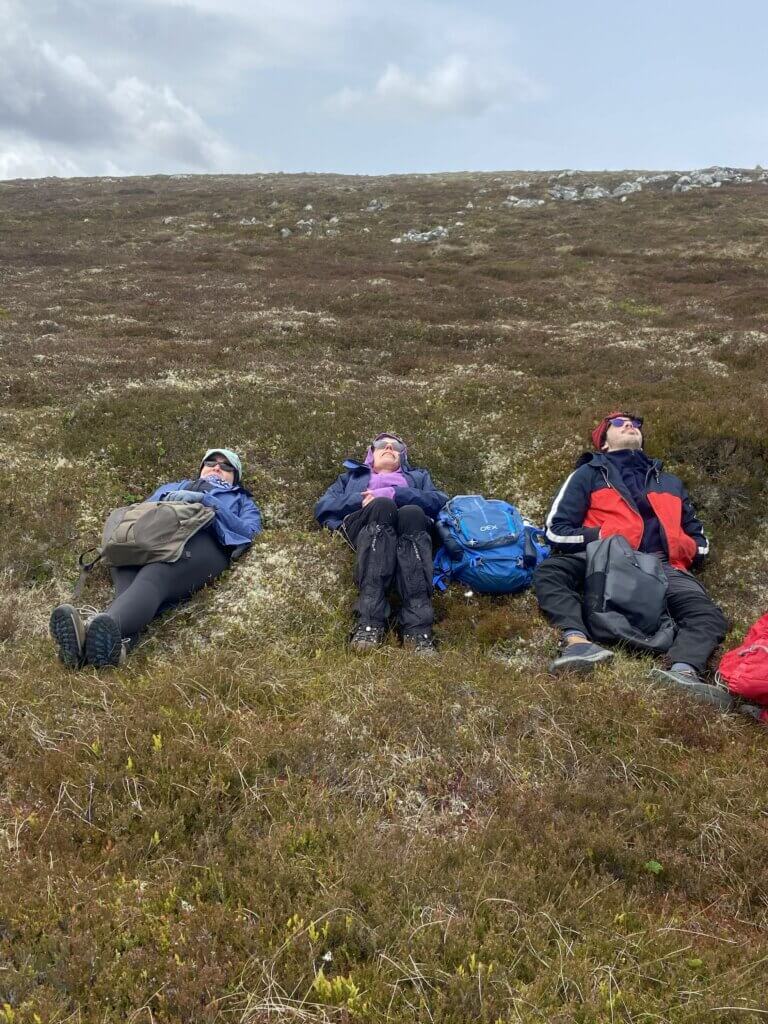
Andy has always been an amateur wildlife enthusiast. It probably began with birdwatching in the garden when he was younger and developed further during his years working as a gardener, where paying attention to seasonal changes and wildlife became part of daily life.
Now, after more than 25 years of guiding walks in the Scottish Highlands, he seems to have developed almost a sixth sense for spotting wildlife. He will invariably notice deer long before I do — even when he’s the one driving.
Guests are often amazed by how much wildlife they see during a week with us, but many sightings are less about luck than about experience, timing and knowing how to move quietly through the landscape. Smaller groups help too.
At the end of a walking day, Andy will often come home talking as enthusiastically about the wildlife and wildflowers people spotted as he does about the walk itself. It might be a golden eagle overhead, an early orchid beside the trail, or simply noticing how the birdlife changes between the pinewoods and the open moorland.
And even after all these years, there is still plenty to learn. If we spot something unfamiliar or unusual, the identification books usually appear after dinner. One of the pleasures of spending so long in the Cairngorms is realising that the landscape never quite stops teaching you something new.
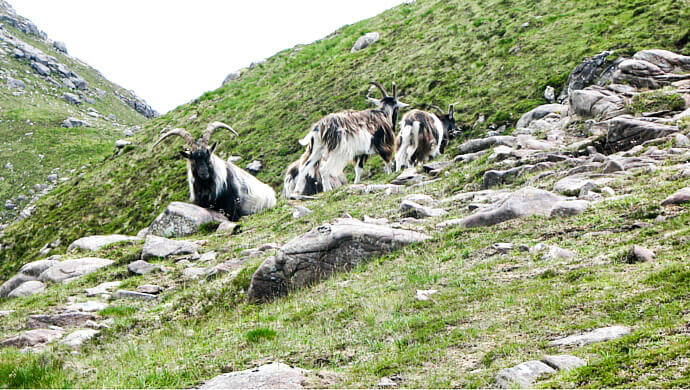
There’s unusual wildlife to spot as well in some spots.
We have always chosen to offer hospitality alongside the guiding rather than treating the walking as a completely separate experience. Looking back, that probably comes from our own travels over the years.
The trips that stay with us most strongly are rarely the ones with the grandest hotels or the busiest itineraries. They are the experiences where local people welcomed us warmly, shared their knowledge generously and helped us feel connected to the place we were visiting.
We have tried to create that same atmosphere here in the Cairngorms.
For many guests, the walking may be the reason they first book a holiday with us, but it is often the small moments around the edges of the day that become equally memorable: conversations over breakfast, returning to tea and cake after a wet afternoon outdoors, discussing route options over dinner or sharing stories with other guests in the evening.
Over the years, we have also noticed that many of our returning guests place enormous value on those personal connections. Quite a few have strong family traditions of walking, travelling or spending time outdoors together, and perhaps that is one of the reasons small-group holidays resonate so strongly with them.
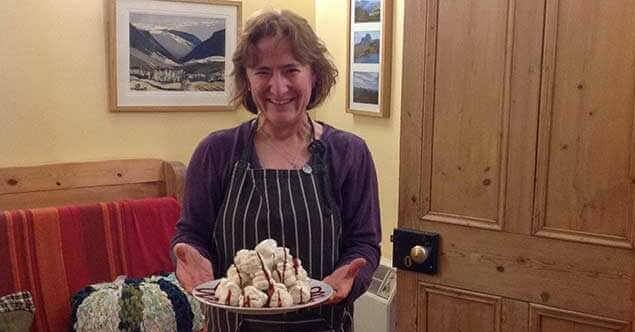
Amazing meals at Fraoch Lodge
After 25 years in the Cairngorms, one of the biggest things we have learned is that people rarely come to the Highlands simply to “complete” walks or tick famous places off a list.
What they remember most vividly is how a place made them feel.
The weather, the mountains and the scenery all matter, of course, but so do the quieter things: the sense of space, the wildlife, the conversations, the flexibility to adapt to conditions and the feeling of being guided by people who genuinely know and love the landscape themselves.
Perhaps that is why so many of our guests return. The Cairngorms are not somewhere you ever fully finish discovering — and after all these years, we still feel we are learning too.
There is a moment on many guided hiking holidays in Scotland when guests realise that a good week in the mountains is about far more than simply following a route.
It might come when the weather forecast changes overnight and a planned high-level walk quietly becomes a beautiful day through ancient pinewoods instead. Or when a guide chooses a less obvious path that suddenly opens onto a silent glen with hardly another person in sight. Sometimes it is simply the relief of knowing someone else has already thought about the changing wind, river levels, cloud cover, timing, transport and where to find the best place to stop for lunch.
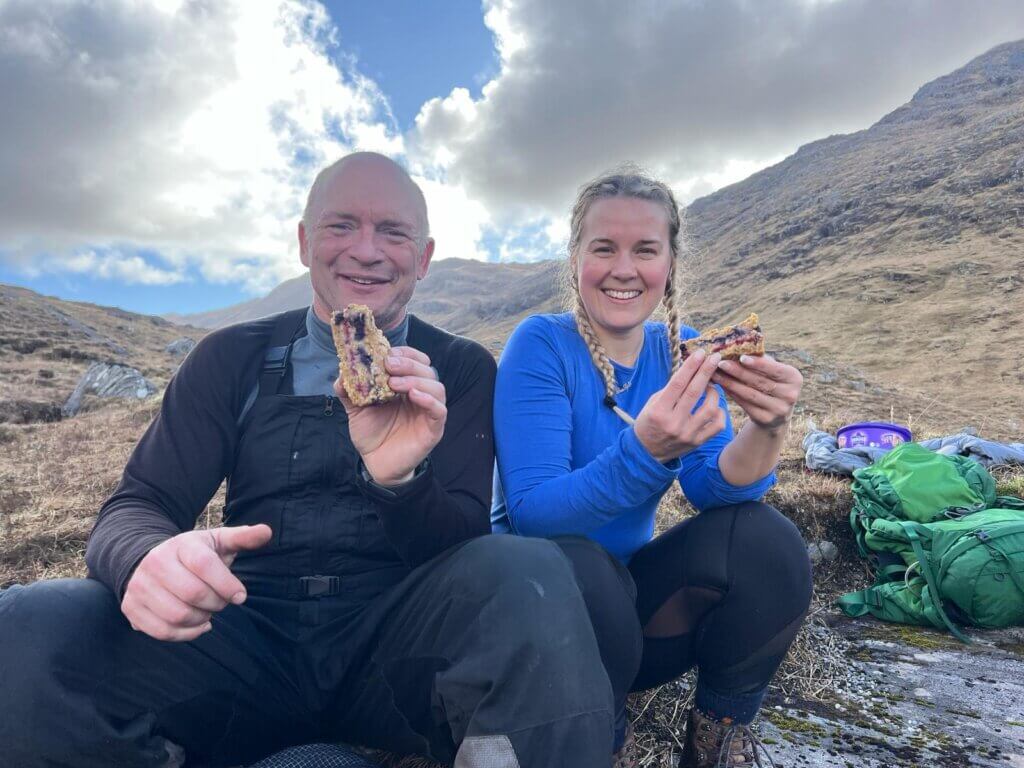
From the outside, a walking holiday can look straightforward. Pick a famous route, follow a map, hope for good weather.
In reality, the Highlands rarely work like that.
The conditions change constantly. Light, wind, temperature and visibility can vary enormously from one glen to the next. A route that feels magical one day can feel exposed and exhausting the next. Often the difference between a good day and a memorable one comes down to quiet decisions made before anyone has even laced their boots.
That kind of judgement is difficult to learn quickly. It comes from years spent walking the same landscapes in every season and all kinds of weather.
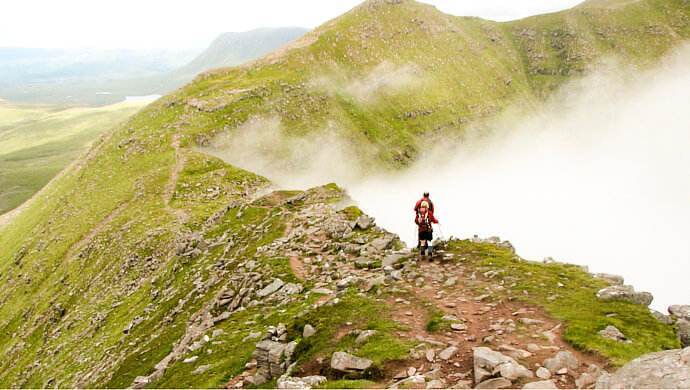
The weather’s not always perfect (it is Scotland) but can sometimes add drama to the scenery.
At Scot Mountain Holidays, we’ve been guiding and hosting walking holidays in and around the Highlands, including the Cairngorms National Park, for more than 25 years, and one thing we’ve learned is that flexibility matters far more than rigid itineraries.
A carefully planned week is important, of course. But the real skill lies in adapting that plan to the people, the conditions and the mood of the day.
Sometimes the best decision is not to head for the biggest summit.
Sometimes it is choosing a quieter route because the light will be better there in the afternoon. Or recognising that a group who arrived tired on Saturday will enjoy a gentler first day while they settle into Highland pace and rhythm. Sometimes it means avoiding the place everyone else is heading because experience suggests there is a better alternative only a few miles away.

That local knowledge is becoming increasingly valuable.
Social media has undoubtedly inspired more people to discover the Highlands, which is a wonderful thing. But it also tends to funnel visitors towards the same photogenic locations, viewpoints and “must-do” routes. Certain places become extraordinarily busy while equally beautiful glens, forests and hill paths remain almost empty.
A photograph rarely tells the full story of a walk.
It cannot tell you whether the path is eroded, whether the car park fills by 9am, whether the light is usually better in the opposite direction, or whether a quieter neighbouring route offers a richer experience altogether. Nor can it explain the feel of a place: the scent of pine after rain in the Abernethy Forest, the sudden stillness beside a hidden lochan, or the long northern evening light that lingers across the Cairngorm plateau in June.
Those things are harder to package into an algorithm.
They are also often the moments people remember most.
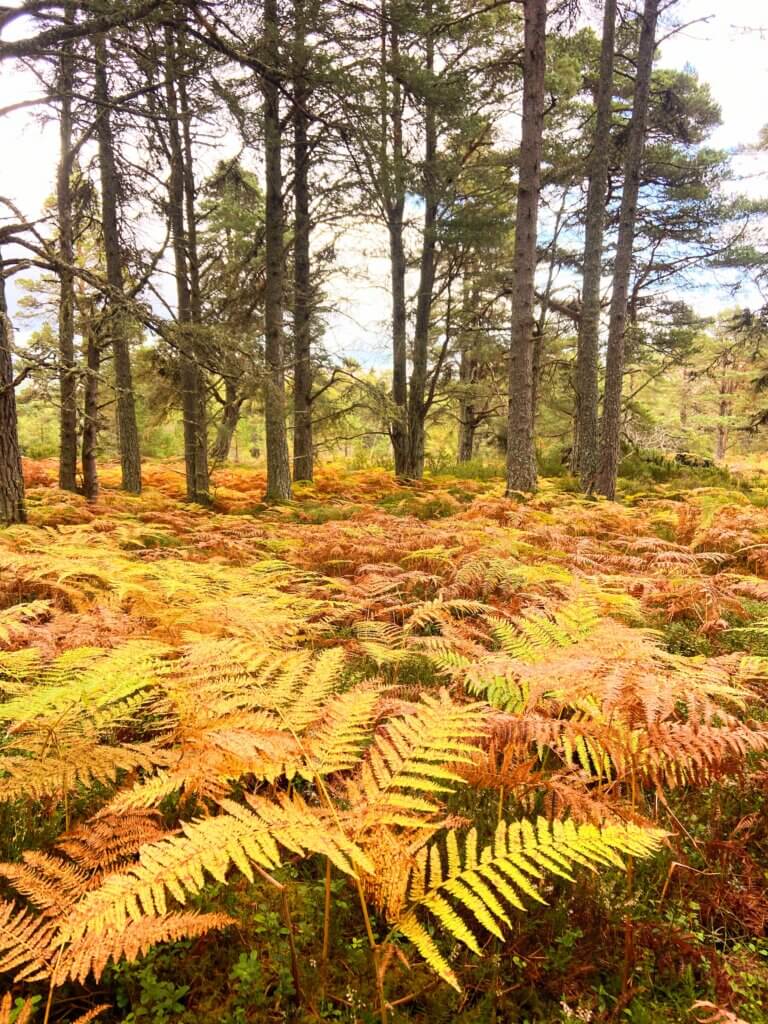
Over the years we’ve found that guests rarely talk most enthusiastically about the biggest mountain or the hardest day. Instead, they remember unexpected wildlife sightings, conversations over coffee after a walk, a hidden path through old Caledonian pinewoods, or the sense of space and quiet that is increasingly difficult to find elsewhere.
A smaller group allows room for adjustment. Plans can evolve. Walks can be adapted to weather, energy levels and interests. If conditions are perfect somewhere unexpected, there is freedom to change direction. Equally importantly, guests have time to get to know both the landscape and the people guiding them through it.
For us, that process often begins long before a holiday itself.
The conversations we have before a trip — about previous walking experience, confidence, hopes for the week and what people most want from their time in Scotland — are often as important as the walking itself. They help shape the experience in subtle ways that no standard itinerary really can.
It is also why being both the people who answer the initial enquiry and the people who help deliver the holiday matters.
There is continuity in that relationship. Guests are not being passed from a sales team to an operations team to an unfamiliar guide arriving with a clipboard on Sunday evening. Instead, the people planning the week already know something about the individuals arriving at the lodge: how they like to walk, what they are nervous about, what excites them and what kind of experience they are really looking for.
That understanding builds gradually over the course of the week too.
By day three, walking pace settles naturally. Conversations deepen. Guides learn when the group wants challenge and when it wants space to slow down and absorb the landscape. Good guiding becomes less about leading from the front and more about quietly shaping the rhythm of the week.
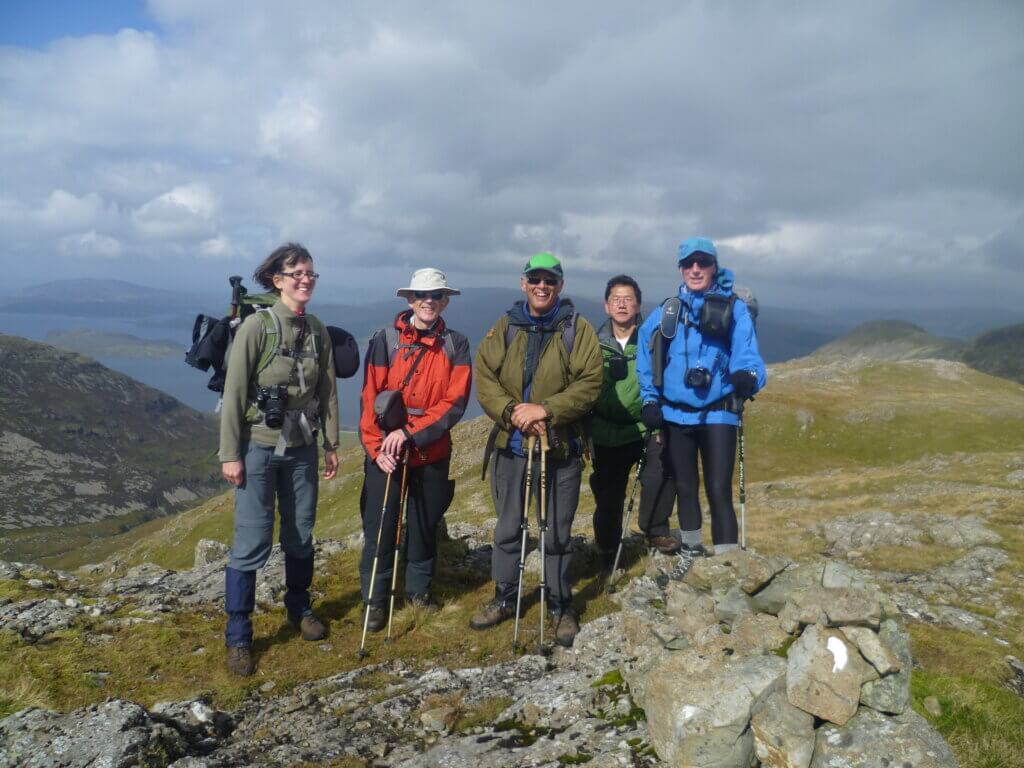
Much of that work is almost invisible when it is done well.
Which is perhaps why the quiet skill behind a good week hiking in the Highlands can be easy to overlook.
But it is often the difference between simply completing a walk and truly experiencing the Highlands in a meaningful and memorable way.
And after all these years, that remains one of the most rewarding parts of what we do.
Spring in the Cairngorms feels like a quiet awakening.
By late March, the Highlands begin to shake off winter. Days stretch longer, wildlife returns, and the landscape softens—yet the mountains still hold that wild, untamed edge that makes this place so special.
For many of our guests at Fraoch Lodge, it’s the perfect time to visit: fewer crowds, crisp air, and a real sense of seasonal change underfoot.
Here are five reasons why spring might just be the best time for your next hiking holiday in the Cairngorms.
Spring is one of the most exciting times for wildlife in the Cairngorms.
Ospreys return to nearby Loch Garten from their incredible migration to West Africa—often arriving in early April. There’s always a sense of anticipation around their return, and no two seasons are ever quite the same.
Alongside them, you may spot:
With knowledgeable local guides, these moments become part of the story of your walk—not just lucky sightings.
Photo Caption: Wild and remote scenery of Knoydart on a visit in May – Wild Knoydart guided walking holiday
One of the simplest—but most transformative—benefits of spring hiking is daylight.
By the end of March, the Cairngorms enjoys around 13 hours of daylight, giving you far more flexibility to explore at a relaxed pace.
No need for rushed starts or watching the clock. Instead, your day can unfold naturally:
It’s walking as it should be—unhurried and immersive.
Sunrise and sunset times in the Cairngorms
Spring is when many people feel ready to move again.
After the darker winter months, there’s something deeply restorative about being outside—breathing fresh Highland air, stretching your legs, and rediscovering your energy.
In the Cairngorms, that might look like:
Our guided holidays are designed to help you ease back into activity comfortably—no pressure, just the right level of challenge for your group.
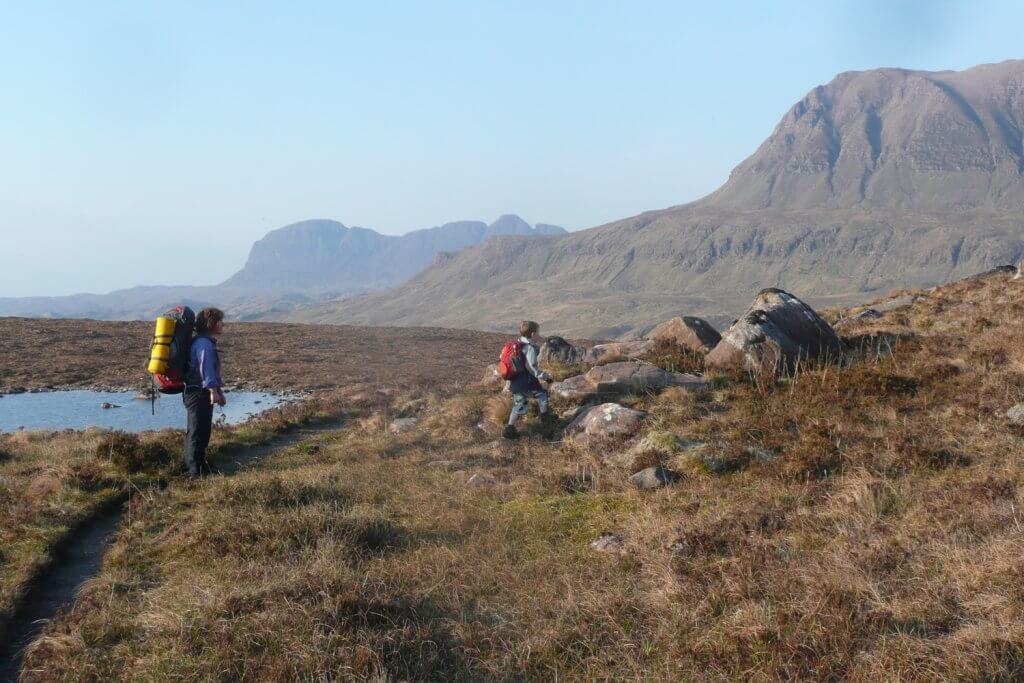
Hiking in to a secret wild camping spot in Assynt
Photo caption: Spring also means that it’s a time the kids can get back outside. You no longer need to wrap them up like Mummies. This photo was taken on a backpack to a wild camp in Assynt in May. If you’d like details of this trip, we can arrange this for small groups and family groups under Andy’s guidance.
Spring offers a unique balance in the mountains.
Higher ground can still hold patches of snow, adding drama and contrast to the landscape—but without the full technical demands of winter mountaineering.
That said, this is still a mountain environment. Conditions can change quickly, especially in early spring.
That’s where walking with experienced local guides makes all the difference:
It’s the Cairngorms at their most accessible—yet still wonderfully wild.
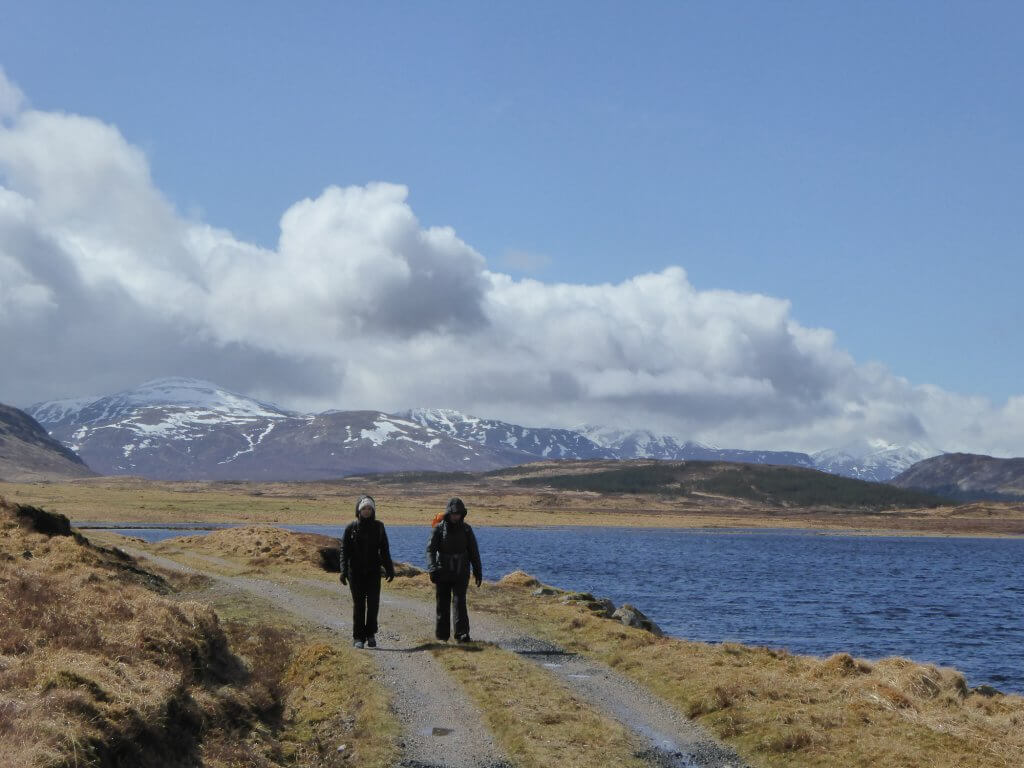
Perfect spring weather for hiking
If you’ve heard about Scottish midges—spring is your window to beat them.
Before the warmer, still days of summer arrive, midge numbers remain very low, especially in the drier climate of the Cairngorms.
Even better:
It’s a chance to experience the Highlands at a gentler pace—without the crowds.
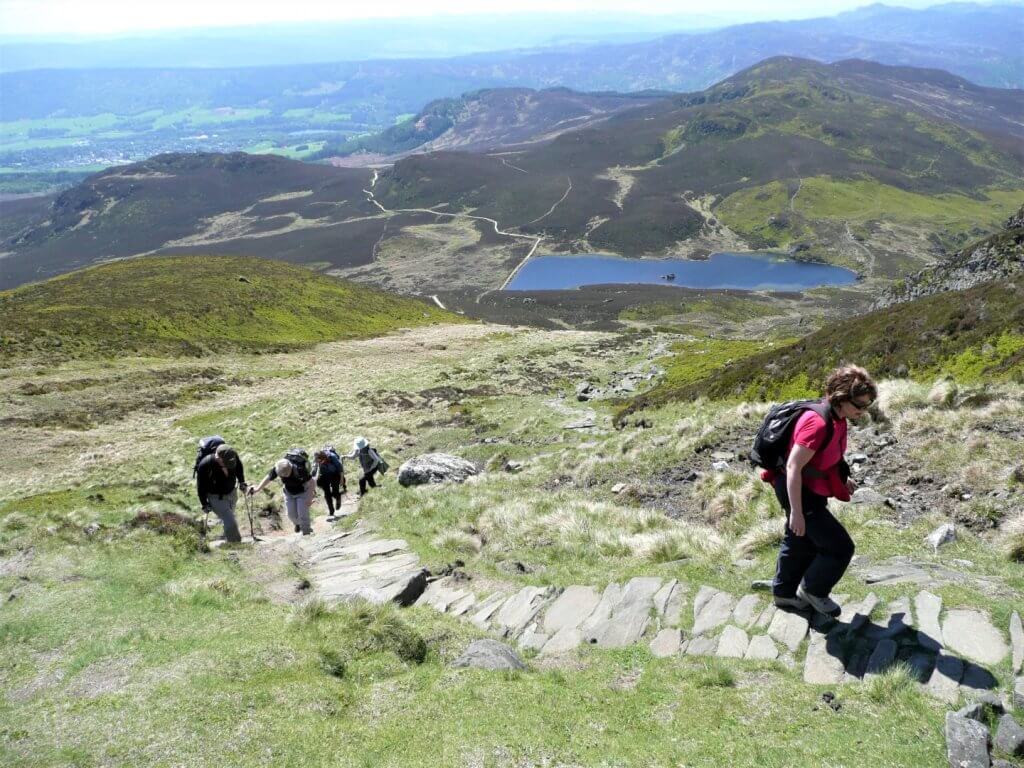
At Scot Mountain Holidays, spring is one of our favourite seasons to share with guests.
From the comfort of Fraoch Lodge, your days are taken care of:
All you need to do is arrive—and step outside.
If you’re looking for fresh air, wide open spaces, and a gentle return to the hills, spring in the Cairngorms might be exactly what you need.
 Scot Mountain Holidays (Ltd),
Fraoch Lodge, Deshar Road,
Boat of Garten,
PH24 3BN
Scot Mountain Holidays (Ltd),
Fraoch Lodge, Deshar Road,
Boat of Garten,
PH24 3BN




All content © Copyright Scot Mountain Holidays 2026
Responsive web design by Summit Web Solutions
