








This website uses cookies to improve your experience. We\'ll assume you\'re ok with this, but you can opt-out if you wish. Read More
In case of sale of your personal information, you may opt out by using the link Do Not Sell My Personal Information
Longer days, quieter trails, spring flowers or autumn colour—and a much better chance of enjoying the Highlands without the midges.
If you’ve ever dreamed of visiting Scotland’s west coast, chances are you’ve pictured dramatic mountains, white-sand beaches, and sea lochs stretching into the distance. It’s a place that rewards those who seek it out—but timing your visit well can make all the difference between a good trip and a truly memorable one.
While July and August might seem like the obvious choice, those in the know tend to favour the quieter “shoulder seasons.” For us, May and September stand out as the sweet spot—offering the best balance of weather, atmosphere, and overall experience.
Here’s why.
It’s a common assumption that midsummer brings the best weather. On Scotland’s west coast, that’s not always the case.
May and September often deliver more settled conditions: crisp, clear days, good visibility for mountain views, and fewer of the heavy, persistent rain systems that can roll through in peak summer. In May especially, you can get long stretches of dry weather with fresh, bright air and incredible clarity—perfect for walking and photography.
September, meanwhile, can feel surprisingly warm after the summer months, with calmer conditions and softer light that gives the landscape a golden glow.
Let’s address the thing everyone quietly worries about: midges.
These tiny insects thrive in warm, still, damp conditions—which is why they tend to peak in mid-summer. While they’re part of the Highland ecosystem, they can be a nuisance if you happen to hit the wrong conditions.
May typically falls before the main midge season gets going, meaning you can enjoy evenings outdoors, scenic stops, and post-walk relaxation without constantly reaching for repellent.
By September, cooler nights and a shift in weather patterns usually bring a noticeable drop in midge activity again. They don’t disappear entirely, but they’re far less of a factor than in July or August.
In short: if avoiding midges matters to you, these months stack the odds firmly in your favour.
One of the great joys of visiting the west coast is the sense of space—and in May and September, you get that in abundance.
May offers long daylight hours (approaching the famous near-endless northern evenings), giving you plenty of time to explore without feeling rushed. Trails are quieter, viewpoints are more peaceful, and it’s easier to find those moments where you feel like you have the landscape to yourself.
September brings slightly shorter days, but still plenty of usable light—and a welcome return to calm after the busier summer period. Popular spots feel more relaxed, and accommodation, ferries, and roads are noticeably less pressured.
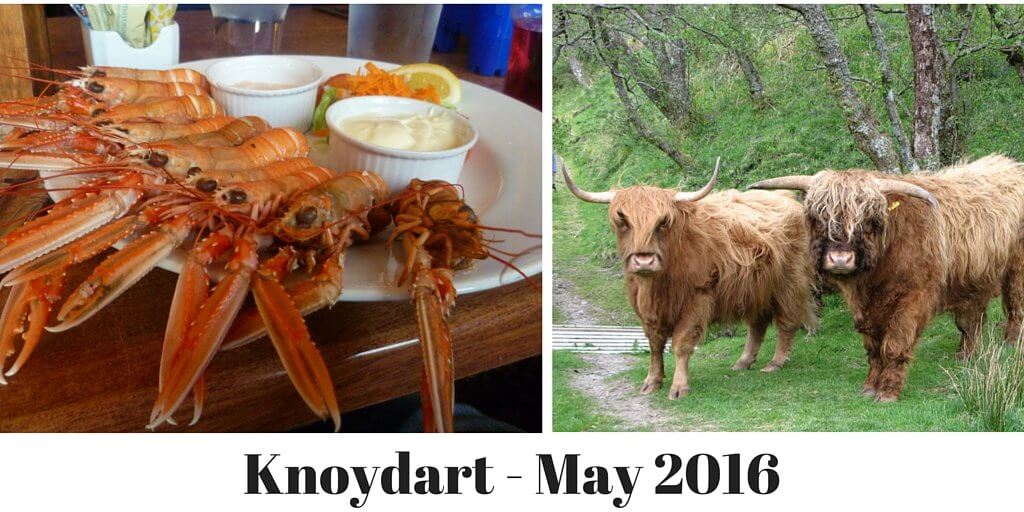
These two months each bring their own distinct character to the landscape.
May is all about renewal. Wildflowers begin to appear, woodlands come into fresh leaf, and the hills take on that vivid early-season green. It’s a time of energy and contrast, with snow sometimes still clinging to the highest peaks while spring unfolds below.
September, on the other hand, is softer and more reflective. Hints of autumn colour start to appear—golden grasses, warming tones in the bracken, and a richness to the landscape that feels completely different from spring. The light is lower, the air is calmer, and the whole experience feels more atmospheric.
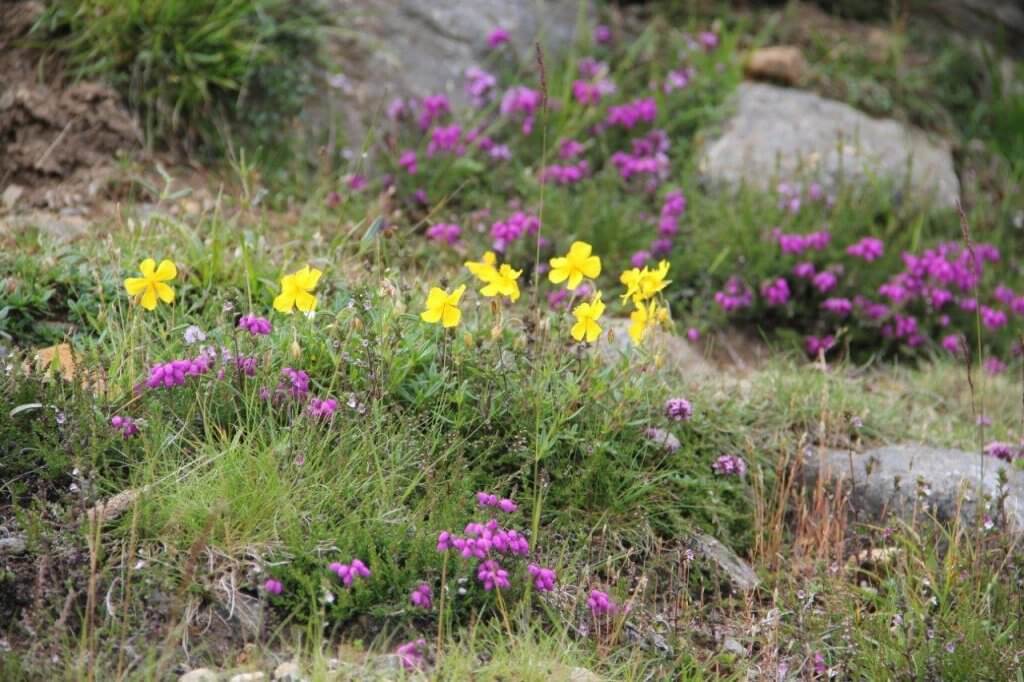
Surprising colours of the Highlands
Perhaps the biggest difference isn’t just weather or midges—it’s the overall feel of your trip.
In May and September, everything slows down just enough. There’s more space on the trails, more time to take in the views, and a greater sense of connection to the landscape. You’re not competing with peak-season crowds, and you’re more likely to experience those quiet, memorable moments that make a trip special.
Whether it’s standing on a ridge with uninterrupted views, enjoying a peaceful beach walk, or simply sitting outside in the evening light, these are the experiences people remember long after they’ve gone home.
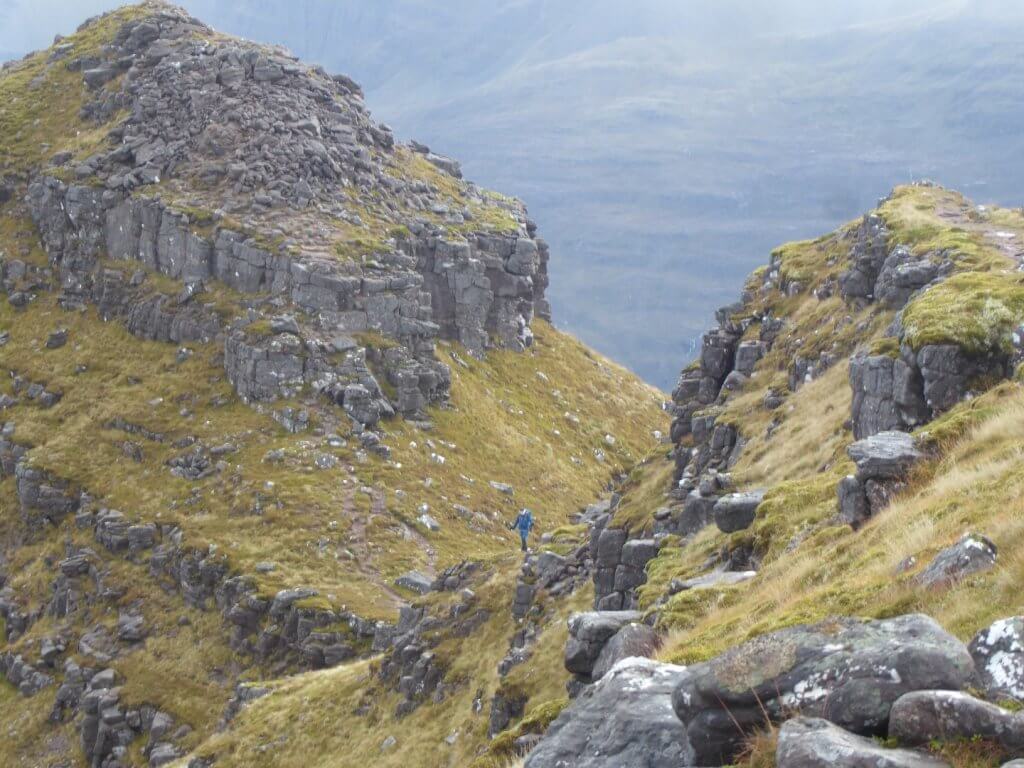
Classic Torridon, September 2021
If you’re looking for the classic west coast experience—dramatic scenery, rewarding walks, and that feeling of wild, open space—May and September offer a compelling advantage.
It’s not that summer is a bad time to visit—but if you want to tilt the odds in your favour, these “secret seasons” are hard to beat.
And once you’ve experienced the west coast in May or September, you may find yourself wondering why more people don’t do the same.
Choosing where and when to go hiking in Scotland can feel surprisingly complicated.
We’re incredibly lucky here — the range of landscapes and walking opportunities is vast. From gentle glens to high mountain routes, there’s something for every kind of walker. Since lockdown, more people than ever have discovered the outdoors, which is fantastic — but it also means “a walking holiday” can mean very different things to different people.
As a business focused on creating safe, rewarding, and memorable experiences in the Highlands, we put a lot of thought into how we plan our itineraries. If you’re organising your own trip, many of the same considerations apply.
Scotland’s weather is part of the experience — but it does require a bit of thought.
There are now excellent specialist mountain weather forecasts and increasingly accurate modelling tools. That said, no forecast is ever completely reliable, especially weeks in advance when many trips are booked.
When planning our trips, Andy often looks at something called UK weather singularities — patterns based on historical data that suggest the likelihood of settled weather at certain times of year. Some of these even have names, like St. Luke’s summer, a spell of fine weather often occurring in October.
It’s not an exact science, but it does help stack the odds slightly more in your favour. More importantly, it reinforces a key point: flexibility and the right mindset matter just as much as the forecast.
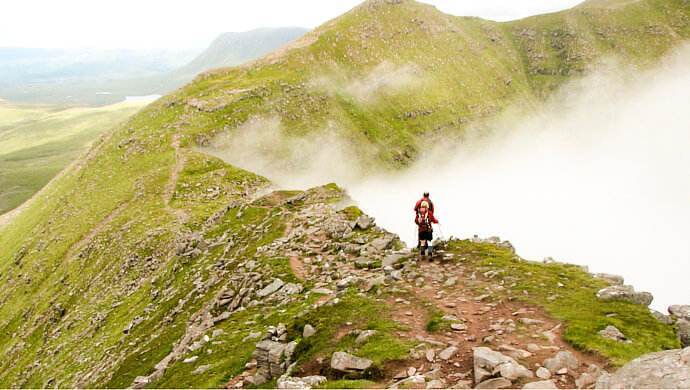
The weather’s not always perfect (it is Scotland) but can sometimes add drama to the scenery.
One of the most common questions we’re asked is: “How long are the walks?”
It’s a fair question — but in the Highlands, distance alone doesn’t tell the full story.
A 10km route here can feel very different from a 10km walk elsewhere. The terrain is often rougher, paths can be less defined, and there’s usually more ascent and descent than people expect — especially for those used to walking in lower-level or more urban environments.
Progress can be slower, but that’s part of the appeal. There’s time to take in the views, notice the changing landscape, and enjoy the journey rather than simply ticking off miles.
In many of the wilder areas, paths fade or disappear altogether. Thanks to Scotland’s access rights, you’re free to wander responsibly, choosing your own line across the landscape. That sense of freedom — of not being confined to a set trail — is one of the real joys of walking here.
Every season in Scotland has its own character.
There’s no single “best” time — it depends on what kind of experience you’re looking for.
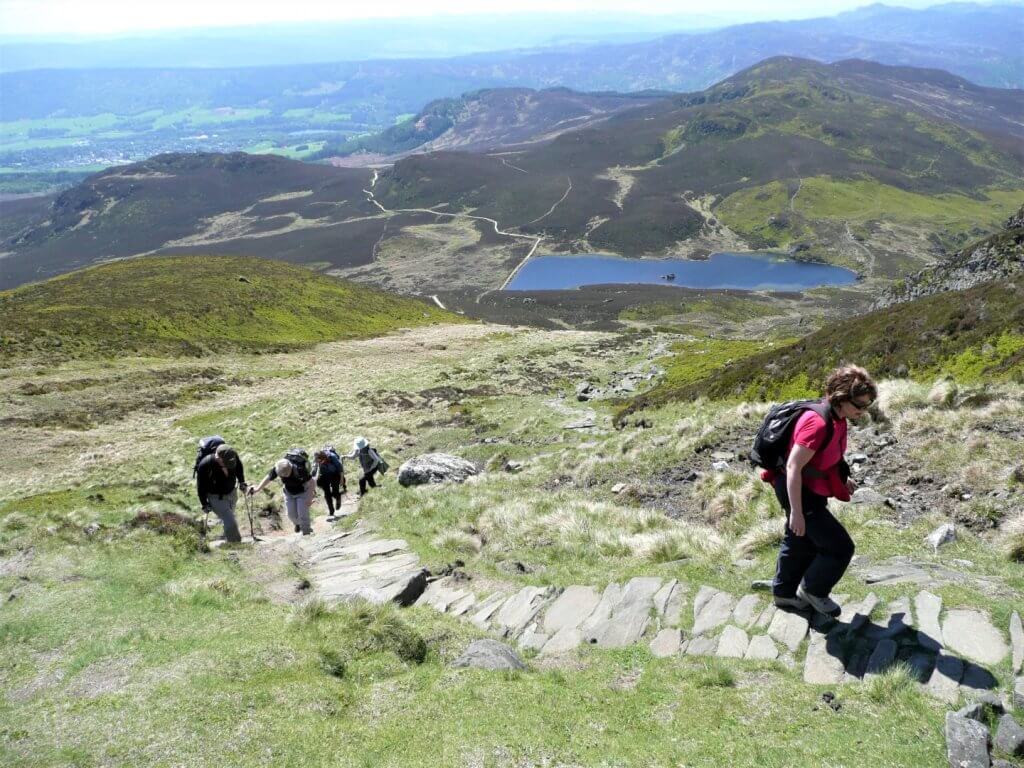
No discussion of Scottish hiking would be complete without mentioning midges.
They’re most active in the warmer months, particularly in still, damp conditions. Some areas are more affected than others, and a bit of breeze can make all the difference.
With a bit of planning — and the right kit — they’re manageable. And they’re a small trade-off for having these landscapes largely unspoilt.
Where you stay — and how you move between locations — can shape your whole experience.
In more remote areas, accommodation can be limited, and distances between places are greater than they might appear on a map. Transport also requires a bit of planning, particularly if you’re not bringing your own vehicle.
That’s one of the reasons many people choose a guided or supported trip: it allows you to focus on the walking, without having to think about the logistics each day.
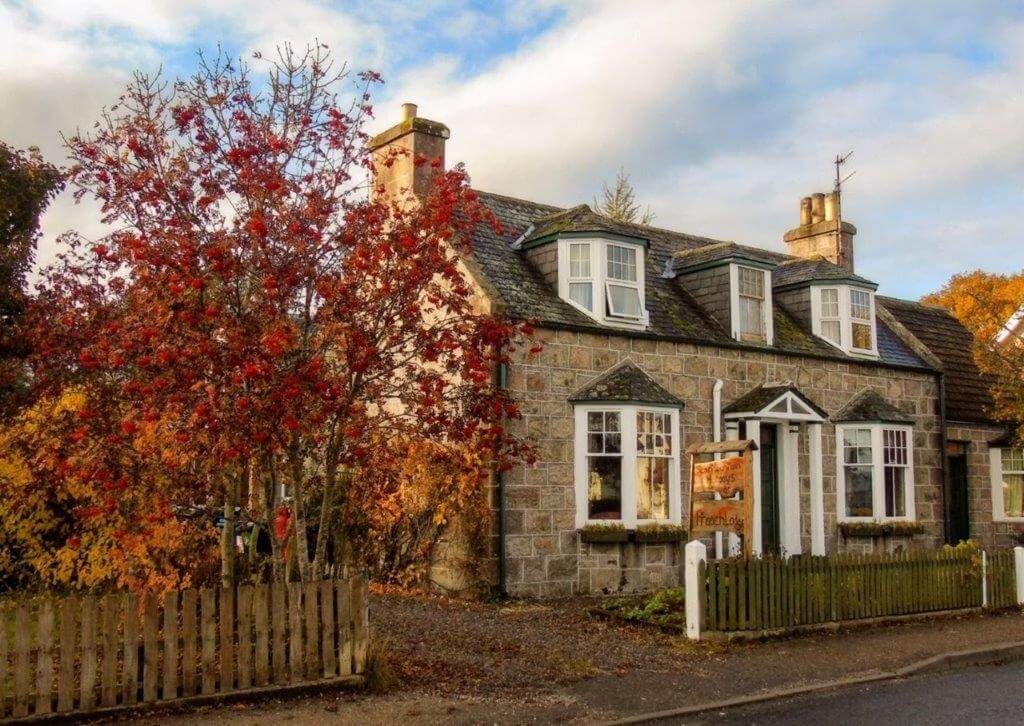
Some routes — understandably — are very popular. Well-known trails have their appeal, but they can also be busy at peak times.
One of the real pleasures of walking in Scotland is how easy it is to step away from the crowds. With a bit of local knowledge, it’s possible to find quieter routes that feel far more remote, even in the height of the season.
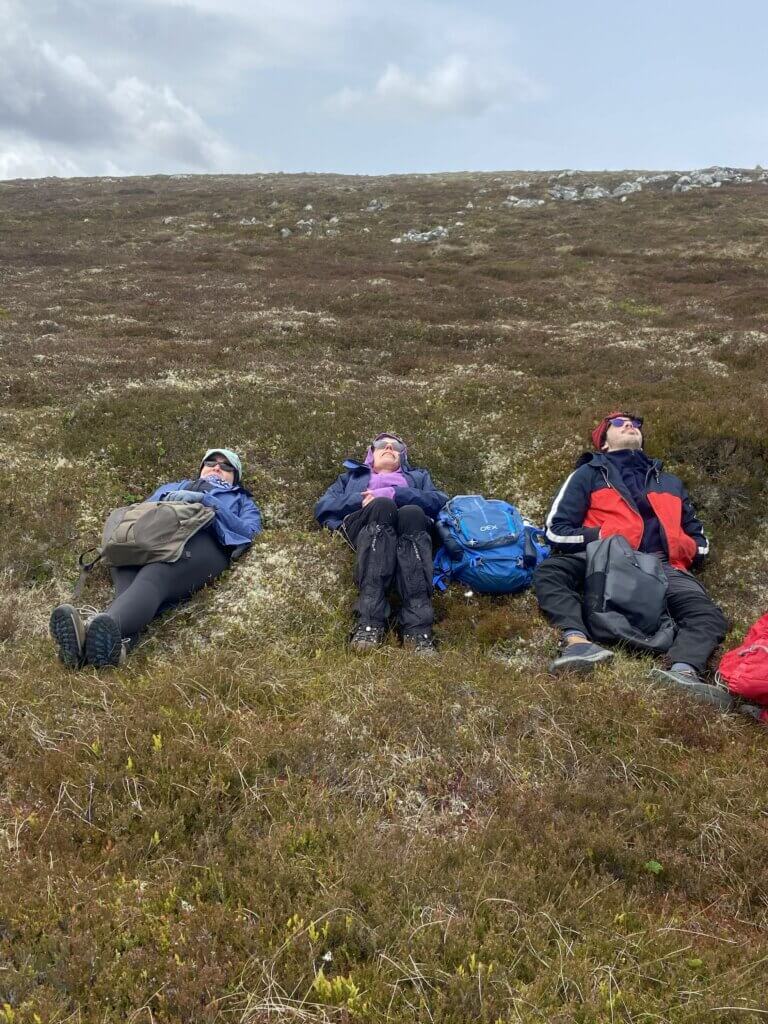
Planning a hiking trip in Scotland isn’t just about picking a route — it’s about balancing all these elements: weather, terrain, timing, logistics, and the kind of experience you want to have.
Get that balance right, and the rewards are immense. Space, freedom, ever-changing light, and a landscape that invites you to slow down and properly take it in.
And if you’d rather not piece it all together yourself — that’s exactly what we’re here for.
If you’ve never been walking in Scotland before, it’s hard to know what to expect.
You might picture dramatic mountains, remote landscapes, and ever-changing weather.
You might also be wondering:
These are exactly the questions most first-time visitors have before arriving in the Scottish Highlands.
But once they get here, many are surprised—often in ways they didn’t expect.
At Scot Mountain Holidays, based at Fraoch Lodge in the heart of Cairngorms National Park, we’ve welcomed hundreds of first-time walkers over the years.
And while every trip is different, the same few surprises come up again and again.
We asked some of the guests who have repeatedly booked hiking trips with us over the past 20 years or more: here’s what they said.
Many visitors arrive in Scotland expecting walking to mean long, demanding climbs.
And yes—there are big mountains here. Names like Ben Lawers or the peaks of Glen Coe can sound intimidating.
But what often surprises people is how accessible the Highlands really are.
“I remember my first Munro… it felt an awfully long way to the top.”
That early experience is something many people relate to—the assumption that walking in Scotland is all about reaching summits.
In reality, most walking holidays—especially in areas like the Cairngorms National Park—focus on:
Takeaway: You can experience the Highlands fully without tackling big mountains.
That said, the bigger peaks—like Cairngorm, Braeriach, or Ben Nevis — can still feel challenging, especially when you factor in Scotland’s changeable weather and northern location.
For first-time visitors, having a knowledgeable guide can make a huge difference—not just for safety, but for confidence and enjoyment too.
After all, if this is your first trip to Scotland, you’ll want to make the most of every day.
And many people find that once they’ve experienced the Highlands this way, it doesn’t feel like a one-off trip… It’s the beginning of wanting to come back again and again.
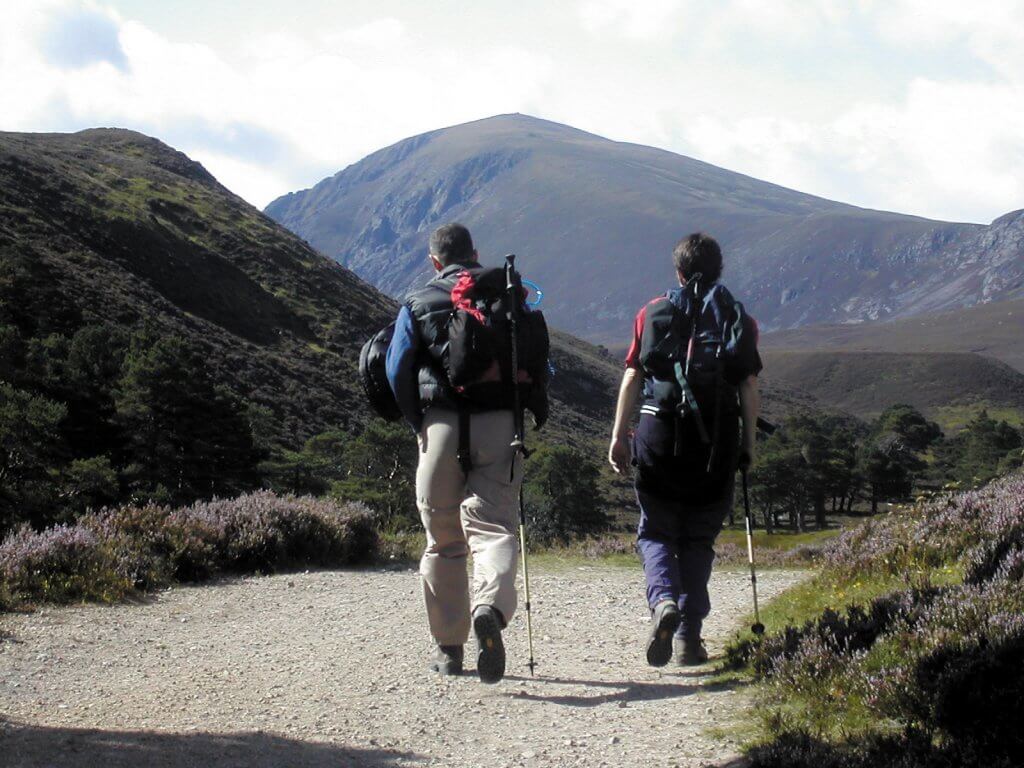
People often expect the most dramatic scenery to be reserved for experienced hikers.
Instead, they discover that the sense of scale is everywhere.
“Just the vast amount of wilderness and the massive bulk of the mountains—and how insignificant we are. There’s a spiritual element to it.”
That feeling doesn’t depend on altitude. Whether you’re walking through a forest, along a river, or across open moorland, the landscape still feels big, wild, and deeply atmospheric.
Takeaway: You don’t need to climb high to feel something profound.

Sunset at Loch Morlich
Let’s be honest—this is something everyone wonders about.
And yes, Scotland has its moments.
“On a lovely still, warm evening… the midges came out. We never finished cooking—everyone just ran for shelter in the Clachaig!”
It’s a story many Highland visitors can relate to, especially on the west coast.
But here’s what surprises people:
On guided trips, routes and timings are chosen carefully to make the most of the day—often in areas like Cairngorms National Park where conditions are generally drier.
And even the less comfortable moments? They often become the stories people laugh about later.
Takeaway: The weather (and yes, midges) are part of the experience—but they don’t define it.
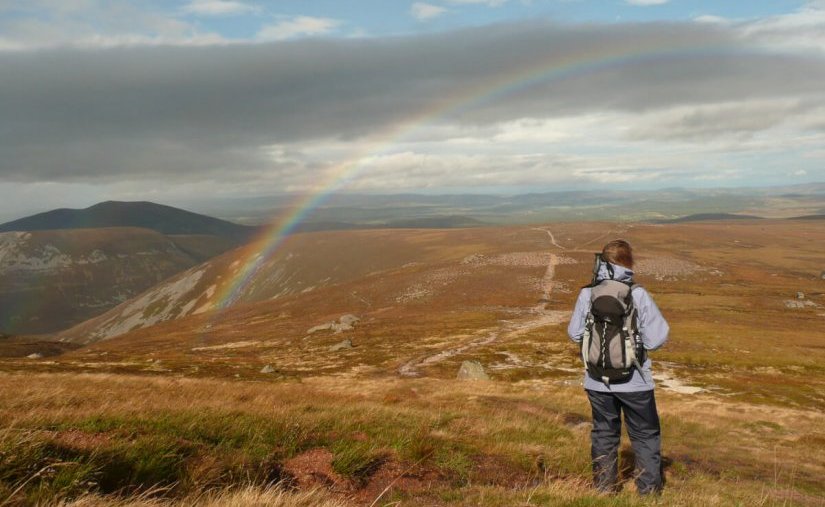
A rainbow over the mountain moorland in the Cairngorms
One of the biggest surprises for first-time walkers is just how much space there is.
Even if you’ve seen photos of famous places like Ben Nevis or Glen Coe, what you can’t fully appreciate until you’re there is the sense of scale and quiet.
“The vastness… and how small we are in it.”
That feeling of space creates something quite rare:
Takeaway: It feels like wilderness—but without needing extreme effort to access it.
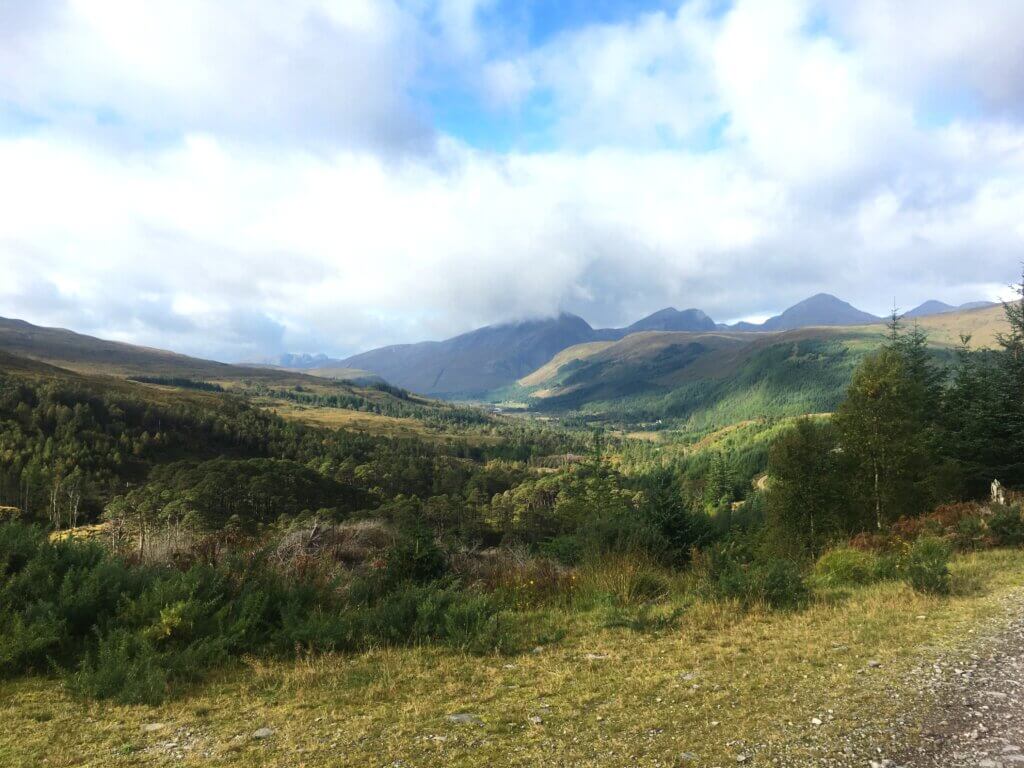
Perhaps the biggest surprise isn’t physical at all.
It’s how the experience lingers.
For some, it starts early:
“I loved the rugged mountains from a young age… and just wanted more and more.”
For others, it’s something they only discover on their first proper walking trip.
Either way, walking in the Scottish Highlands often becomes more than just a holiday:
At places like Fraoch Lodge, that experience is shaped not just by the walks, but by the atmosphere, food, and people you share it with.
Takeaway: It’s not just a trip—it’s something that stays with you.
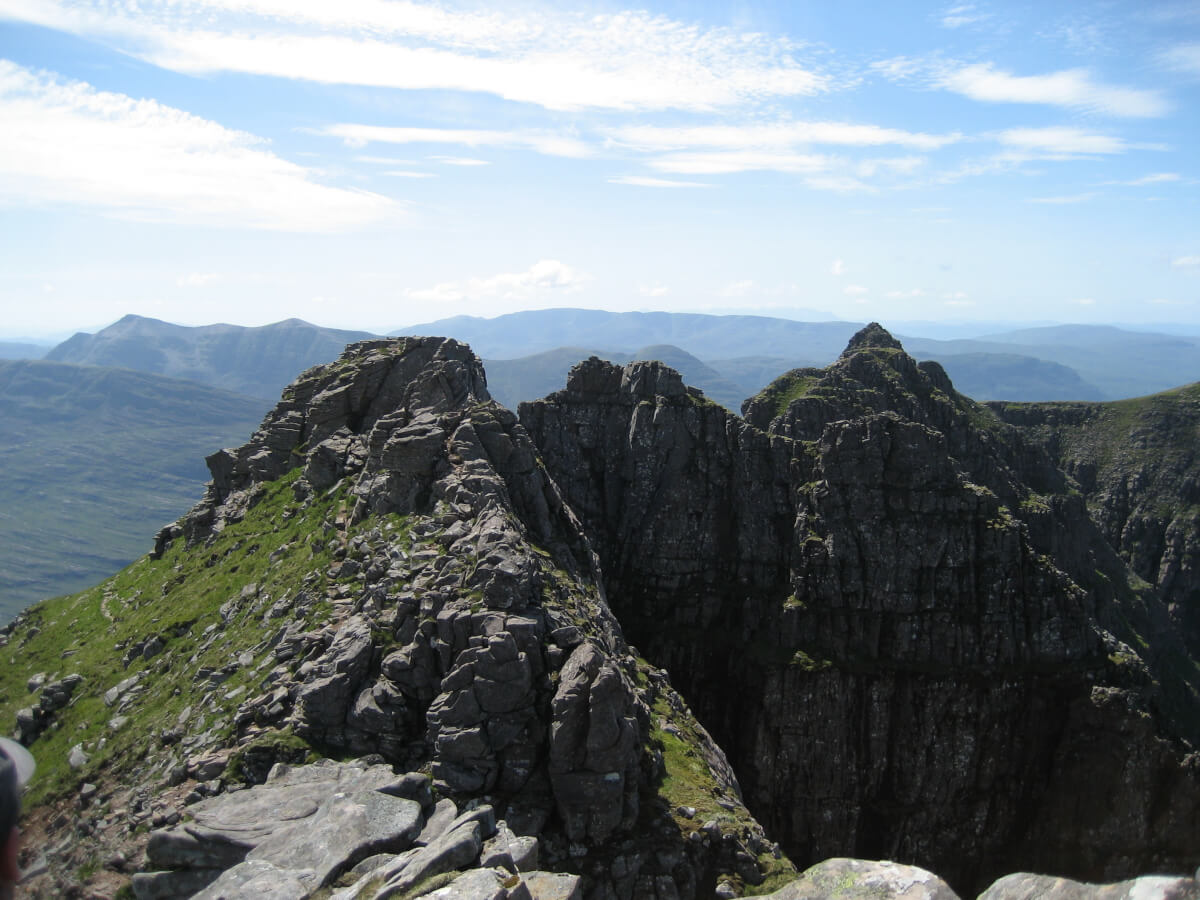
If you’re thinking about a walking holiday in Scotland, one of the biggest unknowns is often the simplest:
What does a typical day actually look like?
Will it feel rushed? Too demanding? Too structured?
Or will there be time to relax, enjoy the scenery, and properly switch off?
Here’s what a summer day looks like on a guided walking holiday with us at Fraoch Lodge—designed to give you a real feel for the rhythm, the experience, and why so many guests say it’s far more relaxing than they expected.
In summer, longer daylight hours mean there’s no need for an early rush.
Breakfast is usually around 7.30 or 8am, giving you time to wake naturally and ease into the day.
Breakfast orders are taken the evening before to:
Options range from:
Much of what you’ll eat is homemade—from the bread to the preserves. Garden produce often makes an appearance too, whether that’s fresh herbs or berries finding their way into jams and desserts.
Over breakfast, Andy—your guide—will:
It’s informal, informative, and sets the tone for a relaxed, well-prepared day.
After breakfast, there’s time to:
Lunch is very much part of the experience, with options like:
(Guests quickly learn that the cake is not to be missed.)
From Fraoch Lodge, it’s usually a short drive to the start of the walk, often within the stunning surroundings of the Cairngorms National Park.
And then—you’re off.
Summer walking here is all about:
Routes are chosen to give you:
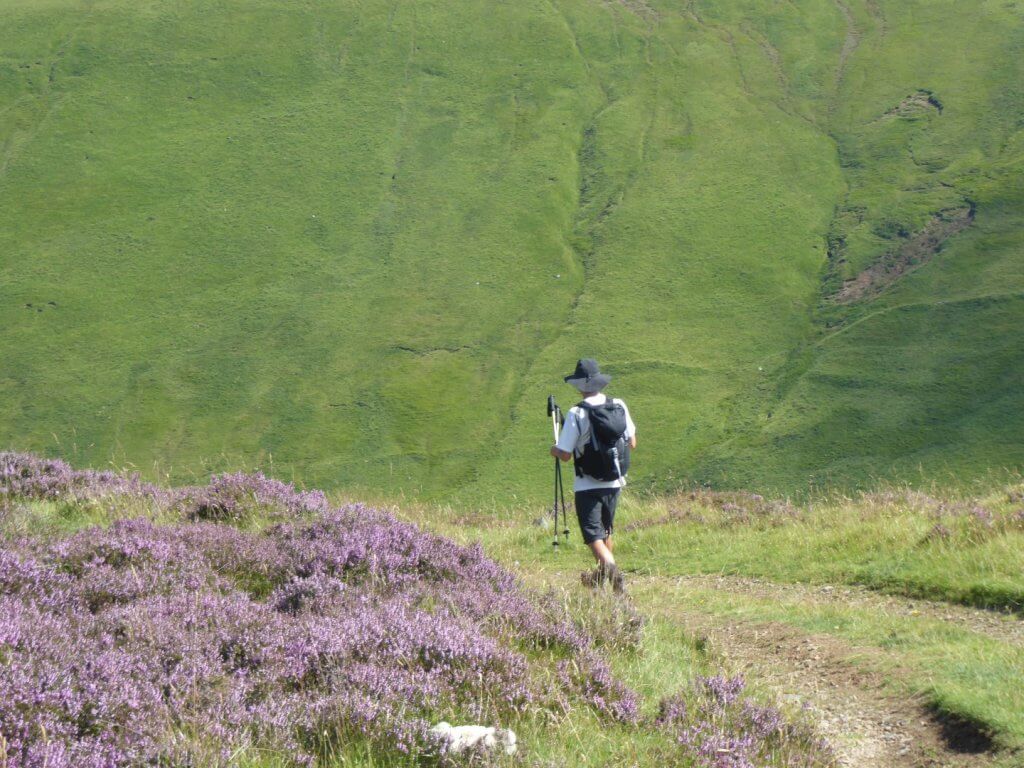
High summer colours in the Central Highlands
This isn’t a forced march—and it’s not a slow amble either.
The pace is:
You’ll stop regularly for:
Unlike winter, there’s usually time for a more relaxed lunch stop—often in a scenic spot beside a river, on a hillside, or with a wide-open view across the glen.
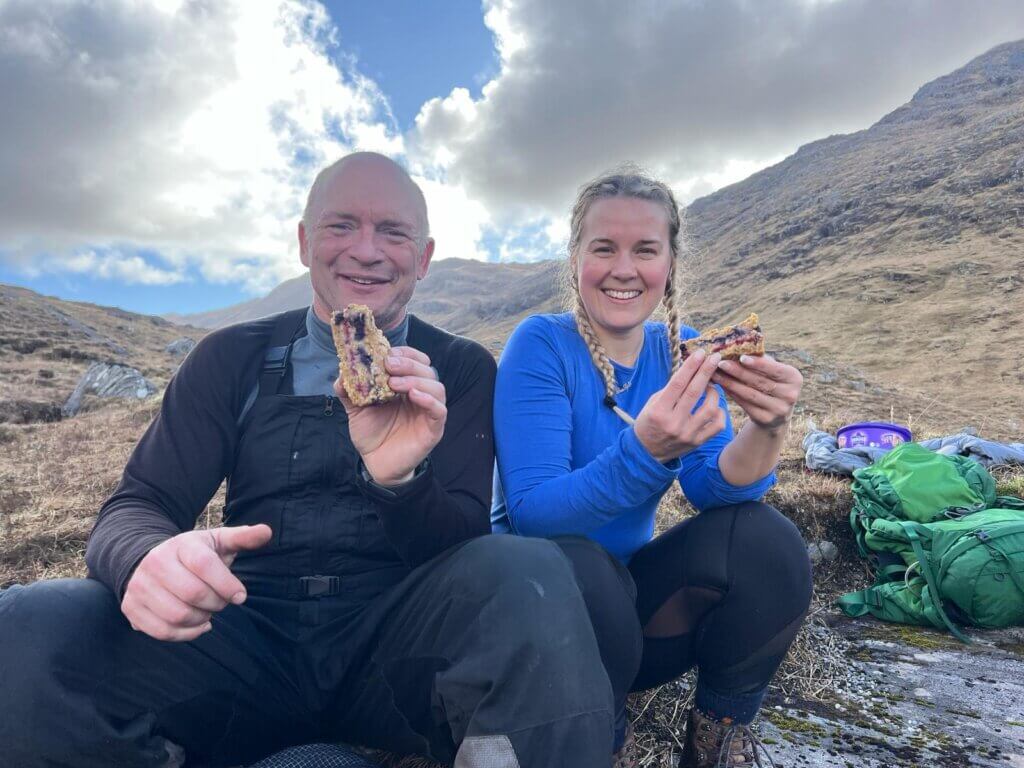
After a satisfying day out, you’ll return to Fraoch Lodge in the afternoon.
Boots come off. Comfortable shoes go on.
And then—it’s time for one of the highlights of the day:
Cake O’Clock.
A mug of tea or coffee, and a generous slice of Rebecca’s homemade baking. It might be:
It’s a chance to:
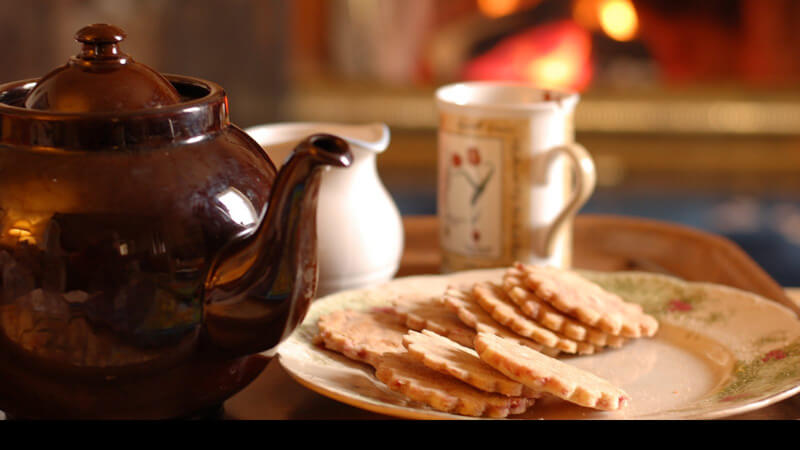
Cake O’Clock – although on this day it was biscuits!
There’s plenty of time before dinner to:
This balance—active days with relaxed evenings—is a big part of what makes the experience feel like a true holiday.
Dinner is served in the evening and is a real highlight of the day.
Rebecca’s cooking is at the heart of the experience:
You might enjoy:
Followed, of course, by a homemade dessert.
Food here isn’t an afterthought—it’s part of the journey.
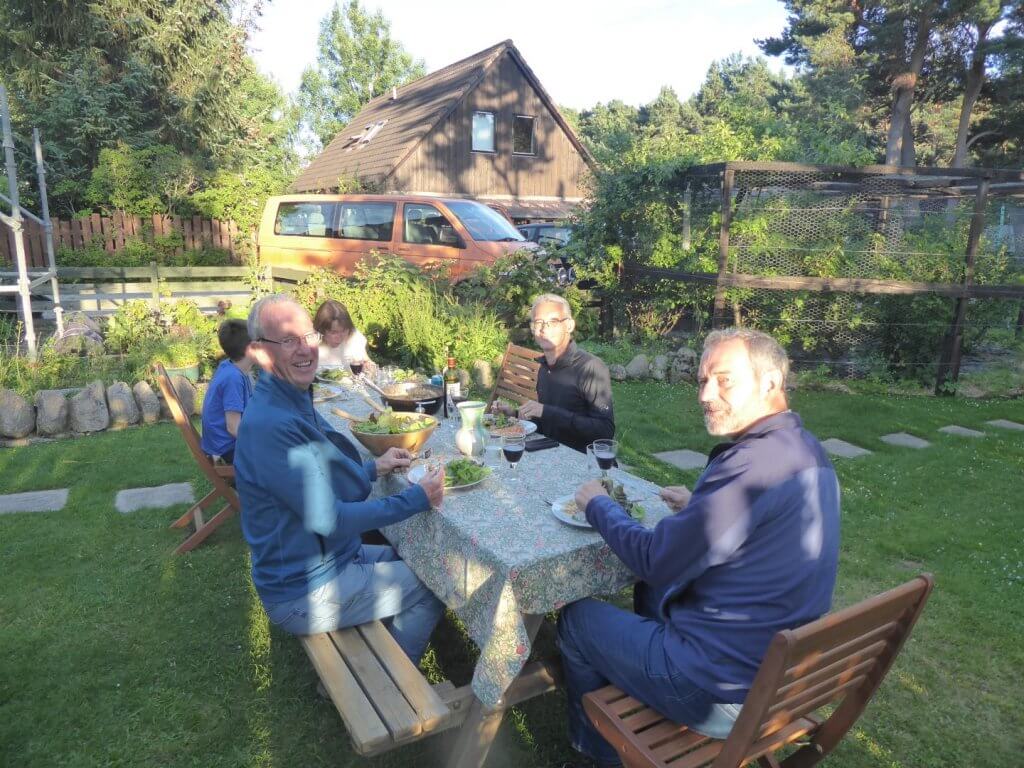
Al fresco dinner at Fraoch Lodge
After dinner, the evening is yours.
You might:
And with long daylight hours, it never feels rushed.
A guided walking holiday isn’t just about the walking.
It’s about:
It’s also about getting the balance right:
If you’re in the early stages of planning a walking holiday in Scotland, this is the experience we aim to create—whether you join a scheduled trip or ask Andy to design a private itinerary for your group or family.
Because the goal isn’t just to go walking.
It’s to spend a few days fully immersed in the Highlands—comfortably, confidently, and with just the right amount of challenge to make it truly memorable.
 Scot Mountain Holidays (Ltd),
Fraoch Lodge, Deshar Road,
Boat of Garten,
PH24 3BN
Scot Mountain Holidays (Ltd),
Fraoch Lodge, Deshar Road,
Boat of Garten,
PH24 3BN




All content © Copyright Scot Mountain Holidays 2026
Responsive web design by Summit Web Solutions
