








This website uses cookies to improve your experience. We\'ll assume you\'re ok with this, but you can opt-out if you wish. Read More
In case of sale of your personal information, you may opt out by using the link Do Not Sell My Personal Information
If you’re organising a group walking holiday, it’s completely natural to wonder: Is Scotland going to be too much for us?
We hear this often—from organisers bringing mixed-age families, walking clubs with varied abilities, or groups who want to enjoy the outdoors without turning it into an endurance test.
The good news is this: Scotland doesn’t have to be overwhelming—but it shouldn’t be underwhelming either. The best walking holidays strike a balance between comfort and challenge.
Very few groups walk at the same pace—and that’s absolutely fine.
You might have:
A well-designed day allows for:
It’s not about rushing—it’s about walking well together.
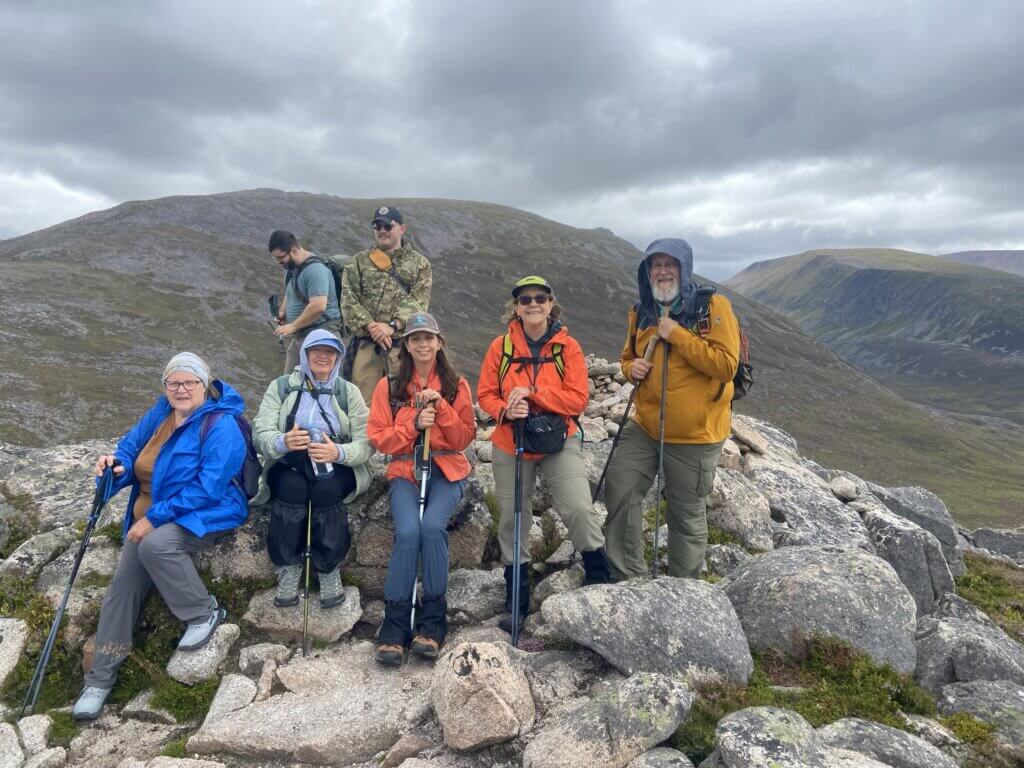
Scotland’s landscapes can look dramatic, but most walking holidays don’t involve exposed or technical terrain.
Safety comes from:
With the right guidance, your group can explore confidently—even in more remote areas.
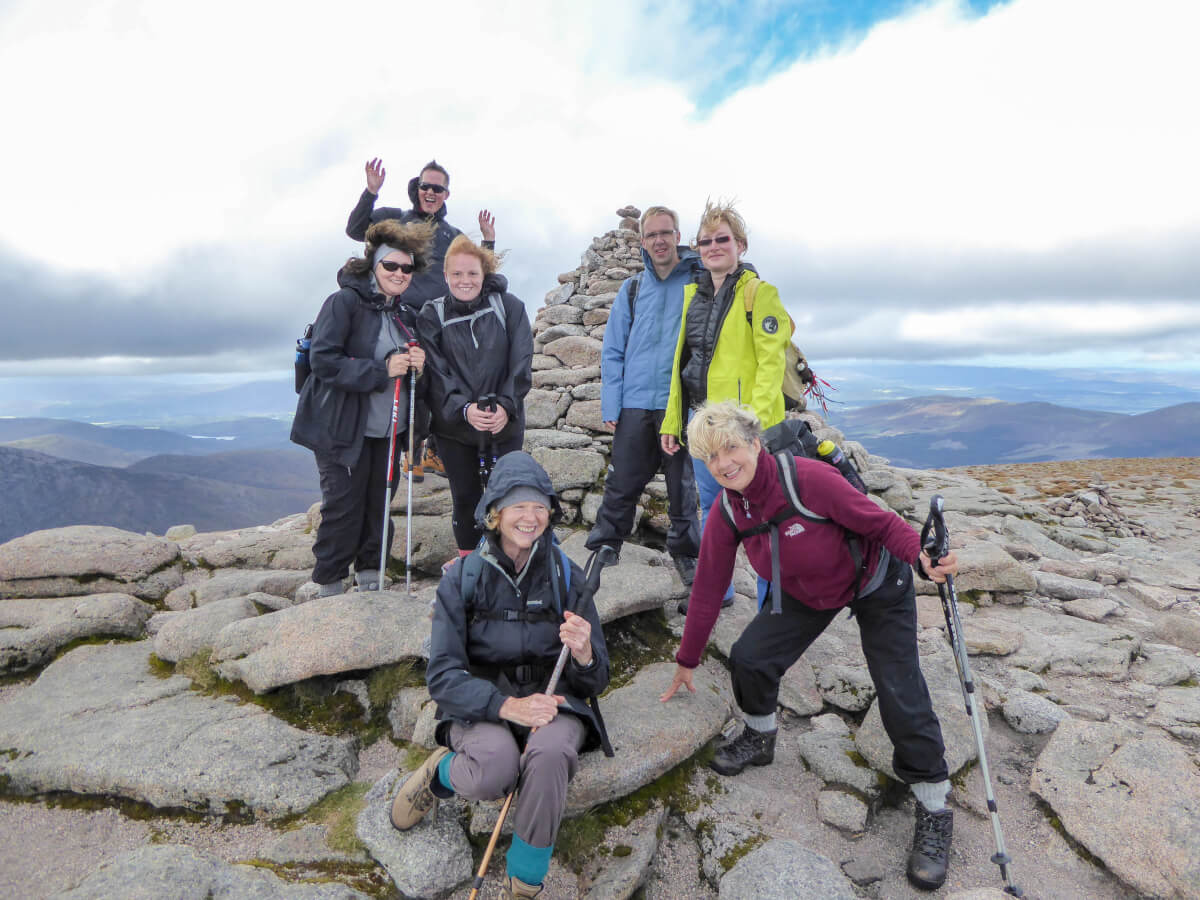
Hiking group celebrate reaching the top of one of Scotland’s many mountains
Yes, Scotland has a reputation—but it’s often part of the experience rather than a problem.
In reality:
Many guests come expecting to “cope” with the weather—and leave having enjoyed it.
One of the biggest misconceptions is that walking in Scotland means climbing mountains.
It doesn’t.
In places like the Cairngorms National Park, there’s an incredible variety of terrain:
You don’t need to summit a peak to have a meaningful day out—but equally, you’re not limited to short, flat strolls either.
There’s a common assumption that guided walking holidays are either:
In reality, the best experiences sit somewhere in between.
Rather than defaulting to the easiest routes, Andy designs walks that:
The result is something far more rewarding than simply “ticking off” an easy route.
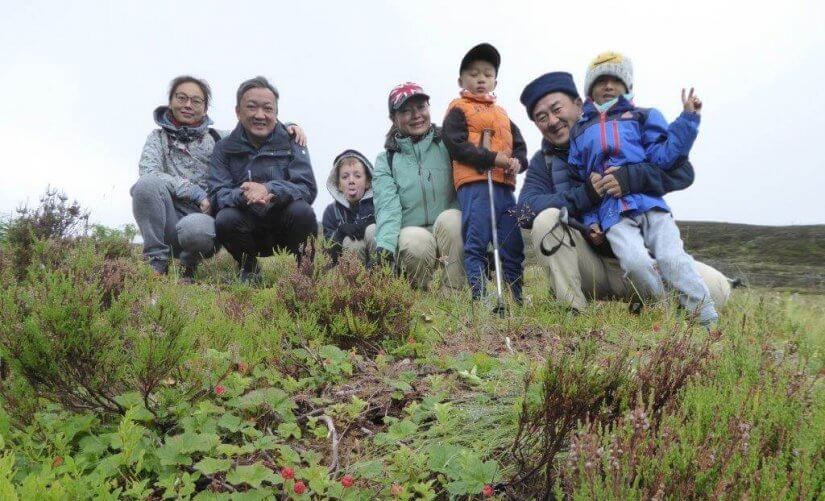
Adventuring we will go – up hill, down dale and thru heather to the berries.
If a walk is too gentle, you miss out on:
Some of the most memorable places in Scotland sit just beyond the obvious paths.
With an experienced guide, your group can:
Challenging doesn’t mean extreme.
Routes are chosen so that:
That might look like:
It’s about making the day work for everyone—not just the fastest or the fittest.
Even on walks that seem manageable on paper, having a guide transforms the experience.
You’re not just following a path—you’re:
That’s where Andy’s expertise really comes into its own—helping your group get far more from the day than they would on their own.
If you’re worried your group might find Scotland “too challenging,” the reality is:
The aim isn’t to exhaust people—it’s to give them a day that feels worthwhile, memorable, and shared.
Scotland isn’t too challenging for your group.
What matters is how the experience is designed.
With the right approach, your walking holiday becomes:
We’ll make sure it’s right—challenging enough to be meaningful, but always within your group’s reach.
If you’re dreaming about a family trip to Scotland, you may have come across this curious claim:
“Scotland doesn’t have real mountains.”
Usually said by someone who’s never stood in the Highlands.
Because once you arrive — once you step out into the cool Highland air and look up — the question disappears entirely.
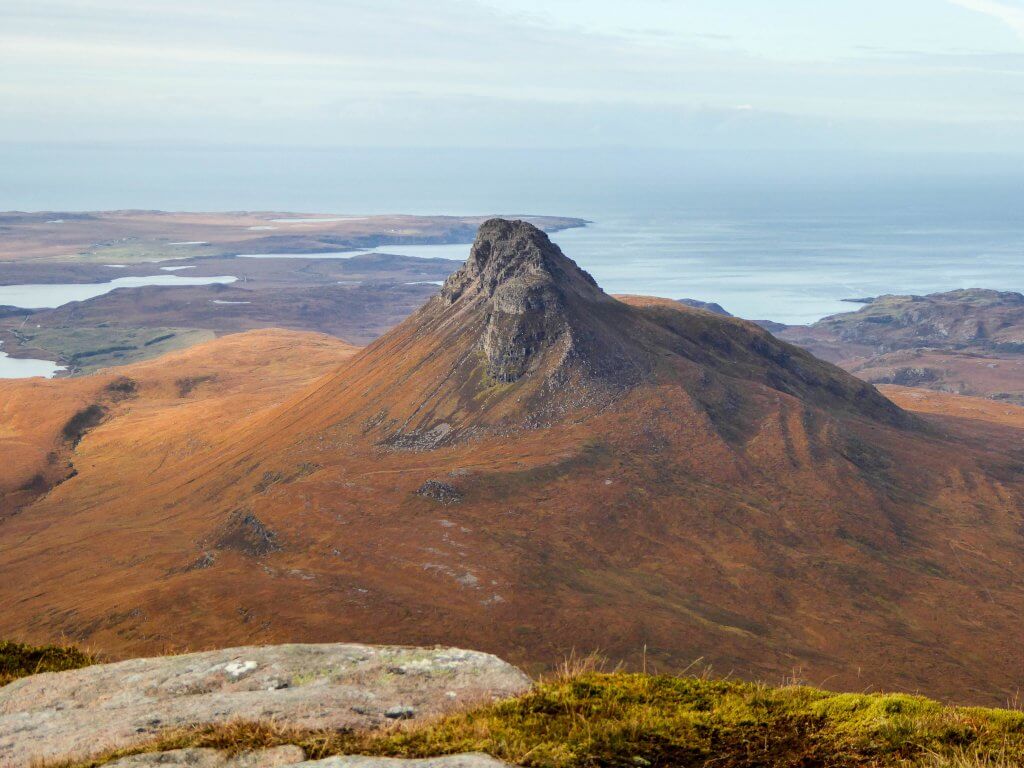
Stac Pollaidh, Assynt, Scotland – north of Inverness
Is it sheer height?
Or is it how small it makes you feel… in the very best way?
Ben Nevis rises to 4,413 ft (1,345m), the highest peak in the UK. But Scotland’s mountains aren’t about altitude alone. They’re about atmosphere.
They rise from sea lochs and ancient forests.
They glow purple with late-summer heather.
They hold snow well into spring.
They feel vast, open, and wonderfully uncrowded.
For families visiting from the US or Canada, there’s something quietly surprising about them. The scale feels big — but accessible. Wild — yet welcoming.
And there’s another detail that often brings visible relief: Scotland is predator-free.
No bears.
No cougars.
No venomous snakes.
You may see red deer, mountain hare, golden eagles overhead — but you can walk freely without the background worry that often comes with hiking in parts of North America. For many families, that makes exploring together feel more relaxed from the very first step.
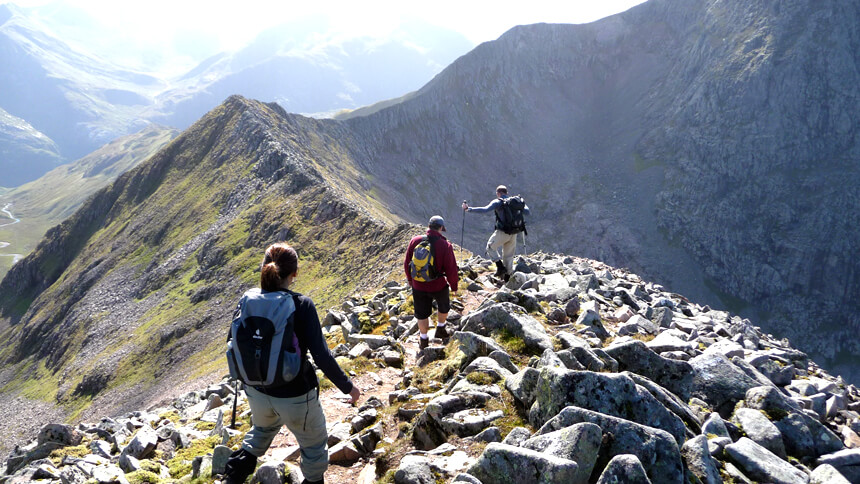
Classic ridge walking on the ascent to Ben Nevis
The Cairngorms are home to five of the UK’s six highest peaks. But what makes them special isn’t just the statistics.
It’s the space.
The high Arctic-like plateau.
The ancient Caledonian pine forests.
Red deer moving across distant slopes.
Sky that seems to go on forever.
This is where Fraoch Lodge sits — right in the heart of the mountains. No long transfers. No logistical juggling. Just a relaxed Highland base where you can settle in, be looked after, and step straight into the landscape with an experienced local guide.
For families in the dreaming stage, imagine this:
Your morning coffee looking out toward the hills
A guided walk designed to suit your pace
Your children learning real mountain skills in a safe environment
Stories of clans and landscapes woven into the day
Coming back to a warm welcome and a home-cooked two-course dinner
It’s adventurous — but without the stress.
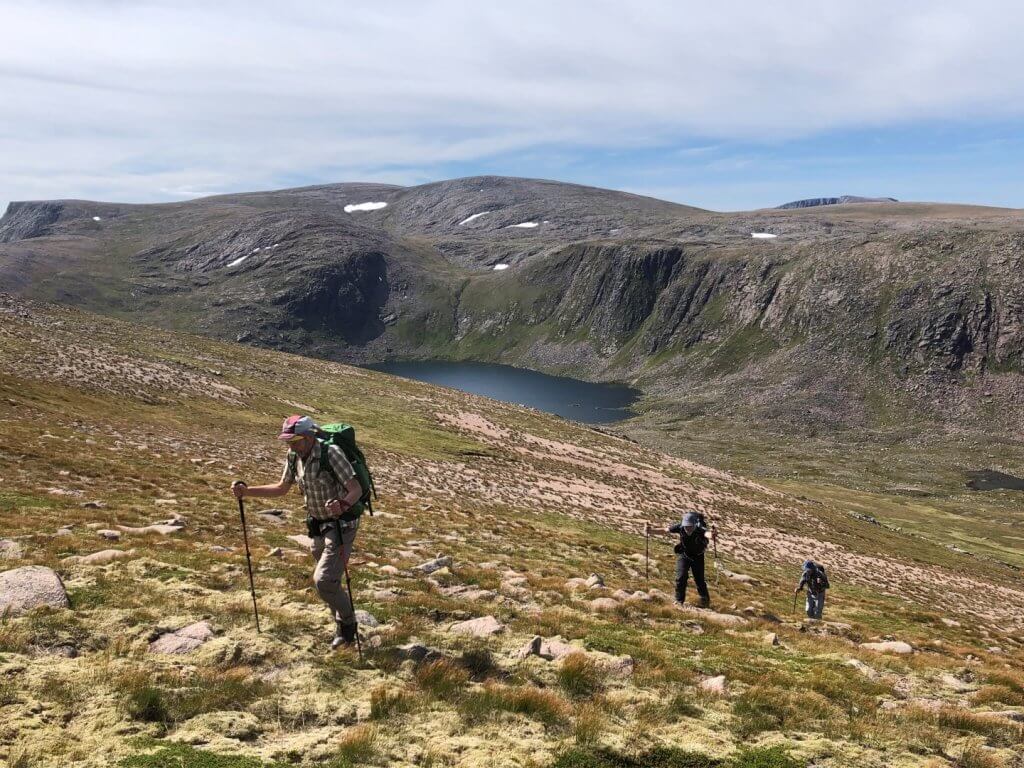
On the way to Beinn Mheadhoin
Scotland has over 280 mountains above 3,000 feet, known as Munros. For many visitors, standing on one becomes a highlight of their trip.
Not because it’s extreme.
But because it’s shared.
A summit photo with the whole family.
Wind in your hair.
Layers on.
Big smiles.
And if your Scotland dream includes dramatic island scenery, the jagged skyline of the Isle of Skye offers something entirely different — bold, cinematic, unforgettable.
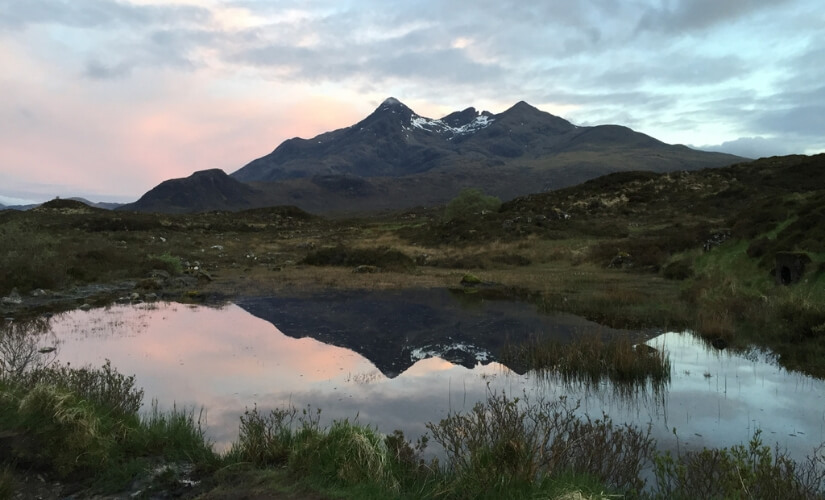
One of the biggest misconceptions about Scottish mountains is that they’re only for hardened climbers.
They’re not.
There are gentle giants and classic ridgelines. Shorter summit days and longer, sweeping expeditions. Snowshoeing in spring. Wildflower walks in summer. Golden light in autumn.
With the right guide — and the right local knowledge — Scotland’s mountains become accessible, educational, and deeply rewarding.
That’s especially important when travelling as a family from overseas. You want challenge, yes — but you also want confidence, safety, and someone quietly managing the details: the weather, the route choice, the backup plan.
So you can focus on being present.
If “real” means dramatic scenery, shifting Highland light, and landscapes that stay with you long after you fly home — then yes.
If “real” means earning a summit together and feeling like you’ve stepped into something ancient and meaningful — then absolutely.
Scotland’s mountains may not scrape the sky like the Rockies.
But they have something else.
History. Atmosphere. Space. Story.
And the freedom to explore without looking over your shoulder.
If you’re in the early dreaming stage — imagining fresh air, wide horizons, and an active, meaningful family adventure — Scotland’s mountains are very real indeed.
And they’re waiting.
If you’re the one reading this, you’re probably the one who always does it.
You find the flights.
You compare the routes.
You check the insurance.
You answer everyone’s questions.
You collect the deposits.
You make the dinner reservations.
You carry the map.
In your walking club, your family group, your alumni association, your Scottish heritage society — you’re the planner. The organiser. The one people trust.
And while that’s an honour, it can also mean one thing:
You never fully switch off.
For many of our group organisers the pattern is the same.
They are:
The trip planner
The point of contact
The most experienced hiker
The one everyone turns to when something goes wrong
Even on holiday, they’re on duty.
If someone twists an ankle, they look at you.
If the weather turns, they look at you.
If dinner is late, they look at you.
If the route is unclear, they look at you.
You may love leading — but that doesn’t mean you don’t deserve a break.
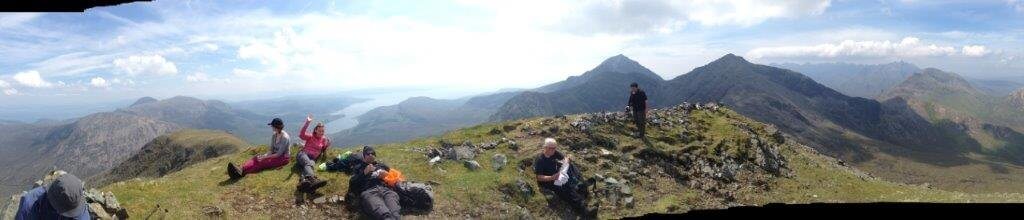
Enjoying a well-deserved break with views in the Cuillin hills
At Scot Mountain Holidays, based at Fraoch Lodge in the Cairngorms, we work with organisers who are used to carrying the load.
Many are experienced hikers from the US and Canada who have led in the Rockies, the Adirondacks, or the Appalachians. They’re capable. Confident. Used to reading maps and watching weather fronts.
But Scotland is different.
The terrain around the Cairngorms National Park is vast and subtle. Weather can roll in quickly across the Cairngorm plateau. River levels change. Estate tracks branch unexpectedly. Access rights are generous — but local knowledge matters.
Even strong leaders find themselves navigating new systems, unfamiliar signage, and micro-decisions all day long.
And that’s exhausting.
When you’re not leading:
You notice the light on the heather.
You hear the crunch of frost underfoot.
You actually taste the local cheese board at dinner.
You sit back with a dram instead of checking tomorrow’s route.
Our guides handle:
Daily route planning
Weather assessment
Adjustments for ability
Safety decisions
Transport logistics
Lunch stops and timings
And because they live and work in the Highlands, they know when to choose the Lairig Ghru — and when to head for a sheltered forest trail instead.
You still bring your experience.
You still bring your leadership presence.
But you are no longer carrying the responsibility.
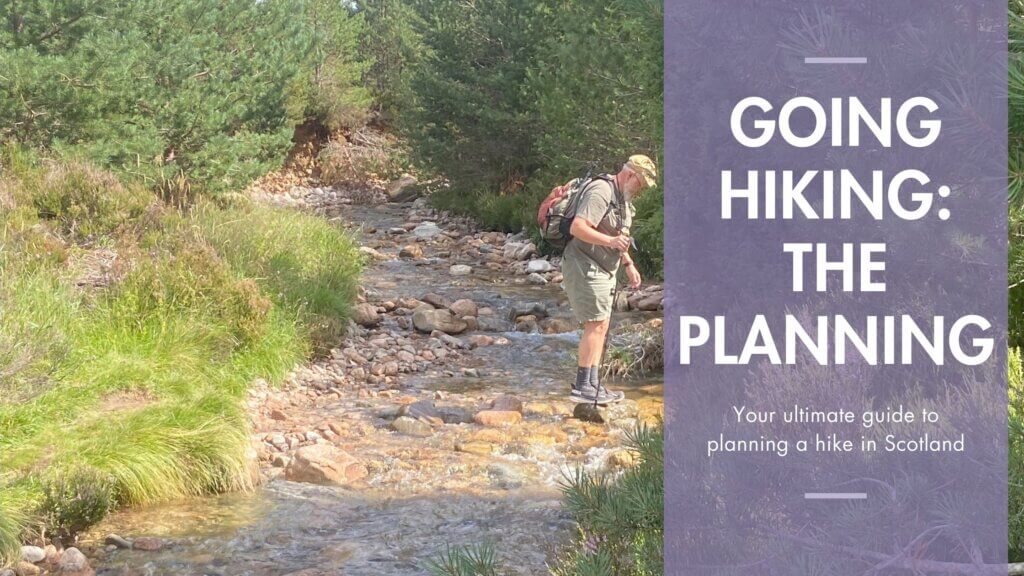
Letting go is hard.
Especially if you are the capable one. The organised one. The dependable one.
But trust is powerful.
At Fraoch Lodge, your group stays together under one roof. Meals are prepared. Routes are tailored. We know the local estates, the seasonal conditions, the quieter paths beyond the obvious.
You don’t have to:
Phone restaurants
Check trailhead parking
Re-route due to wind
Negotiate access
Solve last-minute transport puzzles
You get to walk, laugh, and connect.
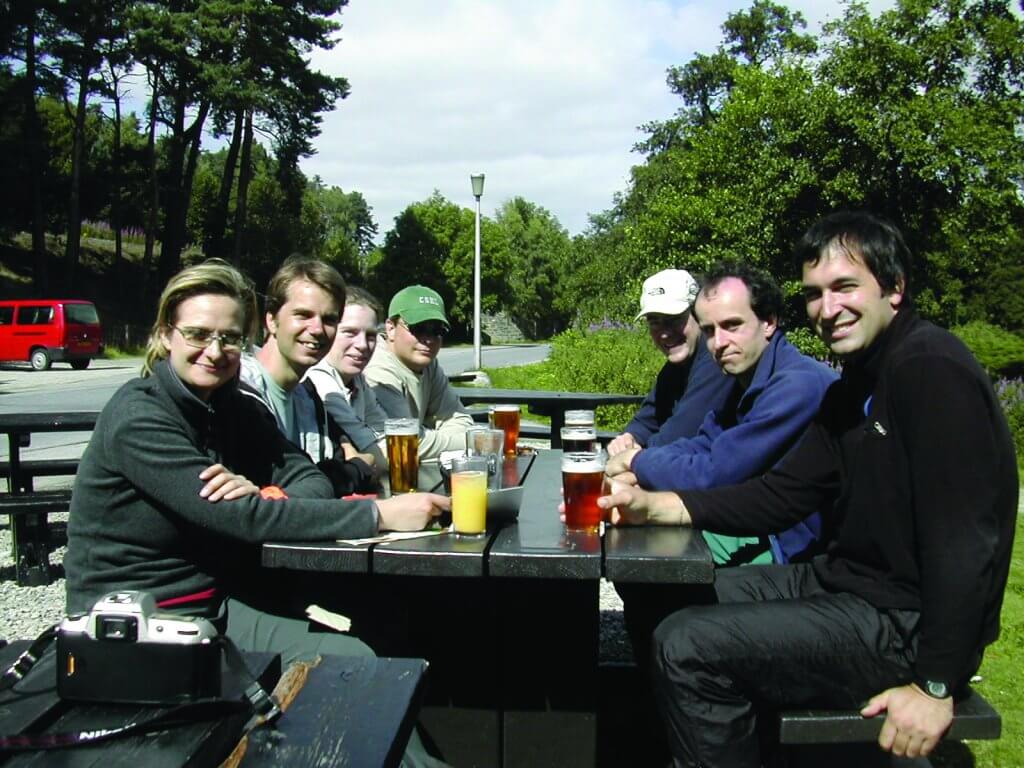
The best way of relaxing after a walk, no matter how hard or easy it may have been
There’s sometimes a quiet guilt organisers feel — as if stepping back means not doing your job.
In reality, it means doing it differently.
By choosing a fully guided, fully inclusive experience, you’re still delivering an extraordinary trip for your group:
Off-the-beaten-track Cairngorm routes
Local stories and wildlife knowledge
Home-cooked Highland meals
Seamless logistics
But you’re also giving yourself something rare:
Rest.
We see it often.
The most competent, capable leaders arrive slightly tense — scanning details, double-checking plans.
By day three, shoulders drop.
By day five, they’re lingering over coffee.
By the end of the week, they’re asking about next year — not as the planner, but as a participant.
Because for the first time in a long time, they got to experience Scotland the way their group did:
Fully present.
Fully included.
Fully part of it.
If you’re organising a walking trip to Scotland from North America, you’ve probably done enough already.
You’ve rallied the group.
You’ve built the excitement.
You’ve handled the emails.
Now imagine this:
You step onto a Highland trail.
The route is ready.
The weather has been assessed.
The lunch stop chosen.
The dinner prepared.
And you simply walk.
For the first time, you can be part of the group — not responsible for it.
And that might just be the best part of the trip.
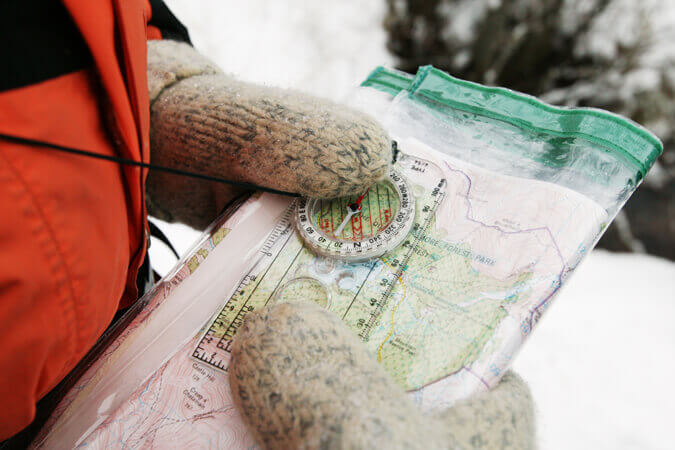
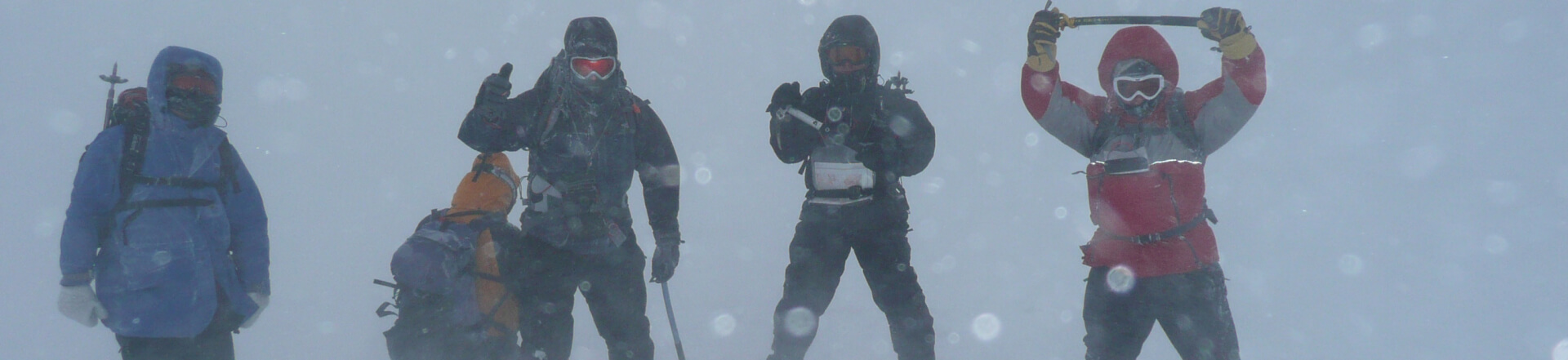
As we move into late autumn and early winter, the mountains change character. The contrast between relatively warm seas and colder air masses fuels more energetic, fast-moving weather systems. Add shorter days, fresh snow cover and the possibility of flat light – when snow and cloud merge into one seamless white – and navigation becomes more committing.
But this doesn’t mean it’s time to hang up the boots until spring.
It does mean it’s worth sharpening your skills and adapting your approach.
At Scot Mountain Holidays, we see winter navigation not as a “black art”, but as a structured skillset built on good habits, clear thinking and practice. Even in a full white-out on the Cairngorm Plateau, navigation isn’t mysterious – it’s methodical.
In our experience, mountain navigation operates on two levels:
Accuracy in individual techniques (bearing, pacing, timing, contour interpretation).
Overriding error management – how you prevent small inaccuracies becoming serious problems.
It’s easy to focus on perfecting a single technique. But the mountain environment contains too many variables – wind drift, uneven terrain, fatigue, snow conditions – to rely on just one tool.
Error management is what keeps you safe.
In simple terms:
If your distance and direction are accurate, you will reach your objective.
Most navigational errors occur when small inaccuracies in these two elements are allowed to grow unchecked.
A key principle we teach:
Never allow your estimated error in distance or direction to exceed your range of visibility.
In winter, that often means keeping your navigational “legs” shorter – ideally under 1 km – and using more intermediate features. This demands strong contour interpretation.
You may hear people describe the Cairngorm Plateau as “featureless”. It isn’t. The features are subtle: shallow re-entrants, gentle domes, faint breaks of slope. Spotting them requires confident map reading and the ability to visualise terrain in three dimensions.
That 3D picture in your mind is what anchors everything else.
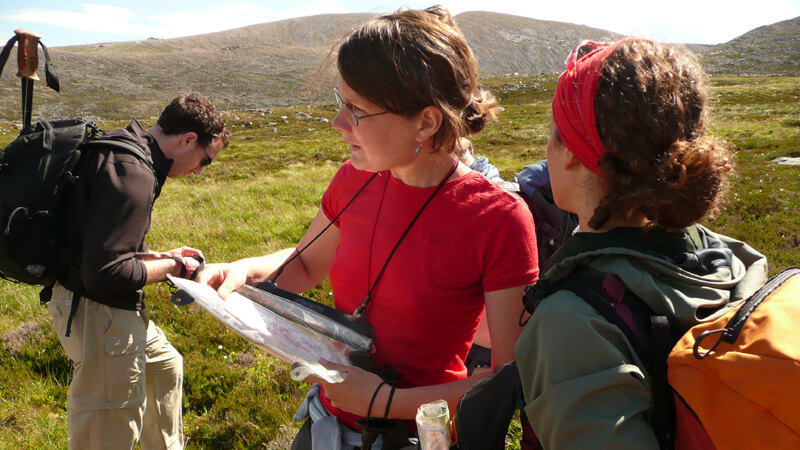
A common mistake is over-reliance on one technique – for example, pacing alone.
Strong winter navigators layer techniques so they confirm each other:
Bearing
Pacing
Timing
Slope angle
Wind direction
Contour interpretation
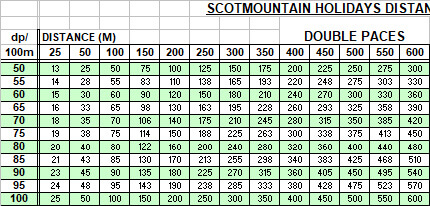
One practical tool we use on our courses is a detailed pacing and timing chart. For example, if your double pace rate is 70 and you expect 595 double paces over 850 m, finishing at 616 paces may still fall within acceptable error. But being 20+ paces out over a short 150 m leg would be a red flag.
That information becomes meaningful when interpreted alongside everything else you’re observing.
Navigation is about cross-checking – constantly.
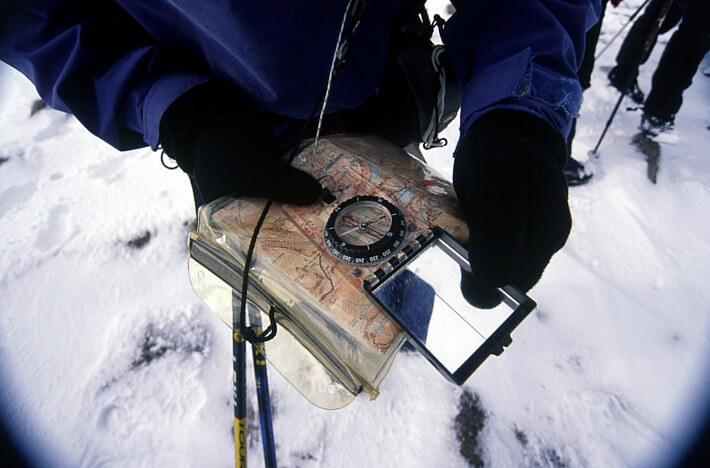
Good navigators don’t just measure – they manage.
Techniques such as:
Aiming off
Attack points
Collection features
…are specifically designed to control and correct error.
Used well, they improve both safety and efficiency. They give you defined decision points rather than vague hope that “we should be somewhere around here”.
If there’s one foundation skill in mountain navigation, it’s contour interpretation.
Everything else feeds back into your understanding of the ground beneath your boots.
In the worst winter conditions, your sense of the terrain’s shape may be the first – and sometimes only – clue that you are drifting off bearing. When visibility collapses, your ability to “feel” and visualise the landscape becomes critical.
This is what transforms navigation from mechanical to intuitive.
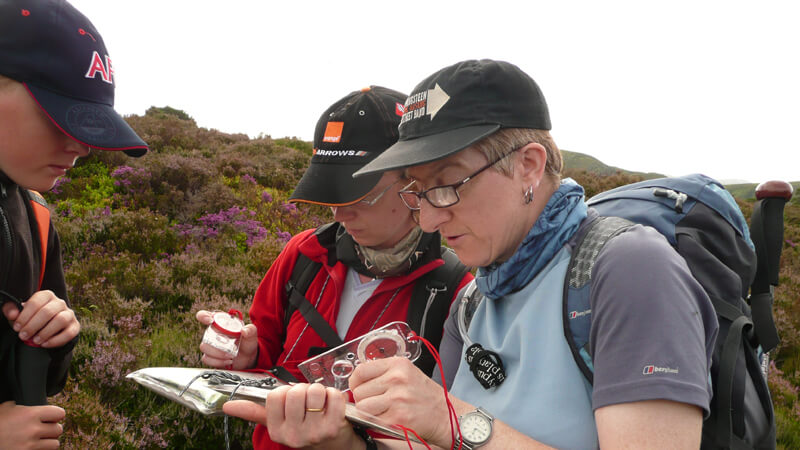
Winter navigation is immensely satisfying. Moving confidently across a snow-covered plateau in challenging conditions is a skill that builds resilience and independence.
If you’d like to develop that confidence in a structured, supportive environment, we run:
Navigation courses (ideal for sharpening core skills)
5-day Winter Skills Courses in the Cairngorms
All based from our welcoming lodge in the heart of the Highlands, with expert instruction, small groups and plenty of time to practise properly.
You don’t need to wait for perfect weather. In fact, some of the best learning happens when the weather isn’t playing ball.
If you’d like to join us in the hills this winter, we’d be delighted to help you build the skills that keep mountain days enjoyable — whatever the forecast.
 Scot Mountain Holidays (Ltd),
Fraoch Lodge, Deshar Road,
Boat of Garten,
PH24 3BN
Scot Mountain Holidays (Ltd),
Fraoch Lodge, Deshar Road,
Boat of Garten,
PH24 3BN




All content © Copyright Scot Mountain Holidays 2026
Responsive web design by Summit Web Solutions
