









This website uses cookies to improve your experience. We\'ll assume you\'re ok with this, but you can opt-out if you wish. Read More
In case of sale of your personal information, you may opt out by using the link Do Not Sell My Personal Information
Winter transforms the Scottish mountains. Familiar paths can quickly become buried, and repeated thaw–freeze cycles can turn an easy summer path into something extremely treacherous. A simple slip can have serious consequences.
For anyone planning winter walking in the Highlands, knowing how to use your crampons and ice axe — and how to carry them properly — is a core part of staying safe.
At Scot Mountain Holidays, we spend a lot of time helping guests build confidence in winter conditions. This blog is not exhaustive, but it outlines some key principles and opinions from our guide, Andy, based on many years of winter experience in the Scottish mountains.
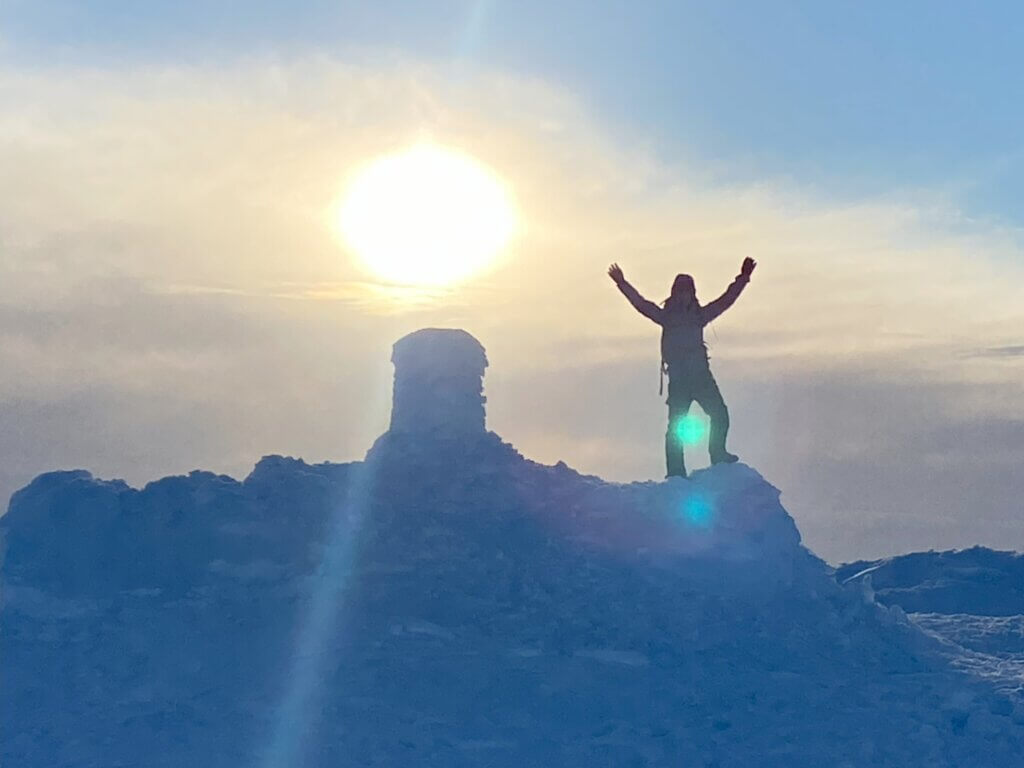
Winter Boots:
dequately stiff winter boots are the foundation of safe winter movement. In many ways, the boot is just as important a tool as your ice axe.
Stiffness is vital because it:
ensures crampons can be fitted securely
allows you to concentrate body weight and force through specific areas of the boot
A proper winter mountaineering boot enables efficient execution of step-kicking and crampon techniques. Even without consciously employing these techniques, you will notice that your footing feels significantly more secure on snow-covered terrain.
Winter boots also provide better insulation, improved ankle support, and — critically — the uppers are robust enough to allow crampon straps to be tightened properly without restricting circulation.
B1 winter boots are generally not sufficiently stiff for Scottish winter mountain conditions. When front-pointing, the toe can bend upwards and the heel drop, causing you to lose purchase and potentially fall out of the step.
Underfoot conditions in Scotland’s winter mountains are often more challenging than summer glacier crossings in the Alps or Himalaya. Even a fully rigid B3 boot rarely feels excessive on a hill walk in full winter conditions.
Crampons:
Crampons are strong pieces of equipment, but they are not indestructible. Importantly, stiffness should come from the boot, not the crampon.
An inadequately stiff boot can subject a crampon to repeated cyclical stress over the course of a day, increasing the risk of fatigue or failure. Always choose a crampon that is compatible with your boot — the stiffer the boot, the wider the range of compatible crampon styles.
Ice axe:
Putting aside technical climbing axes, Andy does not favour long-shafted walking axes. While there are occasions where a longer shaft is useful, these are generally outweighed by the disadvantages.
Shaft length is always a compromise. A length of 50–55cm suits most winter walking situations well.
An ice axe leash should not be permanently attached. There have been incidents where people have sustained head and upper-body injuries after losing grip of an axe during a slide, with the axe flailing at the end of a fixed leash.
A simple and safer solution is to put a loop in the end of the leash and larks-foot it through the hole in the head of the axe only when a leash is needed.
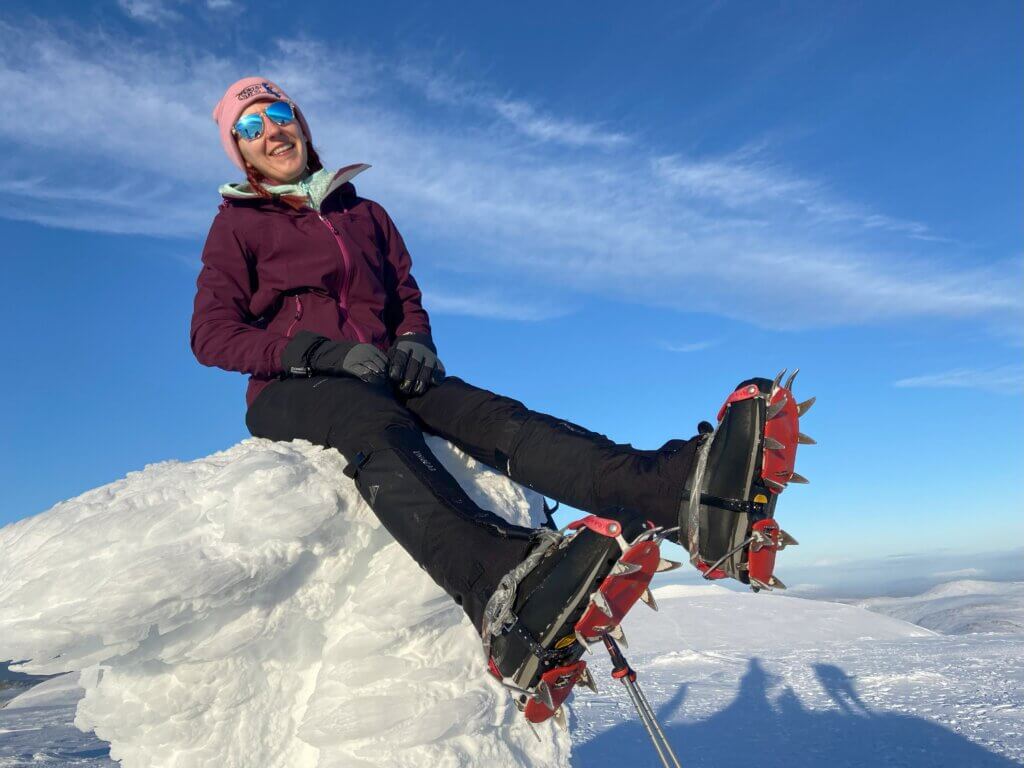
Check out the crampons – New Year Winter Walking 2022 – 2023
When not in use, your ice axe should be carried securely but remain quickly accessible.
The conventional rucksack attachment — threading the shaft through the axe loop and securing it with the pick pointing upwards — is not ideal. This often leaves the pick exposed at an aggressive angle.
Preferably, the axe should be stowed under the side compression straps of the pack, with the head uppermost and the pick pointing downwards and away from the shoulder.
It is also possible to carry the axe slipped behind a shoulder strap or between your back and the rucksack. This allows rapid deployment when you reach snow without stopping to remove your pack.
Once on snow or ice-covered slopes, the axe should usually be carried in the hand. Hold it by the head with the pick pointing backwards and the adze forwards.
When traversing a slope, always carry the axe in the uphill hand, enabling self-belay should you lose your footing. Zig-zagging uphill requires frequent hand changes. A permanently attached leash would significantly reduce speed and efficiency in these situations.
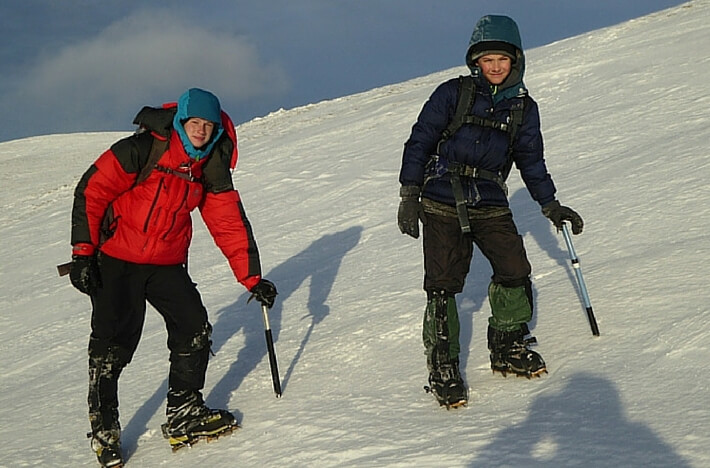
5 day and 2 day winter skills courses in the Cairngorms
At Scot Mountain Holidays, Andy is very clear about how crampons should be carried.
We do not recommend carrying crampons on the outside of a rucksack unless there is an integral, secure crampon pouch. Crampons are heavy and can easily work loose. Unprotected on the outside of a pack, they can also be hazardous — particularly in high winds or crowded environments.
Instead, crampons should be stored in a sturdy crampon bag and carried inside your rucksack. This keeps them secure, protects your pack and other equipment, and prevents accidental loss on the hill or injury to other people.
In winter conditions, place the crampon bag near the top of your pack so it can be accessed quickly without unpacking everything else.
Always adjust and fit your crampons to your boots at home. You should be completely familiar with the process before heading into winter conditions, as cold hands and strong winds make everything more difficult.
Do not put your crampons on while sitting down. You need your full body weight on your feet to ensure proper sole-to-crampon contact.
Choose a flat, stable place — firm snow or a rock platform. Lay the crampons on the ground with all straps clear, step into the crampon, and secure it carefully. Do not wait until you are already on steep or icy ground before fitting them.
General winter walking technique is straightforward but requires attention. A slightly wider gait is advisable, and you must lift your feet properly to avoid catching a crampon point.
As slopes steepen, more specific techniques are required. These skills take practice and should ideally be learned and refreshed in appropriate conditions with experienced guidance.
Winter days are short, so plan conservatively and allow more time than you would in summer. Check mountain weather forecasts and ground conditions carefully, and be prepared to change plans if conditions are unsuitable.
Practise using your winter equipment before your trip, and ensure everyone in your group understands when and how crampons and ice axes should be used.
Safe winter hill walking represents a genuine step up from summer walking — an expansion of skills and judgement rather than a move into something extreme.
If you are considering developing your winter walking skills, our winter courses and guided winter walking trips are designed to build confidence from the ground up.
On all Scot Mountain Holidays winter courses, we revisit core winter skills, including how to carry and use crampons and an ice axe. Every introduction to winter skills begins with a full equipment check, with Andy personally checking crampon fit and compatibility with boots.
He explains how and why adjustments are made, ensuring guests understand not just what works, but why. This attention to detail helps develop good habits early, avoids common mistakes, and builds long-term confidence in winter terrain.
Good habits learned early make winter walking safer, more enjoyable and far more rewarding.
If you are planning winter walking in Scotland after Christmas and would value experienced guidance while developing these skills, we would be delighted to help you prepare.
Frequently asked questions
Yes, the horses are very comfortable around people and are accustomed to us walking with them. They also work as riding ponies so are very used to being around people.
Make sure you let your guide know if there are any issues at all during the walk but there is really no reason to feel at all uneasy if you are comfortable in the outdoors. There are no large predators in Scotland and there is something very comforting about walking in the company of the ponies whose rhythem is very calming.
There is no need for guests to wear helmets as you will not be riding the ponies. You will be walking as a group between the 2 ponies who will be carrying the bags and camping equipment.
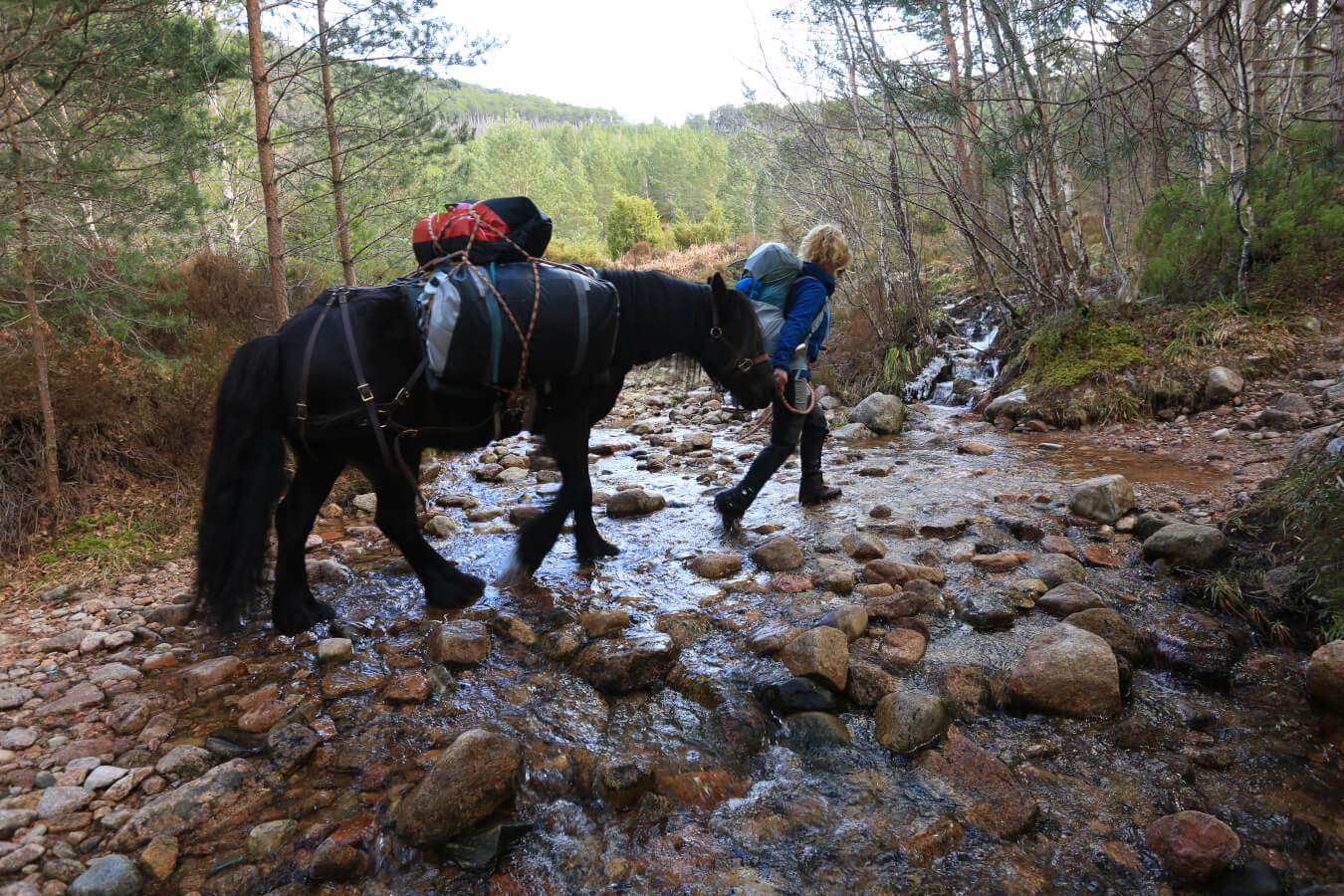
No. This is a relatively gentle to moderately strenuous hiking and wild camping (hot tenting) trip accompanied by pack ponies Foxy and Maggie. The pones carry all the camping gear leaving you to carry little more than a day rucksack plus a change of clothing.
To offer this trip at the advertised price we need at least 2 people to book. If you are a single person trying to book on a trip that already has guests on it please just simply phone us (+44 1479 831 331) and we will book you on the trip. If you are a single person trying to book on a trip that as yet has no one else booked on please call us on the above number and we can put you on a waiting list.
We have made exceptions in the past but we do try to minimise the disturbance to the wildlife. Odours left by dogs in the natural environment can affect the wildlife. Also barking dogs very much increase the level of disturbance as well as there being a question mark with respect to how they behave around horses.
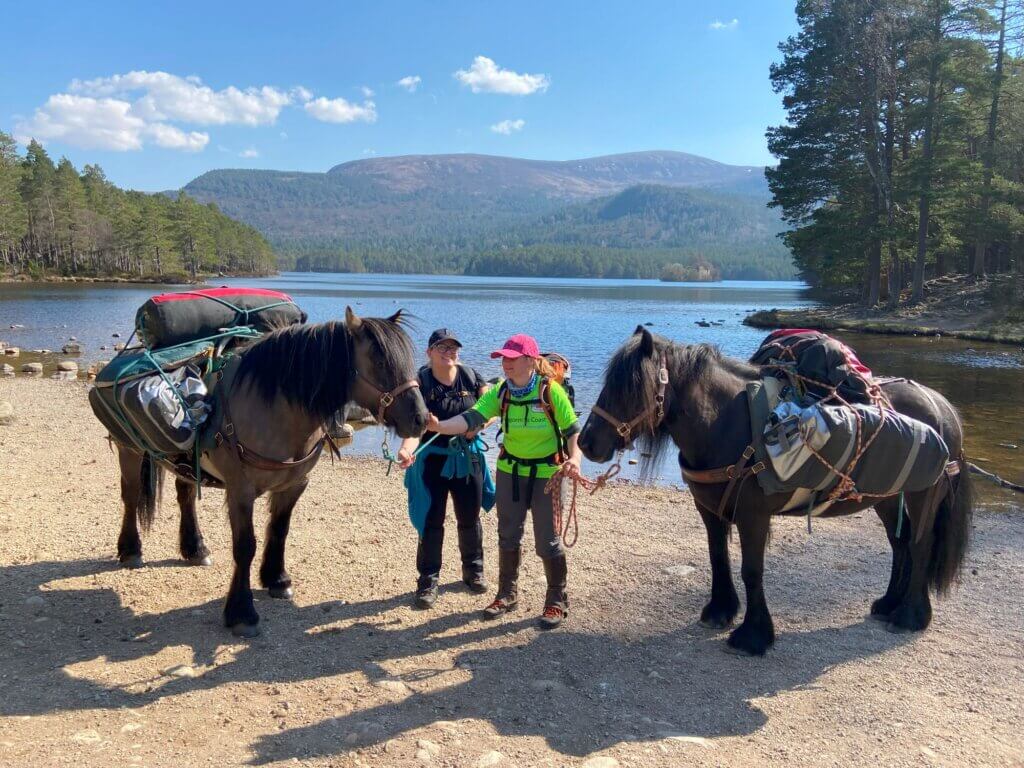
No. This is a hiking trip not a riding holiday. We may have guests on the trip who are not necessarily used to being around horses plus there would be a question mark as to whether the horses would get on with our ponies. Sections of the route in and out to our campsite are not suitable for riding due to overhanging branches. We also camp in any environmentally sensitive area so again want to minimise the disturbance.
As the saying goes: ” there’s no such thing as bad weather, just the wrong clothing.”
No, we have deliberately created a trip which can run in most kinds of weather without being dangerous. We can change the routes and activities a wee bit. The main thing is that everyone will remain safe and cosy.
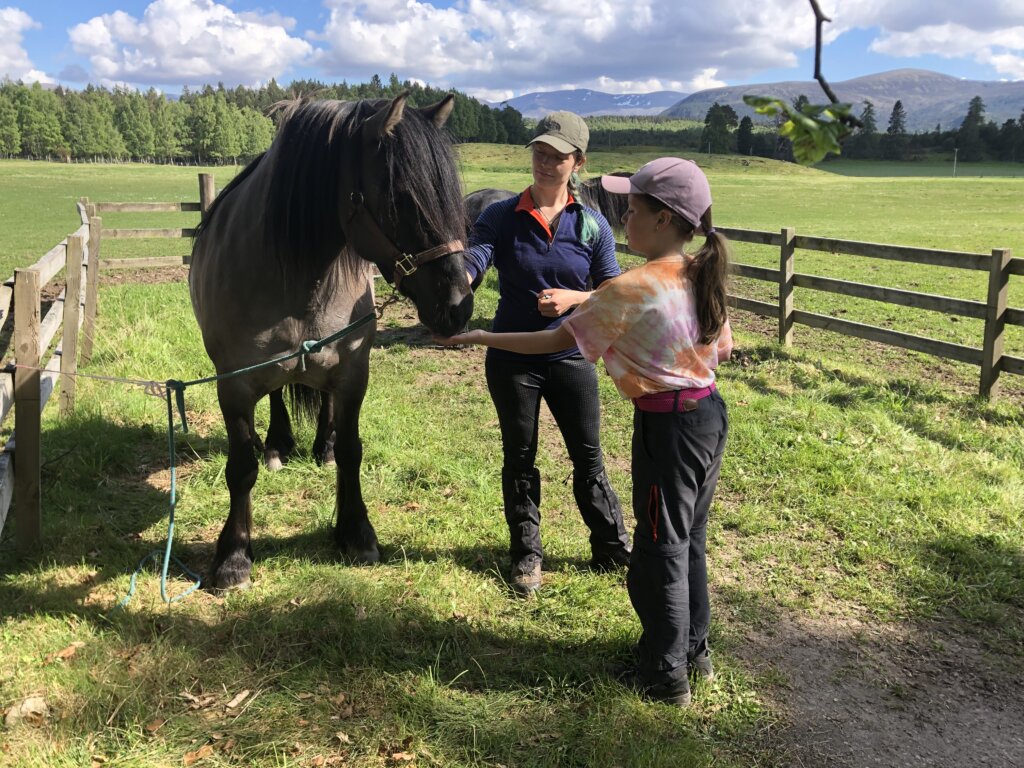
Interaction with Horses:
Can I pet or interact with the horses before the walk?
Yes, you can pet the horses.
How do I approach a horse safely?
Ask the guides about the best way to approach the ponies, but try to make sure that you don’t walk behind them, and don’t approach them where they can’t see you as this may make them nervous.
Are there specific rules for feeding or treating the horses during the walk?
Always check with the pony handlers who usually carry mints as treats for the ponies during the walk. They will treat themselves a lot as they walk though. As with most “ruminant” animals, they need to eat a lot to produce enough energy for the day.
Experience Level:
Do I need any prior experience with horses to participate?
You don’t need any prior experience with horses or ponies to take part in the trip, but it is a good idea to know if you are comfortable around them before you sign up. The handlers will manage the ponies throughout the trip but ponie are sensitive to human emotions so always try to be calm and friendly when around them.
Are the walks suitable for beginners, or are they more advanced?
Trail Information:
What kind of trails will we be walking on?
The trails are mostly very well graded and suitable for all abilities but there are short sections of very rough going, especially close to our campsite – which keeps it private! You will need to wear full walking boots to keep your feet dry and your ankles well protected. Comprehensive route details are provided in the trip information including the stats on the length of walks and anticipated ascent etc.
Weather Considerations:
What happens if the weather is inclement?
Our trips are carefully scheduled in periods where the weather is traditionally benign. Despite the popular belief that our weather in the UK is unpredictable; there are periods when you can expect dry periods and also periods when we’d anticipate more precipitation.
Group Size and Guides:
How large are the walking groups, and is there a guide accompanying us?
Groups are small; no more than 8 people.
This is a guided trip. There will be a guide on all activities.
Physical Requirements:
Is there a weight limit for participants?
There is no weight limit for the people but there is a weight consideration for the bags the ponies are carrying.
Do I need to be physically fit to walk with horses?
You do need to be able to walk up to 10km without feeling under too much strain. If you are at all worried about the walk in, or walking during the trip then please don’t hesitate to give Andy a call. There is some rough walking immediately before the camp site because it is a true wild camp and ont on a prepared campsite.
Booking and Logistics:
How do I book a walking experience with horses?
You should be able to book directly on the website, but if you are looking for a private departure for your family or group of friends, please do contact us first with your preferred dates so we can put them aside for you.
What is the cancellation policy?
We charge a 25% deposit which is non-refundable. For full terms and conditions please check here.
Are there age restrictions for participants?
We don’t really recommend the trip for children under 8 or anyone with mobility issues. However, you know your capabilities best, so if you are any doubt just give us a call or send us a message.
Photography and Personal Items:
Can I take photographs during the walk?
Absolutely. Do take as many photos as you want. We’ll set up a WhataApp group and you’ll be able to share your photos with everyone in the group and us (if you want).
Is it advisable to bring personal items like water bottles or snacks?
It is advisable to bring your own favourite water bottle but we’ll provide plenty of snacks in your packed lunches (though usually not sweeties). There will be chocolate bars, sandwiches and other snacks and you will receive a request to let us know what your favourite snacks are so we can accommodate as many as we can.
It is a good idea to limit your personal possessions as much as possible as you could well end up carrying the majority of the extras. The ponies only have so much capacity and will be carrying all the heavy stuff like the tent, chairs, stove etc so you are comfortable at camp. You should have space for a pack of cards or Bananagrams though!
Post-Walk Care:
Are there facilities for washing up or cleaning after the walk?
You’ll be returning to Fraoch Lodge at the end of the trip to the room you had before you set off. You’ll have access to all the facilities at the Lodge and there are both a toilet and a shower tent at camp; so you don’t have to return smelly at all.
Can we spend time with the horses after the walk?
Absolutely – though the ponies are always keen to catch up with their mates in the herd at the end of the trip and may not want to hang around with us. At camp though you can spend time with both ponies.
Now’s a great time to pause and reflect on last year’s walks. Which routes gave you a sense of calm and connection? Which felt hurried, stressful, or under-prepared? Maybe there were days when weather, gear, or logistics cut a walk short — or others when you underestimated how much time you needed.
By thinking back — asking what worked, what didn’t, and what you’d love to improve — you’ll be in a much stronger place to set walking goals that are both inspiring and achievable.
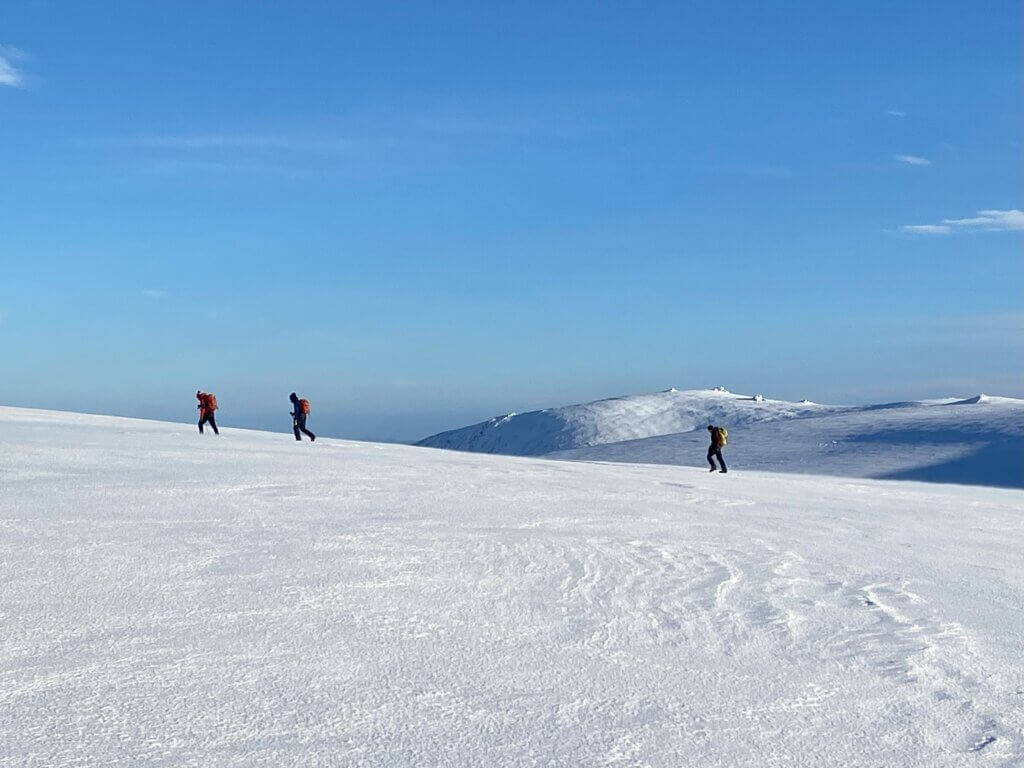
What a view! – New Year Winter Walking 2022 – 2023
Scotland is a popular destination for outdoor-focused holidays, and data highlights strong interest in hillwalking, hiking and nature-based activities. Early booking gives you the best choice — particularly for small lodges like Fraoch Lodge, or peak-week guided walking.
Relax and unwind in the heart of the Highlands of Scotland
Walking regularly brings measurable health benefits, and building up gradually helps avoid injury. A structured plan also makes longer or steeper routes feel far more achievable.
Early planning gives you time to check kit, test boots, refine routes, and handle travel arrangements — all without last-minute stress.
Industry insights show rising interest in slower, restorative travel that emphasises nature, quiet and wellbeing. This aligns closely with walking holidays and time spent in small, nature-rich areas like the Cairngorms.
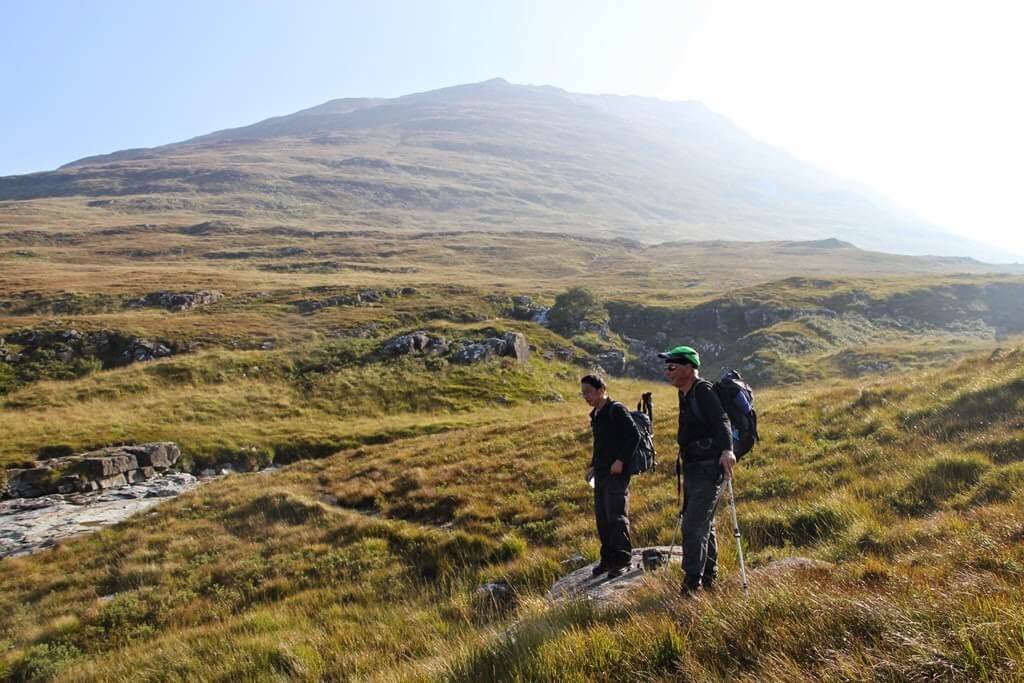
Recent VisitScotland data shows walking, hiking and hillwalking continue to be the top activities for visitors, with more people exploring forests, coastal routes and accessible low-level paths. Families and older travellers, especially, are seeking gentle but immersive itineraries.
Several travel-behaviour reports indicate that UK travellers are booking earlier — often several months ahead — especially for meaningful, special-interest trips. Walking holidays fit that pattern, making early planning more useful than ever.
You don’t need every detail locked in — just a few simple steps can turn vague hopes into real, enjoyable adventures.
Review last year’s walks
Set a clear walking goal for 2026
Pick tentative dates
Book accommodation (Fraoch Lodge, huts, transfers, guiding)
Start your fitness build-up
Test gear on short walks
Sketch out your route options
Consider family or group needs (pace, distances, weather flexibility)
Finalise logistics
Confirm transport
Review progress toward fitness goals
Prepare your packing lists
Enjoy — confident, prepared, well-equipped and ready for the experience
Note what felt good
Note what you’d change
Start thinking about next year’s goals
The best walking holidays don’t happen by accident — they’re created through a mix of dreaming, early decisions, and gentle preparation. Whether you’re longing for peaceful Highland mornings, a family adventure, or a personal challenge, planning ahead gives you more choice, more calm, and more enjoyment.
When most people picture a walking holiday, they imagine the trails: winding routes through ancient forests, high plateaus brushed with heather, summits opening onto vast Highland skylines. Yet what often transforms a good walk into a full on holiday is what happens beyond the trail — in the meals that refuel you, the spaces that welcome you back, and the small touches of comfort that help your body recover for another day outdoors.
At Scot Mountain Holidays, we’ve seen again and again how the right food and accommodation don’t just support a walking holiday — they elevate it.
After hours on the hill, food isn’t a luxury — it’s fuel, comfort, and pleasure wrapped into one. Tired walkers need meals that genuinely feed the body but also celebrate where they are. That’s why our menus at Fraoch Lodge draw deeply from the Highlands: fresh local vegetables, regional cheeses, berries in summer, slow-cooked stews in cooler months, and homemade breads and cakes that feel like a reward after enduring some of the weather the gods throw at you here in the Highlands.
Well-fed walkers recover more quickly, sleep better, and start the next day with more energy. It’s amazing how often our guests tell us the meals were one of the unexpected highlights of their trip — hearty, flavourful, nourishing, and reflective of the landscape they’ve been exploring.
We design our meals specifically with walkers in mind. After a day on the hill, the body needs warmth, calories, hydration, and colour — and that’s exactly what appears on the table.
Some of our regular staples include:
Hearty homemade soups — carrot and ginger, lentil and spinach, creamy celeriac, or a rustic vegetable broth made from whatever’s freshest that week. Perfect as a warming starter or a lighter lunch on an easier day.
Seasonal produce-led mains — think roasted vegetables with herb-crusted chicken, slow-cooked beef with root veg, tagines packed with chickpeas and apricots, or Thai-style curries that bring heat and vibrancy.
Freshly baked breads and cakes — ideal for filling the gaps before dinner or rewarding yourself after a long, wet descent.
Balanced, colourful plates — plenty of protein, good carbs, bright flavours and textures, and always with the aim of restoring tired legs and lifting spirits.
We also cater for a wide range of dietary needs. Vegetarian, vegan, dairy-free, gluten-free — whatever your requirements, you won’t be getting the “afterthought option.” Every plate gets the same care and creativity. Check out the recipes our guests have asked us to share with them.

Recovery isn’t just about food. It’s also about the environment you return to after a long day.
At Fraoch Lodge, we’ve shaped the space around what walkers actually need:
Warm, comfortable beds that invite deep rest — the kind where you wake up ready to stride out again.
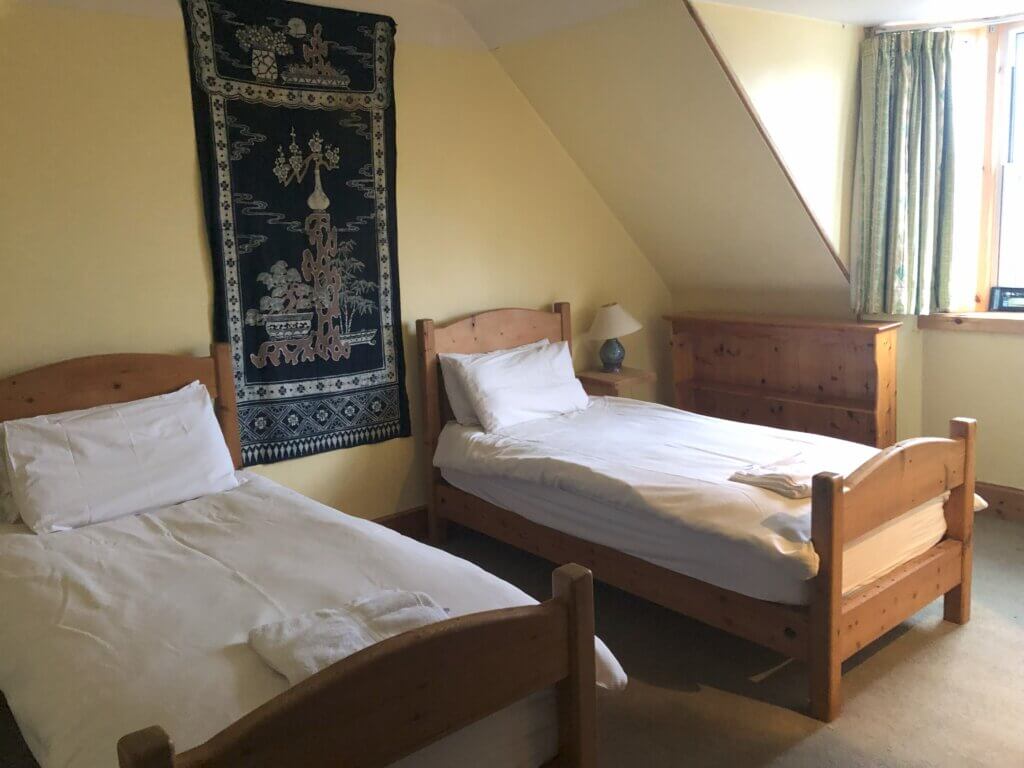
A reliable drying room that quietly works its magic on sodden boots, waterproofs and gloves. A day that began in the rain doesn’t have to carry into the next morning.

Dry clothes & boots for the morngin
Cosy communal spaces — the wood-burner lit, tea and cake waiting, and room to spread out maps, compare routes, chat with fellow walkers or simply unwind with a book.
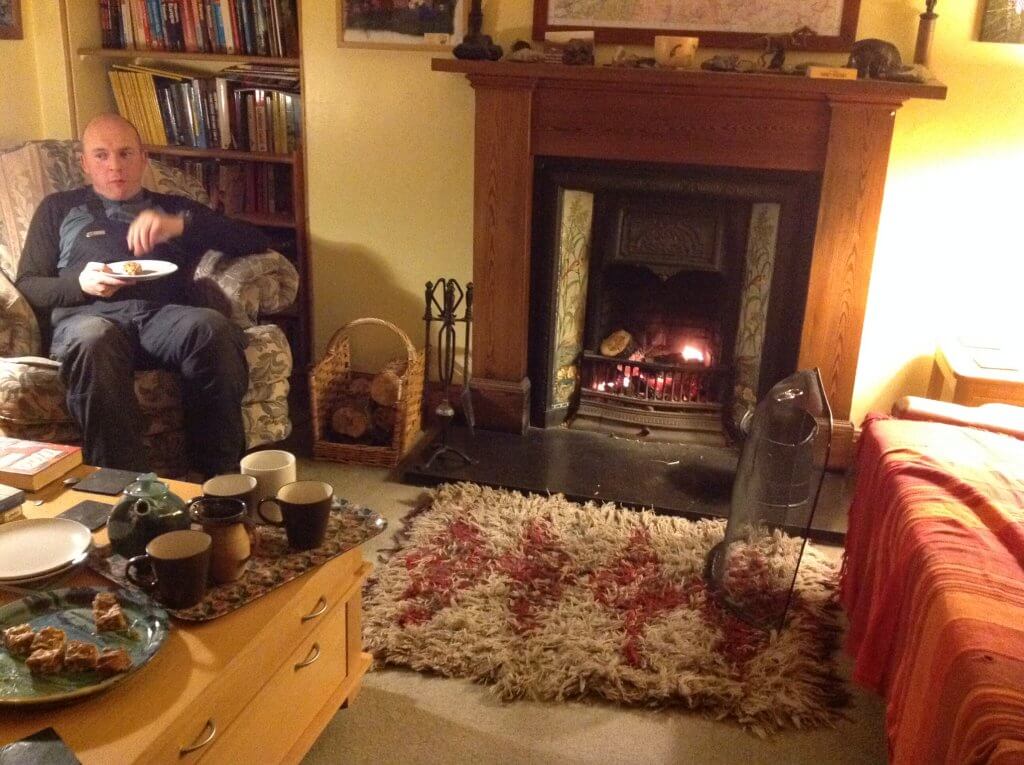
Everyone loves an open fire, almost as much entertainment as the TV
Outdoor areas to enjoy in summer — perfect for a post-walk drink in the fresh Highland air.
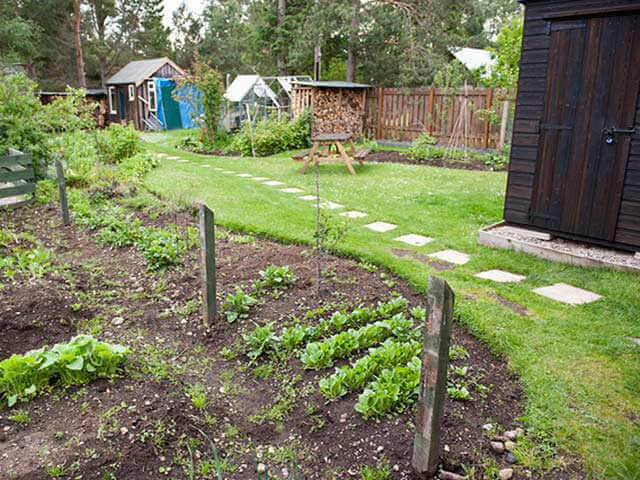
Our edible garden behind Fraoch Lodge
Comfort isn’t indulgence. It’s part of the rhythm that allows you to fully enjoy the landscape day after day.
There’s a rhythm to running a walking lodge, a kind of choreography that unfolds each afternoon.
While you’re on the hill:
Soup simmers on the stove, ready to welcome you home.
Kit is checked, drying racks cleared, and everything reset for incoming gear.
Bread or cake is in the oven, offering that irresistible “just baked” aroma as soon as you step inside.
Dinner prep is underway, with vegetables chopped, sauces stirred, and the menu shaped around the weather, the season, and the energy needs of the group.

Home made souffles served with salad fresh from the garden
We keep an eye on the forecast, adjust plans and meals, and ensure the spaces you rely on — the sitting room, the drying room, the dining table — are all ready for your return. Our goal is simple: you focus on the walking; we handle everything else.
The Cairngorms will give you the views, the challenge, the exhilaration of moving through real wilderness. But it’s the food, comfort and care waiting at the end of each day that give your body and mind the chance to fully absorb it.
At Fraoch Lodge, we’re here to make sure your walking holiday isn’t just memorable — it’s restorative, flavourful, and deeply enjoyable from the first step to the last bite.
 Scot Mountain Holidays (Ltd),
Fraoch Lodge, Deshar Road,
Boat of Garten,
PH24 3BN
Scot Mountain Holidays (Ltd),
Fraoch Lodge, Deshar Road,
Boat of Garten,
PH24 3BN




All content © Copyright Scot Mountain Holidays 2026
Responsive web design by Summit Web Solutions
