








This website uses cookies to improve your experience. We\'ll assume you\'re ok with this, but you can opt-out if you wish. Read More
In case of sale of your personal information, you may opt out by using the link Do Not Sell My Personal Information
Travel experiences play one of the most important roles in why so many of us continue to explore the world. Although this age of technology allows us to document almost every part of our day, nothing compares with experiencing something firsthand.
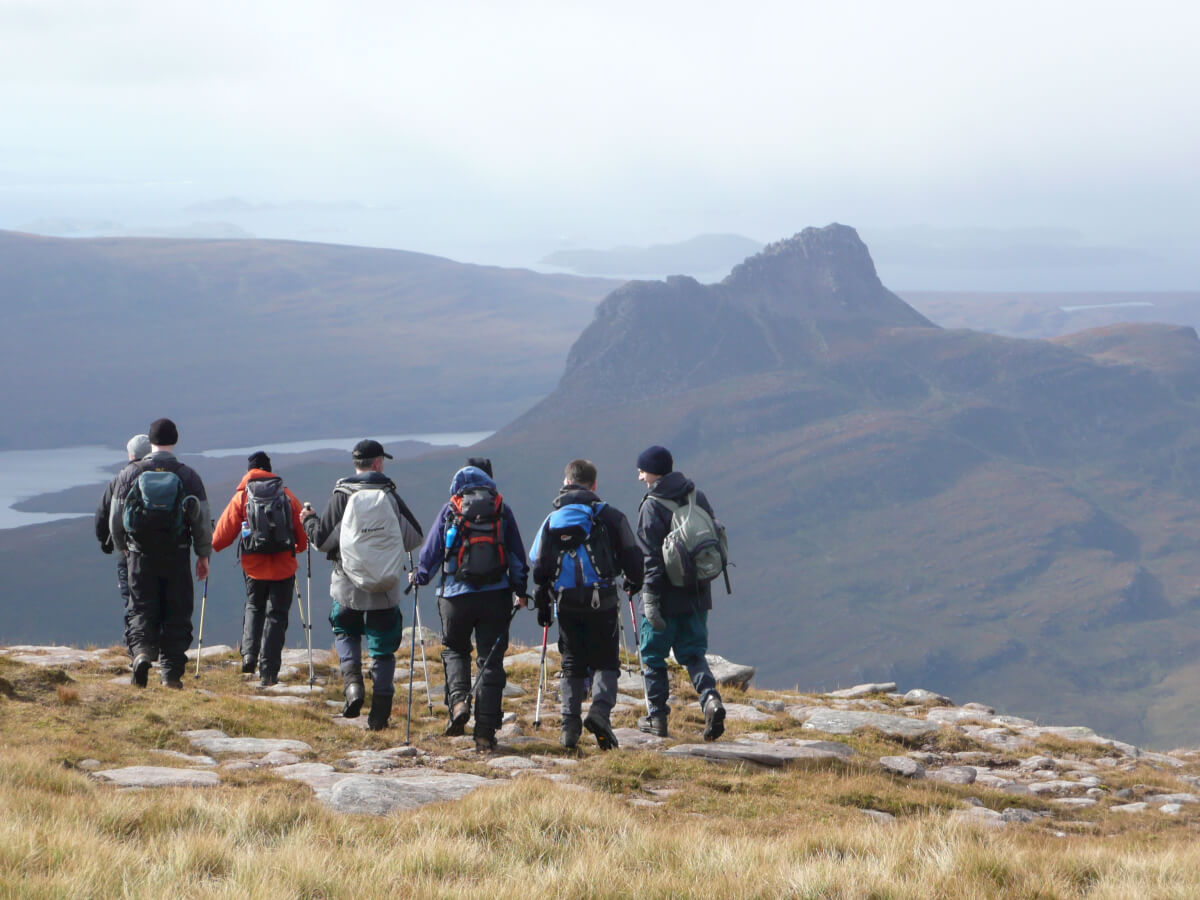
Visiting somewhere you’re not familiar with already means you have an open mind. But exposing yourself to the unexpected when travelling often allows you to broaden your mind so much further. This includes with culture, religion, food and people. Having an open mind and being willing to dive head first into an experience will make travel experiences exceptional.
One of the best things you can do when travelling is get out of your comfort zone. Pushing yourself mentally, physically and emotional often yields the most wonderful of rewards. Scott Mountain Holidays will stretch your boundaries through both tailor made and structured group trips. But not to worry. Your boundaries may be stretched, but with Andy as your guide you’ll be well looked after.
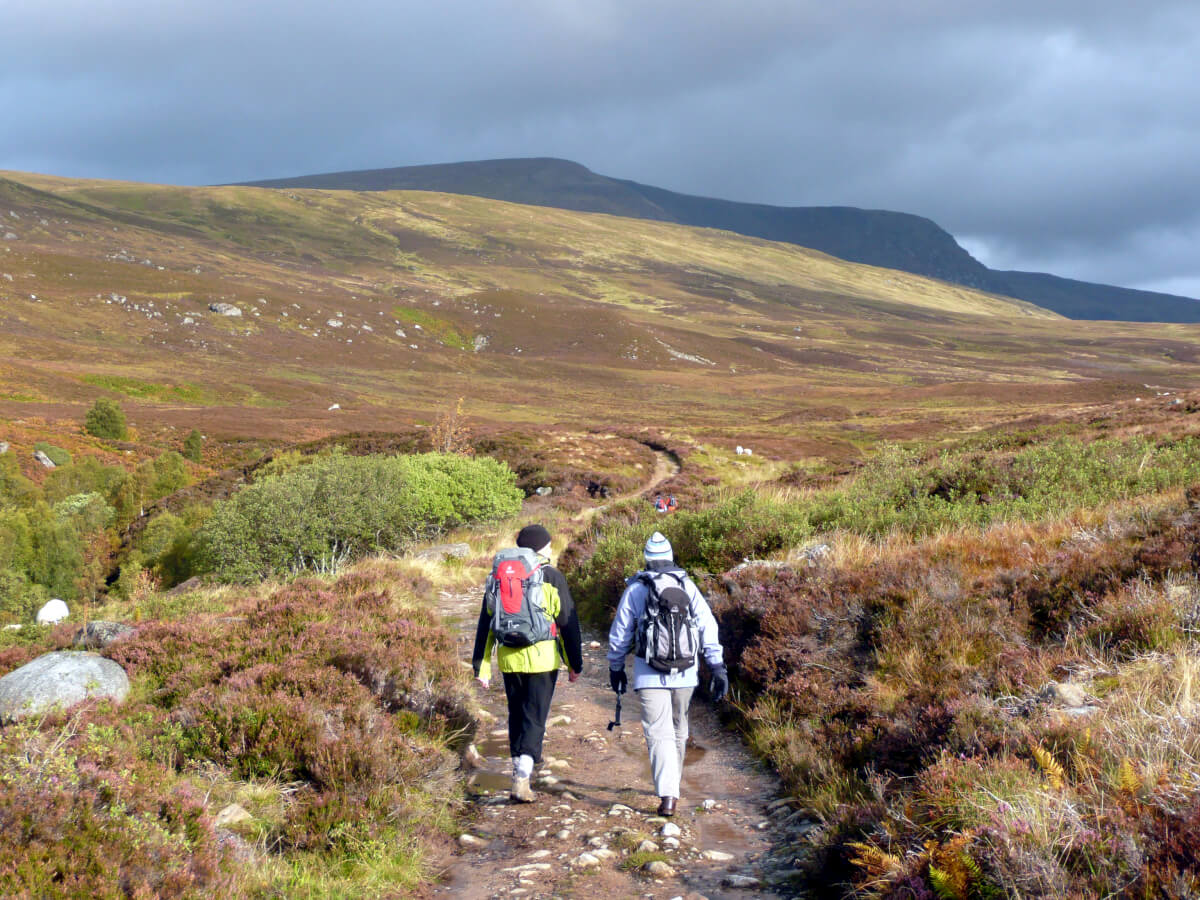
Creating a special travel experience means you need to be willing to embrace interacting with locals, nature and culture alike. This will provide you with a well-rounded experience of a place and the opportunity to interact with likeminded individuals from across the world. Completing a tour with Scot Mountain Holidays will also allow you the rare opportunity to really embrace Scotland.
Photos and videos are such a wonderful way to capture the very best moments of a trip. However travelling is also a wonderful opportunity to take a step away from technology. When travelling, you can be present in the moment rather than experience it through the lens of your phone. So make your travel experience extra special and take the opportunity to really appreciate the place you’re in and what you’re exposed to. Scot Mountain Holidays hiking and walking trips allow you the chance to do this with plenty of opportunities to whip out your camera.
Scot Mountain Holidays is all about the experiences. Participate in walking, hiking or mountain biking holidays in a stunning Scotland, and you’ll go home with travel memories and experiences that will stay with you forever.
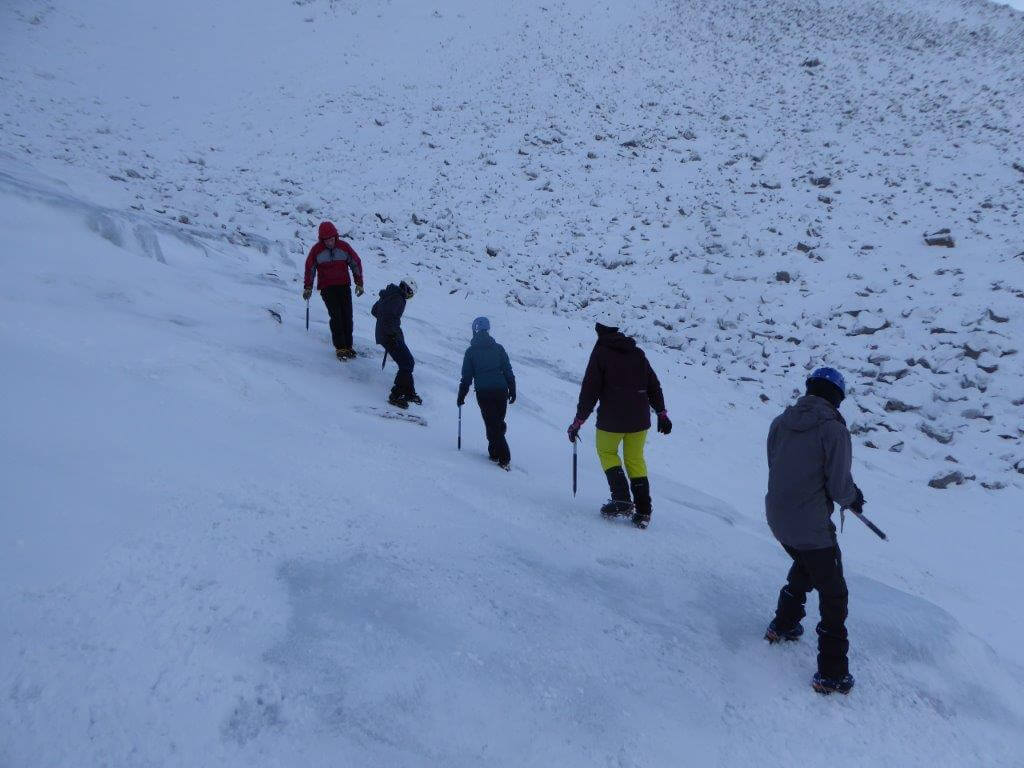
It’s now middle of November and winter in our mountains is knocking at our door. As the Atlantic storms pass our area the arctic air is drawn into their wake. With each passing front, the weather can be extremely changeable. It may be weeks yet before winter conditions are in full nick for full on winter walking, but sudden blizzards on the high tops are now common place – meaning the ill prepared can be easily caught out. Scot Mountain Holidays guide and instructor Andy Bateman takes us through some of the considerations over and above the essentials of ice axe and crampons in transitioning from autumn in winter trekking conditions.
It is prudent to carry a head torch at most times of year, but especially in the case of winter. The days are short and even a minor delay can make the difference between coming off the hill in the daylight and dark. Don’t go without!
In addition, make sure the batteries are fresh so your torch is working at full power. Carry spares too but try to avoid fumbling about to change batteries in a blizzard!
Consider upgrading your head torch to a more powerful model . Remember you may be trying to discern navigational features both in the dark and in the fog.
The stiffness of the winter boot is an integral part of ensuring crampons can be securely attached to your feet. This being said, bunging crampons is not a “fix all” and the winter boot is as much a tool on your foot as the ice axe is in your hand. You need adequate stiffness to kick steps comfortably and efficiently into hard snow. Without it, it will be difficult to execute the technique of front pointing safely.
Proper winter boots are also better insulated. If you’re thinking about buying a boot for the winter go for at least a B2. A B1 boot may be fine for a serious summer glacier trek in the Himalayas, but they don’t come up to the mark when it comes to winter in the Scottish mountains.
Check the state of your soles. It’s those sharp right angled edges that help to prevent slipping and allow you to kick steps.
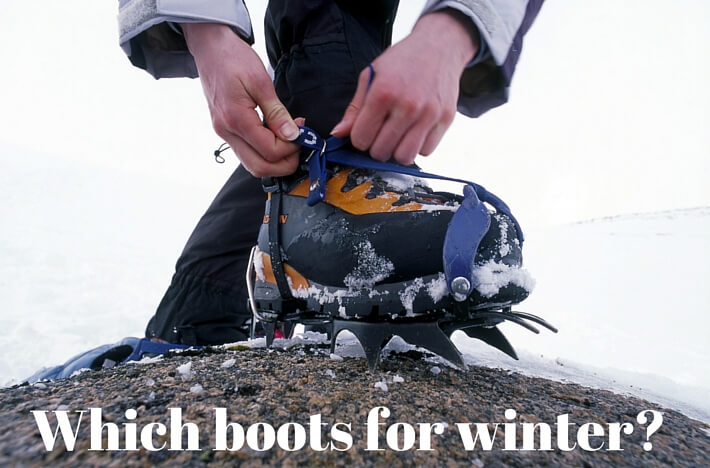
Which boots to choose for winter?
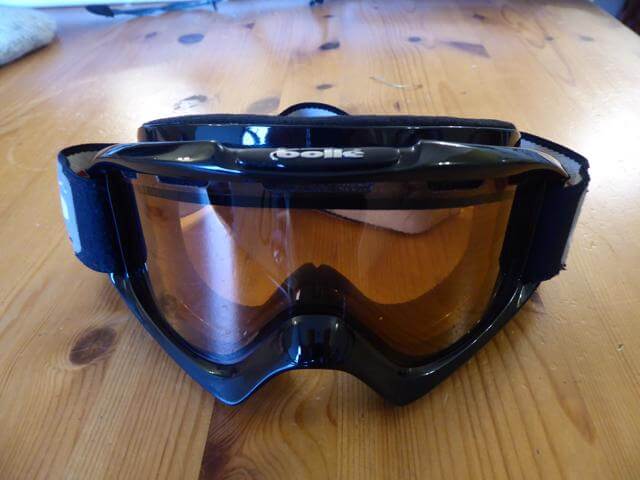
These are an absolute must and in our damp mountain climate they need to be anti-fog (double lenses). It may be uncomfortable – but not impossible – navigating into driving rain, but don’t underestimate how painful this is once precipitation turns solid. It can be literally impossible to see. Your sight is of vital importance so don’t skimp on the goggles and head torch.
Pack that extra warm layer. The ambient temperature at 1000m rarely drops below -10 degrees C but don’t underestimate how cold it can feel. A weak winter sun, the damp air and often a high wind chill all conspire to make the British mountains one of the worst places for hypothermia. You can chill quickly when you stop moving. A really thick fleece or over layering jacket is ideal. Be cautious about wearing duvets jackets under other garments – they can loose their loft and hence insulation.
Make sure you gloves are warm enough for winter walking … i.e. they must be proper thick gloves. Not only do your hands have a very large surface area compared with their volume but also the body will reduce the circulation to them to conserve the core temperature – no wonder they get cold! So if you do have cold hands don’t just think of putting on warmer gloves, but also an extra layer on your body.
Also remember if you do particularly suffer from cold hands, mitts are better at giving you the option of adding heat pads.
If you’re coming on a winter skills course or winter walking holiday with Scot Mountain Holidays please don’t hesitate to contact Andy if you have any further questions, an expert in optimal gear.
Andy will be publishing further blogs on the subject of preparing for winter over the forthcoming weeks. Keep your eyes open!
You can also take a look at our Winter walking holidays, Winter Skills courses and Full moon Snow-hole Expedition.
 Scot Mountain Holidays (Ltd),
Fraoch Lodge, Deshar Road,
Boat of Garten,
PH24 3BN
Scot Mountain Holidays (Ltd),
Fraoch Lodge, Deshar Road,
Boat of Garten,
PH24 3BN




All content © Copyright Scot Mountain Holidays 2026
Responsive web design by Summit Web Solutions
